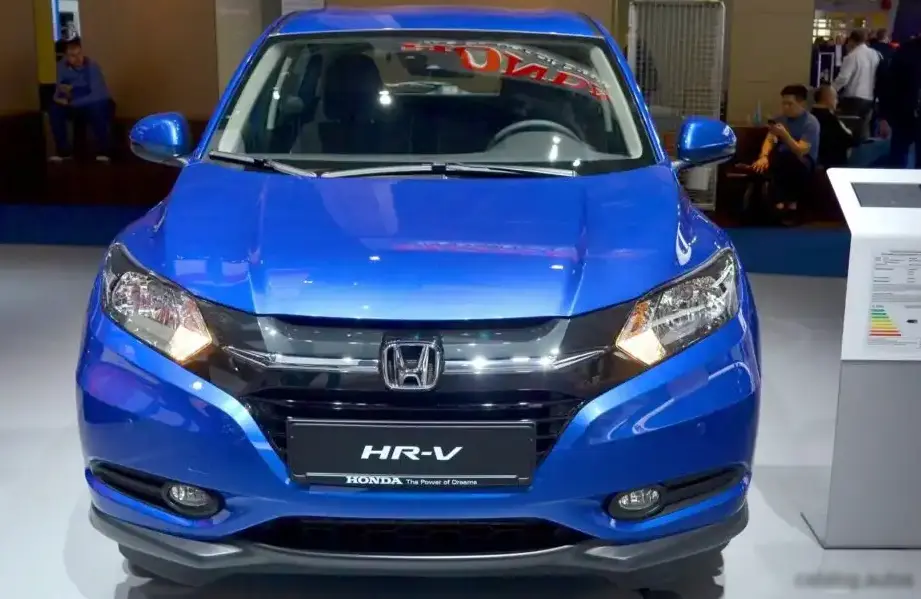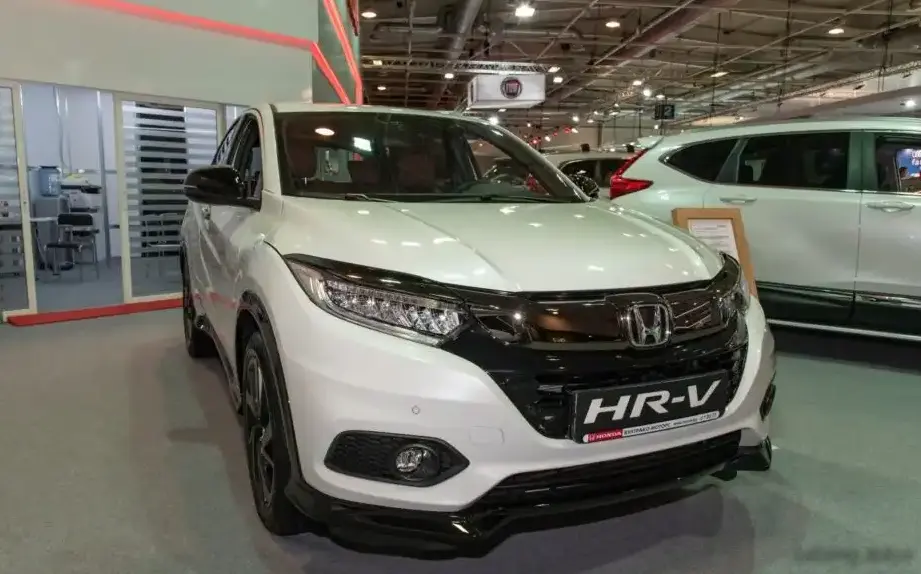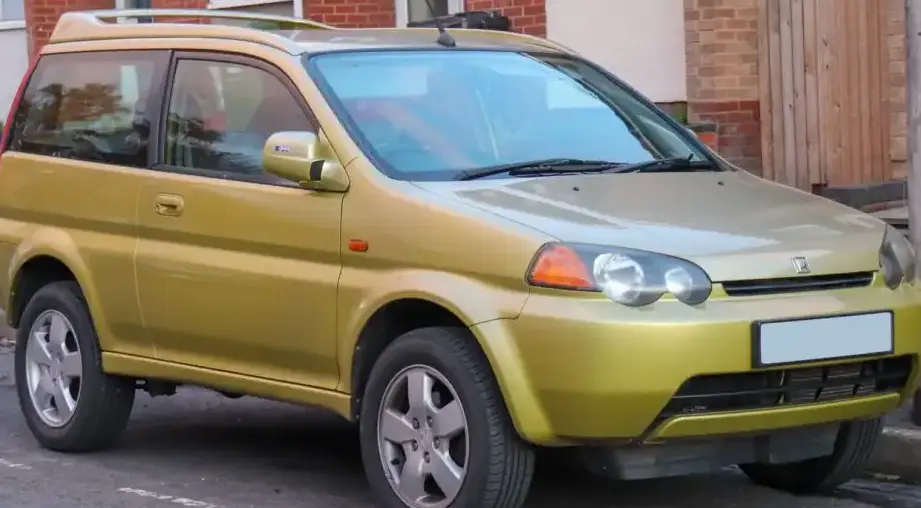
The Honda HR-V (GH) 1.6 i 16V 4WD, produced between 1999 and 2005, represents Honda’s entry into the burgeoning compact SUV/Crossover market. This particular variant, powered by the 1.6-liter D16W5 engine and equipped with a five-speed manual transmission and all-wheel drive, was positioned as a practical and versatile option within the HR-V lineup. The GH generation HR-V, sold primarily in Europe and Asia, distinguished itself with its unique styling and spacious interior for its class, offering a blend of hatchback practicality and SUV capability. It was a key model for Honda in expanding its reach beyond traditional sedan buyers.
Technical Specifications
| Brand | Honda |
| Model | HR-V |
| Generation | HR-V (GH) |
| Type | 1.6 i 16V 4WD (5 dr) (124 Hp) |
| Start of production | 1999 |
| End of production | 2005 |
| Powertrain Architecture | Internal Combustion engine |
| Body type | SUV, Crossover |
| Seats | 5 |
| Doors | 5 |
| Fuel consumption (urban) | 10.4 l/100 km (22.6 US mpg, 27.2 UK mpg, 9.6 km/l) |
| Fuel consumption (extra urban) | 7.6 l/100 km (30.9 US mpg, 37.2 UK mpg, 13.2 km/l) |
| Fuel consumption (combined) | 8.6 l/100 km (27.4 US mpg, 32.8 UK mpg, 11.6 km/l) |
| Fuel Type | Petrol (Gasoline) |
| Acceleration 0 – 100 km/h | 11.3 sec |
| Acceleration 0 – 62 mph | 11.3 sec |
| Acceleration 0 – 60 mph | 10.7 sec |
| Maximum speed | 170 km/h (105.63 mph) |
| Weight-to-power ratio | 10.6 kg/Hp, 94.2 Hp/tonne |
| Weight-to-torque ratio | 9.1 kg/Nm, 109.3 Nm/tonne |
| Power | 124 Hp @ 6600 rpm |
| Power per litre | 78 Hp/l |
| Torque | 144 Nm @ 4900 rpm (106.21 lb.-ft. @ 4900 rpm) |
| Engine layout | Front, Transverse |
| Engine Model/Code | D16W5 |
| Engine displacement | 1590 cm3 (97.03 cu. in.) |
| Number of cylinders | 4 |
| Engine configuration | Inline |
| Cylinder Bore | 75 mm (2.95 in.) |
| Piston Stroke | 90 mm (3.54 in.) |
| Compression ratio | 9.6:1 |
| Number of valves per cylinder | 4 |
| Fuel injection system | Multi-port manifold injection |
| Engine aspiration | Naturally aspirated engine |
| Valvetrain | OHC |
| Engine oil capacity | 3.6 l (3.8 US qt | 3.17 UK qt) |
| Coolant capacity | 2.8 l (2.96 US qt | 2.46 UK qt) |
| Kerb Weight | 1317 kg (2903.49 lbs.) |
| Max. weight | 1640 kg (3615.58 lbs.) |
| Max load | 323 kg (712.09 lbs.) |
| Trunk (boot) space – minimum | 285 l (10.06 cu. ft.) |
| Fuel tank capacity | 55 l (14.53 US gal | 12.1 UK gal) |
| Length | 4110 mm (161.81 in.) |
| Width | 1695 mm (66.73 in.) |
| Width including mirrors | 1995 mm (78.54 in.) |
| Height | 1670 mm (65.75 in.) |
| Wheelbase | 2450 mm (96.46 in.) |
| Front track | 1470 mm (57.87 in.) |
| Rear (Back) track | 1455 mm (57.28 in.) |
| Drive wheel | All wheel drive (4×4) |
| Number of gears and type of gearbox | 5 gears, manual transmission |
| Front suspension | Wishbone |
| Rear suspension | Suspension De-Dion |
| Front brakes | Ventilated discs |
| Rear brakes | Drum |
| Assisting systems | ABS (Anti-lock braking system) |
| Steering type | Steering rack and pinion |
| Power steering | Hydraulic Steering |
| Tires size | 205/60 R16 H |
Powertrain & Engine Architecture
The heart of the HR-V 1.6 i 4WD is the D16W5 engine, a 1.6-liter inline-four cylinder gasoline engine. This engine utilizes a single overhead camshaft (SOHC) valvetrain with four valves per cylinder, contributing to its relatively efficient operation. The D16W5 employs multi-point fuel injection, delivering fuel directly to each intake port for improved combustion. The engine’s 9.6:1 compression ratio strikes a balance between performance and fuel economy. Paired with this engine is a robust five-speed manual transmission, chosen for its driver engagement and efficiency. The all-wheel-drive system is a real-time system, engaging the rear wheels when traction is lost, providing enhanced stability in various driving conditions.
Driving Characteristics
The 124 horsepower and 144 Nm (106 lb-ft) of torque produced by the D16W5 engine, while not exceptionally powerful, provided adequate performance for everyday driving. Acceleration from 0-60 mph took around 10.7 seconds, and the HR-V could reach a top speed of 170 km/h (105 mph). Compared to the more powerful 1.8L VTEC versions available in some markets, the 1.6L felt less responsive, particularly during overtaking maneuvers. However, the manual transmission allowed drivers to make the most of the available power, and the all-wheel-drive system provided confident handling in slippery conditions. The gear ratios were tuned for fuel efficiency, resulting in a slightly less sporty driving experience than the higher-output models.
Equipment & Trim Levels
The 1.6 i 4WD trim typically included features such as power windows, central locking, and an AM/FM radio. Air conditioning was often standard, though it could be optional depending on the specific market. Interior upholstery was typically cloth, with a functional and durable design. Optional extras included alloy wheels, a sunroof, and upgraded audio systems. The interior design prioritized practicality and space, with a focus on maximizing passenger and cargo room. The dashboard layout was straightforward and easy to use, reflecting Honda’s commitment to user-friendly ergonomics.
Chassis & Braking
The HR-V’s chassis featured a front independent suspension with wishbones and a rear De-Dion suspension, providing a comfortable ride and good handling characteristics. The De-Dion setup helped to minimize body roll and improve stability. Braking duties were handled by ventilated discs at the front and drum brakes at the rear. Anti-lock Braking System (ABS) was standard, enhancing safety by preventing wheel lockup during hard braking. The steering system was a rack-and-pinion setup with hydraulic power assistance, offering precise and responsive steering feel.
Market Reception & Comparison
The HR-V 1.6 i 4WD was generally well-received by critics as a practical and versatile compact SUV. Its fuel economy, averaging around 27.4 US mpg combined, was competitive for its class. However, some reviewers noted that the 1.6-liter engine felt underpowered, especially when fully loaded or driving uphill. Compared to the more expensive 1.8L VTEC models, the 1.6L offered a more affordable entry point into the HR-V range, appealing to budget-conscious buyers. Its reliability was also praised, consistent with Honda’s reputation for building durable vehicles.
Legacy
The Honda HR-V (GH) 1.6 i 4WD has proven to be a reliable and long-lasting vehicle. Today, well-maintained examples are still relatively common on the used car market. The D16W5 engine is known for its durability and relatively low maintenance costs. While not a performance standout, the 1.6L engine’s simplicity and robustness contribute to its longevity. The HR-V’s spacious interior and practical design continue to appeal to buyers seeking a versatile and affordable compact SUV. The GH generation HR-V laid the groundwork for Honda’s continued success in the crossover segment, establishing a reputation for quality and reliability.