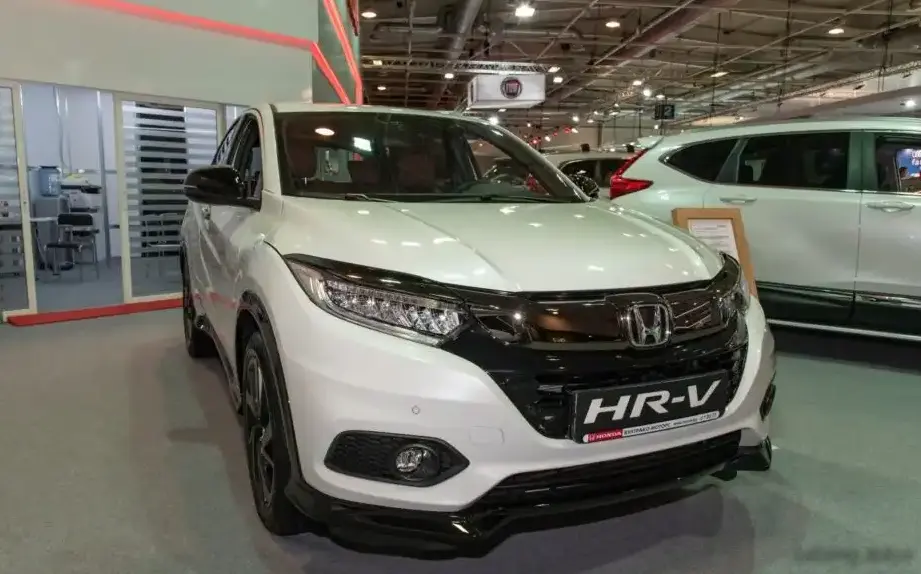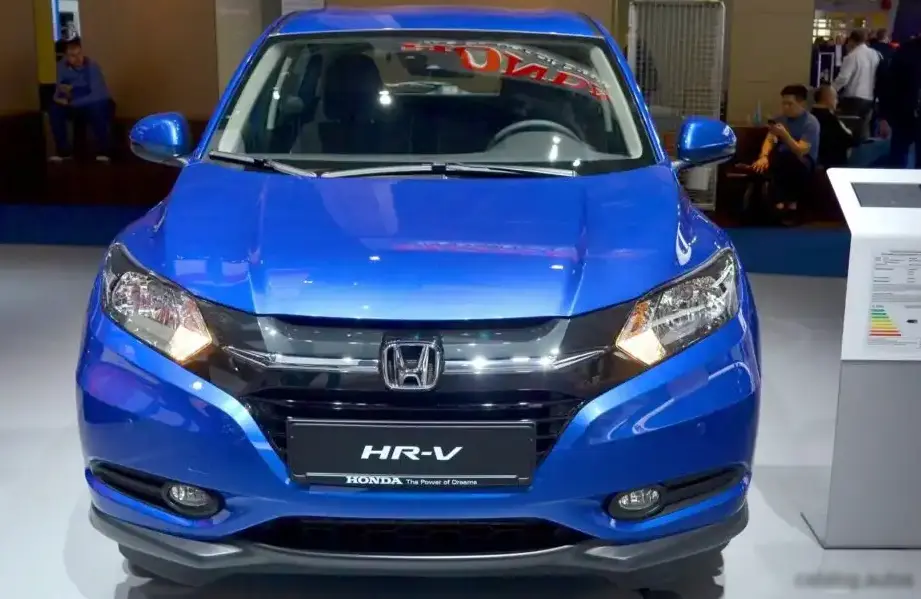
The Honda HR-V II 1.5 i-VTEC (130 Hp) represents a significant iteration of Honda’s popular subcompact crossover, produced between 2015 and 2018. Positioned as a versatile and fuel-efficient option within the HR-V lineup, this variant aimed to balance practicality with affordability. It was a key model for Honda in markets worldwide, including North America, Europe, and Asia, capitalizing on the growing demand for small, efficient SUVs. This generation, internally designated as the RU series, built upon the success of the first-generation HR-V, offering improved space, refinement, and technology. The 1.5 i-VTEC engine, paired with either a continuously variable transmission (CVT) or a six-speed manual, was a cornerstone of the HR-V II’s appeal.
Technical Specifications
| Brand | Honda |
| Model | HR-V |
| Generation | HR-V II |
| Type (Engine) | 1.5 i-VTEC (130 Hp) |
| Start of production | 2015 |
| End of production | 2018 |
| Powertrain Architecture | Internal Combustion engine |
| Body type | SUV, Crossover |
| Seats | 5 |
| Doors | 5 |
| Fuel consumption (urban) | 7 l/100 km (33.6 US mpg) |
| Fuel consumption (extra urban) | 4.8 l/100 km (49 US mpg) |
| Fuel consumption (combined) | 5.6 l/100 km (42 US mpg) |
| CO2 emissions | 130 g/km |
| Fuel Type | Petrol (Gasoline) |
| Acceleration 0 – 100 km/h | 10.2 sec |
| Acceleration 0 – 62 mph | 10.2 sec |
| Acceleration 0 – 60 mph | 9.7 sec |
| Maximum speed | 192 km/h (119.3 mph) |
| Emission standard | Euro 6 |
| Weight-to-power ratio | 10.1 kg/Hp |
| Weight-to-torque ratio | 8.5 kg/Nm |
| Power | 130 Hp @ 6600 rpm |
| Torque | 155 Nm @ 4600 rpm (114.32 lb.-ft. @ 4600 rpm) |
| Engine layout | Front, Transverse |
| Engine Model/Code | L15BY |
| Engine displacement | 1498 cm3 (91.41 cu. in.) |
| Number of cylinders | 4 |
| Engine configuration | Inline |
| Cylinder Bore | 73 mm (2.87 in.) |
| Piston Stroke | 89.5 mm (3.52 in.) |
| Compression ratio | 11.5:1 |
| Number of valves per cylinder | 4 |
| Fuel injection system | Direct injection |
| Engine aspiration | Naturally aspirated engine |
| Valvetrain | DOHC |
| Engine oil capacity | 3.6 l (3.8 US qt | 3.17 UK qt) |
| Coolant capacity | 3.63 l (3.84 US qt | 3.19 UK qt) |
| Kerb Weight | 1312 kg (2892.46 lbs.) |
| Max. weight | 1790 kg (3946.27 lbs.) |
| Max load | 478 kg (1053.81 lbs.) |
| Trunk (boot) space – minimum | 431 l (15.22 cu. ft.) |
| Trunk (boot) space – maximum | 1456 l (51.42 cu. ft.) |
| Fuel tank capacity | 50 l (13.21 US gal | 11 UK gal) |
| Max. roof load | 75 kg (165.35 lbs.) |
| Permitted trailer load with brakes (12%) | 1000 kg (2204.62 lbs.) |
| Permitted trailer load without brakes | 500 kg (1102.31 lbs.) |
| Permitted towbar download | 70 kg (154.32 lbs.) |
| Length | 4294 mm (169.06 in.) |
| Width | 1772 mm (69.76 in.) |
| Width including mirrors | 2019 mm (79.49 in.) |
| Height | 1605 mm (63.19 in.) |
| Wheelbase | 2610 mm (102.76 in.) |
| Front track | 1535 mm (60.43 in.) |
| Rear (Back) track | 1540 mm (60.63 in.) |
| Ride height (ground clearance) | 170 mm (6.69 in.) |
| Minimum turning circle | 11.4 m (37.4 ft.) |
| Drivetrain Architecture | Front wheel drive |
| Drive wheel | Front wheel drive |
| Number of gears and type of gearbox | 6 gears, manual transmission |
| Front suspension | Independent type McPherson |
| Rear suspension | Semi-independent, coil spring |
| Front brakes | Ventilated discs |
| Rear brakes | Disc |
| Assisting systems | ABS (Anti-lock braking system) |
| Steering type | Steering rack and pinion |
| Tires size | 215/60 R16 95H |
| Wheel rims size | 7J x 16 |
Powertrain & Engine Architecture
The heart of the HR-V II 1.5 i-VTEC is the L15BY engine, a 1.5-liter inline-four cylinder gasoline engine. This engine is part of Honda’s Earth Dreams Technology series, focusing on efficiency and reduced emissions. The ‘i-VTEC’ system (intelligent Variable Valve Timing and Lift Electronic Control) optimizes valve timing and lift based on engine speed and load, improving both power and fuel economy. The L15BY utilizes direct fuel injection, further enhancing combustion efficiency and reducing knock. The engine produces 130 horsepower at 6600 rpm and 155 Nm (114 lb-ft) of torque at 4600 rpm. This engine was commonly paired with either a six-speed manual transmission or a Continuously Variable Transmission (CVT). The CVT, while prioritizing fuel efficiency, was often criticized for its simulated shift points and less engaging driving experience compared to the manual.
Driving Characteristics
The 1.5 i-VTEC with the manual transmission offered a reasonably engaging driving experience, though not particularly sporty. Acceleration from 0-60 mph took around 9.7 seconds, making it adequate for everyday driving but not exceptionally quick. The CVT version, while smoother, felt somewhat sluggish, particularly during overtaking maneuvers. The HR-V’s relatively lightweight construction helped mitigate the effects of the modest engine output. The steering was light and precise, making it easy to maneuver in urban environments. The suspension, tuned for comfort, provided a compliant ride, but could feel somewhat soft during spirited driving. The gear ratios in the manual transmission were well-spaced, allowing the engine to remain in its optimal power band.
Equipment & Trim Levels
The HR-V II 1.5 i-VTEC was typically offered in several trim levels, varying by market. Base models generally included features like air conditioning, power windows and locks, a basic audio system, and alloy wheels. Higher trims added features such as a touchscreen infotainment system, rearview camera, Honda’s LaneWatch blind spot display, automatic climate control, and upgraded interior materials. Interior upholstery ranged from cloth to leather, depending on the trim level. Optional extras included a sunroof, navigation system, and premium audio system. The overall interior design was modern and functional, with a focus on maximizing space and usability.
Chassis & Braking
The HR-V II utilized a front-wheel-drive platform with an independent McPherson strut suspension in the front and a semi-independent torsion beam suspension in the rear. This setup prioritized ride comfort and space efficiency. Braking duties were handled by ventilated discs in the front and solid discs in the rear. Anti-lock Braking System (ABS) was standard equipment. The chassis was designed to be lightweight yet rigid, contributing to the HR-V’s handling characteristics. Stabilizer bars were included to reduce body roll during cornering, though the HR-V was not intended to be a performance vehicle.
Market Reception & Comparison
The Honda HR-V II 1.5 i-VTEC was generally well-received by critics for its practicality, fuel efficiency, and spacious interior. However, some reviewers criticized the engine’s lack of outright power, particularly when paired with the CVT. Compared to other trims in the HR-V lineup, such as those with more powerful engines, the 1.5 i-VTEC was positioned as the entry-level option, appealing to buyers prioritizing affordability and fuel economy over performance. It competed with other subcompact crossovers like the Mazda CX-3, Nissan Juke, and Kia Soul. The HR-V consistently scored well in reliability surveys, making it a popular choice in the used car market.
Legacy
The L15BY engine, in general, has proven to be a reliable and durable powerplant. The HR-V II 1.5 i-VTEC, when properly maintained, is known for its longevity and relatively low running costs. In the used car market, these models remain popular due to their reputation for reliability and fuel efficiency. Common maintenance items include regular oil changes, air filter replacements, and spark plug replacements. The CVT transmission, while generally reliable, requires periodic fluid changes to ensure optimal performance. The HR-V II 1.5 i-VTEC continues to be a viable option for buyers seeking a practical and affordable subcompact crossover.