Technical Specifications
| Brand | Honda |
| Model | HR-V |
| Generation | HR-V II |
| Type (Engine) | 1.6 i-DTEC (120 Hp) |
| Start of production | 2015 |
| End of production | 2018 |
| Powertrain Architecture | Internal Combustion engine |
| Body type | SUV, Crossover |
| Seats | 5 |
| Doors | 5 |
| Fuel consumption (urban) | 4.2 l/100 km (56 US mpg, 67.3 UK mpg, 23.8 km/l) |
| Fuel consumption (extra urban) | 3.8 l/100 km (61.9 US mpg, 74.3 UK mpg, 26.3 km/l) |
| Fuel consumption (combined) | 4 l/100 km (58.8 US mpg, 70.6 UK mpg, 25 km/l) |
| CO2 emissions | 104 g/km |
| Fuel Type | Diesel |
| Acceleration 0 – 100 km/h | 10.1 sec |
| Acceleration 0 – 62 mph | 10.1 sec |
| Acceleration 0 – 60 mph | 9.6 sec |
| Maximum speed | 192 km/h (119.3 mph) |
| Emission standard | Euro 6 |
| Weight-to-power ratio | 11.6 kg/Hp, 86 Hp/tonne |
| Weight-to-torque ratio | 4.7 kg/Nm, 215.1 Nm/tonne |
| Power | 120 Hp @ 4000 rpm |
| Power per litre | 75.1 Hp/l |
| Torque | 300 Nm @ 2000 rpm (221.27 lb.-ft. @ 2000 rpm) |
| Engine layout | Front, Transverse |
| Engine Model/Code | N16A3 |
| Engine displacement | 1597 cm3 (97.45 cu. in.) |
| Number of cylinders | 4 |
| Engine configuration | Inline |
| Cylinder Bore | 76 mm (2.99 in.) |
| Piston Stroke | 88 mm (3.46 in.) |
| Compression ratio | 16:1 |
| Number of valves per cylinder | 4 |
| Fuel injection system | Diesel Commonrail |
| Engine aspiration | Turbocharger, Intercooler |
| Valvetrain | DOHC |
| Engine oil capacity | 4.7 l (4.97 US qt | 4.14 UK qt) |
| Coolant | 4.46 l (4.71 US qt | 3.92 UK qt) |
| Kerb Weight | 1395 kg (3075.45 lbs.) |
| Max. weight | 1870 kg (4122.64 lbs.) |
| Max load | 475 kg (1047.2 lbs.) |
| Trunk (boot) space – minimum | 393 l (13.88 cu. ft.) |
| Trunk (boot) space – maximum | 1456 l (51.42 cu. ft.) |
| Fuel tank capacity | 50 l (13.21 US gal | 11 UK gal) |
| Max. roof load | 75 kg (165.35 lbs.) |
| Permitted trailer load with brakes (12%) | 1400 kg (3086.47 lbs.) |
| Permitted trailer load without brakes | 500 kg (1102.31 lbs.) |
| Permitted towbar download | 70 kg (154.32 lbs.) |
| Length | 4294 mm (169.06 in.) |
| Width | 1772 mm (69.76 in.) |
| Width including mirrors | 2019 mm (79.49 in.) |
| Height | 1605 mm (63.19 in.) |
| Wheelbase | 2610 mm (102.76 in.) |
| Front track | 1535 mm (60.43 in.) |
| Rear (Back) track | 1540 mm (60.63 in.) |
| Ride height (ground clearance) | 170 mm (6.69 in.) |
| Minimum turning circle (turning diameter) | 11.4 m (37.4 ft.) |
| Drivetrain Architecture | The Internal combustion engine (ICE) drives the front wheels of the vehicle. |
| Drive wheel | Front wheel drive |
| Number of gears and type of gearbox | 6 gears, manual transmission |
| Front suspension | Independent type McPherson |
| Rear suspension | Semi-independent, coil spring |
| Front brakes | Ventilated discs |
| Rear brakes | Disc |
| Assisting systems | ABS (Anti-lock braking system) |
| Steering type | Steering rack and pinion |
| Tires size | 215/60 R16 95H |
| Wheel rims size | 7J x 16 |
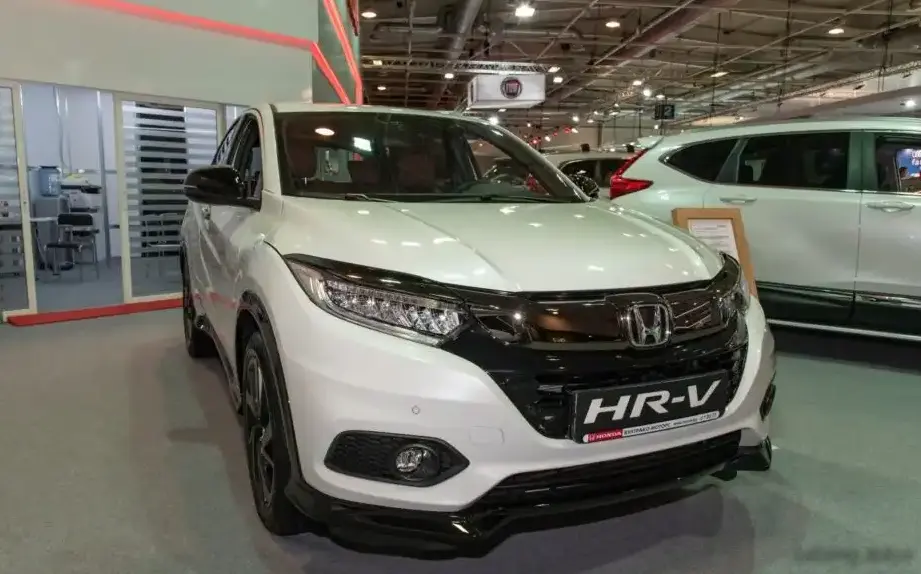
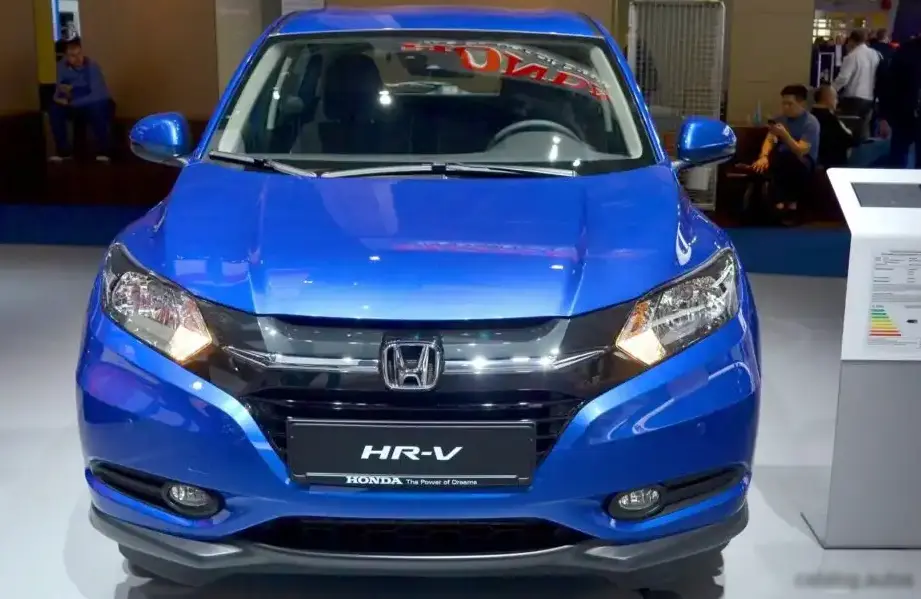
The Honda HR-V 1.6 i-DTEC (120 hp) was introduced as part of the second-generation HR-V (RU) model range, launched in 2015. Built on the Global Small Platform (GSP) – also known as the 1HX0/A3 platform – this HR-V aimed to provide a versatile and economical crossover option. The 1.6 i-DTEC engine was specifically targeted at European buyers who favored diesel powertrains for their fuel efficiency and lower running costs. This variant occupied a mid-range position in the HR-V lineup, offering a balance between performance and economy, slotting below the more powerful petrol options and above the base-level trims.
Powertrain & Engine Architecture
The heart of the HR-V 1.6 i-DTEC is the N16A3 engine, a 1.6-liter inline-four cylinder diesel. This engine is a member of Honda’s Earth Dreams Technology series, designed for improved efficiency and reduced emissions. It features a common-rail direct injection system, delivering fuel at extremely high pressure for optimized combustion. The engine utilizes a single turbocharger with an intercooler to boost power and torque. The valvetrain employs a Double Overhead Camshaft (DOHC) configuration with four valves per cylinder, enhancing breathing and overall engine performance. The 1.6 i-DTEC produced 120 horsepower at 4000 rpm and 300 Nm (221 lb-ft) of torque at 2000 rpm. The engine was paired with a six-speed manual transmission, chosen for its efficiency and driver engagement. While an automatic transmission was available on other HR-V trims, it wasn’t offered with the 1.6 i-DTEC engine.
Driving Characteristics
The 1.6 i-DTEC-equipped HR-V offered a comfortable and refined driving experience, prioritizing fuel economy over outright performance. The 300 Nm of torque available from 2000 rpm provided adequate pulling power for everyday driving and overtaking maneuvers. However, the 120 hp output meant acceleration was not particularly brisk, with a 0-62 mph time of around 10.1 seconds. The six-speed manual transmission allowed drivers to keep the engine in its optimal torque band, maximizing efficiency. Compared to the 1.5-liter petrol versions, the 1.6 i-DTEC offered superior fuel economy and torque, but lacked the petrol engine’s responsiveness. The gear ratios were tuned for economy, meaning the engine could feel slightly strained at higher speeds or when carrying a full load.
Equipment & Trim Levels
The HR-V 1.6 i-DTEC was typically offered in mid-range trim levels, such as SE and ES in the UK market. Standard equipment generally included air conditioning, power windows, central locking, a basic audio system with USB connectivity, and alloy wheels. Higher trim levels added features like climate control, a touchscreen infotainment system, rear parking sensors, and Honda’s Magic Seats – a versatile rear seating configuration that allowed for various cargo-carrying options. Optional extras included navigation systems, panoramic sunroofs, and advanced safety features like Honda Sensing, which included adaptive cruise control and lane departure warning.
Chassis & Braking
The HR-V 1.6 i-DTEC utilized a front-wheel-drive configuration with an independent McPherson strut suspension at the front and a semi-independent torsion beam suspension at the rear. This setup provided a good balance between ride comfort and handling. The front brakes were ventilated discs, while the rear brakes were solid discs. Anti-lock Braking System (ABS) was standard. The suspension was tuned to prioritize comfort, resulting in a slightly softer ride compared to some of its competitors. Stabilizer bars were fitted to both the front and rear axles to reduce body roll during cornering.
Market Reception & Comparison
The HR-V 1.6 i-DTEC was generally well-received by critics for its fuel efficiency and practicality. However, some reviewers noted that the engine lacked the refinement and power of some of its competitors. Compared to the petrol-powered HR-V models, the 1.6 i-DTEC offered significantly better fuel economy, making it an attractive option for high-mileage drivers. Against rivals like the Nissan Juke and Renault Captur, the HR-V 1.6 i-DTEC stood out for its spacious interior and versatile Magic Seats. Reliability reports suggested the 1.6 i-DTEC engine was generally robust, although diesel particulate filter (DPF) issues could occur with frequent short journeys.
Legacy
The Honda HR-V 1.6 i-DTEC remains a popular choice in the used car market, particularly for buyers seeking a fuel-efficient and practical crossover. The N16A3 engine has proven to be relatively reliable, although regular maintenance, including DPF regeneration, is crucial. The HR-V’s spacious interior and versatile seating configuration continue to be highly valued. While Honda has since moved away from offering diesel engines in many of its European models, the 1.6 i-DTEC-powered HR-V represents a significant chapter in the model’s history, catering to a specific market demand for economical and practical transportation.