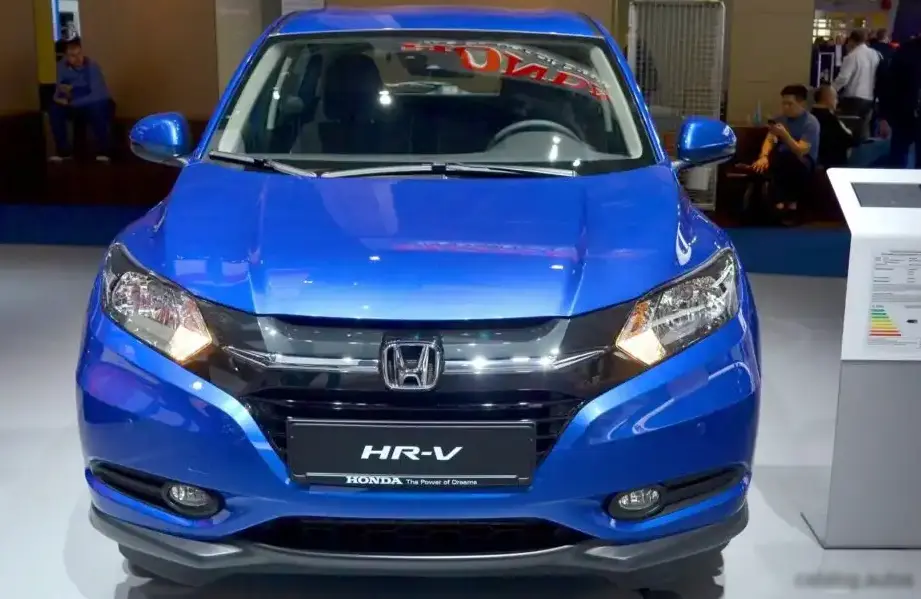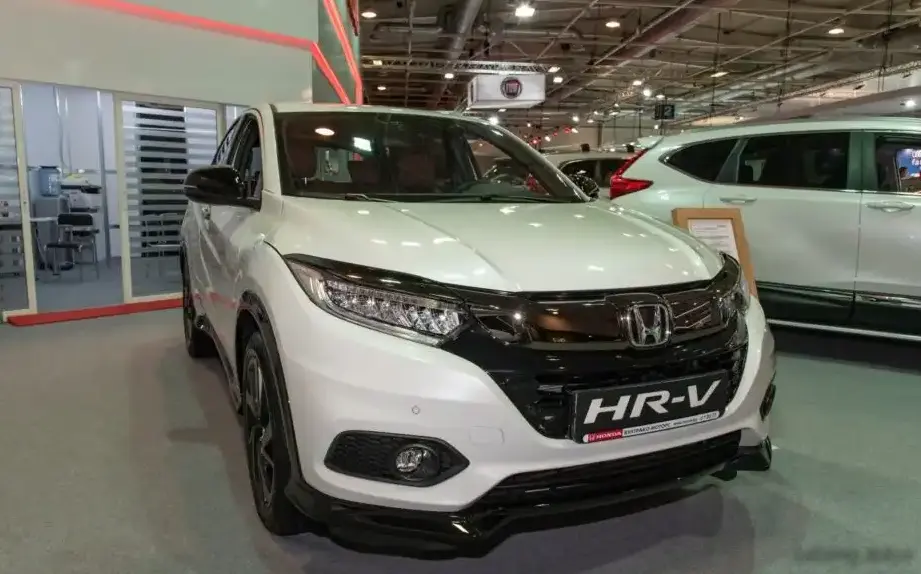
Technical Specifications
| Brand | Honda |
| Model | HR-V |
| Generation | HR-V II (facelift 2018) |
| Type (Engine) | 1.5 i-VTEC (152 Hp) Hybrid DCT |
| Start of production | 2019 |
| End of production | 2020 |
| Powertrain Architecture | FHEV (Full Hybrid Electric Vehicle) |
| Body type | SUV, Crossover |
| Seats | 5 |
| Doors | 5 |
| Fuel Type | Petrol (Gasoline) |
| Weight-to-power ratio | 8.6 kg/Hp, 116.9 Hp/tonne |
| Weight-to-torque ratio | 6.8 kg/Nm, 146.2 Nm/tonne |
| Battery technology | Lithium-ion (Li-Ion) |
| Electric motor power | 30 Hp @ 1313-2000 rpm |
| Electric motor Torque | 160 Nm @ 0-1313 rpm (118.01 lb.-ft. @ 0-1313 rpm) |
| Electric motor location | Integrated into the transmission |
| System power | 152 Hp |
| System torque | 190 Nm (140.14 lb.-ft.) |
| Power | 132 Hp @ 6600 rpm |
| Power per litre | 88.2 Hp/l |
| Torque | 156 Nm @ 4600 rpm (115.06 lb.-ft. @ 4600 rpm) |
| Engine layout | Front, Transverse |
| Engine Model/Code | LEB |
| Engine displacement | 1496 cm3 (91.29 cu. in.) |
| Number of cylinders | 4 |
| Engine configuration | Inline |
| Number of valves per cylinder | 4 |
| Fuel injection system | Direct injection |
| Engine aspiration | Naturally aspirated engine |
| Valvetrain | DOHC, i-VTEC |
| Engine oil capacity | 3.3 l (3.49 US qt | 2.9 UK qt) |
| Coolant | 3.6 l (3.8 US qt | 3.17 UK qt) |
| Kerb Weight | 1300 kg (2866.01 lbs.) |
| Trunk (boot) space – minimum | 404 l (14.27 cu. ft.) |
| Trunk (boot) space – maximum | 991 l (35 cu. ft.) |
| Fuel tank capacity | 50 l (13.21 US gal | 11 UK gal) |
| Length | 4334 mm (170.63 in.) |
| Width | 1772 mm (69.76 in.) |
| Height | 1605 mm (63.19 in.) |
| Wheelbase | 2610 mm (102.76 in.) |
| Front track | 1535 mm (60.43 in.) |
| Rear (Back) track | 1540 mm (60.63 in.) |
| Minimum turning circle (turning diameter) | 11.4 m (37.4 ft.) |
| Drivetrain Architecture | The Internal combustion engine (ICE) and electric motor drive the front wheels of the car with the ability to work in full electric or mixed mode. |
| Drive wheel | Front wheel drive |
| Number of gears and type of gearbox | 7 gears, automatic transmission DCT |
| Front suspension | Independent type McPherson |
| Rear suspension | Torsion |
| Front brakes | Ventilated discs |
| Rear brakes | Disc |
| Assisting systems | ABS (Anti-lock braking system) |
| Steering type | Steering rack and pinion |
| Power steering | Electric Steering |
| Tires size | 215/55 R17 |
| Wheel rims size | 17 |
The 2019-2020 Honda HR-V II 1.5 i-VTEC Hybrid DCT is a front-wheel-drive subcompact crossover that builds upon the foundation of the second-generation HR-V (RU series). The facelifted model, introduced in 2018, brought styling updates and, crucially, the introduction of Honda’s hybrid powertrain option. This variant was designed to offer a compelling blend of practicality, fuel efficiency, and modern technology, targeting urban drivers and small families. It slots into the HR-V range as a mid-range offering, positioned above the base 1.5-liter petrol model but below any potential higher-trim, fully-equipped versions.
Powertrain & Engine Architecture
At the heart of the HR-V 1.5 i-VTEC Hybrid is Honda’s LEB engine, a 1.5-liter inline-four cylinder gasoline engine. This engine utilizes direct injection and Honda’s intelligent Variable Valve Timing and Lift Electronic Control (i-VTEC) system to optimize performance and efficiency. The engine produces 132 horsepower at 6600 rpm and 156 Nm (115.06 lb-ft) of torque at 4600 rpm. However, the system’s total output is 152 horsepower, thanks to the integration of an electric motor. The electric motor, powered by a lithium-ion battery, contributes an additional 30 horsepower and 160 Nm (118.01 lb-ft) of torque. The i-MMD system intelligently switches between electric, gasoline, and combined power modes, optimizing for fuel economy or performance as needed. The transmission is a 7-speed Dual Clutch Transmission (DCT) which is integrated with the electric motor, providing smooth and efficient gear changes. Unlike traditional hybrids, this system doesn’t rely on a conventional planetary gearset; instead, the electric motor directly drives the wheels in many situations, offering a more direct and engaging driving experience.
Driving Characteristics
The 1.5 i-VTEC Hybrid DCT delivers a refined and comfortable driving experience. The electric motor provides instant torque, resulting in brisk acceleration from a standstill. While not a performance-oriented vehicle, the combined 152 horsepower provides adequate power for everyday driving situations. The DCT transmission shifts smoothly and efficiently, contributing to a seamless driving experience. Compared to the standard 1.5-liter petrol version with a manual transmission, the hybrid offers noticeably improved acceleration and fuel economy. The hybrid system’s ability to operate in electric-only mode at lower speeds results in near-silent operation and zero emissions in urban environments. The gear ratios are tuned for efficiency, prioritizing fuel economy over outright performance. The steering is light and precise, making it easy to maneuver in city traffic. However, some drivers may find the steering lacking in feedback at higher speeds.
Equipment & Trim Levels
The HR-V 1.5 i-VTEC Hybrid DCT typically came equipped with a generous array of standard features. These included automatic climate control, a touchscreen infotainment system with smartphone integration (Apple CarPlay and Android Auto), Honda Sensing safety suite (including adaptive cruise control, lane departure warning, and collision mitigation braking system), and alloy wheels. Interior upholstery was typically cloth, with options for leather upgrades available on higher trim levels. Optional extras could include a sunroof, upgraded audio system, and parking sensors. The dashboard layout was clean and modern, with a focus on usability. Trim levels varied slightly depending on the market, but generally, the hybrid variant was offered in well-equipped trims that prioritized comfort and convenience.
Chassis & Braking
The HR-V II utilizes a McPherson strut front suspension and a torsion beam rear suspension. This setup provides a good balance between ride comfort and handling. The torsion beam rear suspension is a cost-effective solution that minimizes space requirements. The front brakes are ventilated discs, while the rear brakes are solid discs, providing adequate stopping power for the vehicle’s weight. The HR-V is equipped with an Anti-lock Braking System (ABS) and Electronic Brake-force Distribution (EBD) as standard safety features. The electric power steering system provides light and precise steering feel. The vehicle’s relatively low weight, thanks in part to the hybrid system’s components, contributes to its agile handling characteristics.
Market Reception & Comparison
The Honda HR-V 1.5 i-VTEC Hybrid DCT was generally well-received by automotive critics. Reviewers praised its fuel efficiency, smooth ride, and refined powertrain. The hybrid system’s ability to operate in electric-only mode was a significant selling point, particularly in urban environments. Compared to the standard 1.5-liter petrol version, the hybrid offered superior fuel economy and slightly improved performance. However, some critics noted that the hybrid system added to the vehicle’s overall weight, which slightly impacted handling. Compared to other hybrid crossovers in the same segment, the HR-V offered a competitive combination of price, features, and fuel efficiency. Reliability reports have been generally positive, with the Honda hybrid system proving to be durable and dependable.
Legacy
The Honda HR-V II 1.5 i-VTEC Hybrid DCT represents an important step in Honda’s electrification strategy. The i-MMD hybrid system showcased Honda’s innovative approach to hybrid technology, offering a unique and engaging driving experience. On the used car market, these models hold their value well, thanks to their fuel efficiency, reliability, and modern features. The powertrain has proven to be durable, with many examples exceeding 100,000 miles without major issues. The HR-V Hybrid remains a popular choice for buyers seeking a practical, economical, and environmentally friendly subcompact crossover.