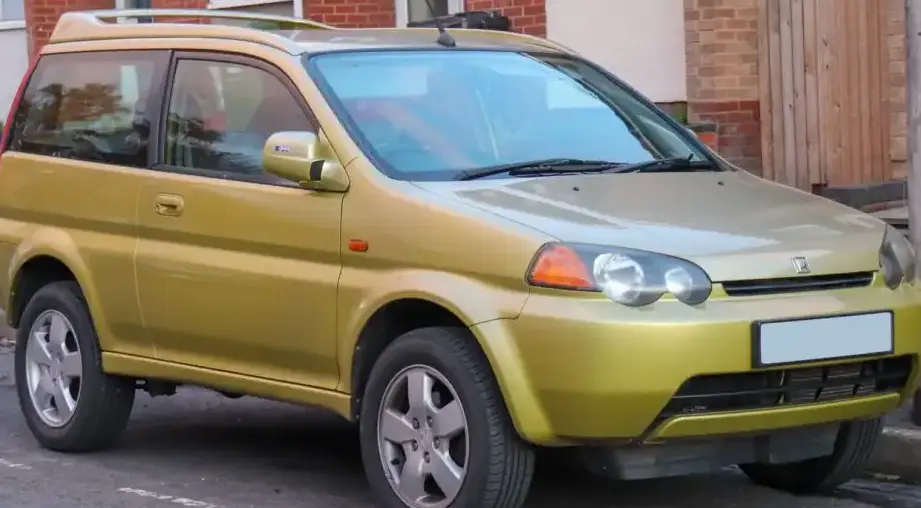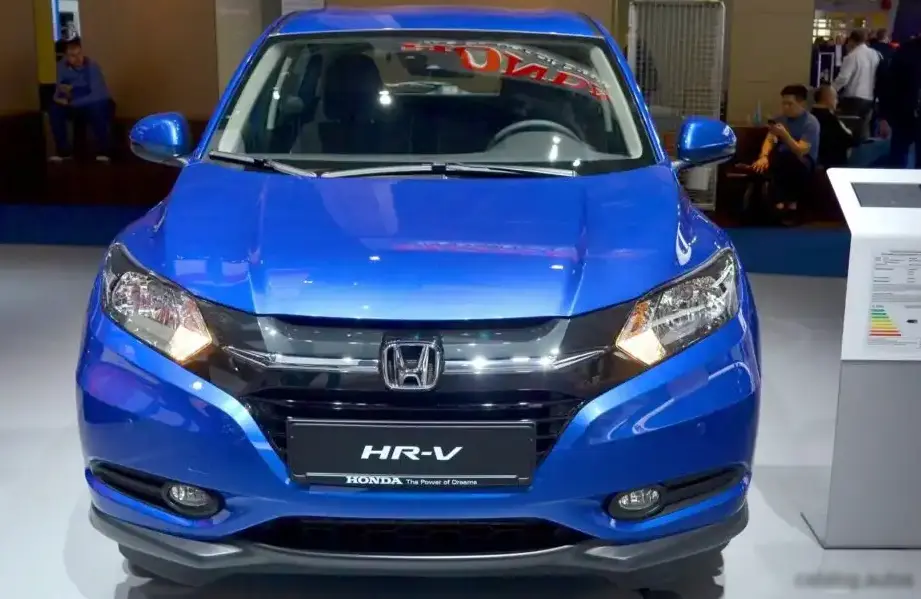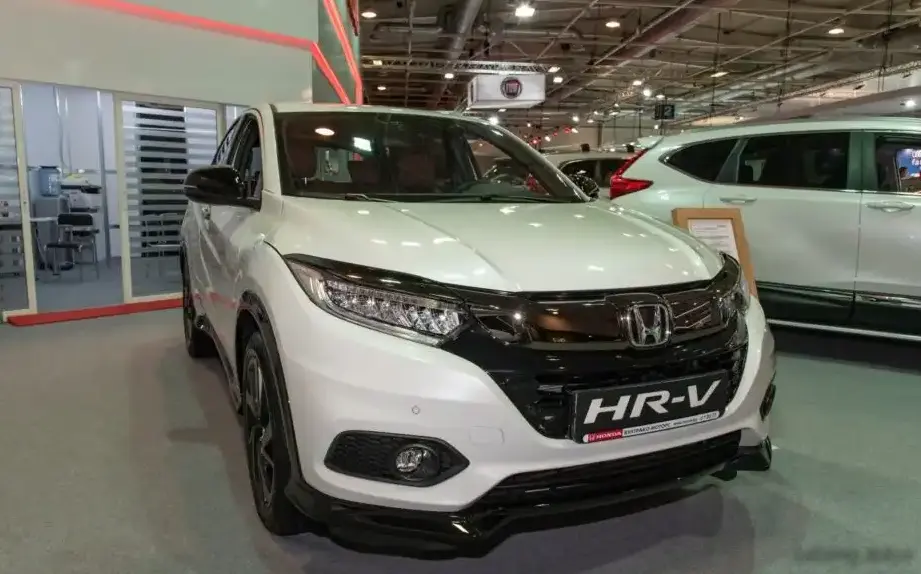
The Honda HR-V II, specifically the facelifted version introduced in 2018, represented Honda’s entry into the increasingly popular subcompact crossover SUV segment in global markets. The “Sport” trim, powered by the 1.8-liter i-VTEC engine paired with a Continuously Variable Transmission (CVT), was offered from 2018 through 2022. This variant aimed to provide a balance between fuel efficiency, practicality, and a slightly more engaging driving experience than the base models. Positioned as a mid-range offering, the Sport trim slotted between the base LX and the more premium EX and EX-L trims, offering a compelling value proposition for buyers seeking a versatile and modern vehicle.
Technical Specifications
| Brand | Honda |
| Model | HR-V |
| Generation | HR-V II (facelift 2018) |
| Type | Sport 1.8 i-VTEC (141 Hp) CVT |
| Start of production | 2018 |
| End of production | 2022 |
| Powertrain Architecture | Internal Combustion engine |
| Body type | SUV, Crossover |
| Seats | 5 |
| Doors | 5 |
| Fuel consumption (urban) | 8.4 l/100 km (28 US mpg) |
| Fuel consumption (extra urban) | 6.9 l/100 km (34.1 US mpg) |
| Fuel consumption (combined) | 7.8 l/100 km (30.2 US mpg) |
| Fuel Type | Petrol (Gasoline) |
| Weight-to-power ratio | 9.4 kg/Hp |
| Weight-to-torque ratio | 7.7 kg/Nm |
| Power | 141 Hp @ 6500 rpm |
| Torque | 172 Nm @ 4300 rpm (126.86 lb.-ft. @ 4300 rpm) |
| Maximum engine speed | 6700 rpm |
| Engine layout | Front, Transverse |
| Engine Model/Code | R18Z9 |
| Engine displacement | 1799 cm3 (109.78 cu. in.) |
| Number of cylinders | 4 |
| Engine configuration | Inline |
| Cylinder Bore | 81 mm (3.19 in.) |
| Piston Stroke | 87.3 mm (3.44 in.) |
| Compression ratio | 10.6:1 |
| Number of valves per cylinder | 4 |
| Fuel injection system | Multi-port manifold injection |
| Engine aspiration | Naturally aspirated |
| Valvetrain | SOHC i-VTEC |
| Engine oil capacity | 3.7 l (3.91 US qt | 3.26 UK qt) |
| Coolant capacity | 5.25 l (5.55 US qt | 4.62 UK qt) |
| Kerb Weight | 1328 kg (2927.74 lbs.) |
| Trunk (boot) space (minimum) | 688 l (24.3 cu. ft.) |
| Trunk (boot) space (maximum) | 1665 l (58.8 cu. ft.) |
| Fuel tank capacity | 50 l (13.21 US gal | 11 UK gal) |
| Length | 4341 mm (170.91 in.) |
| Width | 1791 mm (70.51 in.) |
| Height | 1605 mm (63.19 in.) |
| Wheelbase | 2611 mm (102.8 in.) |
| Front track | 1537 mm (60.51 in.) |
| Rear track | 1539 mm (60.59 in.) |
| Ride height (ground clearance) | 188 mm (7.4 in.) |
| Minimum turning circle | 11.7 m (38.39 ft.) |
| Drivetrain | Front wheel drive |
| Gearbox | CVT (Continuously Variable Transmission) |
| Front suspension | Independent, McPherson with coil spring and anti-roll bar |
| Rear suspension | Semi-independent, coil spring |
| Front brakes | Ventilated discs |
| Rear brakes | Disc |
| Tire size | 225/50 R18 95V |
| Wheel rims size | 18 inches |
Powertrain & Engine Architecture
The heart of the HR-V Sport 1.8 i-VTEC is the R18Z9 engine, a 1.8-liter inline-four cylinder gasoline engine. This engine is part of Honda’s K-series family, known for its reliability and efficiency. The “i-VTEC” system (intelligent Variable valve Timing and Lift Electronic Control) optimizes valve timing and lift based on engine speed and load, improving both fuel economy and performance. The R18Z9 utilizes a multi-point fuel injection system, delivering fuel directly into the intake ports. The engine produces 141 horsepower at 6500 rpm and 172 Nm (126.86 lb-ft) of torque at 4300 rpm. Paired with this engine is a Continuously Variable Transmission (CVT). Unlike traditional automatic transmissions with fixed gear ratios, a CVT provides a seamless and continuously changing gear ratio, optimizing engine efficiency and responsiveness.
Driving Characteristics
The 1.8L i-VTEC engine with the CVT delivers adequate performance for everyday driving. Acceleration is smooth and linear, though not particularly brisk. The CVT is programmed to mimic traditional gear shifts under hard acceleration, providing a more familiar driving experience. Compared to the manual transmission options available in some markets, the CVT prioritizes fuel efficiency over outright performance. The CVT also tends to hold higher engine RPMs during acceleration, which can result in a somewhat droning engine note. The HR-V Sport’s suspension is tuned for comfort, providing a relatively smooth ride over most road surfaces. However, it’s not a particularly sporty vehicle, with noticeable body roll during cornering.
Equipment & Trim Levels
The HR-V Sport trim included several standard features designed to enhance comfort and convenience. These typically included alloy wheels, a leather-wrapped steering wheel, automatic climate control, a touchscreen infotainment system with Apple CarPlay and Android Auto compatibility, and a rearview camera. Optional extras often included a sunroof, upgraded audio system, and Honda Sensing suite of safety features, which included adaptive cruise control, lane departure warning, and collision mitigation braking system. Interior upholstery was typically a combination of cloth and soft-touch materials, offering a comfortable and durable cabin environment.
Chassis & Braking
The HR-V II utilizes a front-wheel-drive platform with an independent McPherson strut suspension in the front and a semi-independent torsion beam suspension in the rear. This setup provides a good balance between ride comfort and handling. The Sport trim typically featured ventilated disc brakes in the front and solid disc brakes in the rear. Anti-lock Braking System (ABS) was standard, enhancing braking performance and stability. The steering system is an electric power-assisted rack and pinion system, providing light and responsive steering feel.
Market Reception & Comparison
The HR-V Sport 1.8 i-VTEC CVT was generally well-received by automotive critics as a practical and fuel-efficient crossover. Reviewers praised its spacious interior, versatile cargo area, and comfortable ride. However, some criticized its lack of outright performance and the sometimes-unrefined feel of the CVT. Compared to other trims in the HR-V lineup, the Sport offered a slightly more engaging driving experience and a more comprehensive set of standard features. Against competitors like the Mazda CX-3 and Toyota C-HR, the HR-V Sport stood out for its spaciousness and practicality, though it didn’t quite match the sporty handling of the Mazda or the distinctive styling of the Toyota.
Legacy
The R18Z9 engine and the CVT transmission used in the HR-V Sport have proven to be relatively reliable in long-term ownership. While CVTs have historically been associated with reliability concerns, Honda’s CVT design has generally been more durable than those found in some other manufacturers’ vehicles. Common maintenance items include regular oil changes, CVT fluid changes, and spark plug replacements. On the used car market, the HR-V Sport 1.8 i-VTEC CVT remains a popular choice for buyers seeking a fuel-efficient, practical, and reliable subcompact crossover. Its reputation for dependability and relatively low running costs contribute to its continued appeal.