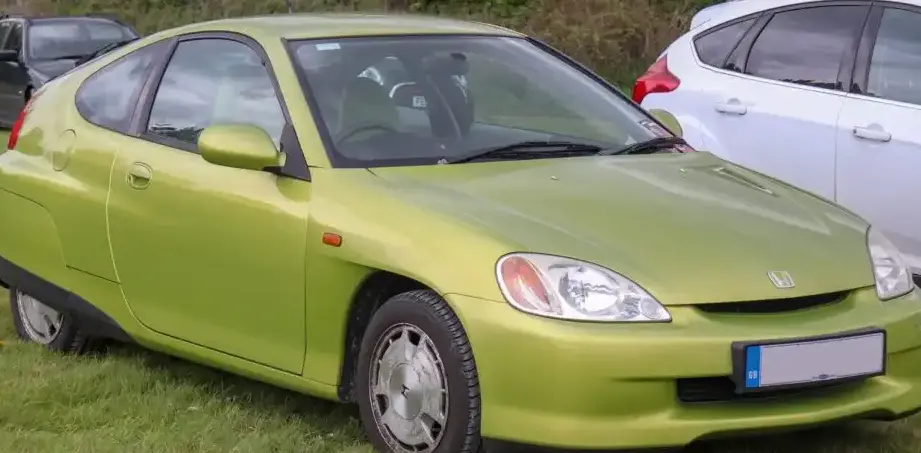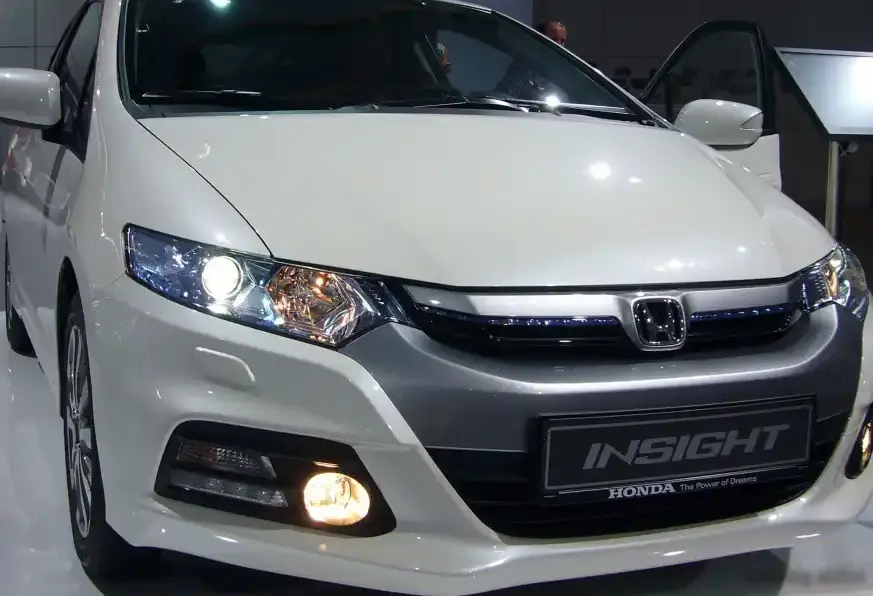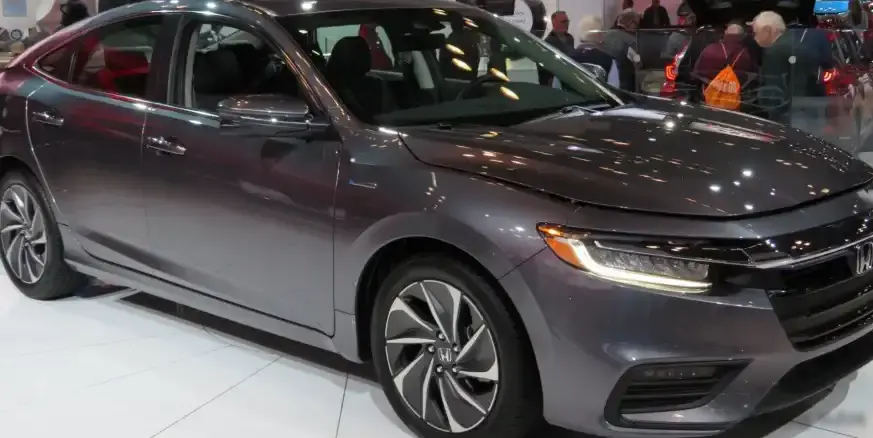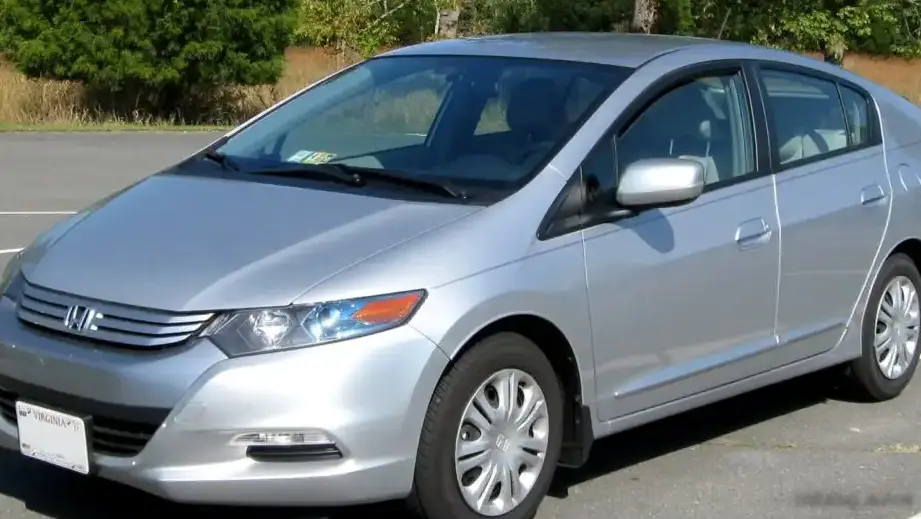
The Honda Insight II 1.3 i-VTEC (88 hp) Hybrid CVT, produced from 2009 to 2011, represents Honda’s second attempt at a dedicated hybrid vehicle, following the original Insight. This second-generation model moved away from the distinctive two-seater design of its predecessor, adopting a more conventional five-door hatchback body style aimed at a broader market. Positioned as an economy-focused vehicle, the 1.3 i-VTEC variant served as the entry point to the Insight II lineup, prioritizing fuel efficiency over outright performance. It was primarily sold in European and Asian markets, where demand for fuel-efficient vehicles was high, though limited numbers were also available in North America. The Insight II utilized Honda’s Integrated Motor Assist (IMA) hybrid technology, combining a gasoline engine with an electric motor to achieve improved fuel economy and reduced emissions.
Technical Specifications
| Brand | Honda |
| Model | Insight |
| Generation | Insight II |
| Type (Engine) | 1.3 i-VTEC (88 Hp) Hybrid CVT |
| Start of production | 2009 |
| End of production | 2011 |
| Powertrain Architecture | FHEV (Full Hybrid Electric Vehicle) |
| Body type | Hatchback |
| Seats | 5 |
| Doors | 5 |
| Fuel consumption (urban) | 4.7 l/100 km (50 US mpg, 60.1 UK mpg, 21.3 km/l) |
| Fuel consumption (extra urban) | 4.5 l/100 km (52.3 US mpg, 62.8 UK mpg, 22.2 km/l) |
| Fuel consumption (combined) | 4.6 l/100 km (51.1 US mpg, 61.4 UK mpg, 21.7 km/l) |
| Fuel Type | Petrol (Gasoline) |
| Acceleration 0 – 100 km/h | 10.7 sec |
| Acceleration 0 – 62 mph | 10.7 sec |
| Acceleration 0 – 60 mph | 10.2 sec |
| Maximum speed | 182 km/h (113.09 mph) |
| Emission standard | Euro 5 |
| Weight-to-power ratio | 13.7 kg/Hp, 73.1 Hp/tonne |
| Weight-to-torque ratio | 10 kg/Nm, 100.5 Nm/tonne |
| Power | 88 Hp @ 5800 rpm |
| Power per litre | 65.7 Hp/l |
| Torque | 121 Nm @ 4500 rpm (89.25 lb.-ft. @ 4500 rpm) |
| Engine layout | Front, Transverse |
| Engine Model/Code | LDA3 |
| Engine displacement | 1339 cm3 (81.71 cu. in.) |
| Number of cylinders | 4 |
| Engine configuration | Inline |
| Compression ratio | 10.8:1 |
| Number of valves per cylinder | 2 |
| Fuel injection system | Multi-port manifold injection |
| Valvetrain | SOHC |
| Engine oil capacity | 3.2 l (3.38 US qt | 2.82 UK qt) |
| Coolant capacity | 4.55 l (4.81 US qt | 4 UK qt) |
| Kerb Weight | 1204 kg (2654.37 lbs) |
| Trunk (boot) space – minimum | 408 l (14.41 cu. ft) |
| Fuel tank capacity | 40 l (10.57 US gal | 8.8 UK gal) |
| Length | 4396 mm (173.07 in) |
| Width | 1695 mm (66.73 in) |
| Height | 1425 mm (56.1 in) |
| Wheelbase | 2550 mm (100.39 in) |
| Minimum turning circle | 10.4 m (34.12 ft) |
| Drivetrain Architecture | The Internal combustion engine (ICE) and electric motor drive the front wheels of the car with the ability to work in full electric or mixed mode. |
| Drive wheel | Front wheel drive |
| Number of gears and type of gearbox | automatic transmission CVT |
| Front suspension | Independent, type McPherson with coil spring and anti-roll bar |
| Rear suspension | Torsion |
| Front brakes | Ventilated discs |
| Rear brakes | Disc |
| Assisting systems | ABS (Anti-lock braking system) |
| Steering type | Steering rack and pinion |
| Tires size | 175/65 R15 |
| Wheel rims size | 15 |
Powertrain & Engine Architecture
The heart of the Insight II 1.3 i-VTEC is the LDA3 engine, a 1.3-liter inline-four cylinder gasoline engine. This engine utilizes Honda’s i-VTEC (Variable Valve Timing and Lift Electronic Control) technology to optimize engine performance and fuel efficiency across a wide range of engine speeds. The LDA3 engine features a single overhead camshaft (SOHC) design and multi-point fuel injection. The engine produces 88 horsepower at 5800 rpm and 121 Nm (89.25 lb-ft) of torque at 4500 rpm. This engine is paired with Honda’s Integrated Motor Assist (IMA) system, which incorporates a 10kW (13 hp) electric motor. The IMA system provides assistance during acceleration and allows for short periods of electric-only driving. Power is delivered to the front wheels through a Continuously Variable Transmission (CVT), chosen specifically for its efficiency and smooth power delivery. The CVT lacks fixed gear ratios, instead utilizing a belt and pulley system to provide a seamless range of ratios, keeping the engine operating in its most efficient zone.
Driving Characteristics
The 1.3 i-VTEC Hybrid CVT variant of the Insight II offers a driving experience focused on efficiency and comfort rather than sporty performance. Acceleration from 0-60 mph takes approximately 10.2 seconds, and top speed is limited to 113.09 mph. The CVT transmission contributes to a smooth, linear acceleration feel, but can sometimes feel less responsive than a traditional automatic transmission, particularly during quick overtaking maneuvers. The electric motor provides a noticeable boost during initial acceleration, helping to compensate for the relatively low engine output. The Insight II’s suspension is tuned for comfort, providing a compliant ride over most road surfaces. Steering feel is light and precise, making it easy to maneuver in urban environments. Compared to higher-trim Insight II models with more powerful engines, the 1.3 i-VTEC feels noticeably slower, but its fuel economy advantage is significant.
Equipment & Trim Levels
The 1.3 i-VTEC Hybrid CVT typically came with a reasonable level of standard equipment. Features generally included air conditioning, power windows and locks, a basic audio system with CD player, and ABS brakes. Interior upholstery was typically cloth, and the dashboard featured a simple, functional design. Optional extras available for this trim level included alloy wheels, a navigation system, and upgraded audio systems. The Insight II’s interior prioritized practicality and space efficiency, with a relatively spacious cabin for its size. The rear seats offered adequate legroom for passengers, and the hatchback body style provided a useful amount of cargo space.
Chassis & Braking
The Insight II utilizes a McPherson strut front suspension with a torsion beam rear suspension. This setup provides a good balance of ride comfort and handling. The front suspension incorporates a stabilizer bar to reduce body roll during cornering. Braking duties are handled by ventilated discs at the front and solid discs at the rear. The ABS (Anti-lock Braking System) is standard, enhancing braking performance and stability in emergency situations. The relatively lightweight construction of the Insight II, at 1204 kg (2654.37 lbs), contributes to its fuel efficiency and helps to offset the modest engine output.
Market Reception & Comparison
The Honda Insight II 1.3 i-VTEC Hybrid CVT was generally well-received by critics for its exceptional fuel economy and comfortable ride. However, some reviewers criticized its lack of performance and the somewhat uninspiring driving experience. Compared to other hybrid vehicles available at the time, such as the Toyota Prius, the Insight II offered a more affordable price point but lacked the Prius’s established reputation and more refined hybrid system. Within the Insight II lineup, the 1.3 i-VTEC was positioned as the entry-level model, appealing to budget-conscious buyers who prioritized fuel efficiency above all else. Higher-trim models with more powerful engines offered improved performance but came at a higher cost and with slightly reduced fuel economy.
Legacy
The Honda Insight II 1.3 i-VTEC Hybrid CVT has proven to be a relatively reliable vehicle, with the hybrid powertrain generally holding up well over time. The LDA3 engine is known for its durability, and the CVT transmission, while sometimes criticized for its feel, has also proven to be reasonably reliable with proper maintenance. In the used car market, the Insight II 1.3 i-VTEC remains an attractive option for buyers seeking a fuel-efficient and affordable vehicle. However, potential buyers should be aware of the importance of maintaining the hybrid system, including regular battery checks and fluid changes. The Insight II played an important role in popularizing hybrid technology and paved the way for Honda’s continued development of fuel-efficient vehicles.