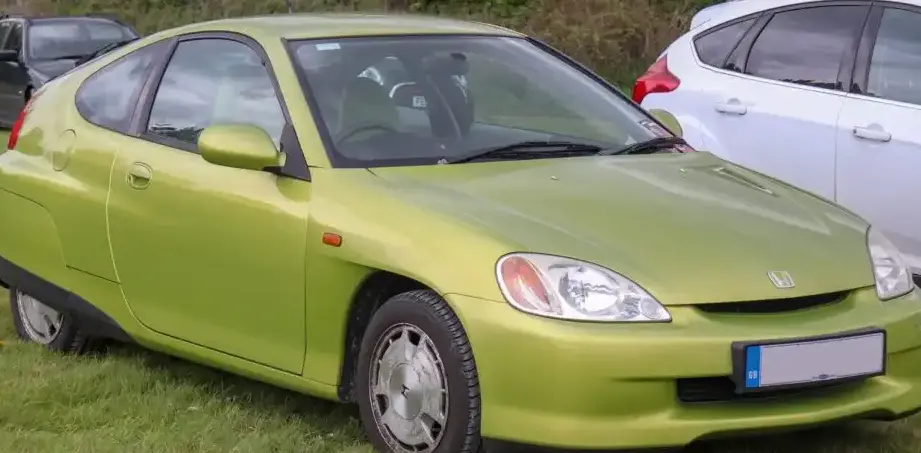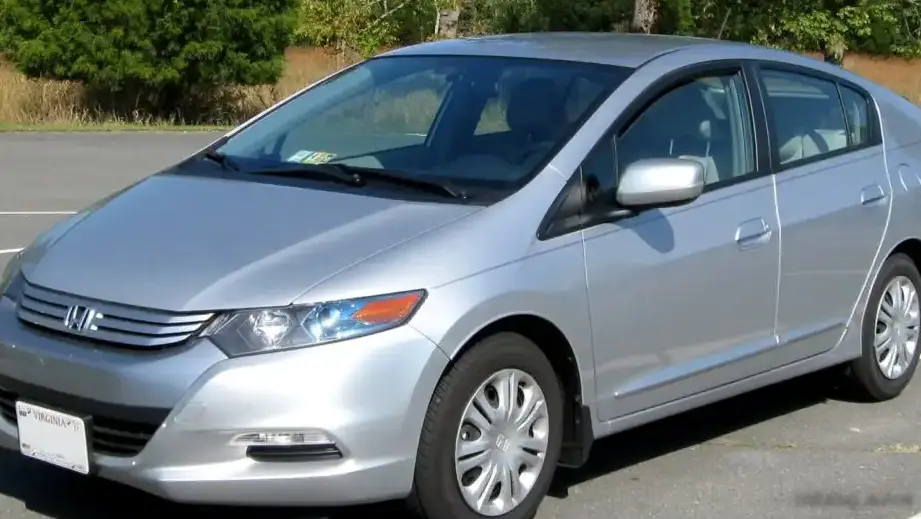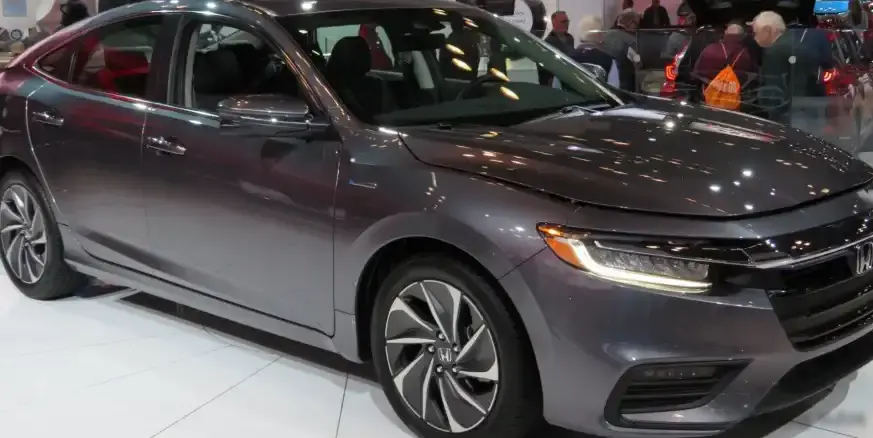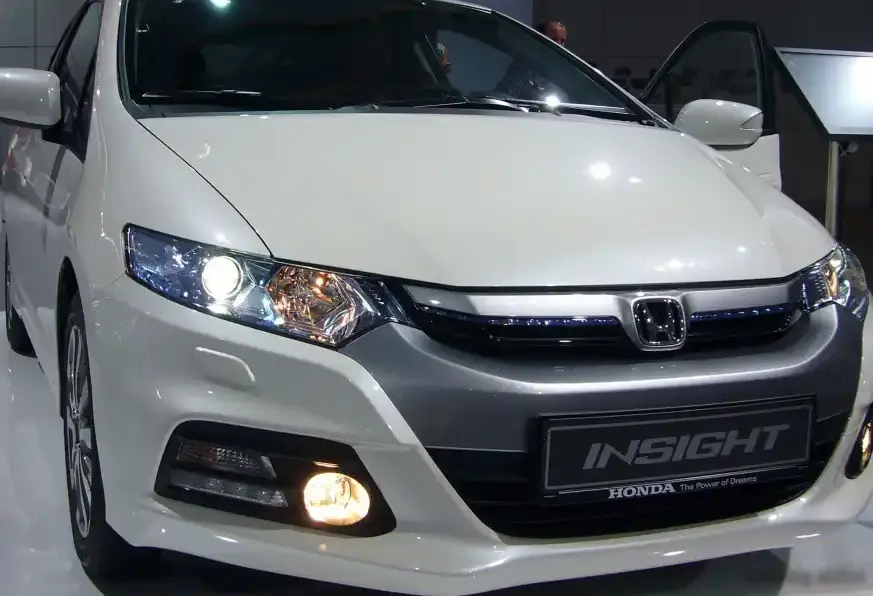
The Honda Insight II, particularly the facelifted version introduced in 2012, represented Honda’s second attempt at a dedicated hybrid vehicle. Positioned as a more affordable and practical alternative to the Toyota Prius, the Insight II aimed to deliver exceptional fuel economy without sacrificing everyday usability. This specific variant, the 1.3-liter (98 horsepower) model paired with a Continuously Variable Transmission (CVT), was a core offering in many markets, including Europe and Asia, though it wasn’t initially sold in the United States. Production of this facelifted model ran from 2012 to 2014, building upon the foundation laid by the original Insight (2000-2006) and utilizing the global Honda Fit/Jazz platform. It competed directly with other subcompact hybrids and fuel-efficient gasoline vehicles.
Technical Specifications
| Brand | Honda |
| Model | Insight |
| Generation | Insight II (facelift 2012) |
| Type (Engine) | 1.3 (98 Hp) Hybrid CVT |
| Start of production | 2012 |
| End of production | 2014 |
| Powertrain Architecture | FHEV (Full Hybrid Electric Vehicle) |
| Body type | Hatchback |
| Seats | 5 |
| Doors | 5 |
| Fuel consumption (urban) | 4.3 l/100 km (54.7 US mpg, 65.7 UK mpg, 23.3 km/l) |
| Fuel consumption (extra urban) | 4 l/100 km (58.8 US mpg, 70.6 UK mpg, 25 km/l) |
| Fuel consumption (combined) | 4.1 l/100 km (57.4 US mpg, 68.9 UK mpg, 24.4 km/l) |
| CO2 emissions | 96 g/km |
| Fuel Type | Petrol (Gasoline) |
| Acceleration 0 – 100 km/h | 12.5 sec |
| Acceleration 0 – 62 mph | 12.5 sec |
| Acceleration 0 – 60 mph | 11.9 sec |
| Maximum speed | 182 km/h (113.09 mph) |
| Emission standard | Euro 5 |
| Weight-to-power ratio | 12.7 kg/Hp, 78.8 Hp/tonne |
| Weight-to-torque ratio | 7.4 kg/Nm, 134.4 Nm/tonne |
| Gross battery capacity | 0.58 kWh |
| Battery voltage | 100.8 V |
| Battery technology | Nickel-metal hydride (NiMH) |
| Electric motor power | 13 Hp @ 1500 rpm |
| Electric motor Torque | 79 Nm @ 1000 rpm (58.27 lb.-ft. @ 1000 rpm) |
| System power | 98 Hp @ 5800 rpm |
| System torque | 167 Nm @ 1000-1700 rpm (123.17 lb.-ft. @ 1000-1700 rpm) |
| Engine Power | 88 Hp @ 5800 rpm |
| Engine Torque | 121 Nm @ 4500 rpm (89.25 lb.-ft. @ 4500 rpm) |
| Engine layout | Front, Transverse |
| Engine Model/Code | LDA3 |
| Engine displacement | 1339 cm3 (81.71 cu. in.) |
| Number of cylinders | 4 |
| Engine configuration | Inline |
| Cylinder Bore | 73 mm (2.87 in.) |
| Piston Stroke | 80 mm (3.15 in.) |
| Compression ratio | 10.8:1 |
| Number of valves per cylinder | 2 |
| Fuel injection system | Multi-port manifold injection |
| Engine aspiration | Naturally aspirated engine |
| Valvetrain | SOHC, i-VTEC |
| Engine oil capacity | 3.2 l (3.38 US qt | 2.82 UK qt) |
| Coolant capacity | 4.41 l (4.66 US qt | 3.88 UK qt) |
| Kerb Weight | 1243 kg (2740.35 lbs.) |
| Max. weight | 1650 kg (3637.63 lbs.) |
| Max load | 407 kg (897.28 lbs.) |
| Trunk (boot) space – minimum | 408 l (14.41 cu. ft.) |
| Trunk (boot) space – maximum | 584 l (20.62 cu. ft.) |
| Fuel tank capacity | 40 l (10.57 US gal | 8.8 UK gal) |
| Max. roof load | 50 kg (110.23 lbs.) |
| Length | 4395 mm (173.03 in.) |
| Width | 1695 mm (66.73 in.) |
| Height | 1425 mm (56.1 in.) |
| Wheelbase | 2545 mm (100.2 in.) |
| Front track | 1495 mm (58.86 in.) |
| Rear track | 1475 mm (58.07 in.) |
| Ride height (ground clearance) | 125 mm (4.92 in.) |
| Drag coefficient (Cd) | 0.32 |
| Minimum turning circle | 11.1 m (36.42 ft.) |
| Drivetrain Architecture | The Internal combustion engine (ICE) and electric motor drive the front wheels of the car with the ability to work in full electric or mixed mode. |
| Drive wheel | Front wheel drive |
| Number of gears and type of gearbox | automatic transmission CVT |
| Front suspension | Independent, type McPherson with coil spring and anti-roll bar |
| Rear suspension | Torsion |
| Front brakes | Ventilated discs |
| Rear brakes | Disc |
| Assisting systems | ABS (Anti-lock braking system) |
| Steering type | Steering rack and pinion |
| Power steering | Electric Steering |
| Tires size | 185/65 R15; 185/55 R16 |
| Wheel rims size | 15; 16 |
Powertrain & Engine Architecture
The 2012-2014 Honda Insight II 1.3 Hybrid utilizes Honda’s Integrated Motor Assist (IMA) hybrid system. The core of the powertrain is the 1.3-liter LDA3 inline-four cylinder gasoline engine. This engine, producing 88 horsepower, is coupled with a 13-horsepower electric motor. The combined system output is 98 horsepower and 123 lb-ft of torque. The LDA3 engine features a single overhead camshaft (SOHC) design with Honda’s i-VTEC variable valve timing system, optimizing efficiency and power delivery. Fuel is delivered via multi-point fuel injection. The electric motor is integrated directly into the drivetrain, assisting the gasoline engine during acceleration and allowing for short periods of electric-only driving. The CVT (Continuously Variable Transmission) is specifically tuned for hybrid applications, prioritizing fuel efficiency over sporty acceleration. The battery pack, a 100.8V Nickel-Metal Hydride (NiMH) unit with a gross capacity of 0.58 kWh, is located under the rear seats.
Driving Characteristics
The 1.3-liter Hybrid CVT Insight II prioritizes fuel economy above all else. Acceleration is modest, taking approximately 12.5 seconds to reach 60 mph. The CVT transmission contributes to smooth, seamless acceleration, but it lacks the responsiveness of a traditional automatic or manual gearbox. The electric motor provides a noticeable boost during initial acceleration, helping to mitigate the engine’s lack of low-end torque. In typical driving conditions, the transition between gasoline and electric power is nearly imperceptible. The Insight II feels light and nimble in city driving, but can feel strained when attempting to accelerate quickly on the highway. Compared to higher-trim Insights with more powerful engines, this variant offers a more economical but less engaging driving experience.
Equipment & Trim Levels
The 1.3 Hybrid CVT trim generally represented the entry-level offering for the Insight II. Standard features typically included air conditioning, power windows and locks, a basic audio system with USB connectivity, and ABS brakes. Interior upholstery was typically cloth. Optional extras often included alloy wheels, a more advanced audio system with navigation, and a rearview camera. The dashboard layout was functional and straightforward, with a prominent digital display providing information about fuel economy and hybrid system operation.
Chassis & Braking
The Insight II utilizes a front-wheel-drive layout with a McPherson strut front suspension and a torsion beam rear suspension. This setup provides a comfortable ride quality, but doesn’t offer the same level of handling precision as more sophisticated suspension designs. Brakes are ventilated discs at the front and solid discs at the rear. ABS (Anti-lock Braking System) is standard. The relatively lightweight construction of the Insight II helps to compensate for the modest braking performance.
Market Reception & Comparison
The 2012-2014 Honda Insight II 1.3 Hybrid CVT was generally well-received by critics for its exceptional fuel economy and practicality. However, some reviewers criticized its lackluster acceleration and somewhat basic interior. Compared to the Toyota Prius, the Insight II offered a lower price point but lacked the Prius’s established reputation and more refined hybrid system. Against other subcompact gasoline vehicles, the Insight II offered significantly better fuel economy, but at a higher initial cost. Reliability was generally good, with the hybrid system proving to be durable over the long term.
Legacy
The Honda Insight II, and specifically the 1.3 Hybrid CVT variant, remains a popular choice in the used car market for buyers seeking a fuel-efficient and reliable vehicle. The powertrain has proven to be relatively durable, with many examples exceeding 150,000 miles with proper maintenance. The NiMH battery pack is a potential maintenance item, but typically lasts for 8-10 years or more. The Insight II helped to popularize hybrid technology and paved the way for Honda’s subsequent hybrid offerings. While not a performance car, it provided a practical and economical transportation solution for a wide range of drivers.