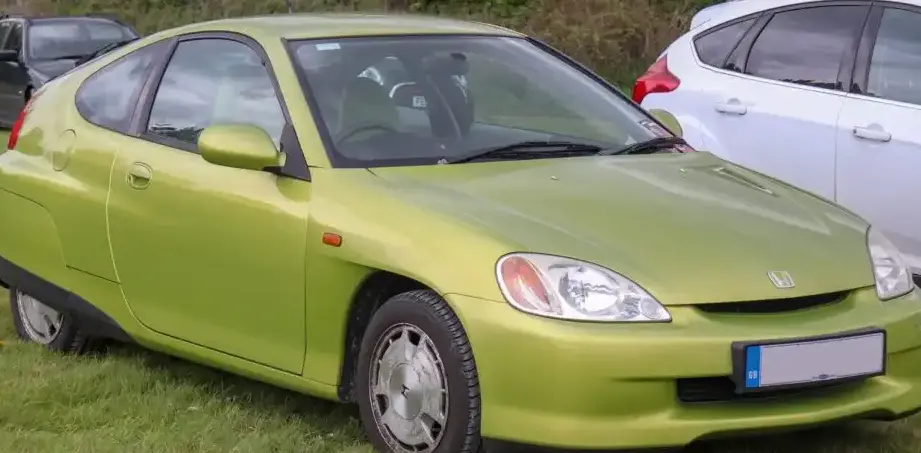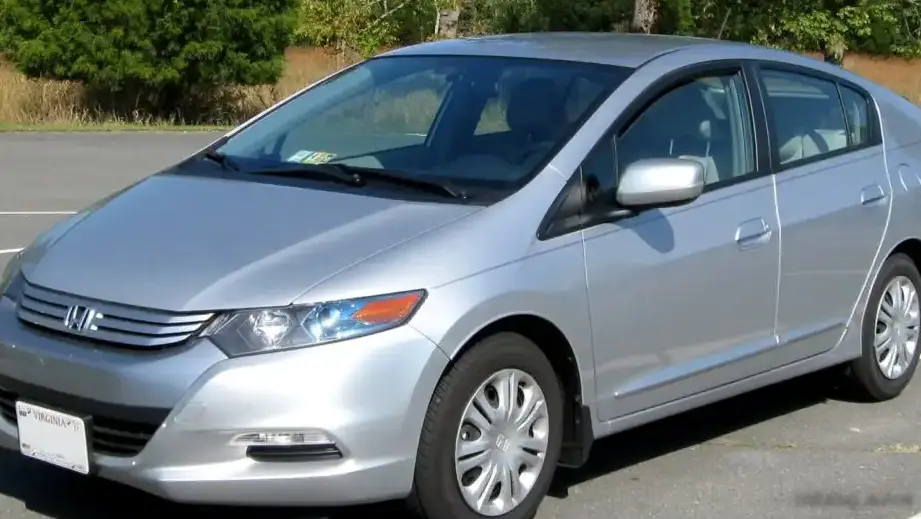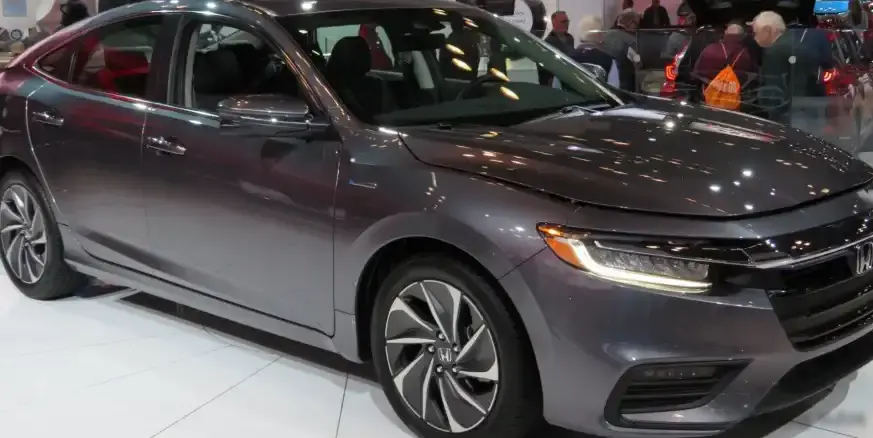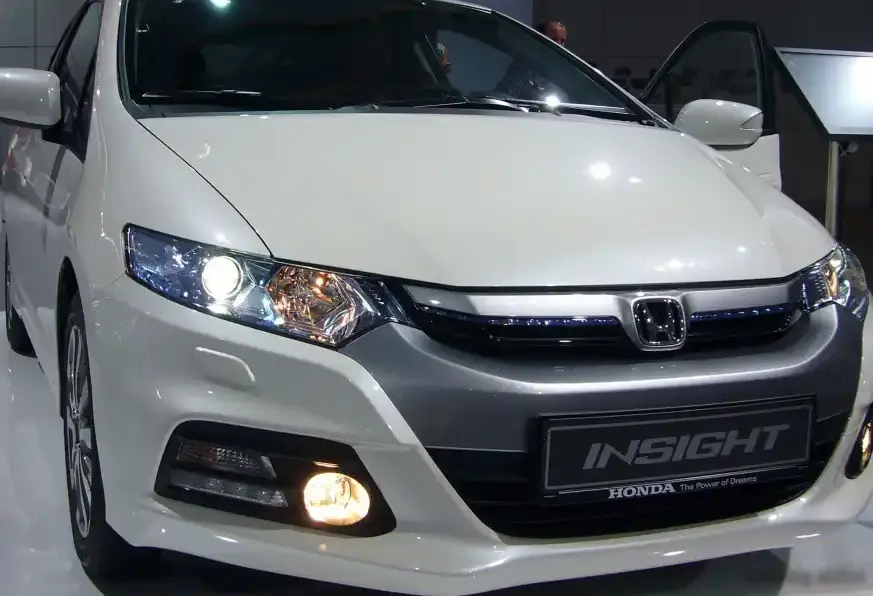
The Honda Insight II, particularly the facelifted model produced from 2012 to 2014, represented Honda’s second-generation attempt at a dedicated hybrid vehicle. Positioned as a more affordable and practical alternative to the Toyota Prius, the Insight II utilized Honda’s Integrated Motor Assist (IMA) hybrid technology. The 1.5-liter (122 hp) Hybrid CVT variant was a core offering within the lineup, aiming to balance fuel efficiency with acceptable performance for everyday driving. This model year saw a refresh to the original Insight II design, with minor cosmetic and equipment updates. It competed directly with other hybrid hatchbacks and compact cars, appealing to environmentally conscious consumers seeking a fuel-efficient and reliable vehicle.
Technical Specifications
| Brand | Honda |
| Model | Insight |
| Generation | Insight II (facelift 2012) |
| Type (Engine) | 1.5 (122 Hp) Hybrid CVT |
| Start of production | 2012 |
| End of production | 2014 |
| Powertrain Architecture | FHEV (Full Hybrid Electric Vehicle) |
| Body type | Hatchback |
| Seats | 5 |
| Doors | 5 |
| Fuel Type | Petrol (Gasoline) |
| Emission standard | Euro 5 |
| Weight-to-power ratio | 9.8 kg/Hp, 101.7 Hp/tonne |
| Weight-to-torque ratio | 6.4 kg/Nm, 156.7 Nm/tonne |
| Gross battery capacity | 0.58 kWh |
| Electric motor power | 13 Hp @ 1500 rpm |
| Electric motor Torque | 78 Nm @ 1000 rpm (57.53 lb.-ft. @ 1000 rpm) |
| System power | 122 Hp @ 6000 rpm |
| System torque | 188 Nm @ 1000-1700 rpm (138.66 lb.-ft. @ 1000-1700 rpm) |
| Internal combustion engine power | 112 Hp @ 6000 rpm |
| Power per litre | 74.8 Hp/l |
| Internal combustion engine torque | 142 Nm @ 4800 rpm (104.73 lb.-ft. @ 4800 rpm) |
| Engine layout | Front, Transverse |
| Engine displacement | 1497 cm3 (91.35 cu. in.) |
| Number of cylinders | 4 |
| Engine configuration | Inline |
| Cylinder Bore | 73 mm (2.87 in.) |
| Piston Stroke | 89.4 mm (3.52 in.) |
| Compression ratio | 10.4:1 |
| Number of valves per cylinder | 2 |
| Fuel injection system | Multi-port manifold injection |
| Engine aspiration | Naturally aspirated engine |
| Valvetrain | SOHC, i-VTEC |
| Kerb Weight | 1200 kg (2645.55 lbs.) |
| Trunk (boot) space – minimum | 408 l (14.41 cu. ft.) |
| Trunk (boot) space – maximum | 1017 l (35.92 cu. ft.) |
| Fuel tank capacity | 40 l (10.57 US gal | 8.8 UK gal) |
| Length | 4395 mm (173.03 in.) |
| Width | 1695 mm (66.73 in.) |
| Height | 1435 mm (56.5 in.) |
| Wheelbase | 2550 mm (100.39 in.) |
| Front track | 1480 mm (58.27 in.) |
| Rear (Back) track | 1470 mm (57.87 in.) |
| Ride height (ground clearance) | 145 mm (5.71 in.) |
| Drag coefficient (Cd) | 0.32 |
| Drivetrain Architecture | The Internal combustion engine (ICE) and electric motor drive the front wheels of the car with the ability to work in full electric or mixed mode. |
| Drive wheel | Front wheel drive |
| Number of gears and type of gearbox | automatic transmission CVT |
| Front suspension | Independent, type McPherson with coil spring and anti-roll bar |
| Rear suspension | Torsion |
| Front brakes | Ventilated discs |
| Rear brakes | Disc |
| Assisting systems | ABS (Anti-lock braking system) |
| Steering type | Steering rack and pinion |
| Power steering | Electric Steering |
| Tires size | 185/60 R15 |
| Wheel rims size | 15 |
Powertrain & Engine Architecture
The 1.5-liter engine, designated as part of Honda’s LEV (Low Emission Vehicle) family, is a naturally aspirated inline-four cylinder engine. It utilizes Honda’s i-VTEC (intelligent Variable valve Timing and lift Electronic Control) system for both intake and exhaust valves, optimizing performance and fuel efficiency across the engine’s operating range. Fuel delivery is managed by a multi-point fuel injection system. The engine’s 112 horsepower is combined with the output of the electric motor, resulting in a total system output of 122 hp. The electric motor, powered by a 0.58 kWh battery pack, provides supplemental power during acceleration and allows for short periods of all-electric driving. The continuously variable transmission (CVT) was specifically tuned for hybrid operation, prioritizing smooth acceleration and maximizing fuel economy. Unlike some CVTs, Honda’s implementation aimed to minimize the “rubber band” feel often associated with the technology.
Driving Characteristics
The 1.5L Hybrid CVT Insight offered a comfortable, if not particularly sporty, driving experience. Acceleration was adequate for everyday commuting and city driving, but the powertrain lacked the punch of larger-displacement engines or more powerful hybrid systems. The CVT, while smooth, could sometimes feel unresponsive during quick acceleration requests. The electric motor provided a noticeable boost during initial acceleration, helping to offset the engine’s modest torque output of 142 Nm (104.73 lb-ft). Compared to a manual transmission equipped Insight, the CVT prioritized fuel economy over driver engagement. The Insight’s hybrid system seamlessly transitioned between electric, gasoline, and combined power modes, largely unnoticed by the driver. The focus was clearly on maximizing miles per gallon rather than providing a thrilling driving experience.
Equipment & Trim Levels
The 1.5L Hybrid CVT Insight typically came standard with features such as air conditioning, power windows and locks, a basic audio system with USB connectivity, and Honda’s Vehicle Stability Assist (VSA) system. Higher trim levels, such as the EX and LX, added features like alloy wheels, a more advanced audio system, Bluetooth connectivity, and a rearview camera. Interior upholstery was typically cloth, with options for upgraded materials on higher trims. The dashboard layout was modern for its time, featuring a two-tier instrument panel with a digital display providing information about fuel economy, battery charge, and hybrid system operation. Optional extras included navigation systems and premium audio packages.
Chassis & Braking
The Insight II utilized a McPherson strut front suspension and a torsion beam rear suspension. This setup provided a comfortable ride quality, but didn’t offer the same level of handling precision as more sophisticated suspension designs. The front brakes were ventilated discs, while the rear brakes were solid discs. ABS (Anti-lock Braking System) was standard equipment. The relatively lightweight construction of the Insight, at around 1200 kg (2645.55 lbs), helped to compensate for the modest braking performance. The electric regenerative braking system captured energy during deceleration, contributing to the hybrid system’s overall efficiency.
Market Reception & Comparison
The 2012-2014 Honda Insight II 1.5L Hybrid CVT was generally well-received by critics for its fuel efficiency and practicality. However, some reviewers noted its lack of performance and somewhat bland interior design. Compared to the Toyota Prius, the Insight offered a more conventional appearance and a slightly lower price point. However, the Prius generally offered better fuel economy and a more refined driving experience. Against other non-hybrid compact cars, the Insight’s fuel economy was a significant advantage, but its performance was often lacking. Reliability was generally good, consistent with Honda’s reputation, although some owners reported minor issues with the hybrid system’s battery pack over the long term.
Legacy
The Honda Insight II, and specifically the 1.5L Hybrid CVT variant, played a role in popularizing hybrid technology and demonstrating Honda’s commitment to fuel efficiency. While not a sales leader in the hybrid market, it provided a viable alternative to the Toyota Prius and helped to broaden the appeal of hybrid vehicles. On the used car market, these Insights are often sought after for their fuel economy and relatively low maintenance costs. The powertrain, while not known for exceptional longevity, has proven to be reasonably reliable with proper maintenance. The Insight II represents a transitional period in Honda’s hybrid strategy, paving the way for more advanced hybrid and electric vehicles in the years to come.