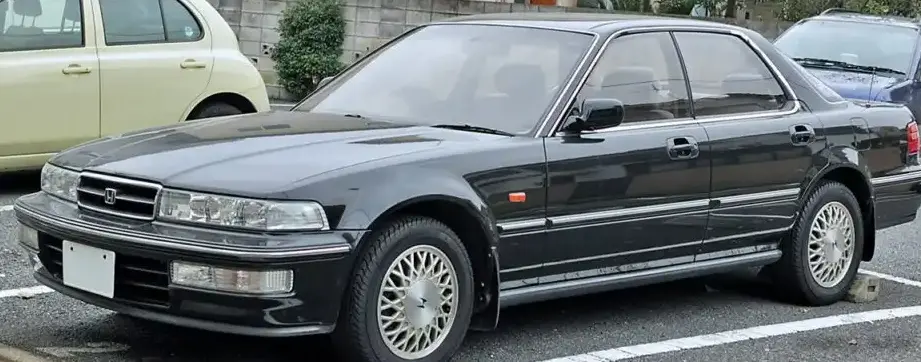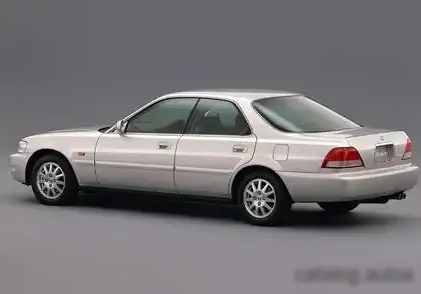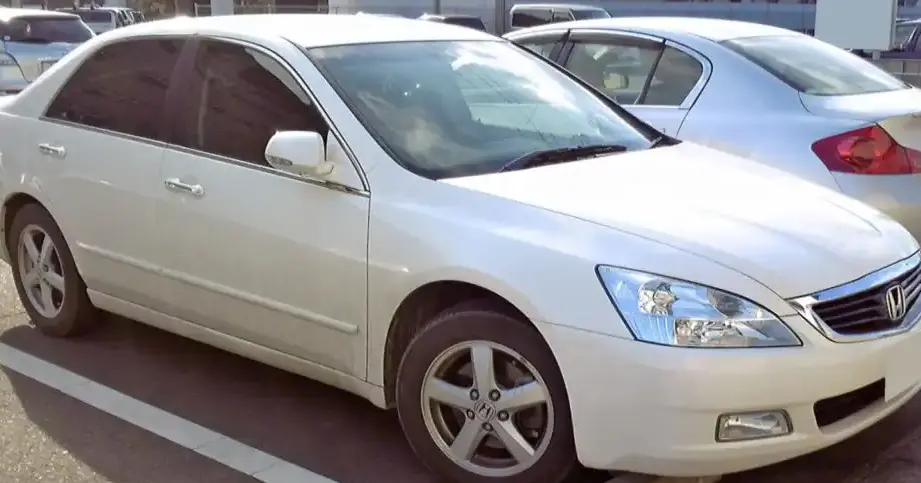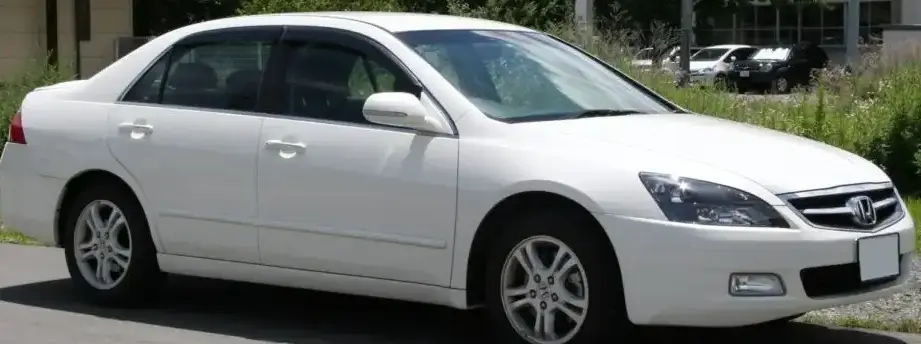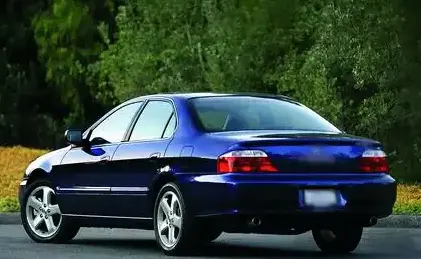
The Honda Inspire III (UA4/UA5) 2.5 i V6 24V Automatic, produced between October 1998 and May 2003, represents a significant iteration in Honda’s upscale sedan lineage. Positioned as a more premium offering than the Accord, the Inspire catered to the Japanese domestic market (JDM) with a focus on comfort, refinement, and a more powerful engine option. The UA4/UA5 generation marked a move towards a more sophisticated design and featured a longitudinally-mounted engine, differentiating it from the transversely-mounted engines found in many other front-wheel-drive sedans of the era. This variant, equipped with the J25A 2.5-liter V6 and a four-speed automatic transmission, occupied a mid-to-upper trim level within the Inspire range, offering a balance of performance and convenience.
Technical Specifications
| Brand | Honda |
| Model | Inspire |
| Generation | Inspire III (UA4/UA5) |
| Type | 2.5 i V6 24V (200 Hp) Automatic |
| Start of production | October, 1998 |
| End of production | May, 2003 |
| Powertrain Architecture | Internal Combustion engine |
| Body type | Sedan |
| Seats | 5 |
| Doors | 4 |
| Fuel consumption (urban) | 14 l/100 km (16.8 US mpg, 20.2 UK mpg, 7.1 km/l) |
| Fuel consumption (extra urban) | 9.8 l/100 km (24 US mpg, 28.8 UK mpg, 10.2 km/l) |
| Fuel Type | Petrol (Gasoline) |
| Maximum speed | 210 km/h (130.49 mph) |
| Weight-to-power ratio | 7.5 kg/Hp, 134.2 Hp/tonne |
| Weight-to-torque ratio | 6.2 kg/Nm, 161.1 Nm/tonne |
| Power | 200 Hp @ 6200 rpm |
| Power per litre | 80.2 Hp/l |
| Torque | 240 Nm @ 4600 rpm (177.01 lb.-ft. @ 4600 rpm) |
| Engine layout | Front, Longitudinal |
| Engine Model/Code | J25A |
| Engine displacement | 2495 cm3 (152.25 cu. in.) |
| Number of cylinders | 6 |
| Engine configuration | V-engine |
| Cylinder Bore | 86 mm (3.39 in.) |
| Piston Stroke | 71.6 mm (2.82 in.) |
| Compression ratio | 10.5:1 |
| Number of valves per cylinder | 4 |
| Fuel injection system | Multi-port manifold injection |
| Engine aspiration | Naturally aspirated engine |
| Valvetrain | SOHC |
| Kerb Weight | 1490 kg (3284.89 lbs.) |
| Max. weight | 1765 kg (3891.16 lbs.) |
| Max load | 275 kg (606.27 lbs.) |
| Trunk (boot) space – minimum | 405 l (14.3 cu. ft.) |
| Fuel tank capacity | 65 l (17.17 US gal | 14.3 UK gal) |
| Length | 4840 mm (190.55 in.) |
| Width | 1785 mm (70.28 in.) |
| Height | 1420 mm (55.91 in.) |
| Wheelbase | 2745 mm (108.07 in.) |
| Front track | 1555 mm (61.22 in.) |
| Rear (Back) track | 1535 mm (60.43 in.) |
| Ride height (ground clearance) | 155 mm (6.1 in.) |
| Minimum turning circle (turning diameter) | 11.2 m (36.75 ft.) |
| Drivetrain Architecture | The Internal combustion engine (ICE) drives the front wheels of the vehicle. |
| Drive wheel | Front wheel drive |
| Number of gears and type of gearbox | 4 gears, automatic transmission |
| Front suspension | Double wishbone |
| Rear suspension | Independent multi-link suspension |
| Front brakes | Ventilated discs |
| Rear brakes | Drum |
| Assisting systems | ABS (Anti-lock braking system) |
| Steering type | Steering rack and pinion |
| Power steering | Hydraulic Steering |
| Tires size | 205/60 R15 |
| Wheel rims size | 6.5J x 15 |
Powertrain & Engine Architecture
The heart of the Inspire 2.5 i V6 is the J25A engine, a 2.5-liter, 24-valve V6. This engine utilizes a single overhead camshaft (SOHC) valvetrain and multi-point fuel injection. The J25A was known for its smooth power delivery and relatively quiet operation, characteristics valued in the Japanese luxury market. The engine’s longitudinal mounting allowed for a more balanced weight distribution, contributing to improved handling. The four-speed automatic transmission, while not as sophisticated as some contemporary transmissions, was chosen for its reliability and smooth shifting characteristics. It was designed to complement the engine’s torque curve, providing adequate acceleration without excessive gear hunting. The transmission featured electronically controlled torque converter lock-up for improved fuel efficiency at highway speeds.
Driving Characteristics
The 200 horsepower and 240 Nm (177 lb-ft) of torque provided by the J25A engine and four-speed automatic resulted in a comfortable and capable driving experience. While not a sports sedan, the Inspire 2.5 i V6 offered brisk acceleration and ample power for highway overtaking. Compared to the lower-spec 2.0-liter four-cylinder models, the V6 provided a noticeable performance advantage. However, it wasn’t as sporty as some of its European competitors. The automatic transmission, while smooth, did result in some power loss compared to the available manual transmission options in other Inspire trims. The gear ratios were tuned for comfort and fuel economy rather than outright performance. The front-wheel-drive configuration, combined with the relatively soft suspension tuning, prioritized ride comfort over sharp handling.
Equipment & Trim Levels
The 2.5 i V6 Automatic trim typically included features such as power windows, power locks, power mirrors, air conditioning, and a high-quality audio system. Interior upholstery was generally cloth or a combination of cloth and leatherette, with higher-end trims offering full leather seating. Optional extras included a sunroof, navigation system, and upgraded audio components. The dashboard layout was functional and well-designed, with a focus on ergonomics. The Inspire aimed to provide a premium interior experience, with attention paid to material quality and fit and finish.
Chassis & Braking
The Inspire III utilized a double wishbone suspension setup at the front and an independent multi-link suspension at the rear. This configuration provided a comfortable ride and reasonable handling characteristics. The front brakes were ventilated discs, offering good stopping power, while the rear brakes were drums, a cost-saving measure common in this class of vehicle. Anti-lock braking system (ABS) was standard, enhancing safety. The steering was a rack-and-pinion system with hydraulic power assistance, providing a light and responsive feel. The suspension was tuned for comfort, prioritizing a smooth ride over aggressive cornering.
Market Reception & Comparison
The Honda Inspire III 2.5 i V6 Automatic was generally well-received in the Japanese market. Critics praised its smooth engine, comfortable ride, and refined interior. However, some noted that it lacked the sporty character of some of its European rivals. Fuel economy was considered average for a V6 engine of this size, with urban consumption around 14 l/100 km (16.8 US mpg). Compared to the 2.0-liter Inspire models, the V6 offered significantly more power but at the cost of slightly lower fuel efficiency. The V6 also commanded a higher price point. Reliability was a strong point, as with most Honda vehicles of this era.
Legacy
The Honda Inspire III 2.5 i V6 Automatic has proven to be a relatively reliable vehicle, with many examples still on the road today. The J25A engine is known for its durability, and the four-speed automatic transmission is generally trouble-free. However, as with any older vehicle, maintenance is key to ensuring long-term reliability. Parts availability can be a challenge outside of Japan, but many components are still available through online retailers and specialist parts suppliers. In the used car market, the Inspire 2.5 i V6 is appreciated for its comfortable ride, smooth engine, and relatively affordable price point, making it a compelling option for those seeking a well-equipped and reliable Japanese sedan.