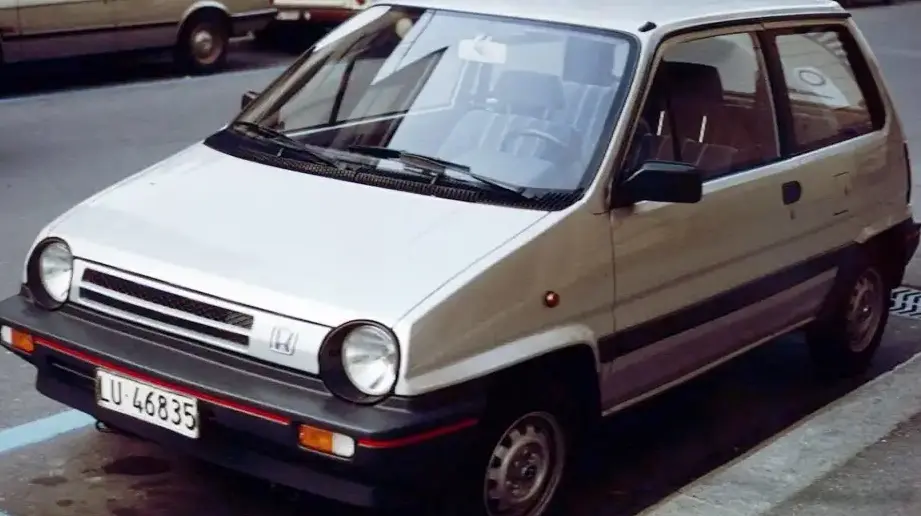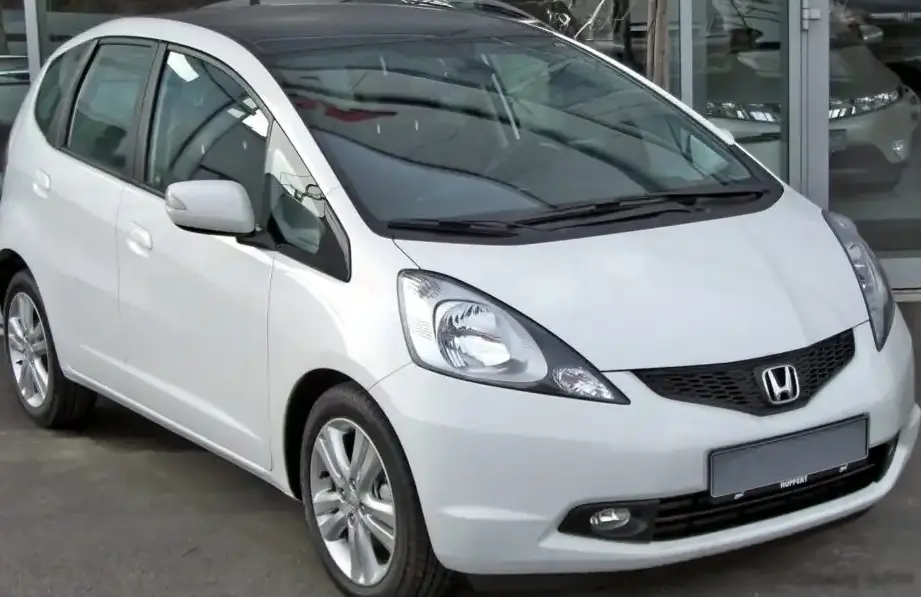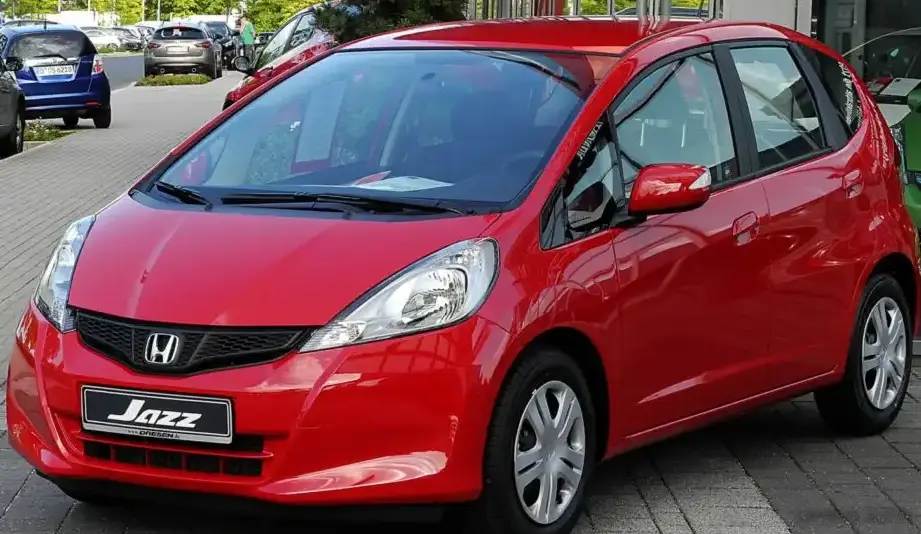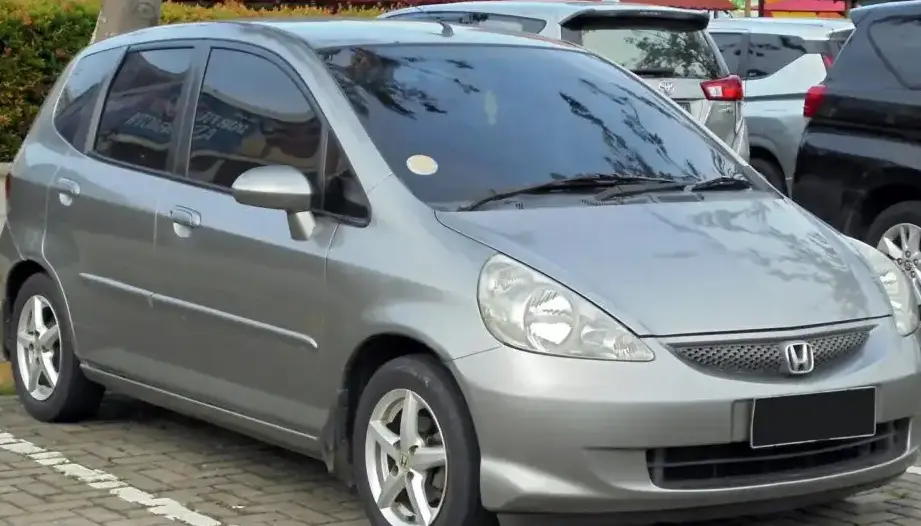
The Honda Jazz, known as the Honda Fit in North America, first arrived in 2002 as a subcompact hatchback designed to maximize interior space and practicality. The 1.2-liter engine variant, producing 78 horsepower, was a key offering in many European and Asian markets, particularly as an entry-level option. Produced from 2002 through 2008 (first generation, GD chassis), this model – often referred to internally as the GD1 – played a significant role in establishing the Jazz’s reputation for versatility and fuel efficiency. This specific configuration, paired with a five-speed manual transmission, aimed to provide affordable transportation with Honda’s renowned reliability.
Technical Specifications
| Brand | Honda |
| Model | Jazz |
| Generation | Jazz I |
| Type (Engine) | 1.2 (78 Hp) |
| Start of production | 2002 |
| End of production | 2008 |
| Powertrain Architecture | Internal Combustion engine |
| Body type | Hatchback |
| Seats | 5 |
| Doors | 5 |
| Fuel consumption (urban) | 6.8 l/100 km (34.6 US mpg) |
| Fuel consumption (extra urban) | 4.7 l/100 km (50 US mpg) |
| Fuel consumption (combined) | 5.3 l/100 km (44.4 US mpg) |
| Fuel Type | Petrol (Gasoline) |
| Acceleration 0 – 100 km/h | 12.9 sec |
| Acceleration 0 – 62 mph | 12.9 sec |
| Acceleration 0 – 60 mph | 12.3 sec |
| Maximum speed | 170 km/h (105.63 mph) |
| Weight-to-power ratio | 12.6 kg/Hp |
| Weight-to-torque ratio | 8.9 kg/Nm |
| Power | 78 Hp @ 5700 rpm |
| Torque | 110 Nm @ 2800 rpm (81.13 lb.-ft. @ 2800 rpm) |
| Engine layout | Front, Transverse |
| Engine Model/Code | L12A1 |
| Engine displacement | 1243 cm3 (75.85 cu. in.) |
| Number of cylinders | 4 |
| Engine configuration | Inline |
| Cylinder Bore | 73 mm (2.87 in.) |
| Piston Stroke | 74.3 mm (2.93 in.) |
| Compression ratio | 10.8:1 |
| Number of valves per cylinder | 2 |
| Fuel injection system | Multi-port manifold injection |
| Engine aspiration | Naturally aspirated |
| Engine oil capacity | 3.6 l (3.8 US qt | 3.17 UK qt) |
| Coolant capacity | 3.9 l (4.12 US qt | 3.43 UK qt) |
| Kerb Weight | 980 kg (2160.53 lbs.) |
| Max. weight | 1455 kg (3207.73 lbs.) |
| Max load | 475 kg (1047.2 lbs.) |
| Trunk (boot) space – minimum | 380 l (13.42 cu. ft.) |
| Trunk (boot) space – maximum | 1323 l (46.72 cu. ft.) |
| Fuel tank capacity | 42 l (11.1 US gal | 9.24 UK gal) |
| Length | 3830 mm (150.79 in.) |
| Width | 1675 mm (65.94 in.) |
| Height | 1525 mm (60.04 in.) |
| Wheelbase | 2450 mm (96.46 in.) |
| Front track | 1460 mm (57.48 in.) |
| Rear track | 1445 mm (56.89 in.) |
| Drivetrain Architecture | Front wheel drive |
| Number of gears | 5 |
| Gearbox type | Manual transmission |
| Front suspension | Spring Strut |
| Rear suspension | Coil spring |
| Front brakes | Ventilated discs |
| Rear brakes | Drum |
| Assisting systems | ABS (Anti-lock braking system) |
| Steering type | Steering rack and pinion |
| Power steering | Hydraulic |
| Tires size | 185/55 R15 |
| Wheel rims size | 15 |
Powertrain & Engine Architecture
The heart of this Jazz variant is the L12A1 engine, a 1.2-liter inline-four cylinder gasoline engine. This engine is part of Honda’s ‘L-series’ family, known for its simplicity and reliability. It features a single overhead camshaft (SOHC) valvetrain with two valves per cylinder. Fuel delivery is managed by a multi-point fuel injection system, providing adequate, though not exceptional, performance. The engine’s 78 horsepower at 5700 rpm and 110 Nm (81 lb-ft) of torque at 2800 rpm were sufficient for city driving and moderate highway speeds. The five-speed manual transmission was the standard offering, providing a direct and engaging driving experience. The engine’s transverse mounting and front-wheel-drive configuration were typical for vehicles in this class.
Driving Characteristics
The 1.2-liter Jazz offered a practical and economical driving experience. Acceleration was modest, taking approximately 12.9 seconds to reach 62 mph (100 km/h). However, the engine was surprisingly responsive in everyday driving situations, particularly when paired with the five-speed manual gearbox. The gear ratios were well-chosen to maximize fuel efficiency and provide adequate power for overtaking. Compared to higher-spec Jazz models equipped with the 1.5-liter engine, the 1.2-liter version felt noticeably less powerful, especially when fully loaded or climbing hills. However, the lighter engine weight contributed to a more nimble and balanced feel. The manual transmission allowed for greater driver control and engagement compared to the optional automatic transmission available on some models.
Equipment & Trim Levels
The 1.2-liter Jazz typically served as the entry-level trim, offering a basic but functional equipment list. Standard features generally included power steering, central locking, electric front windows, and an adjustable steering column. Interior upholstery was typically cloth, and the dashboard featured a simple, straightforward design. Optional extras, depending on the market, could include air conditioning, alloy wheels, and a CD player. The Jazz’s standout feature was its ‘Ultra Seat’ system, which allowed the rear seats to be folded flat or even flipped up to create a spacious cargo area. This versatility was a key selling point for the model.
Chassis & Braking
The Jazz’s chassis was designed to prioritize space efficiency and ride comfort. It utilized a MacPherson strut front suspension and a torsion beam rear suspension. The front brakes were ventilated discs, providing adequate stopping power, while the rear brakes were drums, a cost-saving measure common in this segment. ABS (Anti-lock Braking System) was typically standard, enhancing safety. The suspension setup provided a comfortable ride on most road surfaces, although it could feel slightly soft and prone to body roll during spirited driving. The relatively lightweight construction of the vehicle helped to mitigate these issues.
Market Reception & Comparison
The 1.2-liter Jazz was generally well-received by critics as an affordable and practical city car. Its fuel efficiency was a major selling point, and its spacious interior and versatile seating arrangements were highly praised. However, some reviewers noted that the engine lacked power, particularly when compared to competitors offering larger displacement engines. Compared to other trims in the Jazz lineup, the 1.2-liter version offered the most affordable entry point but sacrificed some performance. It was often seen as a sensible choice for drivers prioritizing economy and practicality over outright speed.
Legacy
The Honda Jazz 1.2 (78 Hp) has proven to be a remarkably reliable vehicle over the long term. The L12A1 engine is known for its durability and relatively low maintenance costs. In the used car market, these models remain popular due to their affordability, fuel efficiency, and Honda’s reputation for reliability. While not a performance icon, the 1.2-liter Jazz established the model as a practical and versatile choice for urban drivers, laying the foundation for the Jazz’s continued success in subsequent generations. Common issues are minimal, often relating to age-related wear and tear on suspension components and exhaust systems. Overall, it remains a solid and dependable choice for those seeking an economical and practical subcompact hatchback.