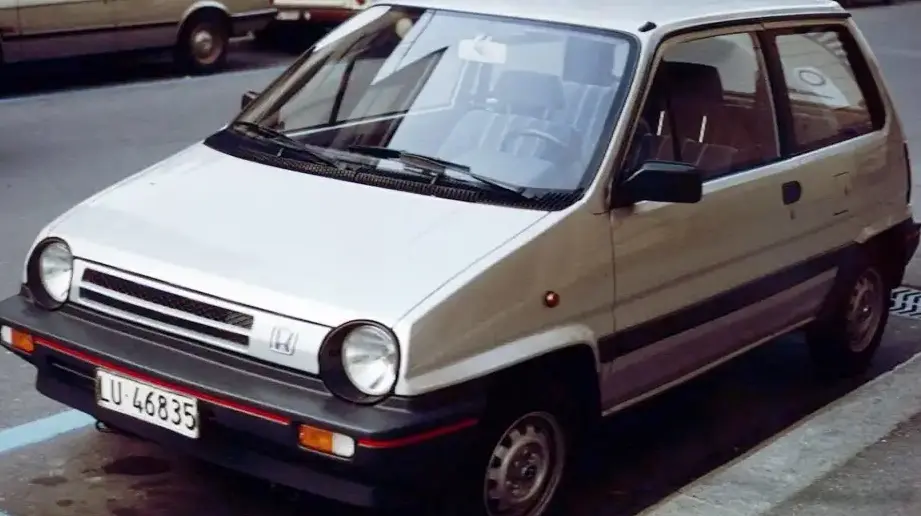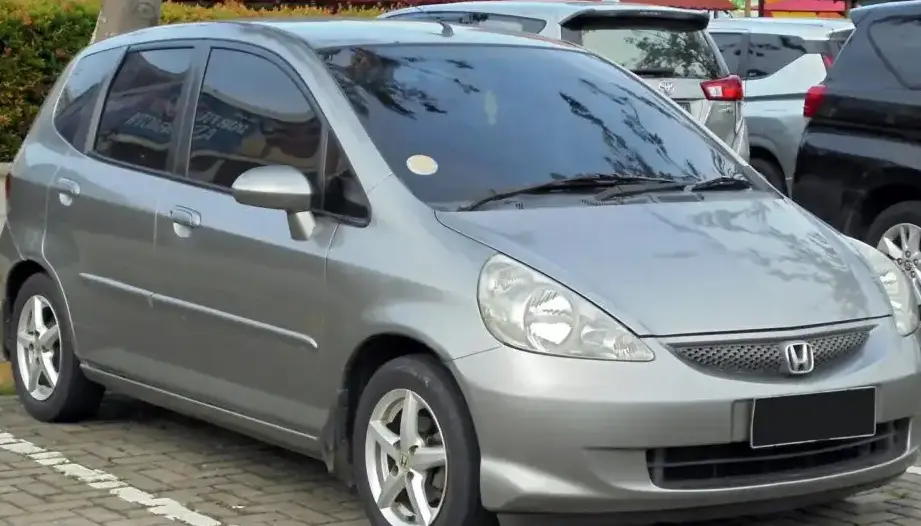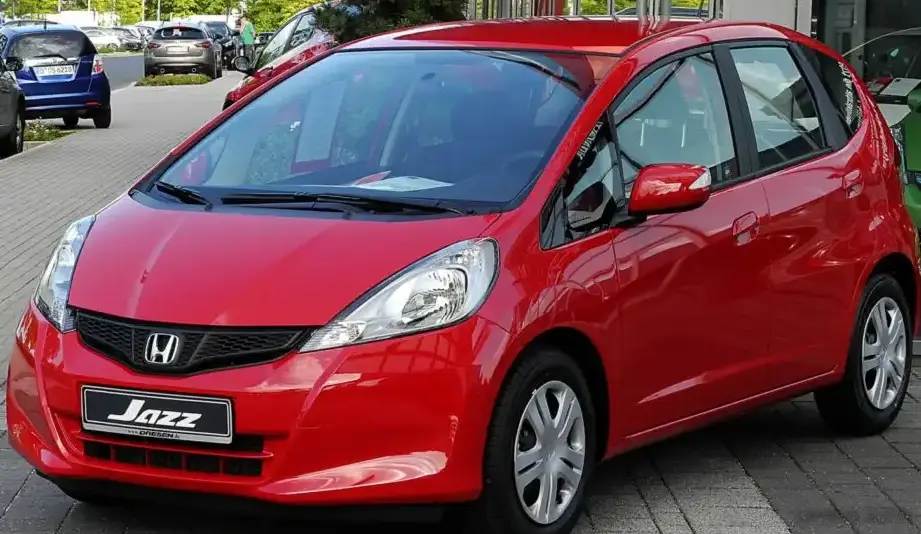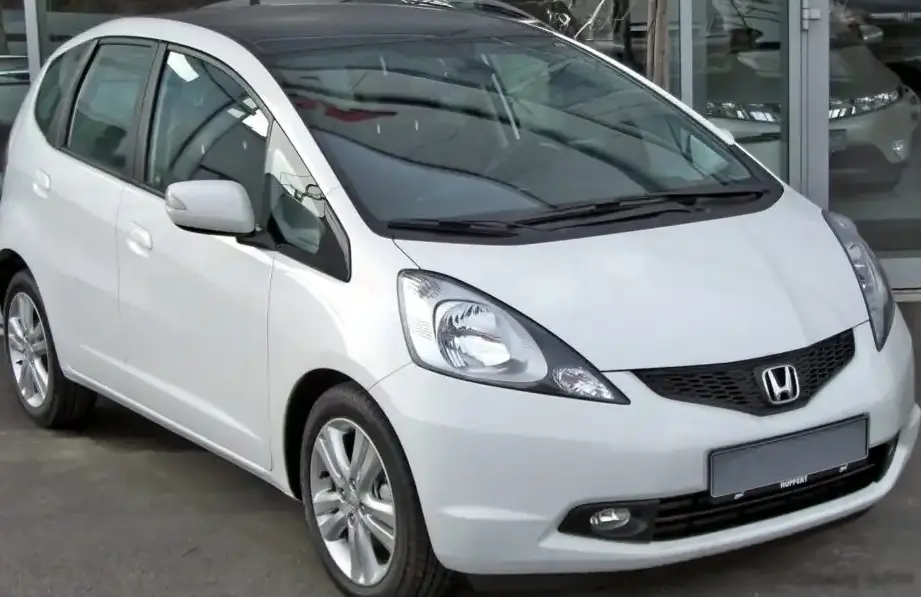
The Honda Jazz II 1.4 (100 hp) i-Shift, marketed in North America as the Honda Fit, was a subcompact hatchback produced between 2008 and 2011. This variant occupied a mid-range position within the second-generation Jazz (GE6/GE8) lineup, offering a balance between affordability, fuel efficiency, and ease of use thanks to its automated manual transmission. It was primarily aimed at urban drivers and small families seeking a practical and economical vehicle. The Jazz II represented a significant evolution over the first generation, boasting improved interior space, a more refined driving experience, and updated safety features. This specific 1.4L i-Shift model was particularly popular in European and Asian markets.
Technical Specifications
| Brand | Honda |
| Model | Jazz |
| Generation | Jazz II |
| Type (Engine) | 1.4 (100 Hp) i-Shift |
| Start of production | 2008 |
| End of production | 2011 |
| Powertrain Architecture | Internal Combustion engine |
| Body type | Hatchback |
| Seats | 5 |
| Doors | 5 |
| Fuel consumption (urban) | 6.5 l/100 km (36.2 US mpg, 43.5 UK mpg, 15.4 km/l) |
| Fuel consumption (extra urban) | 4.6 l/100 km (51.1 US mpg, 61.4 UK mpg, 21.7 km/l) |
| Fuel consumption (combined) | 5.3 l/100 km (44.4 US mpg, 53.3 UK mpg, 18.9 km/l) |
| Fuel Type | Petrol (Gasoline) |
| Acceleration 0 – 100 km/h | 13.6 sec |
| Acceleration 0 – 62 mph | 13.6 sec |
| Acceleration 0 – 60 mph | 12.9 sec |
| Maximum speed | 180 km/h (111.85 mph) |
| Emission standard | Euro 4 |
| Weight-to-power ratio | 10.6 kg/Hp, 94.8 Hp/tonne |
| Weight-to-torque ratio | 8.3 kg/Nm, 120.4 Nm/tonne |
| Power | 100 Hp @ 6000 rpm |
| Power per litre | 74.7 Hp/l |
| Torque | 127 Nm @ 4800 rpm (93.67 lb.-ft. @ 4800 rpm) |
| Engine layout | Front, Transverse |
| Engine Model/Code | L13Z1, L13Z2 |
| Engine displacement | 1339 cm3 (81.71 cu. in.) |
| Number of cylinders | 4 |
| Engine configuration | Inline |
| Cylinder Bore | 73 mm (2.87 in.) |
| Piston Stroke | 80 mm (3.15 in.) |
| Fuel injection system | Multi-port manifold injection |
| Engine aspiration | Naturally aspirated engine |
| Valvetrain | OHC |
| Engine oil capacity | 3.6 l (3.8 US qt | 3.17 UK qt) |
| Coolant | 4.42 l (4.67 US qt | 3.89 UK qt) |
| Kerb Weight | 1055 kg (2325.88 lbs.) |
| Max. weight | 1555 kg (3428.19 lbs.) |
| Max load | 500 kg (1102.31 lbs.) |
| Trunk (boot) space – minimum | 428 l (15.11 cu. ft.) |
| Trunk (boot) space – maximum | 1396 l (49.3 cu. ft.) |
| Fuel tank capacity | 42 l (11.1 US gal | 9.24 UK gal) |
| Length | 3900 mm (153.54 in.) |
| Width | 1695 mm (66.73 in.) |
| Height | 1525 mm (60.04 in.) |
| Wheelbase | 2495 mm (98.23 in.) |
| Front track | 1495 mm (58.86 in.) |
| Rear (Back) track | 1475 mm (58.07 in.) |
| Minimum turning circle | 10.1 m (33.14 ft.) |
| Drivetrain Architecture | Front wheel drive |
| Number of gears | 6 |
| Gearbox type | Automatic transmission |
| Front suspension | Independent type McPherson |
| Front brakes | Ventilated discs |
| Rear brakes | Disc |
| Assisting systems | ABS (Anti-lock braking system) |
| Tires size | 175/65 R15; 185/55 R16 |
| Wheel rims size | 15; 16 |
Powertrain & Engine Architecture
The Jazz II 1.4 i-Shift utilized Honda’s L13Z1 or L13Z2 engine, a 1.339-liter inline-four cylinder gasoline engine. This engine featured a single overhead camshaft (SOHC) valvetrain and multi-point fuel injection. The engine was designed with a focus on fuel efficiency and smooth operation. The “i-Shift” transmission was a key feature, being a six-speed automated manual transmission. Unlike a traditional automatic with a torque converter, the i-Shift used electronically controlled clutch and gear changes, offering a more direct driving feel and improved fuel economy compared to conventional automatics. It allowed for both fully automatic operation and manual gear selection via steering wheel-mounted paddles or a sequential shift lever. The engine produced 100 horsepower at 6000 rpm and 93.67 lb-ft of torque at 4800 rpm.
Driving Characteristics
The 1.4L i-Shift Jazz offered a comfortable, if not particularly sporty, driving experience. Acceleration from 0-60 mph took around 12.9 seconds, and top speed was limited to 111.85 mph. The i-Shift transmission, while efficient, could sometimes exhibit slightly jerky shifts, especially at lower speeds. Compared to the manual transmission versions, the i-Shift offered convenience but sacrificed some responsiveness. The gear ratios were tuned for fuel economy, meaning the engine could feel strained during aggressive acceleration or when climbing hills. However, for everyday urban driving, the i-Shift provided a smooth and effortless experience.
Equipment & Trim Levels
The 1.4 i-Shift trim typically included standard features such as air conditioning, power windows, power door locks, and a basic audio system with CD player. Higher trim levels, such as the ‘ES’ or ‘Sport’ variants, added features like alloy wheels, a more advanced audio system, and climate control. Interior upholstery was typically cloth, with a functional and durable design. Optional extras included navigation systems, parking sensors, and upgraded sound systems.
Chassis & Braking
The Jazz II featured a front-wheel-drive layout with an independent McPherson strut suspension in the front and a torsion beam suspension in the rear. The front brakes were ventilated discs, while the rear brakes were solid discs. ABS (Anti-lock Braking System) was standard. The suspension was tuned for comfort, providing a relatively smooth ride over uneven surfaces. The weight of the vehicle (around 2326 lbs) contributed to its manageable handling characteristics.
Market Reception & Comparison
The Honda Jazz II 1.4 i-Shift was generally well-received by automotive critics for its practicality, fuel efficiency, and clever use of interior space. However, the i-Shift transmission received mixed reviews, with some testers finding it less refined than traditional automatic transmissions. Compared to other trims in the Jazz lineup, the 1.4 i-Shift offered a good balance between performance and economy. The 1.2L engine was more fuel-efficient but lacked power, while the 1.4L manual offered a more engaging driving experience. Against competitors like the Toyota Yaris and Ford Fiesta, the Jazz II stood out for its spacious interior and versatile ‘Magic Seats’ which could be folded flat or flipped up to create additional cargo space.
Legacy
The L13Z engine family, including the L13Z1 and L13Z2 variants used in the Jazz II 1.4, is known for its reliability and durability. The i-Shift transmission, while not without its quirks, has proven to be reasonably reliable with proper maintenance. Today, used examples of the Jazz II 1.4 i-Shift are still relatively common and represent a good value for buyers seeking an economical and practical subcompact hatchback. Regular maintenance, including timely transmission fluid changes, is crucial for ensuring the longevity of the i-Shift unit. The Jazz II continues to be appreciated for its innovative design and overall dependability.