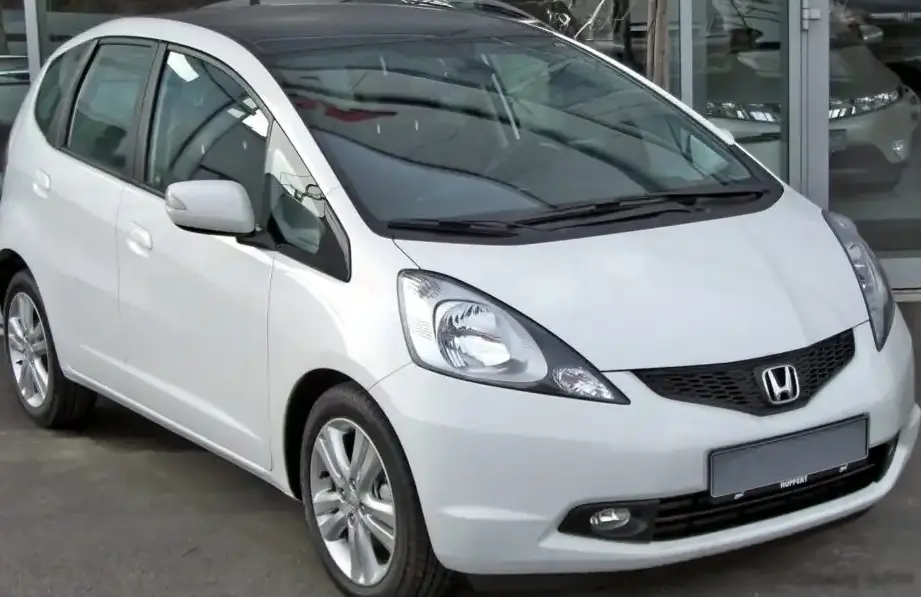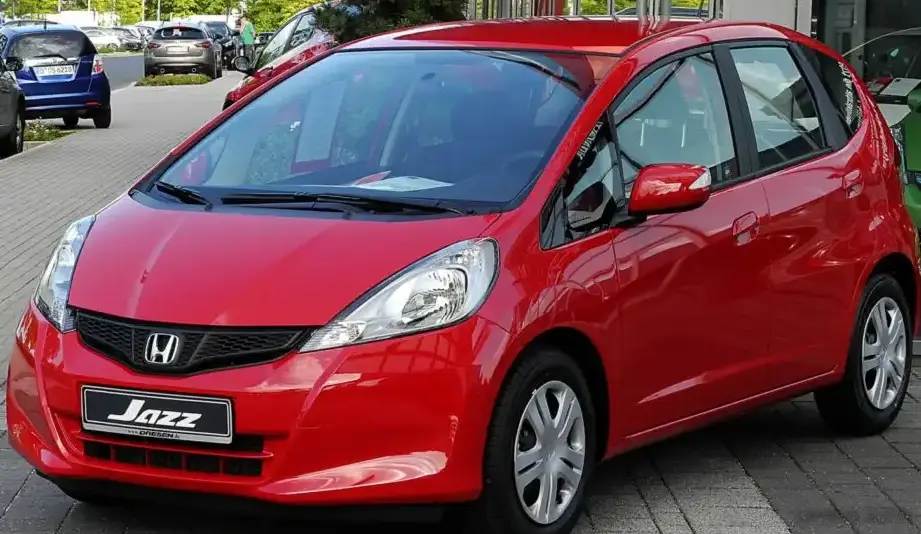
The Honda Jazz II (facelift, released in 2011) 1.3 IMA, often simply referred to as the Jazz Hybrid, represents Honda’s entry into the subcompact hybrid market in Europe and Asia. Produced from 2011 to 2014, this variant was a key component of the second-generation Jazz (known as the Fit in North America), built on the 1HX0/A3 platform. Positioned as an economical and practical choice, the 1.3 IMA aimed to deliver improved fuel efficiency without sacrificing the Jazz’s renowned versatility. It was primarily sold in markets where fuel costs were high and hybrid technology was gaining acceptance, offering a compelling alternative to traditional gasoline-powered subcompacts.
Technical Specifications
| Brand | Honda |
| Model | Jazz |
| Generation | Jazz II (facelift 2011) |
| Type (Engine) | 1.3 IMA (88 Hp) Hybrid |
| Start of production | 2011 |
| End of production | 2014 |
| Powertrain Architecture | MHEV (Mild Hybrid Electric Vehicle) |
| Body type | Hatchback |
| Seats | 5 |
| Doors | 4 |
| Fuel consumption (urban) | 4.6 l/100 km (51.1 US mpg, 61.4 UK mpg, 21.7 km/l) |
| Fuel consumption (extra urban) | 4.4 l/100 km (53.5 US mpg, 64.2 UK mpg, 22.7 km/l) |
| Fuel consumption (combined) | 4.5 l/100 km (52.3 US mpg, 62.8 UK mpg, 22.2 km/l) |
| Fuel Type | Petrol (Gasoline) |
| Acceleration 0 – 100 km/h | 12.1 sec |
| Acceleration 0 – 62 mph | 12.1 sec |
| Acceleration 0 – 60 mph | 11.5 sec |
| Maximum speed | 175 km/h (108.74 mph) |
| Weight-to-power ratio | 13.2 kg/Hp |
| Weight-to-torque ratio | 9.6 kg/Nm |
| Electric motor power | 14 Hp |
| Electric motor Torque | 78 Nm (57.53 lb.-ft.) |
| System power | 88 Hp @ 5800 rpm |
| System torque | 121 Nm @ 4500 rpm (89.25 lb.-ft. @ 4500 rpm) |
| Engine Power | 88 Hp @ 5800 rpm |
| Power per litre | 65.7 Hp/l |
| Engine Torque | 121 Nm @ 4500 rpm (89.25 lb.-ft. @ 4500 rpm) |
| Engine displacement | 1339 cm3 (81.71 cu. in.) |
| Number of cylinders | 4 |
| Engine configuration | Inline |
| Compression ratio | 10.8:1 |
| Number of valves per cylinder | 2 |
| Fuel injection system | Multi-port manifold injection |
| Valvetrain | SOHC |
| Kerb Weight | 1162 kg (2561.77 lbs.) |
| Trunk (boot) space (minimum) | 303 l (10.7 cu. ft.) |
| Fuel tank capacity | 40 l (10.57 US gal, 8.8 UK gal) |
| Length | 3900 mm (153.54 in.) |
| Width | 1695 mm (66.73 in.) |
| Height | 1525 mm (60.04 in.) |
| Wheelbase | 2495 mm (98.23 in.) |
| Minimum turning circle | 10.82 m (35.5 ft.) |
| Drivetrain Architecture | Front wheel drive, MHEV |
| Front suspension | Independent, McPherson with coil spring and anti-roll bar |
| Rear suspension | Torsion |
| Front brakes | Ventilated discs |
| Rear brakes | Disc |
| Assisting systems | ABS (Anti-lock braking system) |
| Steering type | Steering rack and pinion |
| Tires size | 175/65 R15 |
| Wheel rims size | 15 |
Powertrain & Engine Architecture
The heart of the Jazz 1.3 IMA is a 1.3-liter, inline-four cylinder gasoline engine (engine code: LDA) coupled with Honda’s Integrated Motor Assist (IMA) hybrid system. This system isn’t a full hybrid capable of all-electric driving; instead, the electric motor provides assistance during acceleration and helps recapture energy during braking through regenerative braking. The engine utilizes a single overhead camshaft (SOHC) valvetrain and multi-point fuel injection. The electric motor, producing 14 horsepower and 78 Nm of torque, is integrated between the engine and the continuously variable transmission (CVT). The combined system output is 88 horsepower and 121 Nm of torque. The CVT, while contributing to fuel efficiency, was a point of contention for some drivers due to its characteristic “rubber band” feel.
Driving Characteristics
The 1.3 IMA Jazz offered a noticeably different driving experience compared to the higher-powered 1.4 and 1.5-liter gasoline variants. Acceleration was modest, taking around 12.1 seconds to reach 62 mph. The electric motor assist did provide a small boost during initial acceleration, making it feel more responsive in city driving. However, on the highway, the lack of outright power was apparent, particularly when overtaking. The CVT prioritized fuel economy over sporty performance, holding engine RPMs low during cruising and gradually increasing them under load. Compared to the manual transmission options available on other Jazz models, the CVT offered smoother operation but less driver engagement.
Equipment & Trim Levels
The 1.3 IMA typically came with a reasonably well-equipped specification, reflecting its positioning as a more premium, eco-conscious option. Standard features often included air conditioning, power windows, central locking, and an audio system with USB connectivity. Higher trim levels added features like alloy wheels, a multi-function steering wheel, and climate control. Interior upholstery was typically cloth, with a focus on durable and practical materials. Optional extras included navigation systems and parking sensors.
Chassis & Braking
The Jazz II utilized a McPherson strut front suspension and a torsion beam rear suspension. This setup provided a comfortable ride quality, well-suited for everyday driving. The 1.3 IMA variant, being relatively lightweight, didn’t require a significantly different suspension setup compared to other Jazz models. Braking was handled by ventilated discs at the front and solid discs at the rear, equipped with an Anti-lock Braking System (ABS). The braking performance was adequate for the car’s weight and power, but not particularly sporty.
Market Reception & Comparison
The Honda Jazz 1.3 IMA was generally well-received by critics for its fuel efficiency and practicality. It consistently achieved combined fuel economy figures around 4.5 l/100 km (52.3 US mpg), making it one of the most economical cars in its class. However, the CVT transmission and modest performance were often criticized. Compared to the 1.4-liter Jazz, the IMA offered superior fuel economy but less power. The 1.5-liter Jazz provided a better balance of performance and economy, but at a higher price point. The IMA appealed to buyers prioritizing fuel savings and environmental consciousness over driving excitement.
Legacy
The Honda Jazz 1.3 IMA proved to be a reliable and durable hybrid powertrain. The IMA system, while not without its complexities, generally held up well over time. The gasoline engine itself was known for its longevity. In the used car market, these models continue to be sought after by buyers looking for an economical and practical city car. However, potential buyers should be aware of the age of the hybrid battery and the possibility of needing replacement, which can be a significant expense. Despite this, the Jazz 1.3 IMA remains a testament to Honda’s early efforts in hybrid technology and a popular choice for environmentally conscious drivers.