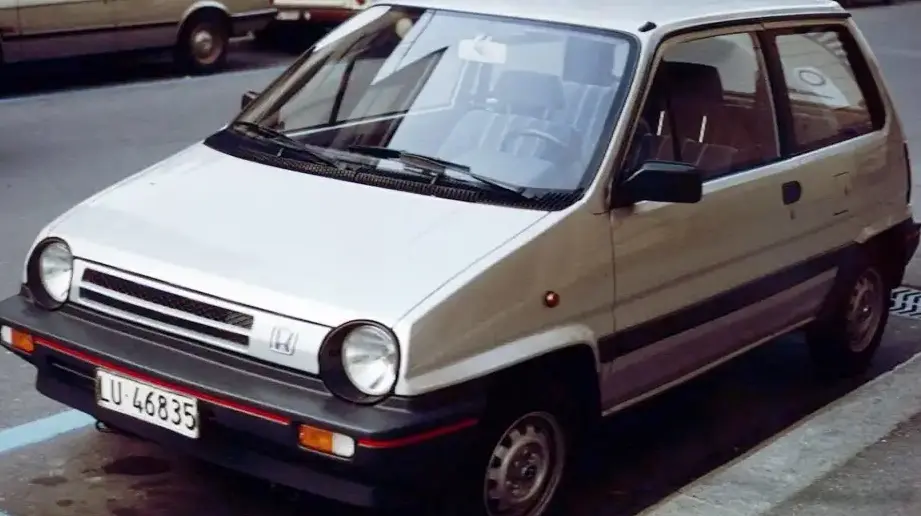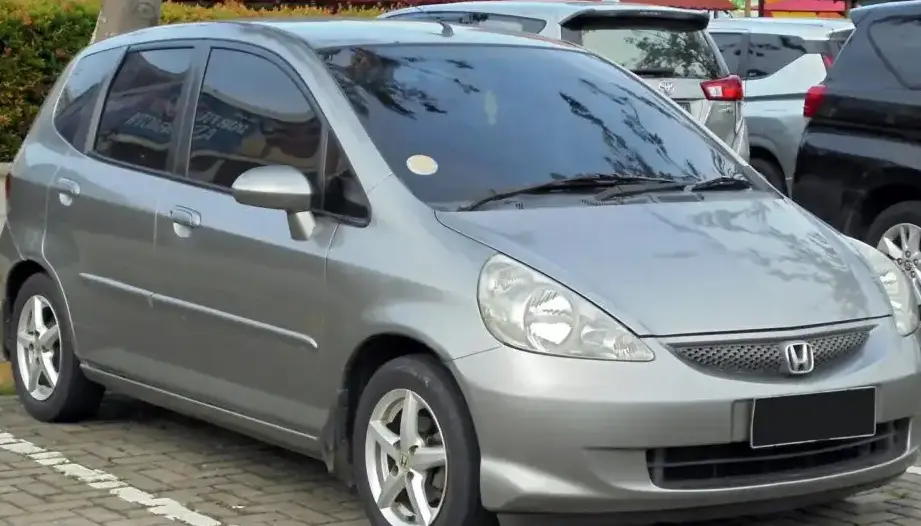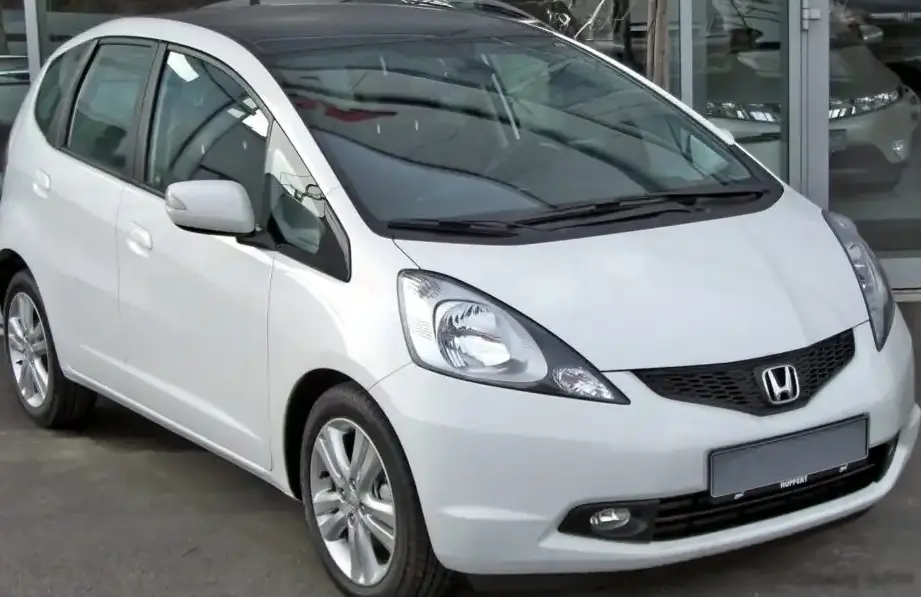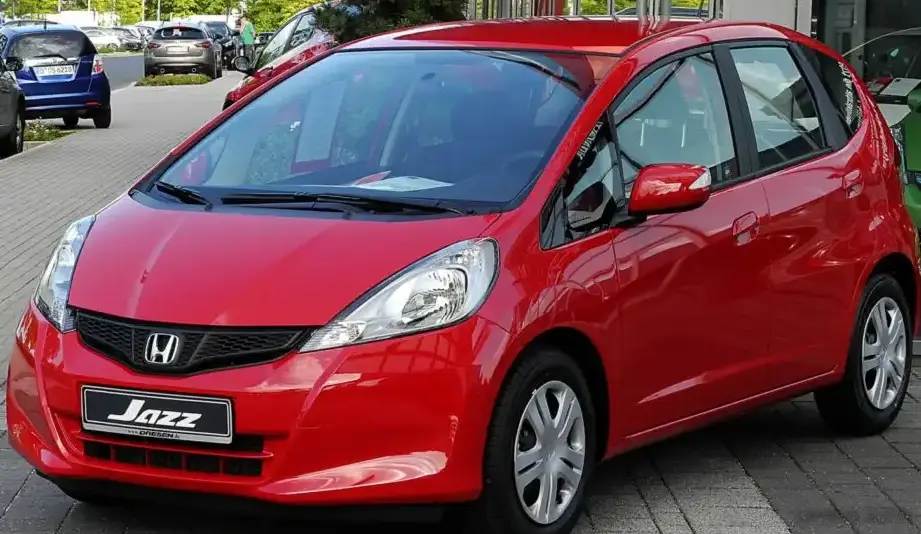
The Honda Jazz II (facelift, introduced in 2011) 1.4 i-VTEC (99 horsepower) with a Continuously Variable Transmission (CVT) represented an important iteration within the second generation of Honda’s popular subcompact hatchback. Produced from 2011 to 2015, this variant was primarily aimed at the European, Asian, and Australian markets, where fuel efficiency and practicality were highly valued. The Jazz, known as the Fit in North America, offered a unique combination of interior space, versatility, and Honda’s reputation for reliability. This specific 1.4L CVT model served as a mainstream offering, positioned between the base 1.3L engine and the more powerful 1.5L variants.
Technical Specifications
| Brand | Honda |
| Model | Jazz |
| Generation | Jazz II (facelift 2011) |
| Type (Engine) | 1.4 i-VTEC (99 Hp) CVT |
| Start of production | 2011 |
| End of production | 2015 |
| Powertrain Architecture | Internal Combustion engine |
| Body type | Hatchback |
| Seats | 5 |
| Doors | 5 |
| Fuel consumption (urban) | 6.7 l/100 km (35.1 US mpg, 42.2 UK mpg, 14.9 km/l) |
| Fuel consumption (extra urban) | 4.6 l/100 km (51.1 US mpg, 61.4 UK mpg, 21.7 km/l) |
| Fuel consumption (combined) | 5.4 l/100 km (43.6 US mpg, 52.3 UK mpg, 18.5 km/l) |
| CO2 emissions | 125 g/km |
| Fuel Type | Petrol (Gasoline) |
| Acceleration 0 – 100 km/h | 12.7 sec |
| Acceleration 0 – 62 mph | 12.7 sec |
| Acceleration 0 – 60 mph | 12.1 sec |
| Maximum speed | 175 km/h (108.74 mph) |
| Weight-to-power ratio | 10.9 kg/Hp, 91.8 Hp/tonne |
| Weight-to-torque ratio | 8.5 kg/Nm, 117.7 Nm/tonne |
| Power | 99 Hp @ 6000 rpm |
| Power per litre | 73.9 Hp/l |
| Torque | 127 Nm @ 4800 rpm (93.67 lb.-ft. @ 4800 rpm) |
| Engine layout | Front, Transverse |
| Engine Model/Code | L13Z1, L13Z2 |
| Engine displacement | 1339 cm3 (81.71 cu. in.) |
| Number of cylinders | 4 |
| Engine configuration | Inline |
| Compression ratio | 10.5:1 |
| Number of valves per cylinder | 4 |
| Fuel injection system | Multi-port manifold injection |
| Engine aspiration | Naturally aspirated |
| Engine oil capacity | 3.6 l (3.8 US qt, 3.17 UK qt) |
| Coolant capacity | 4.42 l (4.67 US qt, 3.89 UK qt) |
| Kerb Weight | 1079 kg (2378.79 lbs) |
| Trunk (boot) space – minimum | 400 l (14.13 cu. ft.) |
| Trunk (boot) space – maximum | 883 l (31.18 cu. ft.) |
| Fuel tank capacity | 42 l (11.1 US gal, 9.24 UK gal) |
| Length | 3900 mm (153.54 in) |
| Width | 1695 mm (66.73 in) |
| Height | 1525 mm (60.04 in) |
| Wheelbase | 2500 mm (98.43 in) |
| Minimum turning circle | 10.08 m (33.07 ft) |
| Drivetrain Architecture | Front wheel drive |
| Front suspension | Independent, McPherson with coil spring and anti-roll bar |
| Rear suspension | Semi-independent, coil spring |
| Front brakes | Ventilated discs |
| Rear brakes | Disc |
| Tires size | 175/65 R15 |
| Wheel rims size | 15 |
INTRODUCTION
The 2011 facelift of the second-generation Honda Jazz (known as the Fit in North America) brought subtle styling revisions and continued the model’s reputation for maximizing interior space within a small footprint. The 1.4 i-VTEC CVT variant was a key component of the European and Asian lineups, offering a balance of affordability, fuel economy, and ease of use. Built on the 1HX0/A3 platform, the Jazz II aimed to improve upon the original’s already impressive practicality and efficiency. This version was designed to appeal to urban drivers and small families seeking a versatile and reliable vehicle.
Powertrain & Engine Architecture
At the heart of the Jazz 1.4 i-VTEC CVT lies the L13Z1 or L13Z2 engine, a 1.339-liter (81.71 cubic inches) inline-four cylinder gasoline engine. This engine utilizes Honda’s i-VTEC (Intelligent Variable Valve Timing and Lift Electronic Control) technology, which optimizes valve timing and lift based on engine speed and load, improving both fuel efficiency and performance. The engine employs a multi-point fuel injection system for precise fuel delivery. The L13Z series engines are known for their robust construction and relatively simple design, contributing to their reliability. The CVT (Continuously Variable Transmission) offered a smooth, stepless gear change, prioritizing fuel economy over outright acceleration. Unlike traditional automatic transmissions with fixed gear ratios, a CVT uses a belt or chain system to provide an infinite number of gear ratios within a certain range. This allows the engine to operate at its most efficient RPM for any given speed.
Driving Characteristics
The 1.4L i-VTEC engine paired with the CVT delivers a comfortable, if not particularly sporty, driving experience. With 99 horsepower and 127 Nm (93.67 lb-ft) of torque, acceleration is adequate for city driving and highway merging, but it won’t provide exhilarating performance. The CVT is programmed to prioritize fuel efficiency, which means it tends to hold lower engine speeds for longer, resulting in a somewhat “rubber band” feel during acceleration. Compared to the manual transmission versions of the Jazz, the CVT sacrifices some responsiveness for smoother operation. The 1.5L variants offered significantly more power and a more engaging driving experience, but at the cost of increased fuel consumption. The CVT’s gear ratios are tuned for efficiency, meaning the engine often operates at lower RPMs during cruising, contributing to quieter operation and improved fuel economy.
Equipment & Trim Levels
The 1.4 i-VTEC CVT Jazz typically came equipped with a reasonable level of standard features. These generally included air conditioning, power windows, power door locks, a basic audio system (often with CD player and auxiliary input), and ABS (Anti-lock Braking System). Higher trim levels, such as the ‘SE’ or ‘ES’ variants (depending on the market), added features like alloy wheels, a more sophisticated audio system, climate control, and sometimes parking sensors. Interior upholstery was typically cloth, with a functional and durable design. Optional extras could include navigation systems, upgraded audio systems, and metallic paint finishes.
Chassis & Braking
The Jazz II utilized a McPherson strut front suspension and a semi-independent torsion beam rear suspension. This setup provided a comfortable ride quality, well-suited for everyday driving. The front brakes were ventilated discs, offering good stopping power, while the rear brakes were typically solid discs. The Jazz’s relatively lightweight construction (1079 kg / 2378.79 lbs) helped to compensate for the modest engine output. Stabilizer bars were included to reduce body roll during cornering, enhancing handling stability. The steering system employed a rack and pinion setup, providing precise and responsive steering feel.
Market Reception & Comparison
The Honda Jazz 1.4 i-VTEC CVT was generally well-received by automotive critics for its practicality, fuel efficiency, and reliability. However, some reviewers noted that the CVT could feel sluggish at times, and the engine lacked the punch of its larger counterparts. Compared to other subcompact hatchbacks in its class, the Jazz stood out for its spacious interior and innovative ‘Magic Seat’ system, which allowed for a variety of seating configurations. Fuel economy was a key selling point, with the Jazz consistently achieving impressive MPG figures. Reliability surveys consistently ranked the Jazz highly, making it a popular choice for buyers seeking a dependable and low-maintenance vehicle.
Legacy
The Honda Jazz II 1.4 i-VTEC CVT has proven to be a durable and reliable vehicle in the used car market. The L13Z engine is known for its longevity, and the CVT, while not as robust as a traditional automatic, has generally held up well with proper maintenance. Today, these Jazz models represent a good value for buyers seeking an affordable, fuel-efficient, and practical subcompact hatchback. Parts availability is generally good, and maintenance costs are relatively low. The Jazz’s reputation for reliability and versatility continues to make it a popular choice among used car buyers.