
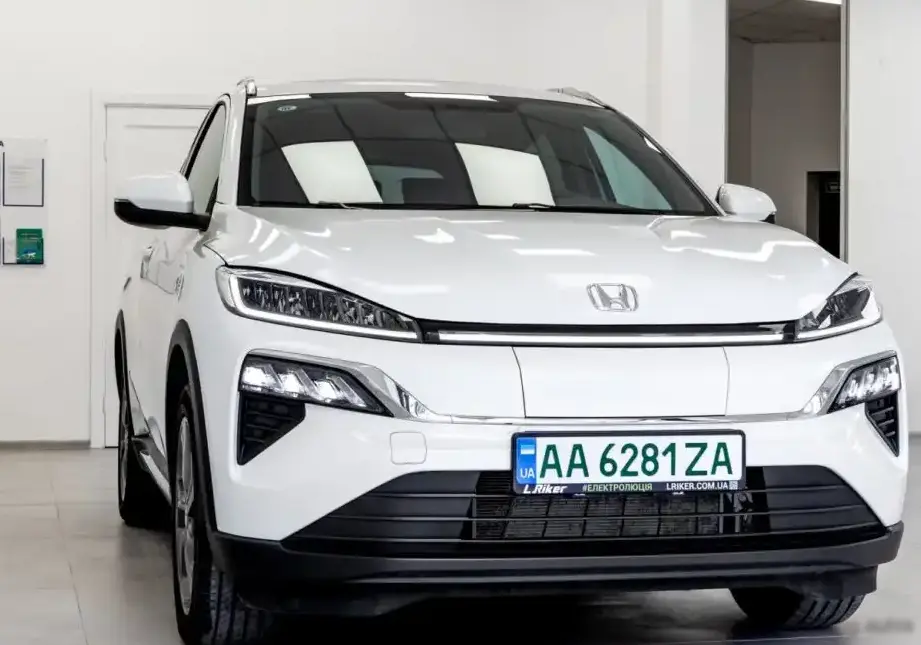
The Honda M-NV 58.69 kWh is a battery electric vehicle (BEV) crossover SUV produced by Honda from June 2023 to 2025. Positioned as an entry-level electric offering for the brand, the M-NV aimed to provide a practical and affordable electric vehicle option within the rapidly expanding EV market. It is based on Honda’s compact vehicle architecture and represents the automaker’s commitment to electrification. The M-NV was primarily targeted towards urban commuters and small families seeking a zero-emission vehicle for daily use.
Technical Specifications
| Brand | Honda |
| Model | M-NV |
| Generation | M-NV |
| Type (Engine) | 58.69 kWh (218 Hp) |
| Start of production | June, 2023 |
| End of production | 2025 |
| Powertrain Architecture | BEV (Electric Vehicle) |
| Body type | SUV, Crossover |
| Seats | 5 |
| Doors | 5 |
| Fuel Type | Electricity |
| Acceleration 0 – 100 km/h | 7.4 sec |
| Acceleration 0 – 62 mph | 7.4 sec |
| Acceleration 0 – 60 mph | 7 sec |
| Maximum speed | 150 km/h (93.21 mph) |
| Weight-to-power ratio | 7.4 kg/Hp, 134.7 Hp/tonne |
| Weight-to-torque ratio | 5.2 kg/Nm, 191.5 Nm/tonne |
| Gross battery capacity | 58.69 kWh |
| Battery technology | Lithium iron phosphate (LiFePO4) |
| Battery location | Below the floor |
| All-electric range (CLTC) | 500 km (310.69 mi) |
| Average Energy consumption (CLTC) | 13.4 kWh/100 km (21.57 kWh/100 mi) |
| Average Energy consumption (MPGe) | 156 MPGe |
| Average Energy consumption (km/kWh) | 7.5 km/kWh |
| Average Energy consumption (mi/kWh) | 4.6 mi/kWh |
| Electric motor power | 218 Hp |
| Electric motor Torque | 310 Nm (228.64 lb.-ft.) |
| Electric motor model/code | TZ200XSBT1 |
| Electric motor location | Front axle, Transverse |
| Electric motor type | Synchronous |
| System power | 218 Hp |
| System torque | 310 Nm (228.64 lb.-ft.) |
| Kerb Weight | 1619-1654 kg (3569.28 – 3646.45 lbs.) |
| Max. weight | 2044 kg (4506.25 lbs.) |
| Max load | 390-425 kg (859.8 – 936.96 lbs.) |
| Length | 4324 mm (170.24 in.) |
| Width | 1785 mm (70.28 in.) |
| Height | 1637 mm (64.45 in.) |
| Wheelbase | 2610 mm (102.76 in.) |
| Front track | 1535 mm (60.43 in.) |
| Rear (Back) track | 1540 mm (60.63 in.) |
| Minimum turning circle | 11.4 m (37.4 ft.) |
| Front suspension | Independent, type McPherson with coil spring and anti-roll bar |
| Rear suspension | Torsion |
| Front brakes | Ventilated discs |
| Rear brakes | Disc |
| Drive wheel | Front wheel drive |
| Number of gears | 1 |
| Gearbox type | automatic transmission |
| Tires size | 215/55 R18 |
| Wheel rims size | 18 |
Powertrain & Engine Architecture
The Honda M-NV utilizes a single electric motor driving the front wheels. The motor, designated TZ200XSBT1, is a synchronous type, delivering a peak output of 218 horsepower and 310 Nm (228.64 lb.-ft.) of torque. Power is supplied by a 58.69 kWh lithium iron phosphate (LiFePO4) battery pack located under the vehicle floor, contributing to a low center of gravity. The M-NV employs a single-speed automatic transmission, typical for electric vehicles, providing seamless acceleration. The battery pack supports fast charging capabilities, allowing for a significant range increase with relatively short charging times, though specific charging times vary depending on the charging infrastructure used.
Driving Characteristics
The M-NV offers brisk acceleration for its class, achieving 0-60 mph in approximately 7 seconds. The instant torque delivery characteristic of electric motors provides responsive performance in urban driving conditions. While not designed for outright performance, the M-NV delivers adequate power for highway merging and overtaking. The single-speed transmission ensures smooth and linear acceleration. Compared to potential higher-performance EV trims, the M-NV prioritizes efficiency and range over raw speed. The front-wheel-drive configuration provides predictable handling, though it may exhibit some torque steer under hard acceleration.
Equipment & Trim Levels
The M-NV was generally offered with a standard equipment level focused on practicality and convenience. Standard features typically included air conditioning, a touchscreen infotainment system with smartphone integration (Apple CarPlay and Android Auto), and a suite of safety features such as automatic emergency braking, lane departure warning, and adaptive cruise control. Interior upholstery was typically cloth, with optional upgrades to leatherette available. Higher trim levels may have included features such as a panoramic sunroof, heated front seats, and a premium audio system. The dashboard layout was designed to be clean and modern, with a focus on ease of use.
Chassis & Braking
The M-NV utilizes a McPherson strut front suspension with a coil spring and anti-roll bar, providing a comfortable ride and responsive handling. The rear suspension employs a torsion beam setup, which is a cost-effective and space-efficient solution. The braking system consists of ventilated discs at the front and solid discs at the rear. Anti-lock braking system (ABS) is standard, enhancing safety and control during emergency braking situations. The electric steering system provides light and precise steering feel, making it easy to maneuver in tight spaces.
Market Reception & Comparison
The Honda M-NV was generally well-received by critics as an affordable and practical electric crossover. Its competitive pricing and decent range made it an attractive option for budget-conscious EV buyers. However, some reviewers noted that its interior materials and overall refinement were not as premium as some of its competitors. Compared to other EVs in its segment, the M-NV offered a good balance of range, performance, and price. Its CLTC range of 500 km (310.69 mi) was competitive, and its energy consumption of 13.4 kWh/100 km (21.57 kWh/100 mi) was relatively efficient.
Legacy
The Honda M-NV represents an important step in Honda’s electrification strategy. While its production run was relatively short, it helped to establish Honda as a player in the growing EV market. The LiFePO4 battery technology used in the M-NV is known for its stability and longevity, suggesting that the powertrain should prove reliable over the long term. As the used EV market expands, the M-NV is likely to become an increasingly popular choice for buyers seeking an affordable and practical electric vehicle. Its relatively simple design and robust powertrain should contribute to its long-term reliability and maintainability.
