
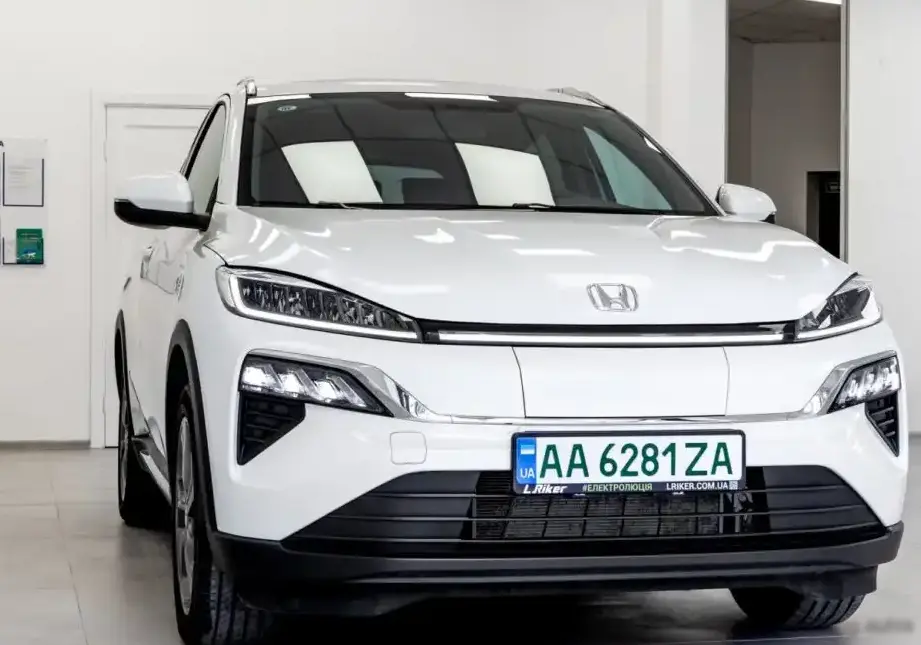
The Honda M-NV, specifically the 61.3 kWh variant producing 163 horsepower, was an all-electric subcompact crossover SUV manufactured by Honda between November 2020 and June 2023. Designed primarily for the Chinese market as a joint venture with Dongfeng Motor, the M-NV represented Honda’s early foray into dedicated electric vehicle production. It was based on a modified version of the Honda Vezel/HR-V platform, aiming to provide a practical and efficient electric vehicle option within the rapidly growing EV segment in China. This particular configuration, with its single-motor front-wheel-drive layout and 61.3 kWh battery, served as the mainstream offering within the M-NV lineup.
Technical Specifications
| Brand | Honda |
| Model | M-NV |
| Generation | M-NV |
| Type (Engine) | 61.3 kWh (163 Hp) |
| Start of production | November, 2020 |
| End of production | June, 2023 |
| Powertrain Architecture | BEV (Electric Vehicle) |
| Body type | SUV, Crossover |
| Seats | 5 |
| Doors | 5 |
| Fuel Type | Electricity |
| Maximum speed | 140 km/h (86.99 mph) |
| Weight-to-power ratio | 9.7 kg/Hp, 103.5 Hp/tonne |
| Weight-to-torque ratio | 5.6 kg/Nm, 177.8 Nm/tonne |
| Gross battery capacity | 61.3 kWh |
| Battery technology | Lithium nickel manganese cobalt oxides (Li-NMC) |
| Battery location | Below the floor |
| All-electric range (NEDC) | 480 km (298.26 mi) |
| Average Energy consumption (NEDC) | 13.7 kWh/100 km (22.05 kWh/100 mi) |
| Average Energy consumption (MPGe) | 153 MPGe |
| Average Energy consumption (km/kWh) | 7.3 km/kWh |
| Average Energy consumption (mi/kWh) | 4.5 mi/kWh |
| Electric motor power | 163 Hp |
| Electric motor Torque | 280 Nm (206.52 lb.-ft.) |
| Electric motor model/code | TZ220XSBT2 |
| Electric motor location | Front axle, Transverse |
| Electric motor type | Synchronous |
| System power | 163 Hp |
| System torque | 280 Nm (206.52 lb.-ft.) |
| Kerb Weight | 1575-1610 kg (3472.28 – 3549.44 lbs.) |
| Max. weight | 2027 kg (4468.77 lbs.) |
| Max load | 417-452 kg (919.33 – 996.49 lbs.) |
| Length | 4324 mm (170.24 in.) |
| Width | 1785 mm (70.28 in.) |
| Height | 1637 mm (64.45 in.) |
| Wheelbase | 2610 mm (102.76 in.) |
| Front track | 1535 mm (60.43 in.) |
| Rear (Back) track | 1540 mm (60.63 in.) |
| Minimum turning circle | 11.2 m (36.75 ft.) |
| Drivetrain Architecture | One electric motor drives the front wheels. |
| Drive wheel | Front wheel drive |
| Number of gears | 1 |
| Gearbox type | automatic transmission |
| Front suspension | Independent, type McPherson with coil spring and anti-roll bar |
| Rear suspension | Torsion |
| Front brakes | Ventilated discs |
| Rear brakes | Disc |
| Steering type | Steering rack and pinion |
| Power steering | Electric Steering |
| Tires size | 215/55 R18 |
| Wheel rims size | 18 |
Powertrain & Engine Architecture
The Honda M-NV utilizes a fully electric powertrain, centered around a single synchronous electric motor driving the front wheels. The motor, designated TZ220XSBT2, produces 163 horsepower and 280 Nm (206.52 lb.-ft.) of torque. Power is drawn from a 61.3 kWh lithium-nickel-manganese-cobalt oxide (Li-NMC) battery pack located under the vehicle floor, contributing to a low center of gravity. The single-speed automatic transmission is inherent to electric vehicle design, providing seamless acceleration. The M-NV does not employ a traditional multi-gear transmission. The vehicle’s power electronics manage the flow of energy between the battery, motor, and other vehicle systems. The charging port location wasn’t widely publicized, but was designed for compatibility with Chinese charging standards.
Driving Characteristics
The 163 hp and 280 Nm of torque delivered by the M-NV’s electric motor provided adequate, though not particularly exhilarating, performance for urban and suburban driving. Acceleration was brisk from a standstill due to the instant torque characteristic of electric motors. However, at higher speeds, the power delivery became more subdued. The single-speed transmission meant there was no gear shifting, resulting in a smooth but somewhat less engaging driving experience compared to vehicles with multi-gear transmissions. The M-NV prioritized efficiency and smooth operation over sporty handling. Compared to potential higher-performance variants (which were not widely available), the 61.3 kWh model offered a balance between range and affordability.
Equipment & Trim Levels
The M-NV, in its standard 61.3 kWh configuration, typically included features such as automatic climate control, a touchscreen infotainment system, and a suite of safety features including ABS and electronic stability control. Interior upholstery was generally cloth, with options for leather upgrades available on higher trim levels. The dashboard layout was relatively simple and functional, prioritizing ease of use. Optional extras included a panoramic sunroof, upgraded audio system, and advanced driver-assistance systems (ADAS) like adaptive cruise control and lane keeping assist, depending on the specific trim package.
Chassis & Braking
The M-NV utilized a McPherson strut front suspension with a coil spring and anti-roll bar, providing a comfortable ride quality. The rear suspension employed a torsion beam setup, a cost-effective solution commonly found in compact vehicles. The braking system consisted of ventilated discs at the front and solid discs at the rear. ABS (Anti-lock Braking System) was standard, enhancing braking performance and stability. The electric steering system provided light and precise steering feel, making it easy to maneuver in urban environments.
Market Reception & Comparison
The Honda M-NV was primarily targeted at the Chinese market, where demand for electric vehicles was rapidly increasing. Reviews generally praised the vehicle’s practicality, comfortable ride, and decent range. However, some critics noted that the interior design was somewhat basic compared to some competitors. In terms of fuel economy (electricity consumption), the M-NV offered competitive figures, achieving approximately 13.7 kWh/100 km (22.05 kWh/100 mi) under NEDC testing conditions. Compared to other electric crossovers available in China at the time, the M-NV positioned itself as a mid-range option, offering a balance between price, range, and features.
Legacy
The Honda M-NV, while not a global model, served as an important stepping stone for Honda in the electric vehicle market. It provided valuable experience in designing, manufacturing, and selling dedicated EVs. The powertrain, while relatively simple, proved to be reasonably reliable in real-world use. On the used car market in China, the M-NV holds a moderate value, with its appeal dependent on battery health and mileage. The M-NV paved the way for Honda’s subsequent electric vehicle offerings, such as the e:NS1 and e:NP1, which represent a more advanced and globally-focused approach to electric mobility.
