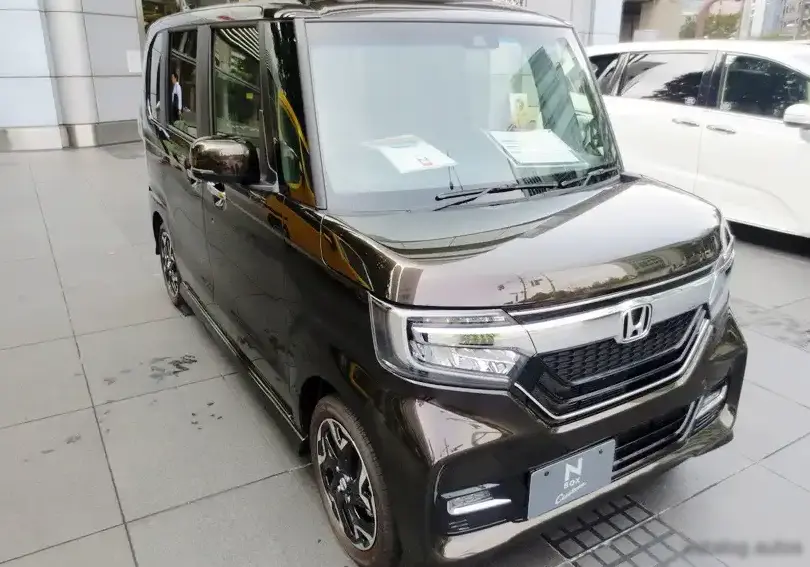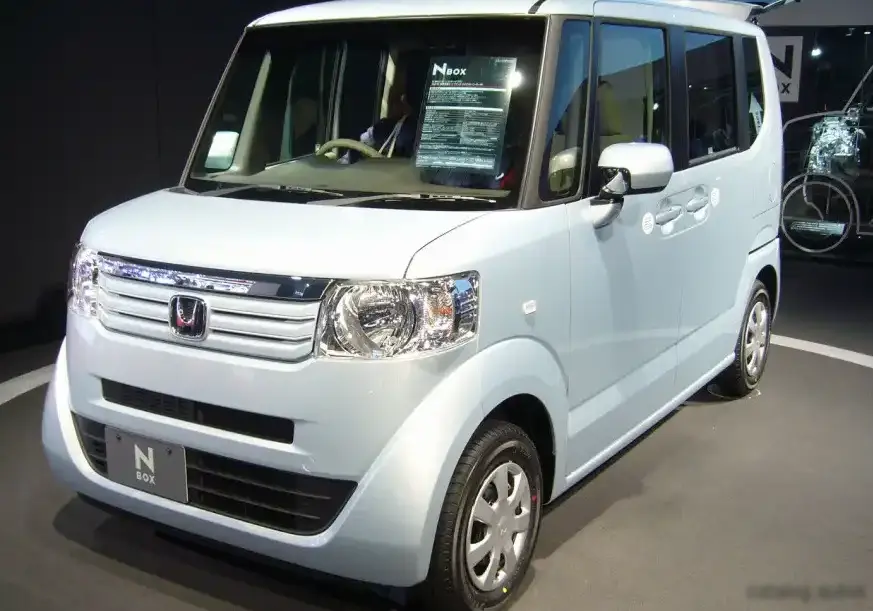
The Honda N-Box I 0.7i (58 Hp) 4WD CVT, produced between 2011 and 2017, represents a key variant within the first generation of Honda’s popular kei car MPV. Designed specifically for the Japanese domestic market (JDM), the N-Box aimed to maximize interior space and practicality within the strict regulations governing kei cars. This particular configuration – the 0.7-liter engine paired with a continuously variable transmission (CVT) and all-wheel drive – served as a mid-range offering, balancing affordability with enhanced all-weather capability. It was positioned as a practical and economical choice for families and individuals navigating Japan’s often congested urban environments and varied terrain.
Technical Specifications
| Brand | Honda |
| Model | N-Box |
| Generation | N-Box I |
| Type (Engine) | 0.7i (58 Hp) 4WD CVT |
| Start of production | 2011 |
| End of production | 2017 |
| Powertrain Architecture | Internal Combustion engine |
| Body type | MPV |
| Seats | 4 |
| Doors | 5 |
| Fuel consumption (combined) | 4.3 l/100 km (54.7 US mpg, 65.7 UK mpg, 23.3 km/l) |
| Fuel Type | Petrol (Gasoline) |
| Weight-to-power ratio | 17.2 kg/Hp, 58 Hp/tonne |
| Weight-to-torque ratio | 15.4 kg/Nm, 65 Nm/tonne |
| Power | 58 Hp @ 7300 rpm |
| Power per litre | 88.1 Hp/l |
| Torque | 65 Nm @ 3500 rpm (47.94 lb.-ft. @ 3500 rpm) |
| Engine layout | Front, Transverse |
| Engine Model/Code | S07A |
| Engine displacement | 658 cm3 (40.15 cu. in.) |
| Number of cylinders | 3 |
| Engine configuration | Inline |
| Cylinder Bore | 64 mm (2.52 in.) |
| Piston Stroke | 68.2 mm (2.69 in.) |
| Compression ratio | 11.2:1 |
| Number of valves per cylinder | 4 |
| Fuel injection system | Multi-port manifold injection |
| Engine aspiration | Naturally aspirated engine |
| Valvetrain | DOHC |
| Engine oil capacity | 2.6 l (2.75 US qt | 2.29 UK qt) |
| Coolant | 2.89 l (3.05 US qt | 2.54 UK qt) |
| Kerb Weight | 1000-1010 kg (2204.62 – 2226.67 lbs.) |
| Fuel tank capacity | 30 l (7.93 US gal | 6.6 UK gal) |
| Length | 3395 mm (133.66 in.) |
| Width | 1475 mm (58.07 in.) |
| Height | 1800 mm (70.87 in.) |
| Wheelbase | 2520 mm (99.21 in.) |
| Front track | 1295-1305 mm (50.98 – 51.38 in.) |
| Rear (Back) track | 1305-1315 mm (51.38 – 51.77 in.) |
| Ride height (ground clearance) | 150 mm (5.91 in.) |
| Minimum turning circle (turning diameter) | 9.4 m (30.84 ft.) |
| Drive wheel | All wheel drive (4×4) |
| Number of gears and type of gearbox | automatic transmission CVT |
| Front brakes | Disc |
| Rear brakes | Drum |
| Assisting systems | ABS (Anti-lock braking system) |
| Tires size | 145/80 R13; 155/65 R14 |
| Wheel rims size | 13; 14 |
Powertrain & Engine Architecture
The heart of the N-Box 0.7i is the S07A engine, a 658cc inline three-cylinder petrol engine. This engine utilizes a multi-point fuel injection system and a double overhead camshaft (DOHC) valvetrain, contributing to its relatively high power output for its size. The S07A is a naturally aspirated engine, meaning it doesn’t employ a turbocharger or supercharger. This simplicity contributes to its reliability, but also limits its overall performance. The engine’s 11.2:1 compression ratio is fairly high for a small displacement engine, aiding in efficiency. The CVT transmission is a key component of this variant. Unlike traditional automatic transmissions with fixed gear ratios, a CVT provides a virtually infinite number of ratios within its operating range, optimizing engine speed for either fuel efficiency or power delivery. The all-wheel-drive system is a part-time system, engaging the rear wheels when traction is needed, enhancing stability in slippery conditions.
Driving Characteristics
The 58 horsepower and 65 Nm (47.94 lb-ft) of torque produced by the 0.7i engine translate to modest, but adequate, performance. Acceleration is not brisk, and the CVT transmission, while smooth, can sometimes feel disconnected from the engine. The CVT prioritizes fuel economy, so aggressive acceleration results in the engine revving to its maximum output without a corresponding surge in speed. Compared to the more powerful N-Box variants, such as those with the 660cc turbocharged engine, the 0.7i feels significantly slower. However, the CVT’s ability to keep the engine in its optimal power band makes it surprisingly capable for everyday driving. The all-wheel drive system provides enhanced grip and stability, particularly on wet or snowy roads, making it a practical choice for regions with inclement weather.
Equipment & Trim Levels
The N-Box 0.7i 4WD CVT typically came equipped with standard features such as power windows, power door locks, and air conditioning. Interior upholstery was generally cloth, with a functional and durable design. Higher trim levels within the 0.7i range offered options like keyless entry, a touchscreen infotainment system, and alloy wheels. The dashboard layout was designed to maximize space and visibility, with a centrally mounted instrument cluster. Safety features included dual front airbags and ABS (Anti-lock Braking System). The N-Box was known for its clever interior packaging, with features like “Super Seat” which allowed for a variety of seating configurations.
Chassis & Braking
The N-Box I utilizes a front MacPherson strut suspension and a rear torsion beam suspension. This setup provides a comfortable ride, although it’s not particularly sporty. The front brakes are discs, providing adequate stopping power, while the rear brakes are drums, a cost-saving measure common in kei cars. The relatively light weight of the vehicle – between 1000 and 1010 kg (2204.62 – 2226.67 lbs.) – helps to offset the modest braking performance. Stabilizer bars were typically omitted on the base 0.7i models to keep costs down.
Market Reception & Comparison
The N-Box, in general, was a resounding success in Japan, consistently ranking among the best-selling kei cars. The 0.7i 4WD CVT variant was praised for its practicality, fuel efficiency, and all-weather capability. Critics noted its lack of outright performance, but acknowledged that it wasn’t intended to be a sports car. Compared to other N-Box trims, the 0.7i offered a more affordable entry point, making it accessible to a wider range of buyers. Its fuel economy of 4.3 l/100 km (54.7 US mpg) was a significant selling point, particularly in a country with high fuel prices. The 0.7i was often compared to other kei car MPVs, such as the Daihatsu Tanto and the Suzuki Spacia, with the N-Box generally being favored for its spacious interior and clever features.
Legacy
The Honda N-Box I 0.7i 4WD CVT has proven to be a reliable and durable vehicle. The S07A engine is known for its longevity, and the CVT transmission, while sometimes criticized for its feel, has generally held up well over time. In the used car market, these N-Boxes are still sought after for their practicality and fuel efficiency. While not a collector’s item, they represent a well-engineered and thoughtfully designed kei car that continues to provide affordable transportation for many Japanese drivers. The success of the first-generation N-Box paved the way for subsequent generations, which have continued to build on its strengths and maintain its position as a leading kei car MPV.