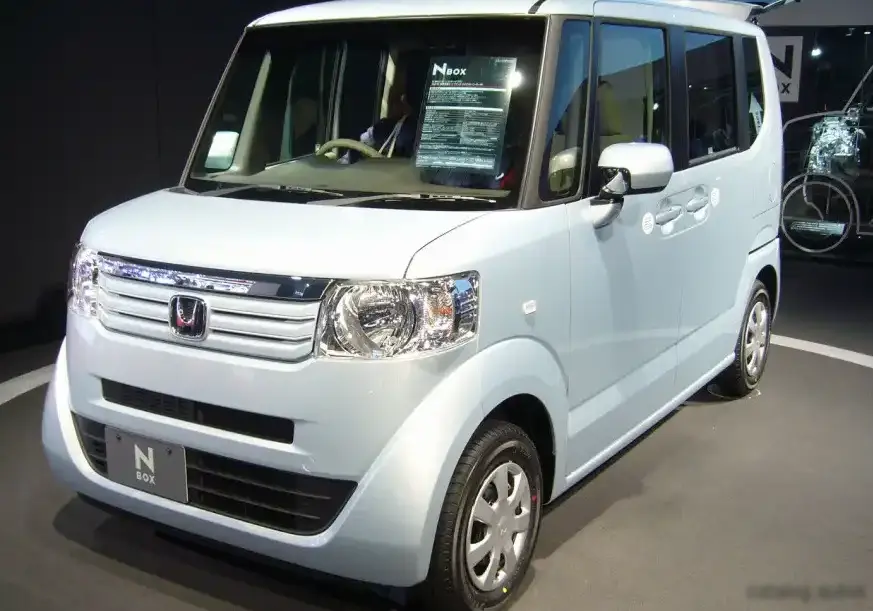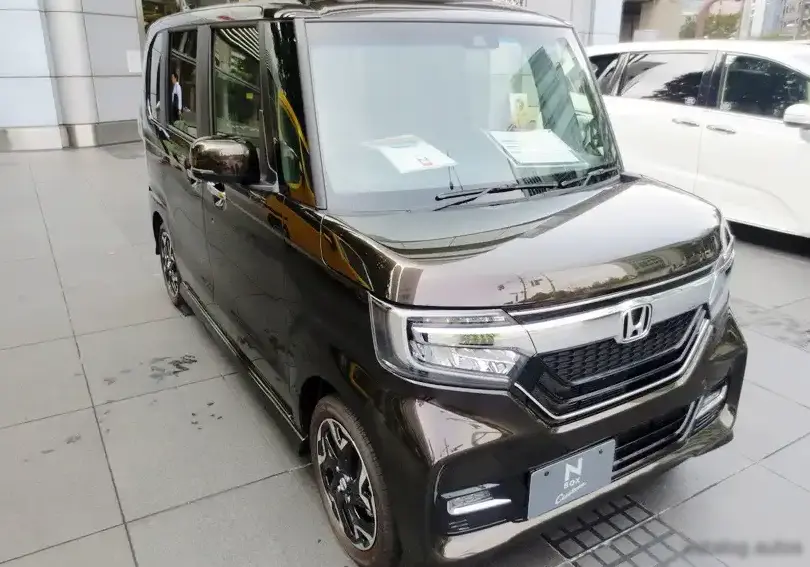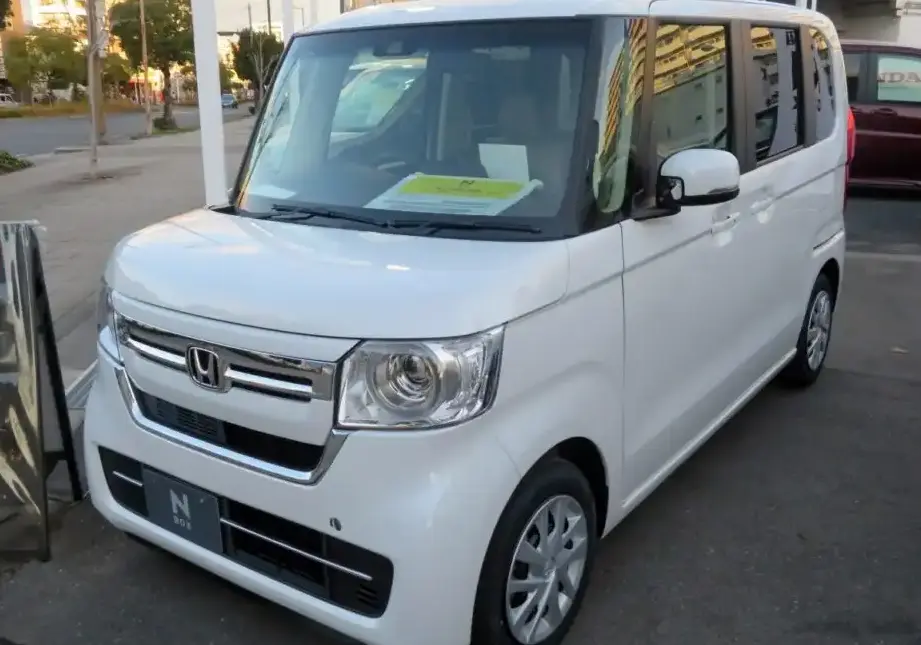
The Honda N-Box II, specifically the 0.7-liter (58 horsepower) variant with a Continuously Variable Transmission (CVT), represents a significant iteration in Honda’s “kei car” strategy. Introduced with the facelift in 2020, this model year falls within the second generation of the N-Box (introduced in 2017), designated internally as the JF3/JF4 series. The N-Box is primarily a Japan-market vehicle, designed to fit within the stringent size and engine regulations for the “kei” class, offering a practical and space-efficient solution for urban mobility. This particular 0.7L CVT configuration serves as the entry point to the N-Box lineup, prioritizing fuel efficiency and affordability over outright performance.
Technical Specifications
| Brand | Honda |
| Model | N-Box |
| Generation | N-Box II (facelift 2021) |
| Type (Engine) | 0.7 (58 Hp) CVT |
| Start of production | 2020 |
| Powertrain Architecture | Internal Combustion engine |
| Body type | MPV |
| Seats | 4 |
| Doors | 5 |
| Fuel consumption (urban) | 5.3 l/100 km (44.4 US mpg) |
| Fuel consumption (extra urban) | 4.4 l/100 km (53.5 US mpg) |
| Fuel consumption (combined) | 3.7 l/100 km (63.6 US mpg) |
| Fuel Type | Petrol (Gasoline) |
| Weight-to-power ratio | 15.3 kg/Hp |
| Weight-to-torque ratio | 13.7 kg/Nm |
| Power | 58 Hp @ 7300 rpm |
| Power per litre | 88.1 Hp/l |
| Torque | 65 Nm @ 4800 rpm (47.94 lb.-ft. @ 4800 rpm) |
| Engine layout | Front, Transverse |
| Engine Model/Code | S07B |
| Engine displacement | 658 cm3 (40.15 cu. in.) |
| Number of cylinders | 3 |
| Engine configuration | Inline |
| Cylinder Bore | 60 mm (2.36 in.) |
| Piston Stroke | 77.6 mm (3.06 in.) |
| Compression ratio | 12:1 |
| Number of valves per cylinder | 4 |
| Fuel injection system | Multi-port manifold injection |
| Engine aspiration | Naturally aspirated engine |
| Valvetrain | DOHC |
| Kerb Weight | 890-960 kg (1962.11 – 2116.44 lbs.) |
| Fuel tank capacity | 27 l (7.13 US gal | 5.94 UK gal) |
| Length | 3395 mm (133.66 in.) |
| Width | 1475 mm (58.07 in.) |
| Height | 1790 mm (70.47 in.) |
| Wheelbase | 2520 mm (99.21 in.) |
| Front track | 1305 mm (51.38 in.) |
| Rear track | 1305 mm (51.38 in.) |
| Ride height (ground clearance) | 145 mm (5.71 in.) |
| Minimum turning circle | 9.0 m (29.53 ft.) |
| Drivetrain Architecture | Front wheel drive |
| Number of gears and type of gearbox | automatic transmission CVT |
| Front suspension | Independent type McPherson |
| Rear suspension | Torsion |
| Front brakes | Ventilated discs |
| Rear brakes | Disc |
| Assisting systems | ABS (Anti-lock braking system) |
| Steering type | Steering rack and pinion |
| Power steering | Electric Steering |
| Tires size | 155/65 R14 |
| Wheel rims size | 14 |
Powertrain & Engine Architecture
The heart of this N-Box variant is the S07B engine, a 658cc inline-three cylinder petrol engine. This engine utilizes a multi-point fuel injection system and a double overhead camshaft (DOHC) valvetrain, contributing to its relatively efficient operation. The S07B is a naturally aspirated engine, meaning it doesn’t employ turbocharging or supercharging. This simplicity contributes to its reliability, but also limits its overall power output. The engine’s 12:1 compression ratio is relatively high for a small displacement engine, aiding in thermal efficiency. The engine is paired with Honda’s CVT (Continuously Variable Transmission), designed to maximize fuel economy by keeping the engine operating within its most efficient range. This CVT lacks stepped “gears” like a traditional automatic, providing a smooth, albeit sometimes less engaging, driving experience.
Driving Characteristics
The 58 horsepower output and CVT pairing result in modest acceleration. The N-Box 0.7 CVT is geared towards smooth, economical urban driving rather than spirited performance. The CVT’s programming prioritizes fuel efficiency, meaning the engine often operates at lower RPMs, resulting in a relaxed driving experience. While adequate for city commutes and short trips, overtaking maneuvers on highways require careful planning. Compared to the more powerful N-Box variants (like those equipped with a 660cc turbocharged engine), this version feels noticeably slower. The CVT’s lack of distinct gear changes can also feel somewhat disconnected to drivers accustomed to traditional automatic transmissions.
Equipment & Trim Levels
As the entry-level trim, the 0.7L CVT N-Box typically includes basic amenities such as power windows, power door locks, and air conditioning. Safety features like ABS (Anti-lock Braking System) are standard. Interior upholstery is typically a durable cloth material. Optional extras, depending on the specific sub-trim level, could include a touchscreen infotainment system, navigation, and parking sensors. Higher trim levels within the N-Box II range offer features like leather upholstery, automatic climate control, and advanced safety systems like Honda Sensing (Honda’s suite of driver-assistance technologies).
Chassis & Braking
The N-Box utilizes a front-engine, front-wheel-drive layout. The front suspension employs an independent McPherson strut setup, providing a comfortable ride. The rear suspension utilizes a torsion beam, a simpler and more cost-effective design. The braking system features ventilated discs on the front wheels and solid discs on the rear, providing adequate stopping power for the vehicle’s weight and performance. The electric power steering offers light and easy maneuverability, ideal for navigating tight urban streets.
Market Reception & Comparison
The N-Box, in general, has been a resounding success in the Japanese market, consistently ranking among the best-selling vehicles in the country. The 0.7L CVT variant appeals to buyers prioritizing fuel economy and affordability. Critics generally praise the N-Box for its spacious interior, clever packaging, and ease of use. However, the 0.7L engine is often criticized for its lack of power, particularly when fully loaded or driving on inclines. Compared to the turbocharged N-Box variants, the 0.7L offers significantly lower performance but boasts superior fuel economy. It also tends to be less expensive to purchase and maintain.
Legacy
The S07B engine, while not known for its high performance, has proven to be a reliable and durable powerplant. The N-Box II, including the 0.7L CVT variant, enjoys a good reputation for reliability, with few widespread mechanical issues reported. In the used car market, these models hold their value reasonably well, particularly those with low mileage and a well-maintained service history. The N-Box continues to be a popular choice for Japanese drivers seeking a practical, fuel-efficient, and affordable urban vehicle.