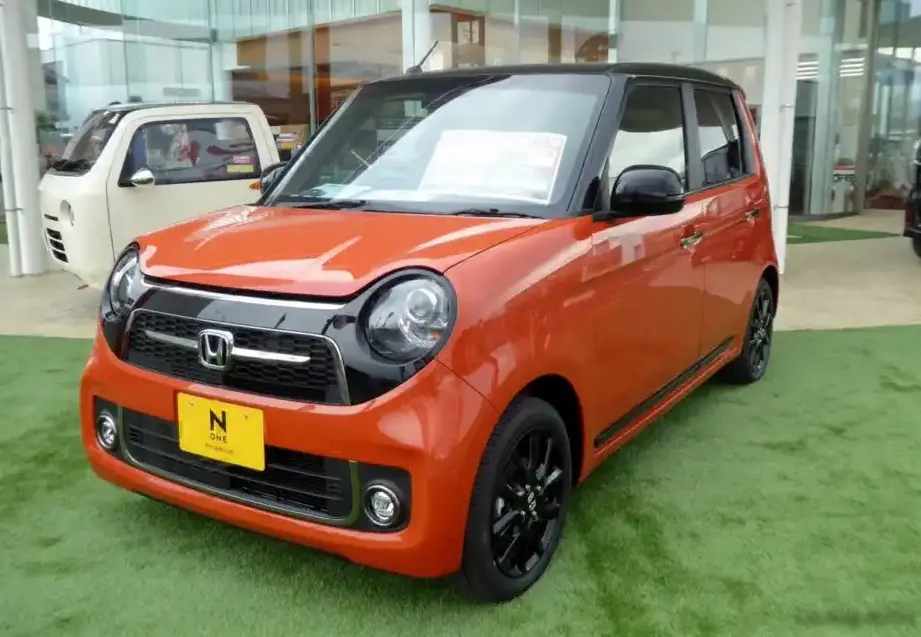
The Honda N-One I 0.7i (58 Hp) 4WD CVT is a kei car produced by Honda between November 2012 and March 2020. It represents the first generation of the N-One, a city car designed to appeal to a nostalgic market while offering modern convenience and efficiency. Positioned as an entry-level variant within the N-One lineup, this model combined a small-displacement engine with a continuously variable transmission (CVT) and all-wheel drive, making it a practical choice for urban driving and inclement weather conditions. The N-One was conceived as a successor to the Honda Be-1 and aimed to recapture the spirit of Honda’s “small, fun” cars of the past, offering a unique blend of retro styling and contemporary technology.
Technical Specifications
| Brand | Honda |
| Model | N-One |
| Generation | N-One I |
| Type (Engine) | 0.7i (58 Hp) 4WD CVT |
| Start of production | November, 2012 |
| End of production | March, 2020 |
| Powertrain Architecture | Internal Combustion engine |
| Body type | Hatchback |
| Seats | 4 |
| Doors | 5 |
| Fuel consumption (combined) | 3.9 l/100 km (60.3 US mpg, 72.4 UK mpg, 25.6 km/l) |
| Fuel Type | Petrol (Gasoline) |
| Weight-to-power ratio | 15.2 kg/Hp, 65.9 Hp/tonne |
| Weight-to-torque ratio | 13.5 kg/Nm, 73.9 Nm/tonne |
| Power | 58 Hp @ 7300 rpm |
| Power per litre | 88.1 Hp/l |
| Torque | 65 Nm @ 4700 rpm (47.94 lb.-ft. @ 4700 rpm) |
| Engine layout | Front, Transverse |
| Engine displacement | 658 cm3 (40.15 cu. in.) |
| Number of cylinders | 3 |
| Engine configuration | Inline |
| Cylinder Bore | 64 mm (2.52 in.) |
| Piston Stroke | 68.2 mm (2.69 in.) |
| Compression ratio | 11.8:1 |
| Number of valves per cylinder | 4 |
| Fuel injection system | Multi-port manifold injection |
| Engine aspiration | Naturally aspirated engine |
| Valvetrain | DOHC |
| Engine oil capacity | 2.6 l (2.75 US qt | 2.29 UK qt) |
| Kerb Weight | 880-920 kg (1940.07 – 2028.25 lbs.) |
| Fuel tank capacity | 30 l (7.93 US gal | 6.6 UK gal) |
| Length | 3395 mm (133.66 in.) |
| Width | 1475 mm (58.07 in.) |
| Height | 1630 mm (64.17 in.) |
| Wheelbase | 2520 mm (99.21 in.) |
| Front track | 1290-1300 mm (50.79 – 51.18 in.) |
| Rear (Back) track | 1295-1305 mm (50.98 – 51.38 in.) |
| Ride height (ground clearance) | 155 mm (6.1 in.) |
| Minimum turning circle (turning diameter) | 9.4 m (30.84 ft.) |
| Drive wheel | All wheel drive (4×4) |
| Number of gears and type of gearbox | automatic transmission CVT |
| Front suspension | Independent type McPherson |
| Rear suspension | Torsion |
| Front brakes | Disc |
| Rear brakes | Drum |
| Assisting systems | ABS (Anti-lock braking system) |
| Steering type | Steering rack and pinion |
| Power steering | Electric Steering |
| Tires size | 155/65 R14; 165/55 R15 |
| Wheel rims size | 14; 15 |
Powertrain & Engine Architecture
The N-One 0.7i utilizes Honda’s S07A engine, a 658cc inline-three cylinder engine. This engine is naturally aspirated and employs a multi-point fuel injection system. The engine features a double overhead camshaft (DOHC) valvetrain with four valves per cylinder, contributing to its relatively high power output for its size. The engine’s compact dimensions were crucial for meeting the stringent size and weight requirements of the kei car class in Japan. The S07A engine is known for its smooth operation and reasonable refinement, despite its small displacement. Paired with the engine is a continuously variable transmission (CVT), which prioritizes fuel efficiency and smooth acceleration over outright performance. The CVT is tuned for relaxed driving, with a focus on minimizing engine revolutions at cruising speeds.
Driving Characteristics
The 58 horsepower and 65 Nm (47.94 lb-ft) of torque produced by this powertrain configuration results in modest, but adequate, performance for city driving. Acceleration is not brisk, and overtaking maneuvers require careful planning. The CVT contributes to a smooth, linear power delivery, but can sometimes feel disconnected from the engine. Compared to the turbocharged 660cc variants available in the N-One lineup, this 0.7i model offers significantly less power and torque. The all-wheel drive system provides enhanced traction in slippery conditions, making it a suitable choice for regions with frequent rain or snow. The CVT’s gear ratios are optimized for fuel economy, resulting in a relaxed driving experience at highway speeds, though maintaining speed on inclines can require the engine to work harder.
Equipment & Trim Levels
The N-One 0.7i 4WD CVT typically came equipped with basic amenities, reflecting its position as an entry-level trim. Standard features generally included air conditioning, power windows, and a basic audio system. Safety features such as ABS were standard. Interior upholstery was typically cloth, and the dashboard featured a simple, functional design. Optional extras included features like a navigation system, upgraded audio, and alloy wheels. Higher trim levels of the N-One offered more luxurious appointments, such as leather upholstery and additional convenience features, but the 0.7i model focused on providing essential transportation at an affordable price point.
Chassis & Braking
The N-One I utilizes a McPherson strut suspension setup at the front and a torsion beam suspension at the rear. This configuration provides a comfortable ride quality, particularly on smooth roads. The front brakes are discs, while the rear brakes are drums, a cost-saving measure common in kei cars. The steering is rack and pinion with electric power assistance, offering light and precise steering feel. The relatively lightweight construction of the N-One contributes to its nimble handling characteristics. The all-wheel drive system adds to the vehicle’s stability and traction, particularly in adverse weather conditions.
Market Reception & Comparison
The Honda N-One was generally well-received in Japan, praised for its retro styling, practical size, and fuel efficiency. Critics noted that the 0.7i engine, while economical, lacked the punch of the turbocharged options. Compared to other kei cars in the Japanese market, the N-One stood out for its unique design and spacious interior. The CVT transmission was often criticized for its lack of responsiveness, but it was acknowledged as a key contributor to the vehicle’s fuel economy. The 4WD system was a popular feature, particularly among buyers in regions with harsh winters.
Legacy
The Honda N-One, and specifically the 0.7i 4WD CVT variant, has proven to be a reliable and economical city car. The S07A engine is known for its durability, and the CVT transmission, while not known for high performance, is generally reliable if properly maintained. On the used car market, these N-Ones are sought after for their affordability and practicality. The N-One represents a successful attempt by Honda to blend retro aesthetics with modern technology, creating a unique and appealing vehicle that resonated with Japanese consumers. The first generation N-One helped revitalize the kei car segment and paved the way for the second generation model.