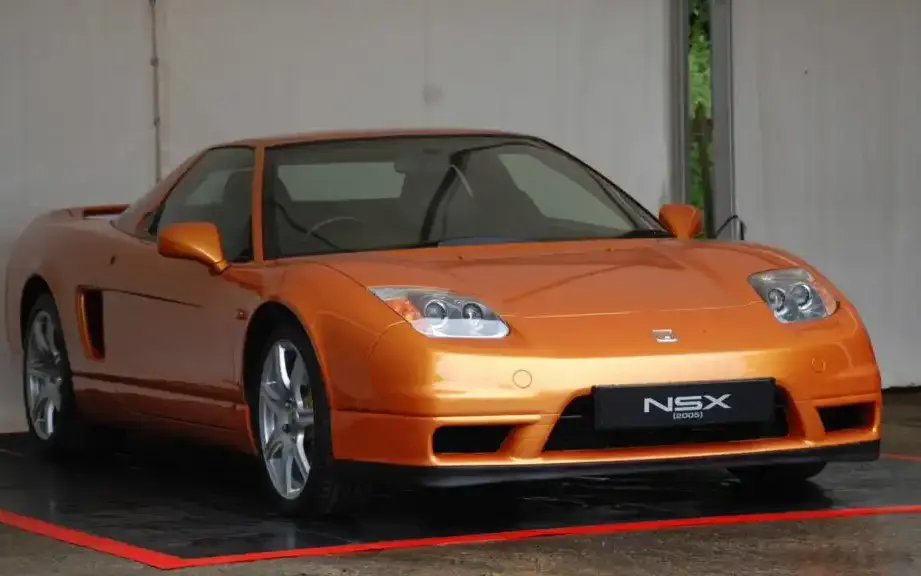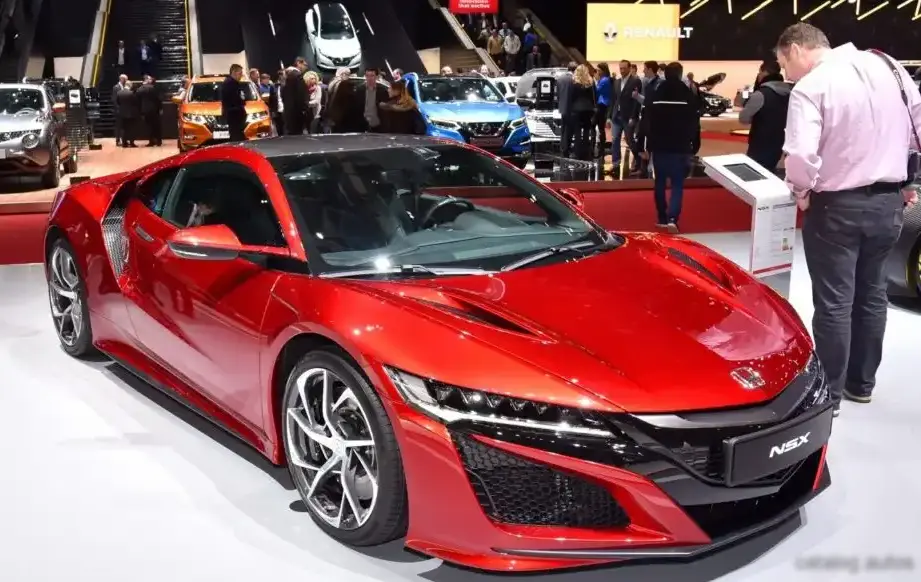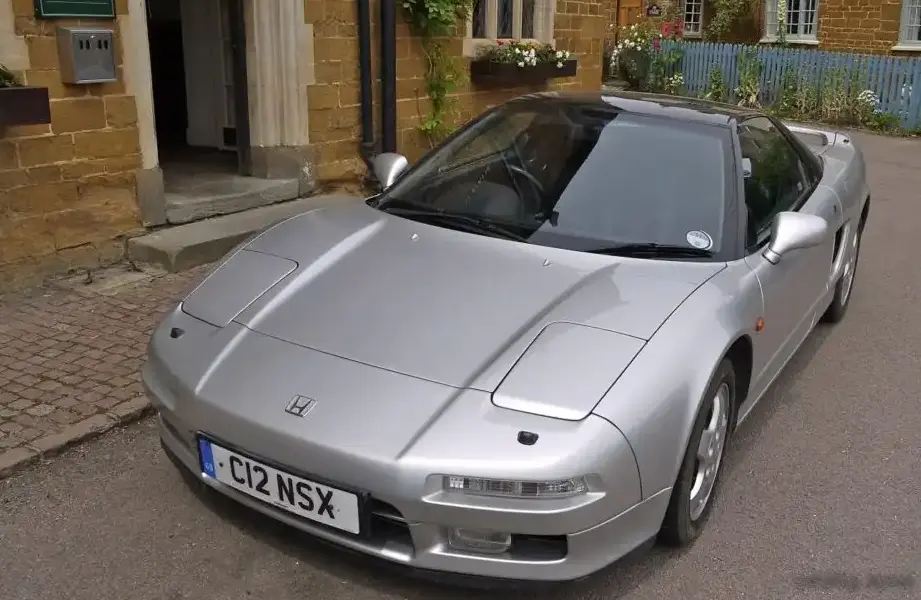
The Honda NSX, internally designated the NA1, represented a paradigm shift in sports car design when it debuted in 1990. Produced through 1997, the first-generation NSX (New Sportscar eXperimental) aimed to compete directly with established European marques like Ferrari and Porsche, offering comparable performance with Honda’s renowned reliability. The 3.0-liter V6 model, producing 274 horsepower, was the flagship of the NA1 series, embodying Honda’s technological prowess and commitment to a balanced driving experience. It was built on the foundation of extensive research and development, including significant input from Formula One driver Ayrton Senna, resulting in a car celebrated for its precision handling and innovative all-aluminum construction.
Technical Specifications
| Brand | Honda |
| Model | NSX |
| Generation | NSX I Coupe |
| Type (Engine) | 3.0 24V Vtec (NA1) (274 Hp) |
| Start of production | 1990 |
| End of production | 1997 |
| Powertrain Architecture | Internal Combustion engine |
| Body type | Coupe |
| Seats | 2 |
| Doors | 2 |
| Fuel consumption (combined) | 10 l/100 km (23.5 US mpg, 28.2 UK mpg, 10 km/l) |
| Fuel Type | Petrol (Gasoline) |
| Acceleration 0 – 100 km/h | 5.9 sec |
| Acceleration 0 – 62 mph | 5.9 sec |
| Acceleration 0 – 60 mph | 5.6 sec |
| Maximum speed | 270 km/h (167.77 mph) |
| Weight-to-power ratio | 5 kg/Hp, 200 Hp/tonne |
| Weight-to-torque ratio | 4.8 kg/Nm, 207.3 Nm/tonne |
| Power | 274 Hp @ 7300 rpm |
| Power per litre | 92 Hp/l |
| Torque | 284 Nm @ 5400 rpm (209.47 lb.-ft. @ 5400 rpm) |
| Engine layout | Middle, Transverse |
| Engine Model/Code | C30A3 |
| Engine displacement | 2977 cm3 (181.67 cu. in.) |
| Number of cylinders | 6 |
| Engine configuration | V-engine |
| Cylinder Bore | 90 mm (3.54 in.) |
| Piston Stroke | 78 mm (3.07 in.) |
| Compression ratio | 10.2:1 |
| Number of valves per cylinder | 4 |
| Fuel injection system | Multi-port manifold injection |
| Engine aspiration | Naturally aspirated engine |
| Valvetrain | DOHC |
| Engine oil capacity | 5 l (5.28 US qt | 4.4 UK qt) |
| Kerb Weight | 1370 kg (3020.33 lbs.) |
| Max. weight | 1610 kg (3549.44 lbs.) |
| Max load | 240 kg (529.11 lbs.) |
| Trunk (boot) space – minimum | 154 l (5.44 cu. ft.) |
| Fuel tank capacity | 70 l (18.49 US gal | 15.4 UK gal) |
| Length | 4405 mm (173.43 in.) |
| Width | 1810 mm (71.26 in.) |
| Height | 1170 mm (46.06 in.) |
| Wheelbase | 2530 mm (99.61 in.) |
| Front track | 1510 mm (59.45 in.) |
| Rear (Back) track | 1530 mm (60.24 in.) |
| Drivetrain Architecture | The Internal combustion engine (ICE) drives the rear wheels of the vehicle. |
| Drive wheel | Rear wheel drive |
| Number of gears and type of gearbox | 5 gears, manual transmission |
| Front suspension | Double wishbone |
| Rear suspension | Double wishbone |
| Front brakes | Ventilated discs |
| Rear brakes | Ventilated discs |
| Assisting systems | ABS (Anti-lock braking system) |
| Tires size | 205/55 R16; 225/50 R16 |
Powertrain & Engine Architecture
The heart of the NA1 NSX is the C30A3 engine, a 2,977 cc (181.67 cu. in.) naturally aspirated V6. This engine is notable for its all-aluminum construction, a feature rarely seen in production cars at the time, contributing to the NSX’s relatively lightweight chassis. The engine utilizes a 60-degree V-angle, providing a balance between smoothness and compactness. It employs multi-port fuel injection and a Double Overhead Camshaft (DOHC) valvetrain with four valves per cylinder. The VTEC (Variable Valve Timing and Lift Electronic Control) system, a Honda innovation, is central to the engine’s performance. VTEC allows the engine to seamlessly switch between two camshaft profiles – one optimized for low-end torque and fuel efficiency, and another for high-rpm power. The 5-speed manual transmission was the standard offering, known for its precise shifts and robust construction. The engine’s design prioritized responsiveness and a linear power delivery, rather than peak horsepower figures.
Driving Characteristics
The NA1 NSX with the 3.0-liter engine and manual transmission delivers a remarkably balanced driving experience. Acceleration from 0-60 mph takes approximately 5.6 seconds, and it can achieve a top speed of 167.77 mph. The engine’s VTEC system is noticeable, providing a distinct change in character as it engages around 5,400 rpm. The car feels nimble and responsive, thanks to its mid-engine layout and well-tuned suspension. Compared to later, more powerful NSX variants, the NA1 offers a more approachable and predictable driving experience. While the later 3.2-liter engine provided more raw power, many enthusiasts prefer the purity and balance of the original 3.0-liter.
Equipment & Trim Levels
The NSX was relatively sparsely equipped by modern standards, focusing on the core driving experience. Standard features included power windows, power locks, air conditioning, and a basic audio system. Leather upholstery was standard, and the interior design was driver-focused, with well-placed controls and excellent visibility. Optional extras included a premium Bose audio system, power-adjustable seats, and a Targa top. The NSX didn’t offer a wide range of trim levels; the focus was on providing a high-performance sports car with a refined interior.
Chassis & Braking
The NSX’s chassis is a masterpiece of engineering. Its all-aluminum monocoque construction was revolutionary for its time, providing exceptional rigidity and minimizing weight. The suspension utilizes a double wishbone setup at both the front and rear, offering precise control and excellent handling characteristics. Braking duties are handled by ventilated disc brakes on all four wheels, assisted by an Anti-lock Braking System (ABS). The suspension was tuned to provide a comfortable ride without sacrificing handling performance. The relatively low weight of the NA1 NSX contributed significantly to its agility and braking performance.
Market Reception & Comparison
The NSX was widely praised by automotive critics upon its release. It was lauded for its handling, performance, and build quality. It successfully challenged the established European sports car manufacturers, demonstrating that a Japanese automaker could compete at the highest level. Compared to the Porsche 911 of the same era, the NSX offered a more user-friendly driving experience and greater reliability. However, the 911 offered a more established brand image and a wider range of customization options. Fuel economy was respectable for a sports car of its caliber, averaging around 23.5 mpg in combined driving.
Legacy
The Honda NSX, particularly the NA1 variant, has become a highly sought-after classic car. Its innovative design, exceptional handling, and Honda’s reputation for reliability have ensured its enduring appeal. The C30A3 engine is known for its durability, and well-maintained examples can still provide years of reliable performance. The NA1 NSX is often credited with raising the bar for Japanese sports car engineering and influencing the design of subsequent sports cars from around the world. Today, prices for well-preserved NA1 NSXs continue to rise, reflecting their status as a modern classic and a testament to Honda’s engineering excellence.