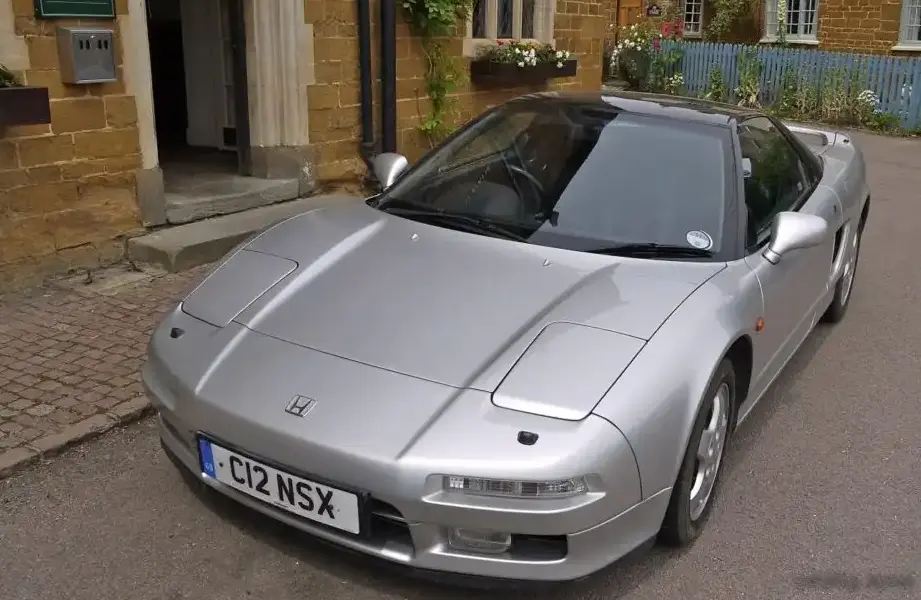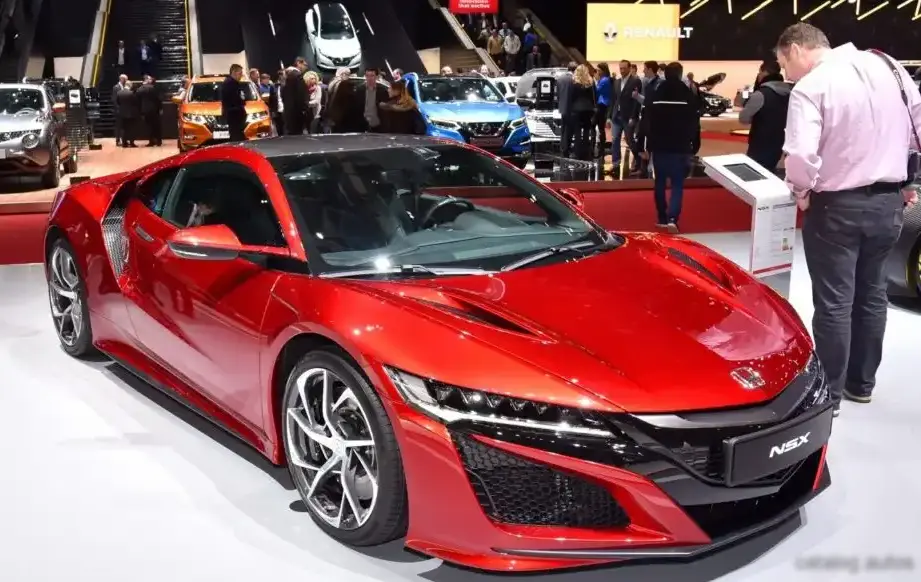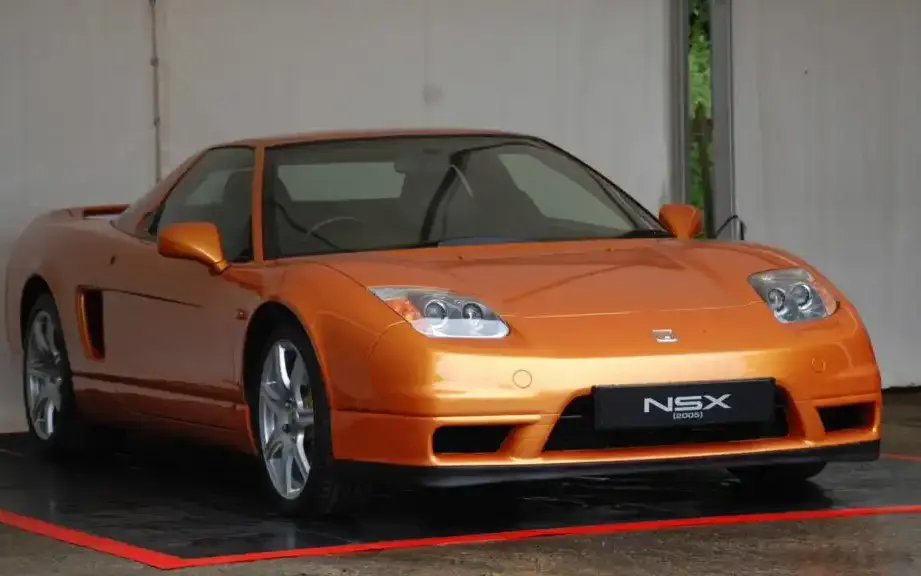
The Honda NSX (New Sportscar eXperimental) was a mid-engine, rear-wheel drive sports car produced by Honda between 1990 and 2005. The first generation, known as the NA1 (1990-1997) and NA2 (1997-2005), established a benchmark for performance and handling. The 2002-2005 model year represents the final iteration of the first-generation NSX, often referred to as the facelift model. This version featured subtle cosmetic updates and refinements to the already highly regarded platform. The 3.0 V6 VTEC with the “F-matic” automatic transmission represents a relatively uncommon configuration, positioned as a more accessible entry point into the NSX ownership experience compared to the six-speed manual transmission models.
Technical Specifications
| Brand | Honda |
| Model | NSX |
| Generation | NSX I Coupe (facelift 2002) |
| Type (Engine) | 3.0 V6 VTEC (256 Hp) F-matic |
| Start of production | 2002 |
| End of production | 2005 |
| Powertrain Architecture | Internal Combustion engine |
| Body type | Coupe |
| Seats | 2 |
| Doors | 2 |
| Fuel consumption (economy) – urban (NEDC) | 18.3 l/100 km (12.9 US mpg, 15.4 UK mpg, 5.5 km/l) |
| Fuel consumption (economy) – extra urban (NEDC) | 8.8 l/100 km (26.7 US mpg, 32.1 UK mpg, 11.4 km/l) |
| Fuel consumption (economy) – combined (NEDC) | 12.3 l/100 km (19.1 US mpg, 23 UK mpg, 8.1 km/l) |
| CO2 emissions (NEDC) | 287 g/km |
| Fuel Type | Petrol (Gasoline) |
| Acceleration 0 – 100 km/h | 7.5 sec |
| Acceleration 0 – 62 mph | 7.5 sec |
| Acceleration 0 – 60 mph | 7.1 sec |
| Maximum speed | 261 km/h (162.18 mph) |
| Emission standard | Euro 3 |
| Weight-to-power ratio | 5.8 kg/Hp, 172.4 Hp/tonne |
| Weight-to-torque ratio | 5.2 kg/Nm, 191.2 Nm/tonne |
| Power | 256 Hp @ 6800 rpm |
| Power per litre | 86 Hp/l |
| Torque | 284 Nm @ 5400 rpm (209.47 lb.-ft. @ 5400 rpm) |
| Maximum engine speed | 7500 rpm |
| Engine layout | Middle, Transverse |
| Engine Model/Code | C30A4 |
| Engine displacement | 2977 cm3 (181.67 cu. in.) |
| Number of cylinders | 6 |
| Engine configuration | V-engine |
| Cylinder Bore | 90 mm (3.54 in.) |
| Piston Stroke | 78 mm (3.07 in.) |
| Compression ratio | 9.6:1 |
| Number of valves per cylinder | 4 |
| Fuel injection system | Multi-port manifold injection |
| Engine aspiration | Naturally aspirated engine |
| Valvetrain | DOHC, VTEC |
| Engine oil capacity | 5 l (5.28 US qt | 4.4 UK qt) |
| Coolant | 16.5 l (17.44 US qt | 14.52 UK qt) |
| Kerb Weight | 1485 kg (3273.86 lbs.) |
| Max. weight | 1610 kg (3549.44 lbs.) |
| Max load | 125 kg (275.58 lbs.) |
| Trunk (boot) space – minimum | 154 l (5.44 cu. ft.) |
| Fuel tank capacity | 70 l (18.49 US gal | 15.4 UK gal) |
| Length | 4425 mm (174.21 in.) |
| Width | 1810 mm (71.26 in.) |
| Height | 1170 mm (46.06 in.) |
| Wheelbase | 2530 mm (99.61 in.) |
| Front track | 1510 mm (59.45 in.) |
| Rear (Back) track | 1530 mm (60.24 in.) |
| Ride height (ground clearance) | 130 mm (5.12 in.) |
| Minimum turning circle (turning diameter) | 11.6 m (38.06 ft.) |
| Drivetrain Architecture | Rear wheel drive |
| Drive wheel | Rear wheel drive |
| Number of gears and type of gearbox | 4 gears, automatic transmission |
| Front suspension | Coil spring, Double wishbone, Transverse stabilizer |
| Rear suspension | Double wishbone, Transverse stabilizer, Coil spring |
| Front brakes | Ventilated discs, 298 mm |
| Rear brakes | Ventilated discs, 303 mm |
| Assisting systems | ABS (Anti-lock braking system) |
| Steering type | Steering rack and pinion |
| Power steering | Electric Steering |
| Tires size | Front wheel tires: 215/40 R17 Rear wheel tires: 255/40 R17 |
| Wheel rims size | Front wheel rims: 7J x 17 Rear wheel rims: 9J x 17 |
INTRODUCTION
The 2002-2005 Honda NSX facelift represented the culmination of years of refinement for Honda’s iconic sports car. Built on the 1HX0/A3 platform, this iteration featured subtle styling changes, including revised headlights and taillights, along with improvements to the interior. The 3.0-liter V6 engine, designated C30A4, continued to be the heart of the NSX, but this specific variant paired it with a four-speed automatic transmission marketed as “F-matic.” This combination aimed to broaden the NSX’s appeal by offering a more comfortable and accessible driving experience compared to the more focused six-speed manual option. It was positioned as a grand touring version of the NSX, sacrificing some outright performance for increased usability.
Powertrain & Engine Architecture
The C30A4 engine is a 2,977 cc (181.67 cu. in.) naturally aspirated V6, featuring Honda’s renowned VTEC (Variable Valve Timing and Lift Electronic Control) technology. This system allows for optimized valve timing at both low and high engine speeds, resulting in a broad powerband and improved fuel efficiency. The engine utilizes multi-port fuel injection and a compression ratio of 9.6:1. The “F-matic” transmission is a four-speed automatic with a torque converter. While not as sporty or responsive as a dual-clutch transmission (DCT) or even a traditional manual, it provided smooth shifts and ease of use, making the NSX more approachable for everyday driving. The transmission was electronically controlled, adapting shift points based on throttle input and driving conditions.
Driving Characteristics
The NSX 3.0 V6 with the F-matic transmission delivers a different driving experience compared to its manual counterpart. Acceleration from 0-60 mph takes approximately 7.1 seconds, and 0-100 km/h in 7.5 seconds, slightly slower than the manual version. The automatic transmission prioritizes smooth shifts over aggressive downshifts, resulting in a more relaxed driving style. The gear ratios are tuned for comfortable cruising, and while the transmission offers a “Sport” mode, it doesn’t provide the same level of control as a manual gearbox. The car’s mid-engine layout and well-tuned suspension still provide excellent balance and handling, but the automatic transmission diminishes the driver’s involvement in the process.
Equipment & Trim Levels
The 2002-2005 NSX with the automatic transmission typically came well-equipped, though not to the same level as some of the higher-performance manual variants. Standard features included leather upholstery, power windows and locks, air conditioning, and a premium sound system. Optional extras included a navigation system, upgraded audio, and various cosmetic enhancements. The interior design was driver-focused, with a clear and concise instrument panel. The automatic transmission models often featured wood trim accents, further emphasizing their grand touring character.
Chassis & Braking
The NSX chassis is a lightweight aluminum monocoque, contributing to the car’s exceptional rigidity and handling. The suspension utilizes double wishbones at all four corners, with coil springs and transverse stabilizers. The braking system consists of ventilated discs on all four wheels, with ABS (Anti-lock Braking System) as standard. The rear brakes are slightly larger (303mm) than the front (298mm) to optimize braking balance. The relatively low curb weight of 1485 kg (3273.86 lbs) helps to offset the slight performance disadvantage of the automatic transmission.
Market Reception & Comparison
The NSX 3.0 V6 with the F-matic transmission received mixed reviews. While praised for its comfort and ease of use, it was often criticized for lacking the engagement and responsiveness of the manual version. Critics noted that the automatic transmission didn’t fully exploit the engine’s potential. Fuel economy was reasonable for a sports car of its era, averaging around 19.1 US mpg combined. Compared to the manual NSX, the automatic version was generally less expensive and appealed to a different type of buyer – those prioritizing comfort and convenience over outright performance. Compared to European rivals like the Porsche 911, the NSX offered a unique blend of Japanese reliability and innovative engineering.
Legacy
The 2002-2005 Honda NSX with the automatic transmission remains a desirable classic car. The C30A4 engine and F-matic transmission are generally considered reliable, although regular maintenance is crucial. Parts availability can be a challenge, as the NSX is no longer in production. However, a dedicated community of enthusiasts ensures that parts and support are still available. Today, these models are appreciated for their unique character and offer a more accessible entry point into NSX ownership. While not as highly sought after as the manual versions, they represent a significant piece of automotive history and a testament to Honda’s engineering prowess.