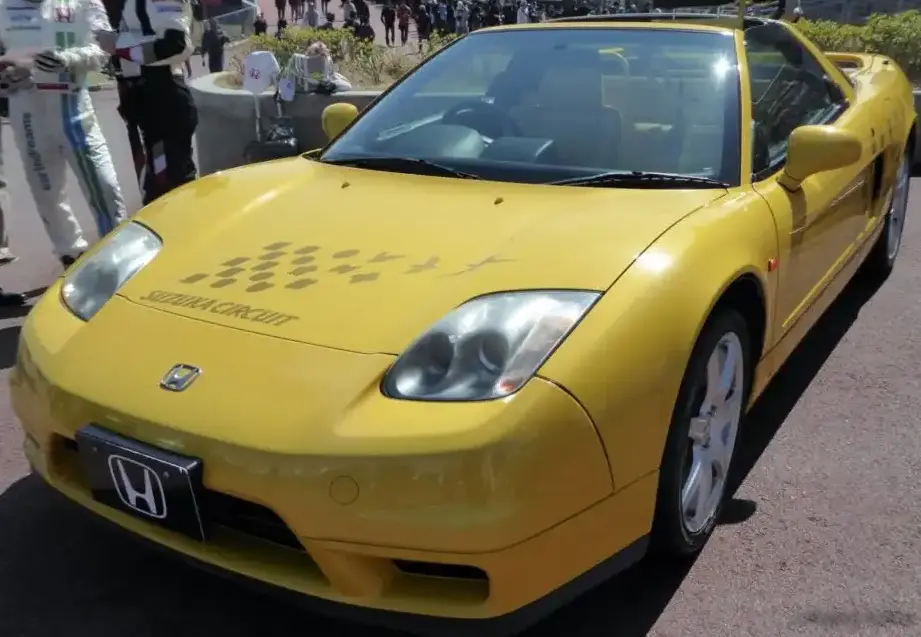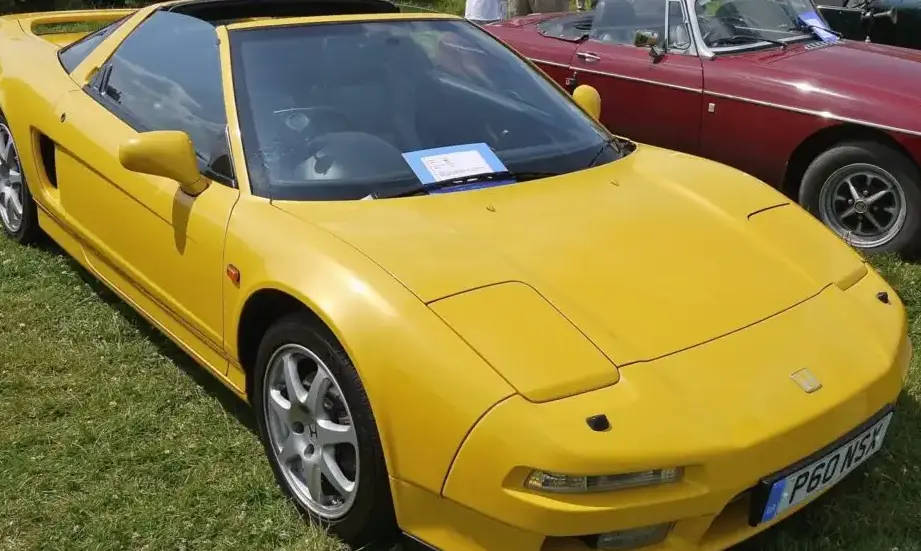
The Honda NSX-T I, produced between 1995 and 2001, represents a pivotal iteration of Honda’s groundbreaking mid-engine sports car. Positioned as the targa-top variant of the first-generation NSX (chassis code NA1/NA2), the NSX-T I offered a blend of open-air driving enjoyment and the renowned performance characteristics of the NSX. It sat in the middle of the NSX lineup, offering a more accessible entry point than the hardtop NSX, but still delivering a significant performance experience. This version, equipped with the 3.0-liter V6 engine and the “F-matic” four-speed automatic transmission, aimed to broaden the NSX’s appeal to drivers seeking a more comfortable and user-friendly experience without sacrificing the core NSX driving dynamics.
Technical Specifications
| Brand | Honda |
| Model | NSX |
| Generation | NSX-T I |
| Type (Engine) | 3.0 V6 VTEC (256 Hp) F-matic |
| Start of production | 1995 |
| End of production | 2001 |
| Powertrain Architecture | Internal Combustion engine |
| Body type | Targa |
| Seats | 2 |
| Doors | 2 |
| Fuel consumption (economy) – urban (NEDC) | 17.3 l/100 km (13.6 US mpg, 16.3 UK mpg, 5.8 km/l) |
| Fuel consumption (economy) – extra urban (NEDC) | 8.8 l/100 km (26.7 US mpg, 32.1 UK mpg, 11.4 km/l) |
| Fuel consumption (economy) – combined (NEDC) | 11.8 l/100 km (19.9 US mpg, 23.9 UK mpg, 8.5 km/l) |
| Fuel Type | Petrol (Gasoline) |
| Maximum speed | 260 km/h (161.56 mph) |
| Weight-to-power ratio | 5.7 kg/Hp, 175.9 Hp/tonne |
| Weight-to-torque ratio | 4.9 kg/Nm, 204.8 Nm/tonne |
| Power | 256 Hp @ 6800 rpm |
| Power per litre | 86 Hp/l |
| Torque | 298 Nm @ 5300 rpm (219.79 lb.-ft. @ 5300 rpm) |
| Maximum engine speed | 7500 rpm |
| Engine layout | Middle, Transverse |
| Engine Model/Code | C30A4 |
| Engine displacement | 2977 cm3 (181.67 cu. in.) |
| Number of cylinders | 6 |
| Engine configuration | V-engine |
| Cylinder Bore | 90 mm (3.54 in.) |
| Piston Stroke | 78 mm (3.07 in.) |
| Compression ratio | 9.6:1 |
| Number of valves per cylinder | 4 |
| Fuel injection system | Multi-port manifold injection |
| Engine aspiration | Naturally aspirated engine |
| Valvetrain | DOHC, VTEC |
| Engine oil capacity | 5 l (5.28 US qt | 4.4 UK qt) |
| Coolant | 16.5 l (17.44 US qt | 14.52 UK qt) |
| Kerb Weight | 1455 kg (3207.73 lbs.) |
| Trunk (boot) space – minimum | 154 l (5.44 cu. ft.) |
| Fuel tank capacity | 70 l (18.49 US gal | 15.4 UK gal) |
| Length | 4420 mm (174.02 in.) |
| Width | 1810 mm (71.26 in.) |
| Height | 1175 mm (46.26 in.) |
| Wheelbase | 2530 mm (99.61 in.) |
| Front track | 1510 mm (59.45 in.) |
| Rear (Back) track | 1530 mm (60.24 in.) |
| Drivetrain Architecture | Rear wheel drive |
| Number of gears and type of gearbox | 4 gears, automatic transmission F-matic |
| Front suspension | Coil spring, Double wishbone, Transverse stabilizer |
| Rear suspension | Double wishbone, Transverse stabilizer, Coil spring |
| Front brakes | Ventilated discs, 298 mm |
| Rear brakes | Ventilated discs, 303 mm |
| Assisting systems | ABS (Anti-lock braking system) |
| Steering type | Steering rack and pinion |
| Power steering | Electric Steering |
| Tires size | Front wheel tires: 215/45 ZR16, Rear wheel tires: 245/40 ZR17 |
| Wheel rims size | Front wheel rims: 7J x 16, Rear wheel rims: 8.5J x 17 |
Powertrain & Engine Architecture
The heart of the NSX-T I is the C30A4 3.0-liter V6 engine. This engine is a naturally aspirated, all-aluminum 24-valve V6 featuring Honda’s innovative VTEC (Variable Valve Timing and Lift Electronic Control) system. VTEC allows for a switch between two different camshaft profiles, optimizing low-end torque and high-end horsepower. The multi-port fuel injection system delivers precise fuel metering for efficient combustion. The engine produces 256 horsepower at 6,800 rpm and 298 Nm (219.79 lb-ft) of torque at 5,300 rpm. The “F-matic” transmission is a four-speed automatic with electronically controlled torque converter lockup. While not as engaging as the available five-speed manual, the F-matic offered smoother shifts and greater convenience, appealing to a wider range of drivers. The transmission was specifically tuned to complement the V6’s power delivery, providing relatively quick acceleration, though not matching the responsiveness of the manual version.
Driving Characteristics
The NSX-T I with the automatic transmission delivers a refined and comfortable driving experience. The F-matic transmission, while lacking the direct control of a manual, provides smooth and predictable gear changes. Acceleration is brisk, but noticeably slower than the manual transmission equipped NSX. The automatic transmission’s gear ratios are geared more towards cruising comfort than outright performance. The NSX’s mid-engine layout provides excellent balance and handling, and the electric power steering offers precise and responsive control. However, the added weight of the automatic transmission and its associated components slightly diminishes the car’s agility compared to its manual counterpart. The suspension, tuned for a balance of comfort and performance, absorbs bumps effectively while maintaining a flat and stable ride during cornering.
Equipment & Trim Levels
The NSX-T I came standard with a well-appointed interior featuring leather upholstery, power windows, power locks, and air conditioning. A premium sound system was also included. Optional extras included a navigation system, upgraded audio, and various cosmetic enhancements. The targa top, a defining feature of the NSX-T, could be easily removed for open-air driving. Interior trim options were relatively limited, focusing on black or tan leather. The dashboard layout was driver-focused, with clearly marked gauges and intuitive controls.
Chassis & Braking
The NSX-T I utilizes a lightweight aluminum monocoque chassis, a revolutionary design at the time of its introduction. This construction contributes significantly to the car’s rigidity and low weight. The suspension features independent double wishbone suspension at all four corners, with coil springs and transverse stabilizers. Braking duties are handled by ventilated disc brakes on all four wheels, assisted by an ABS (Anti-lock Braking System). The front brakes measure 298mm, while the rear brakes are slightly larger at 303mm. The braking system provides strong and consistent stopping power, contributing to the NSX’s overall safety and performance.
Market Reception & Comparison
The NSX-T I was generally well-received by automotive critics, who praised its blend of performance, handling, and comfort. However, the automatic transmission was often criticized for detracting from the NSX’s sporty character. Compared to the manual transmission NSX, the automatic version offered slightly lower fuel economy and slower acceleration. Against competitors like the Porsche 911 and Toyota Supra, the NSX-T I offered a unique combination of Japanese reliability, innovative technology, and a more accessible price point. The automatic transmission broadened the NSX’s appeal to a wider audience, but purists often preferred the engagement of the manual gearbox.
Legacy
The Honda NSX-T I, and the first-generation NSX as a whole, left an indelible mark on the automotive world. Its innovative aluminum construction, mid-engine layout, and VTEC technology set new standards for sports car design and performance. The C30A4 engine, while not known for being particularly complex, has proven to be relatively reliable when properly maintained. Today, the NSX-T I is a sought-after classic car, appreciated for its unique blend of performance, style, and Japanese engineering. Well-maintained examples command a premium in the used car market, and the NSX continues to be celebrated as a landmark achievement in automotive history. The automatic transmission variant, while not as highly regarded as the manual, remains a desirable option for those seeking a more comfortable and user-friendly NSX experience.