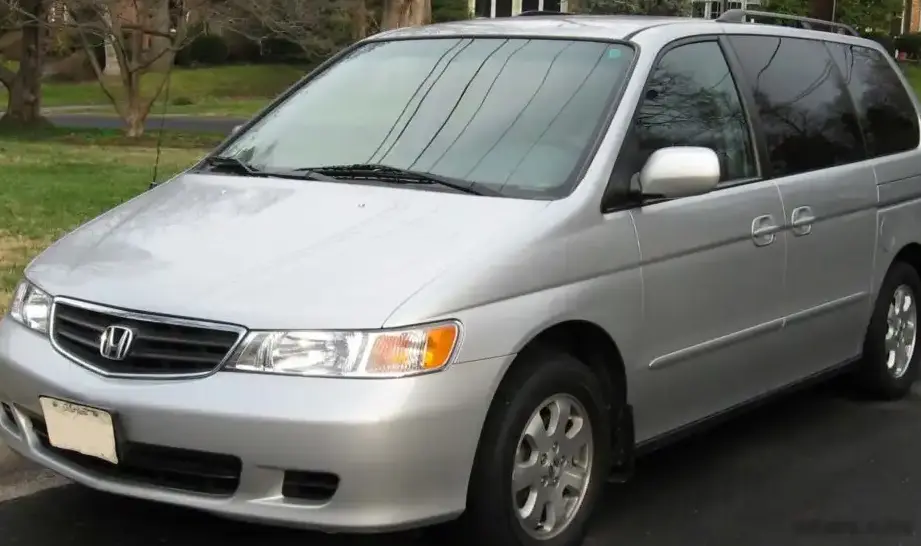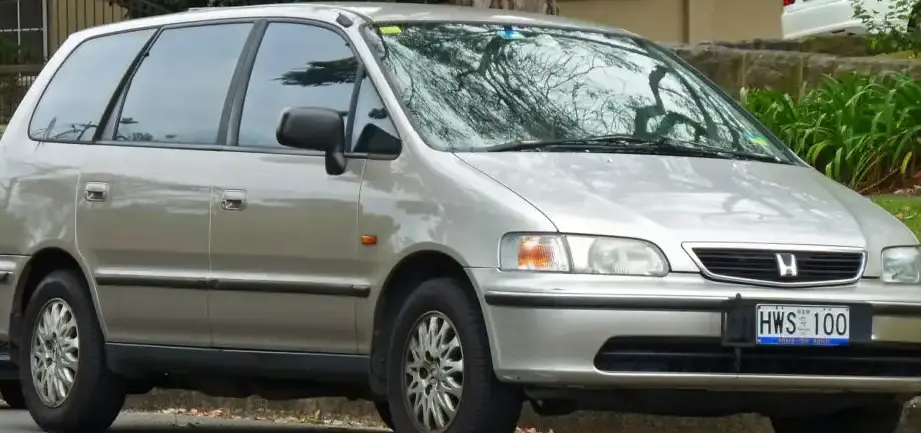
The Honda Odyssey I 3.0i, produced between 1994 and 1999, represented Honda’s initial foray into the minivan segment, primarily aimed at the North American market. Positioned as a more driver-focused alternative to established players like the Dodge Caravan and Chrysler Town & Country, the Odyssey I distinguished itself with Honda’s reputation for reliability and a more engaging driving experience. This particular 3.0i variant, equipped with a 3.0-liter V6 engine producing 200 horsepower, served as the top-tier offering within the first-generation Odyssey lineup, offering a balance of power and practicality for families.
Technical Specifications
| Brand | Honda |
| Model | Odyssey |
| Generation | Odyssey I |
| Type (Engine) | 3.0i (200 Hp) |
| Start of production | 1994 |
| End of production | 1999 |
| Powertrain Architecture | Internal Combustion engine |
| Body type | Minivan |
| Seats | 7 |
| Doors | 5 |
| Fuel Type | Petrol (Gasoline) |
| Power | 200 Hp @ 5500 rpm |
| Power per litre | 66.7 Hp/l |
| Torque | 265 Nm @ 4800 rpm / 195.45 lb.-ft. @ 4800 rpm |
| Engine layout | Front, Transverse |
| Engine displacement | 2997 cm3 / 182.89 cu. in. |
| Number of cylinders | 6 |
| Engine configuration | V-engine |
| Cylinder Bore | 86 mm / 3.39 in. |
| Piston Stroke | 86 mm / 3.39 in. |
| Compression ratio | 9.4:1 |
| Number of valves per cylinder | 4 |
| Fuel injection system | Multi-port manifold injection |
| Engine aspiration | Naturally aspirated engine |
| Valvetrain | DOHC |
| Fuel tank capacity | 65 l / 17.17 US gal | 14.3 UK gal |
| Length | 4750 mm / 187.01 in. |
| Width | 1770 mm / 69.69 in. |
| Height | 1645 mm / 64.76 in. |
| Wheelbase | 2830 mm / 111.42 in. |
| Front track | 1525 mm / 60.04 in. |
| Rear (Back) track | 1540 mm / 60.63 in. |
| Drivetrain Architecture | The Internal combustion engine (ICE) drives the front wheels of the vehicle. |
| Drive wheel | Front wheel drive |
| Number of gears and type of gearbox | 5 gears, manual transmission |
| Front brakes | Disc |
| Rear brakes | Disc |
| Assisting systems | ABS (Anti-lock braking system) |
| Tires size | 205/65 R15 |
Powertrain & Engine Architecture
The heart of the Odyssey I 3.0i is the Honda J30A engine, a 3.0-liter, 60-degree V6. This engine utilized a naturally aspirated configuration with multi-port fuel injection and a double overhead camshaft (DOHC) valvetrain. The 9.4:1 compression ratio contributed to a good balance of power and fuel efficiency for its time. The J30A was known for its smooth operation and relatively high output for a naturally aspirated engine of that displacement. The 5-speed manual transmission was the sole transmission option for this trim level, providing drivers with direct control over the engine’s power. The transmission was designed to handle the engine’s 265 Nm (195 lb-ft) of torque effectively, offering reasonably quick acceleration for a minivan.
Driving Characteristics
The 3.0i variant offered a noticeably more spirited driving experience compared to potential lower-trim Odysseys (had they existed). The 200 horsepower and 265 Nm of torque allowed for confident highway merging and passing maneuvers. While not a sports car, the Odyssey I 3.0i felt surprisingly agile for its size, thanks in part to its front-wheel-drive layout and well-tuned suspension. The 5-speed manual transmission allowed drivers to keep the engine in its optimal power band, maximizing acceleration. Gear ratios were spaced to provide a balance between everyday drivability and responsive performance. Compared to larger American minivans of the era, the Odyssey felt more nimble and engaging to drive.
Equipment & Trim Levels
The 3.0i represented the highest trim level available for the first-generation Odyssey. Standard features included air conditioning, power windows and locks, a CD player, and cloth upholstery. Optional extras included a sunroof, upgraded audio systems, and alloy wheels. Interior appointments were functional and well-built, reflecting Honda’s commitment to quality. The 7-passenger seating configuration was standard, with a versatile arrangement of removable seats to accommodate varying cargo and passenger needs. The dashboard layout was straightforward and driver-focused, with easy-to-read gauges and logically placed controls.
Chassis & Braking
The Odyssey I utilized a front-wheel-drive platform with an independent front suspension featuring MacPherson struts and a multi-link rear suspension. This suspension setup provided a comfortable ride while maintaining reasonable handling characteristics. Disc brakes were standard on all four wheels, providing adequate stopping power for the vehicle’s weight. An Anti-lock Braking System (ABS) was included as standard equipment, enhancing safety by preventing wheel lockup during hard braking. The chassis was designed to minimize noise, vibration, and harshness (NVH), contributing to a refined driving experience.
Market Reception & Comparison
The Honda Odyssey I 3.0i was generally well-received by automotive critics. It was praised for its engaging driving dynamics, spacious interior, and Honda’s reputation for reliability. However, some critics noted that the interior materials were not as luxurious as those found in some competing minivans. Compared to the base models of other minivans, the 3.0i offered a significant performance advantage. Fuel economy was respectable for its class, averaging around 18-22 mpg in mixed driving conditions. The Odyssey I 3.0i appealed to families who wanted a minivan that was both practical and enjoyable to drive.
Legacy
The Honda Odyssey I 3.0i laid the foundation for the Odyssey’s continued success in the minivan segment. The J30A engine proved to be a durable and reliable powerplant, with many examples still on the road today. While maintenance costs for older Odysseys can increase with age, the J30A engine is generally considered to be relatively easy to maintain. The Odyssey I 3.0i remains a popular choice among enthusiasts looking for a classic Honda minivan that offers a unique blend of practicality, performance, and reliability. In the used car market, well-maintained examples of the 3.0i command a premium due to their desirable engine and transmission combination.