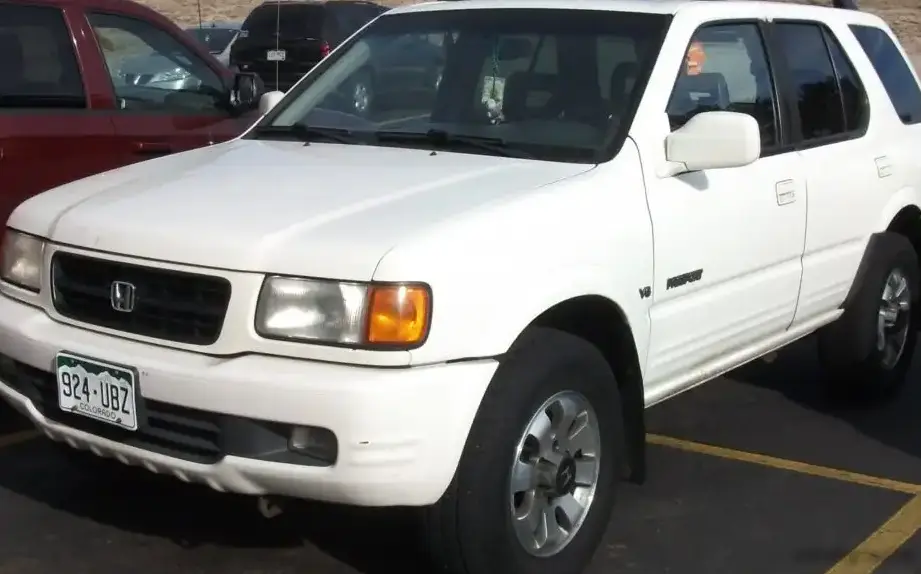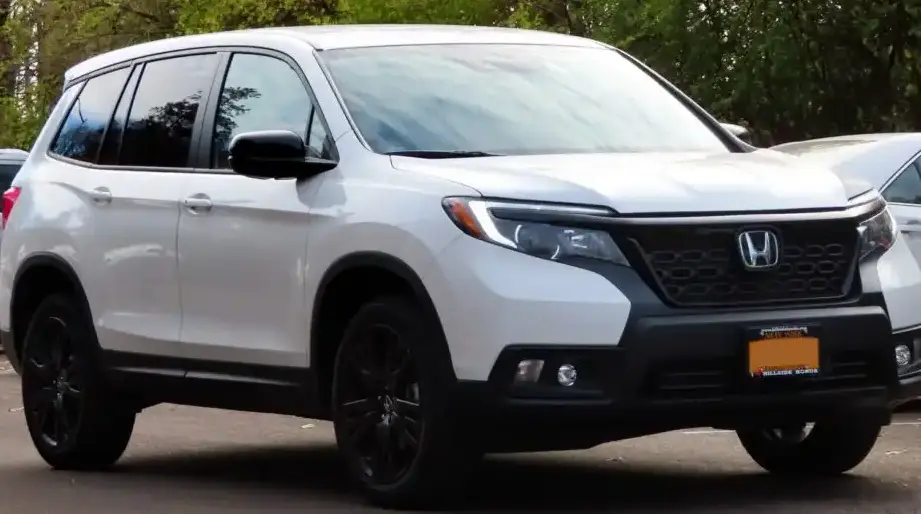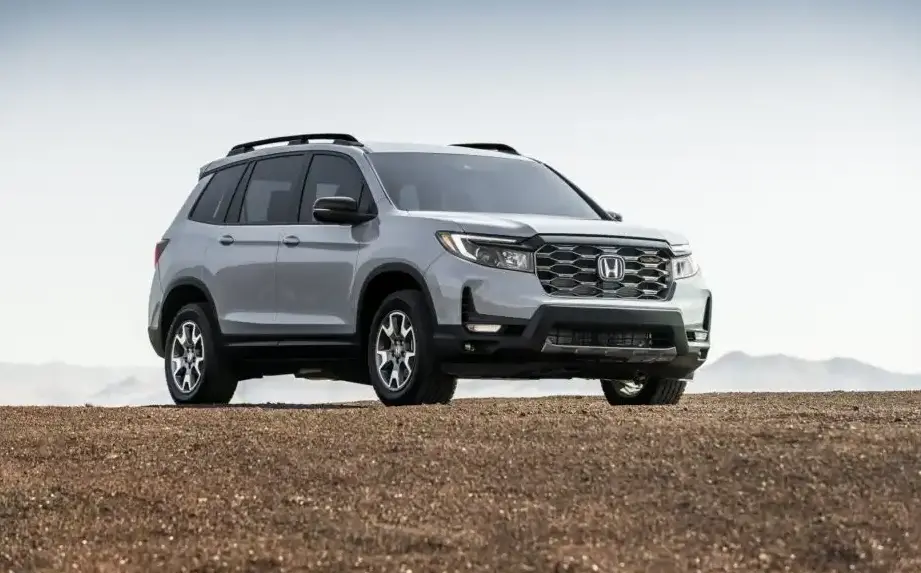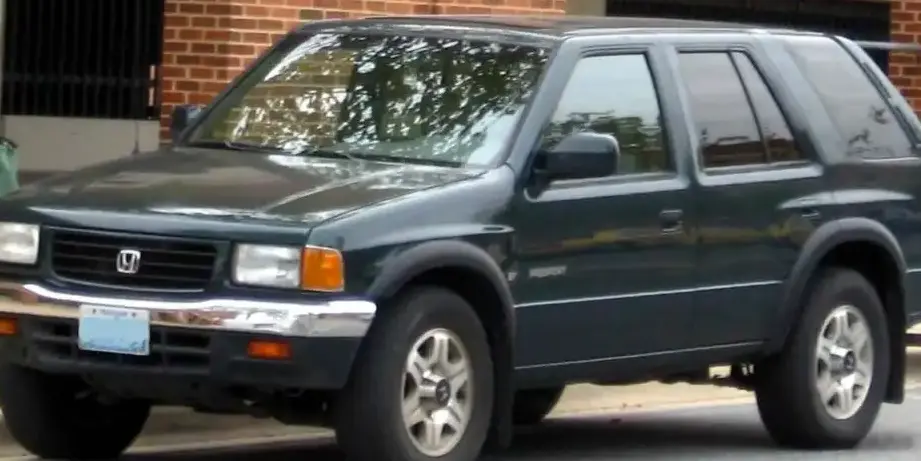
The Honda Passport, introduced in 1993, represented Honda’s entry into the mid-size SUV market in North America. Developed specifically for the US market, it was positioned as a more rugged and spacious alternative to the Honda CR-V, sharing a platform with the Isuzu Rodeo. The first generation, spanning from 1993 to 1997, offered a single engine choice, with the 2.6i variant – producing 120 horsepower and equipped with a four-speed automatic transmission and four-wheel drive – being a common configuration. This particular trim level aimed to provide a balance of affordability and capability for families and those seeking a versatile vehicle for both on and off-road use.
Technical Specifications
| Brand | Honda |
| Model | Passport |
| Generation | Passport I |
| Type (Engine) | 2.6i (120 Hp) 4WD Automatic |
| Start of production | 1993 |
| End of production | 1997 |
| Powertrain Architecture | Internal Combustion engine |
| Body type | SUV |
| Seats | 5 |
| Doors | 5 |
| Fuel Type | Petrol (Gasoline) |
| Weight-to-power ratio | 13.4 kg/Hp, 74.6 Hp/tonne |
| Weight-to-torque ratio | 7.9 kg/Nm, 126.8 Nm/tonne |
| Power | 120 Hp @ 4600 rpm |
| Power per litre | 46.9 Hp/l |
| Torque | 204 Nm @ 4600 rpm (150.46 lb.-ft. @ 4600 rpm) |
| Engine layout | Front, Longitudinal |
| Engine displacement | 2559 cm3 (156.16 cu. in.) |
| Number of cylinders | 4 |
| Engine configuration | Inline |
| Cylinder Bore | 92.6 mm (3.65 in.) |
| Piston Stroke | 95 mm (3.74 in.) |
| Compression ratio | 8.3:1 |
| Number of valves per cylinder | 2 |
| Fuel injection system | Multi-port manifold injection |
| Engine aspiration | Naturally aspirated engine |
| Valvetrain | OHC |
| Kerb Weight | 1609 kg (3547.24 lbs.) |
| Fuel tank capacity | 83 l (21.93 US gal | 18.26 UK gal) |
| Length | 4480 mm (176.38 in.) |
| Width | 1690 mm (66.54 in.) |
| Height | 1660 mm (65.35 in.) |
| Wheelbase | 2760 mm (108.66 in.) |
| Front track | 1440 mm (56.69 in.) |
| Rear (Back) track | 1445 mm (56.89 in.) |
| Drive wheel | All wheel drive (4×4) |
| Number of gears and type of gearbox | 4 gears, automatic transmission |
| Front suspension | Double wishbone |
| Rear suspension | Leaf spring |
| Front brakes | Ventilated discs |
| Rear brakes | Disc |
| Assisting systems | ABS (Anti-lock braking system) |
| Steering type | Steering rack and pinion |
| Power steering | Hydraulic Steering |
| Tires size | 225/75 R15 |
Powertrain & Engine Architecture
The heart of the 1993-1997 Honda Passport 2.6i was the 2.6-liter (2559 cc) inline-four cylinder engine. This engine, internally designated as the C26A, was a naturally aspirated unit featuring a single overhead camshaft (OHC) design and two valves per cylinder. Fuel delivery was managed by a multi-port fuel injection system, contributing to relatively smooth operation for the time. The engine produced 120 horsepower at 4600 rpm and 150.46 lb-ft of torque at the same engine speed. The four-speed automatic transmission, while providing ease of use, was a relatively conventional unit and not known for particularly quick shifts. The engine’s longitudinal mounting allowed for a traditional front-engine, rear-wheel-drive layout, with power then distributed to all four wheels via a part-time four-wheel-drive system.
Driving Characteristics
The 2.6i Passport with the automatic transmission offered adequate, but not exhilarating, performance. Acceleration was modest, with the vehicle feeling somewhat sluggish when attempting quick overtaking maneuvers. The automatic transmission’s gear ratios were geared more towards fuel efficiency and cruising comfort than outright speed. Compared to a hypothetical manual transmission version, the automatic noticeably diminished the engine’s responsiveness. The 4WD system provided enhanced traction in slippery conditions, making it suitable for light off-road adventures, but it wasn’t designed for serious rock crawling or challenging terrain. The vehicle’s weight of approximately 3547 lbs contributed to its less-than-sporty handling characteristics.
Equipment & Trim Levels
The 2.6i Passport typically came standard with features considered essential for the time, including air conditioning, power steering, and an AM/FM radio. Interior upholstery was typically cloth, with a relatively simple dashboard layout. Optional extras included a cassette player, upgraded sound systems, and a sunroof. The trim level was fairly basic, focusing on functionality and affordability. It was positioned as the entry-level Passport, lacking the more luxurious appointments found in potential higher-trim versions (which were not widely offered in the US market).
Chassis & Braking
The Passport’s chassis featured a double wishbone suspension setup at the front, providing a reasonable level of ride comfort. The rear suspension utilized leaf springs, a more cost-effective and durable design, but one that contributed to a somewhat less refined ride quality. Braking duties were handled by ventilated discs at the front and solid discs at the rear. An anti-lock braking system (ABS) was included as a standard safety feature. The steering system employed a rack-and-pinion setup with hydraulic power assistance, offering reasonable steering feel and maneuverability.
Market Reception & Comparison
The Honda Passport was generally well-received by critics as a capable and reliable SUV. However, the 2.6i engine with the automatic transmission was often criticized for its lack of power, particularly when compared to competitors offering V6 engines. Fuel economy was average for the class. The Passport’s strength lay in its build quality, durability, and Honda’s reputation for reliability. Compared to the Isuzu Rodeo (with which it shared a platform), the Passport often benefited from Honda’s stronger brand image and perceived higher quality control.
Legacy
The Honda Passport 2.6i, while not a performance standout, has proven to be a relatively durable and long-lasting vehicle. Many examples are still on the road today, a testament to Honda’s engineering. The C26A engine is known for its reliability, although regular maintenance is crucial to prevent issues such as oil leaks and timing belt failure. In the used car market, these Passports are often sought after by those looking for an affordable and dependable SUV, particularly for light off-road use or as a practical family vehicle. While not a collector’s item, well-maintained examples hold a reasonable value, reflecting their enduring reputation for reliability.