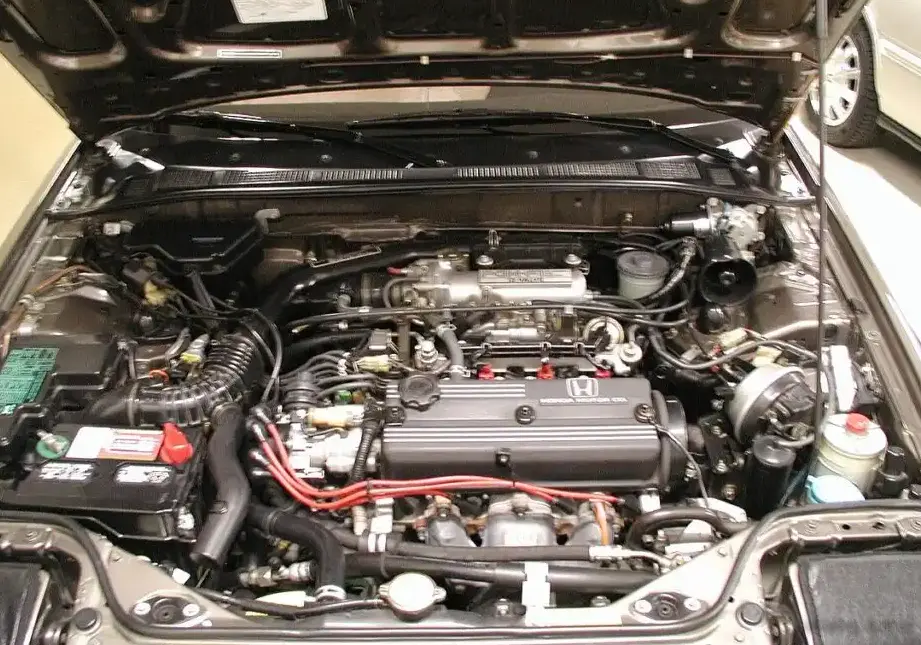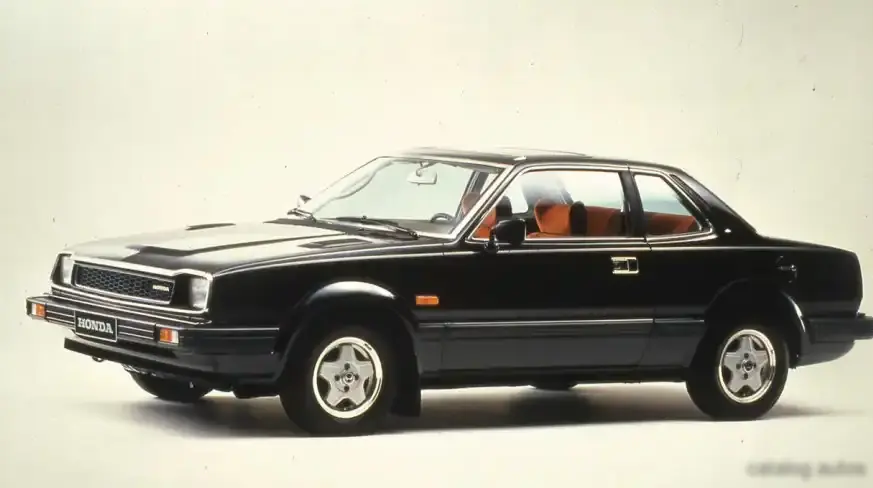
The Honda Prelude I Coupe (SN), specifically the 1.6-liter 80 horsepower variant, represents the initial offering in Honda’s iconic Prelude lineage. Produced from May 1979 to March 1983, this model served as Honda’s foray into the personal luxury coupe segment, aiming to provide a sporty and refined alternative to more utilitarian compact cars. It was built on the foundation of the Honda Accord, sharing many components but distinguished by its sleek, coupe body style and more focused driving experience. This particular 1.6L engine and 5-speed manual transmission combination occupied the entry-level position in the Prelude lineup, offering affordability and reasonable fuel economy.
Technical Specifications
| Brand | Honda |
| Model | Prelude |
| Generation | Prelude I Coupe (SN) |
| Type (Engine) | 1.6 (80 Hp) |
| Start of production | May, 1979 |
| End of production | March, 1983 |
| Powertrain Architecture | Internal Combustion engine |
| Body type | Coupe |
| Seats | 4 |
| Doors | 2 |
| Fuel Type | Petrol (Gasoline) |
| Acceleration 0 – 100 km/h | 13.3 sec |
| Acceleration 0 – 62 mph | 13.3 sec |
| Acceleration 0 – 60 mph | 12.6 sec |
| Maximum speed | 165 km/h (102.53 mph) |
| Weight-to-power ratio | 11.5 kg/Hp, 87 Hp/tonne |
| Weight-to-torque ratio | 7.2 kg/Nm, 138 Nm/tonne |
| Power | 80 Hp @ 5300 rpm |
| Power per litre | 49.9 Hp/l |
| Torque | 127 Nm @ 3500 rpm (93.67 lb.-ft. @ 3500 rpm) |
| Engine layout | Front, Transverse |
| Engine Model/Code | EL |
| Engine displacement | 1602 cm3 (97.76 cu. in.) |
| Number of cylinders | 4 |
| Engine configuration | Inline |
| Cylinder Bore | 77 mm (3.03 in.) |
| Piston Stroke | 86 mm (3.39 in.) |
| Compression ratio | 8.4:1 |
| Number of valves per cylinder | 2 |
| Fuel injection system | Carburettor |
| Engine aspiration | Naturally aspirated engine |
| Valvetrain | SOHC |
| Engine oil capacity | 3.5 l (3.7 US qt | 3.08 UK qt) |
| Coolant | 7 l (7.4 US qt | 6.16 UK qt) |
| Kerb Weight | 920 kg (2028.25 lbs.) |
| Max. weight | 1360 kg (2998.29 lbs.) |
| Max load | 440 kg (970.03 lbs.) |
| Fuel tank capacity | 50 l (13.21 US gal | 11 UK gal) |
| Permitted trailer load with brakes (12%) | 800 kg (1763.7 lbs.) |
| Permitted trailer load without brakes | 400 kg (881.85 lbs.) |
| Length | 4090 mm (161.02 in.) |
| Width | 1635 mm (64.37 in.) |
| Height | 1295 mm (50.98 in.) |
| Wheelbase | 2320 mm (91.34 in.) |
| Front track | 1400 mm (55.12 in.) |
| Rear (Back) track | 1410 mm (55.51 in.) |
| Front overhang | 860 mm (33.86 in.) |
| Rear overhang | 910 mm (35.83 in.) |
| Ride height (ground clearance) | 170 mm (6.69 in.) |
| Minimum turning circle (turning diameter) | 10 m (32.81 ft.) |
| Drivetrain Architecture | The Internal combustion engine (ICE) drives the front wheels of the vehicle. |
| Drive wheel | Front wheel drive |
| Number of gears and type of gearbox | 5 gears, manual transmission |
| Front suspension | Independent, type McPherson with coil spring and anti-roll bar |
| Rear suspension | McPherson, Transverse stabilizer |
| Front brakes | Disc |
| Rear brakes | Drum |
| Steering type | Cone worm with recirculation balls |
Powertrain & Engine Architecture
The heart of the Prelude I 1.6 was the Honda EL engine, a 1602cc inline-four cylinder powerplant. This engine utilized a single overhead camshaft (SOHC) valvetrain with two valves per cylinder. Fuel delivery was managed by a carburetor, a common practice for the era, rather than fuel injection. The EL engine was known for its relatively smooth operation and decent reliability, though it wasn’t a powerhouse. The 80 horsepower output at 5300 rpm and 93.67 lb-ft of torque at 3500 rpm were adequate for the car’s weight, but didn’t provide particularly brisk acceleration. The engine’s transverse mounting and front-wheel drive configuration were key elements in maximizing interior space and improving handling. The 5-speed manual transmission offered precise shifts and allowed drivers to keep the engine in its optimal power band.
Driving Characteristics
The 1.6-liter Prelude, with its 5-speed manual, offered a reasonably engaging driving experience for its time. Acceleration to 60 mph took around 12.6 seconds, which was competitive with other coupes in its class. The gear ratios were well-matched to the engine’s power curve, allowing for comfortable cruising and sufficient power for overtaking maneuvers. Compared to later, more powerful Prelude variants (like those equipped with the 2.0-liter engine), the 1.6 felt noticeably less responsive. However, its lighter weight and nimble handling made it a fun car to drive on winding roads. The manual transmission provided a greater sense of control compared to the optional 3-speed automatic, which further diminished acceleration performance.
Equipment & Trim Levels
The base 1.6-liter Prelude was relatively sparsely equipped, reflecting its position as the entry-level model. Standard features typically included cloth upholstery, a basic AM/FM radio, and manual windows and locks. The interior design was functional and straightforward, prioritizing practicality over luxury. Optional extras included a sunroof, upgraded audio systems, and air conditioning. The dashboard layout was clean and easy to read, with clearly marked gauges. The Prelude’s interior space was surprisingly generous for a coupe, offering comfortable seating for four adults.
Chassis & Braking
The Prelude I utilized a McPherson strut suspension system at both the front and rear, providing a good balance of ride comfort and handling. The front suspension incorporated an anti-roll bar to reduce body roll during cornering. The rear suspension also featured a transverse stabilizer. Braking duties were handled by disc brakes at the front and drum brakes at the rear. While adequate for normal driving conditions, the braking system lacked the stopping power of more modern setups. The car’s relatively light weight helped to mitigate the limitations of the drum brakes. Steering was accomplished via a cone worm and recirculation balls system, which provided a reasonable level of precision.
Market Reception & Comparison
The Honda Prelude I was generally well-received by automotive critics. It was praised for its stylish design, comfortable interior, and engaging driving experience. However, the 1.6-liter engine was sometimes criticized for its lack of power. Compared to the more expensive and powerful 1.8-liter and later 2.0-liter variants, the 1.6 offered a more affordable entry point into the Prelude lineup. Fuel economy was a strong point for the 1.6, making it an attractive option for budget-conscious buyers. Reliability was also a key selling point, as Honda had already established a reputation for building durable and dependable vehicles.
Legacy
The Honda Prelude I 1.6, while not the most powerful or technologically advanced version of the car, played a crucial role in establishing the Prelude as a desirable and respected coupe. The EL engine proved to be reasonably durable, and many examples are still on the road today. In the used car market, these early Preludes are becoming increasingly collectible, particularly those in original and well-maintained condition. The 1.6-liter variant remains a relatively affordable way to experience the charm and character of the first-generation Prelude, offering a glimpse into Honda’s early foray into the personal luxury coupe segment. Its simplicity and relative ease of maintenance make it a popular choice for enthusiasts and classic car collectors alike.