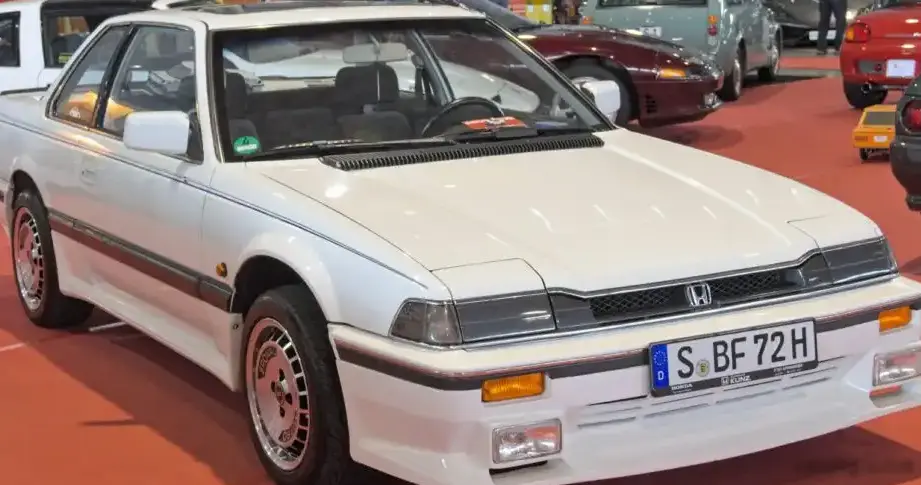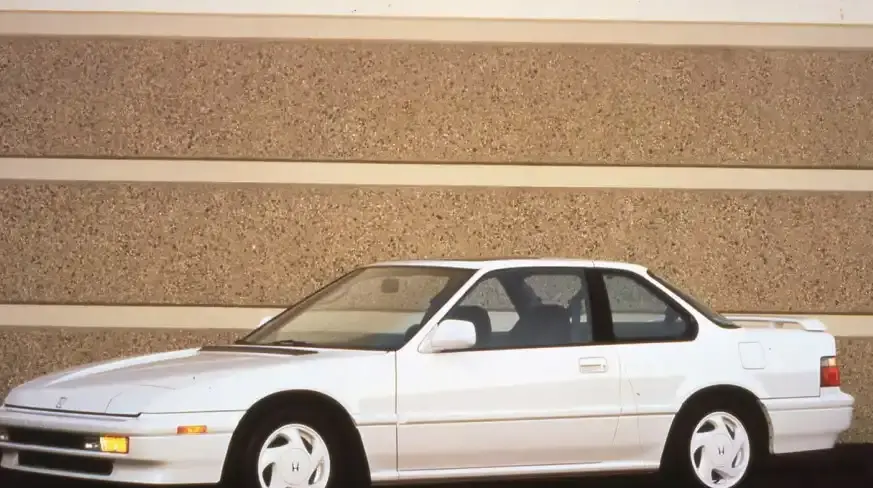
The Honda Prelude III (BA4) 2.0 EX, produced between 1987 and 1992, represents a significant evolution in Honda’s personal luxury coupe lineage. Falling within the third generation (BA) of the Prelude, the BA4 variant was specifically tailored for markets seeking a balance between sporty styling, comfortable features, and reliable performance. It occupied a mid-range position within the BA lineup, positioned above the base model and below the more performance-oriented Si models. The BA generation, built on a lengthened version of the Accord platform, aimed to offer a more refined and sophisticated driving experience than its predecessors, and the 2.0 EX trim exemplified this goal.
Technical Specifications
| Brand | Honda |
| Model | Prelude |
| Generation | Prelude III (BA) |
| Type | 2.0 EX (BA4) (109 Hp) |
| Start of Production | 1987 |
| End of Production | 1992 |
| Powertrain Architecture | Internal Combustion Engine |
| Body Type | Coupe |
| Fuel Type | Petrol (Gasoline) |
| Engine Power | 109 Hp |
| Engine Aspiration | Naturally Aspirated |
Powertrain & Engine Architecture
The heart of the 2.0 EX (BA4) is the Honda F20A SOHC 16-valve inline-four cylinder engine. This 1997cc (2.0-liter) engine, while not the most powerful in the Prelude range, was known for its smooth operation and inherent reliability. The F20A featured a single overhead camshaft (SOHC) design, which contributed to its relatively compact size and reduced weight. Fuel delivery was managed by Honda’s Programmed Fuel Injection (PGM-FI) system, a multi-point electronic fuel injection system that optimized fuel efficiency and emissions. The engine produced 109 horsepower at 5,600 rpm and 137 lb-ft of torque at 4,200 rpm.
The BA4 2.0 EX was typically paired with a four-speed automatic transmission. This transmission, while providing convenience, was geared more towards comfortable cruising than aggressive acceleration. It featured electronic control for smoother shifts and improved fuel economy. The automatic transmission’s gear ratios were optimized for everyday driving, prioritizing fuel efficiency and a relaxed driving experience over outright performance. The transmission was known for its durability, but like any automatic, required regular fluid changes for optimal longevity.
Driving Characteristics
The driving experience in the 2.0 EX was characterized by comfort and ease of use. The automatic transmission eliminated the need for manual gear changes, making it ideal for city driving and long highway journeys. Acceleration was adequate for most situations, but noticeably slower than the five-speed manual versions or the higher-output Si models. The 0 to 60 mph time was estimated to be around 10.5 seconds. The automatic transmission’s shift points were programmed to prioritize fuel economy, which sometimes resulted in the engine feeling slightly strained during overtaking maneuvers. The suspension, while tuned for comfort, still provided a reasonably controlled ride, minimizing body roll during cornering. Steering was light and precise, making the car easy to maneuver.
Equipment & Trim Levels
The 2.0 EX trim level offered a good balance of features and affordability. Standard equipment typically included power windows, power door locks, a tilt steering wheel, and an AM/FM stereo with cassette player. The interior featured cloth upholstery, and the dashboard layout was functional and user-friendly. Optional extras available for the 2.0 EX included a sunroof, cruise control, and upgraded sound systems. The exterior styling was relatively understated, with body-colored bumpers and side moldings. The 2.0 EX aimed to appeal to buyers who wanted a stylish and comfortable coupe without the higher price tag of the Si models.
Chassis & Braking
The Prelude BA4 utilized a front-engine, front-wheel-drive layout. The suspension consisted of independent MacPherson struts at the front and independent double wishbones at the rear, providing a comfortable and controlled ride. The chassis was relatively lightweight, contributing to the car’s nimble handling. Braking duties were handled by power-assisted disc brakes at the front and drum brakes at the rear. While the front discs provided adequate stopping power, the rear drums were a cost-saving measure that limited overall braking performance compared to the all-disc setups found on the Si models. The BA4 did not feature anti-lock brakes (ABS) as standard equipment, although it was sometimes available as an option.
Market Reception & Comparison
The 2.0 EX variant of the Prelude BA was generally well-received by automotive critics as a comfortable and reliable daily driver. It was praised for its smooth engine, comfortable ride, and well-equipped interior. However, it was often criticized for its lack of outright performance compared to the manual transmission and Si models. Fuel economy was considered good for its time, averaging around 22 mpg city and 29 mpg highway. Compared to the 2.0 Si, the EX offered less horsepower and torque, resulting in slower acceleration and a less engaging driving experience. However, the EX was significantly more affordable and offered a more relaxed driving experience. The 1.9L base model offered even less power, making the 2.0 EX a worthwhile upgrade for those seeking a bit more performance.
Legacy
The Honda Prelude BA4 2.0 EX has developed a reputation for long-term reliability and durability. The F20A engine is known to be exceptionally robust, and with proper maintenance, can easily exceed 200,000 miles. The automatic transmission, while not as sporty as a manual, is also known for its durability. Today, the BA4 2.0 EX is a popular choice among enthusiasts looking for a classic Japanese coupe that is both affordable and reliable. Parts availability is generally good, and the car’s relatively simple mechanical design makes it relatively easy to maintain. While not as highly sought after as the Si models, the 2.0 EX offers a unique blend of comfort, style, and reliability that continues to appeal to a wide range of drivers. The car represents a high point in Honda’s commitment to building quality and dependable vehicles, and remains a testament to the engineering prowess of the era.