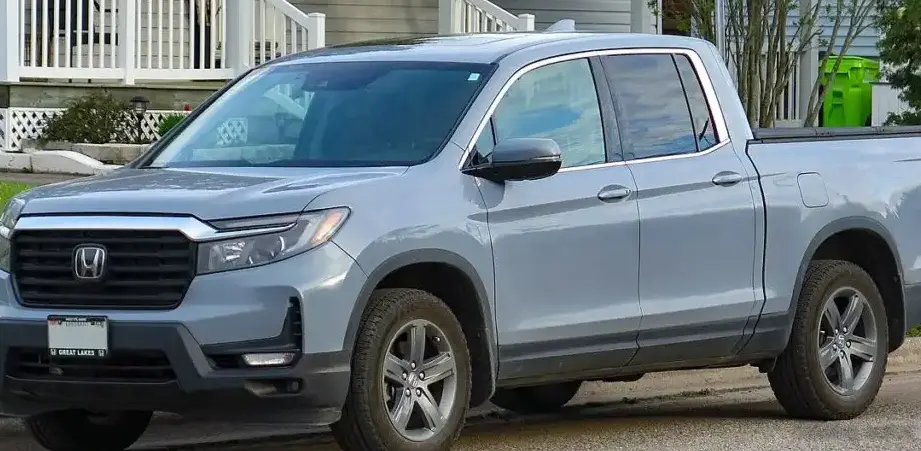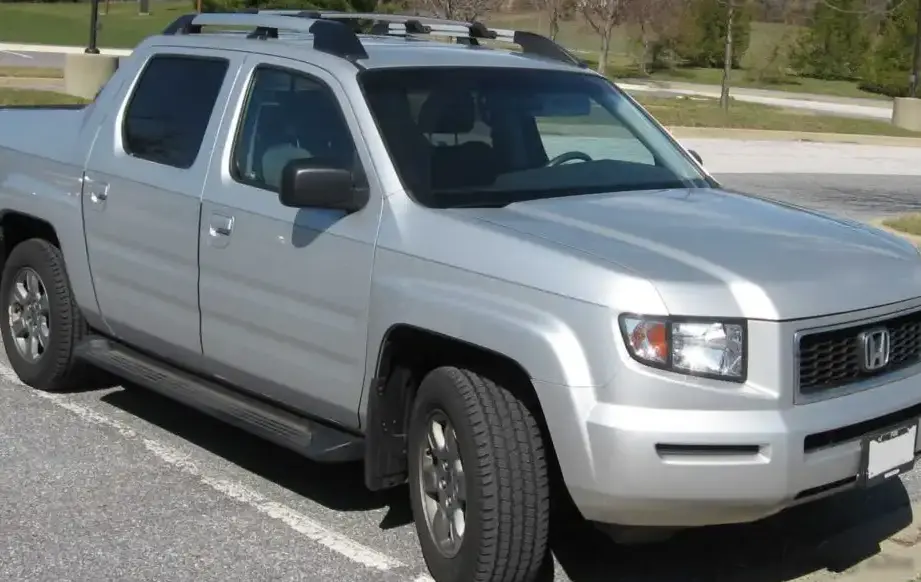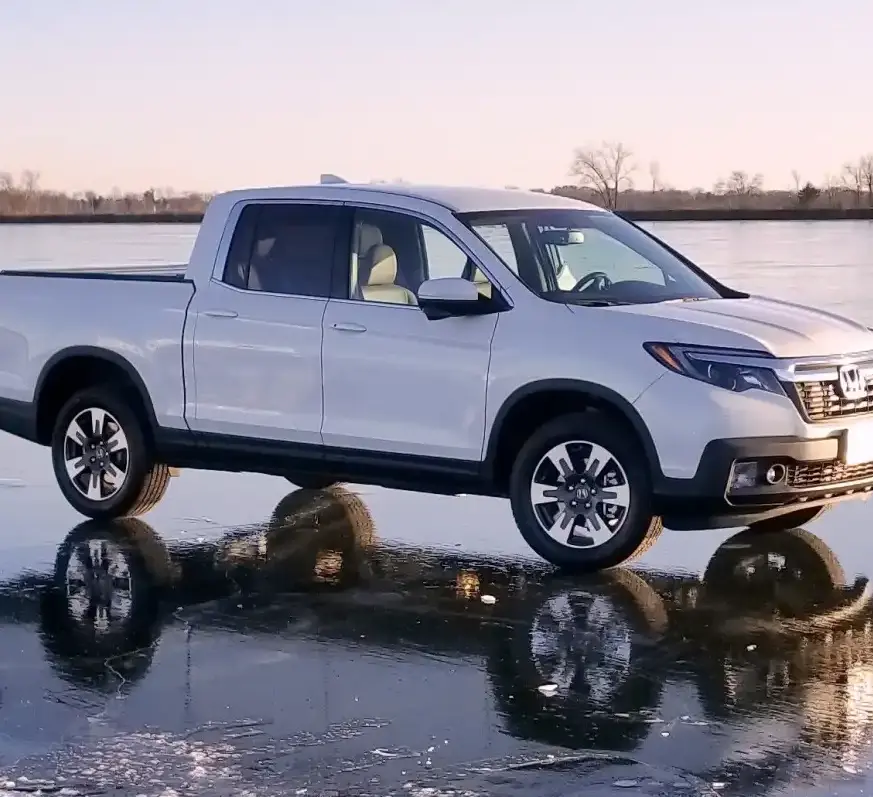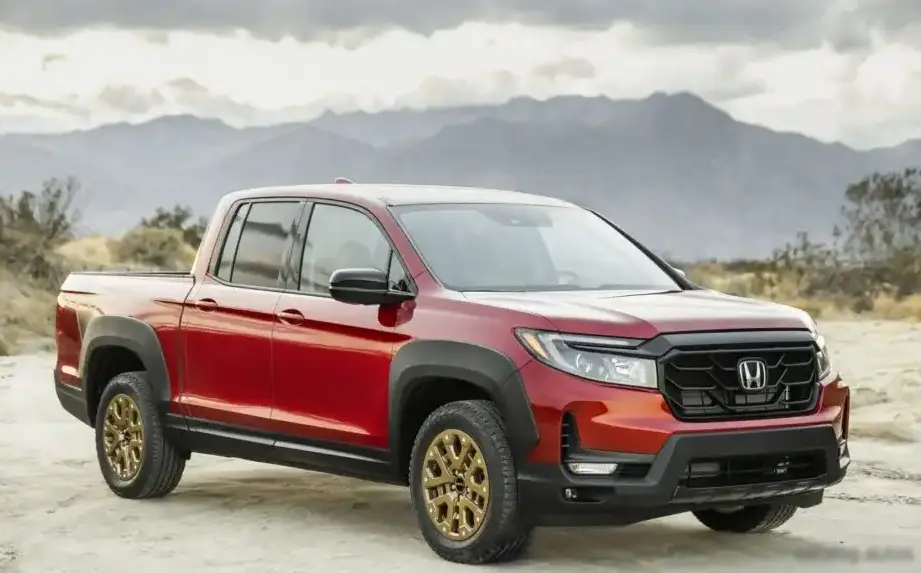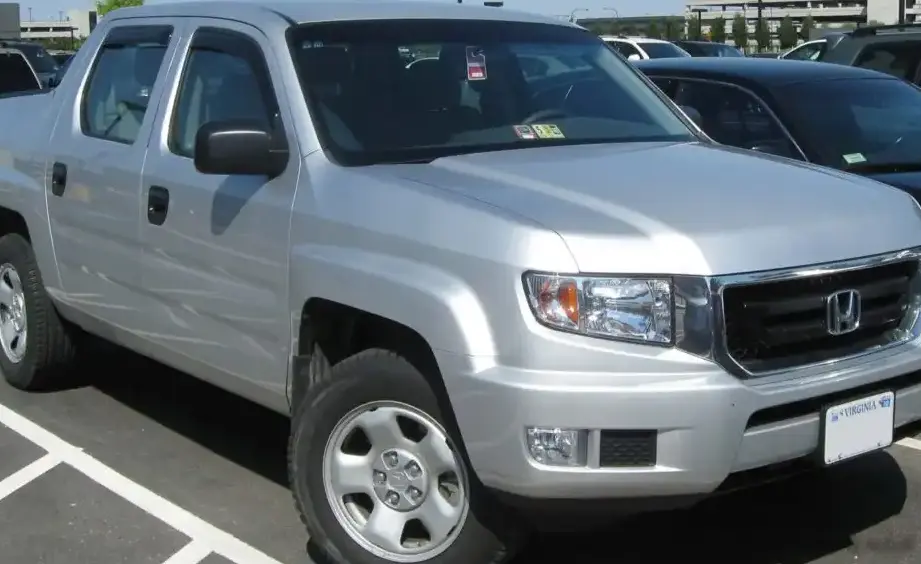
The Honda Ridgeline, introduced for the 2006 model year, represented Honda’s unique take on the mid-size pickup truck segment. Unlike traditional body-on-frame designs, the first-generation Ridgeline (2006-2014) utilized a unibody construction, prioritizing on-road comfort and refinement. The 2009 facelift brought subtle styling updates and refinements to the powertrain. This article focuses on the 2009-2014 Honda Ridgeline equipped with the 3.5-liter V6 engine producing 250 horsepower, paired with a five-speed automatic transmission and a four-wheel-drive system. This configuration occupied the upper-mid range of the Ridgeline lineup, offering a balance of capability and features for the American truck buyer.
Technical Specifications
| Brand | Honda |
| Model | Ridgeline |
| Generation | Ridgeline I (facelift 2009) |
| Type (Engine) | 3.5 V6 24V (250 Hp) 4WD Automatic |
| Start of production | 2009 |
| End of production | 2014 |
| Powertrain Architecture | Internal Combustion engine |
| Body type | Pick-up |
| Seats | 5 |
| Doors | 4 |
| Fuel consumption (urban) | 15.7 l/100 km (15 US mpg, 18 UK mpg, 6.4 km/l) |
| Fuel consumption (extra urban) | 11.8 l/100 km (19.9 US mpg, 23.9 UK mpg, 8.5 km/l) |
| Fuel consumption (combined) | 13.8 l/100 km (17 US mpg, 20.5 UK mpg, 7.2 km/l) |
| Fuel Type | Petrol (Gasoline) |
| Emission standard | ULEV-2 |
| Weight-to-power ratio | 8.2 kg/Hp, 122.4 Hp/tonne |
| Weight-to-torque ratio | 6.1 kg/Nm, 164 Nm/tonne |
| Power | 250 Hp @ 5700 rpm |
| Power per litre | 72 Hp/l |
| Torque | 335 Nm @ 4300 rpm (247.08 lb.-ft. @ 4300 rpm) |
| Maximum engine speed | 6300 rpm |
| Engine layout | Front, Transverse |
| Engine Model/Code | J35Z5 |
| Engine displacement | 3471 cm3 (211.81 cu. in.) |
| Number of cylinders | 6 |
| Engine configuration | V-engine |
| Cylinder Bore | 89 mm (3.5 in.) |
| Piston Stroke | 93 mm (3.66 in.) |
| Compression ratio | 10:1 |
| Number of valves per cylinder | 4 |
| Fuel injection system | Multi-port manifold injection |
| Engine aspiration | Naturally aspirated engine |
| Valvetrain | SOHC, VTEC |
| Engine oil capacity | 5.3 l (5.6 US qt | 4.66 UK qt) |
| Coolant capacity | 8.1 l (8.56 US qt | 7.13 UK qt) |
| Kerb Weight | 2043 kg (4504.04 lbs.) |
| Max. weight | 2744 kg (6049.48 lbs.) |
| Max load | 701 kg (1545.44 lbs.) |
| Trunk (boot) space – minimum | 241 l (8.51 cu. ft.) |
| Fuel tank capacity | 83.3 l (22.01 US gal | 18.32 UK gal) |
| Length | 5258 mm (207.01 in.) |
| Width | 1976 mm (77.8 in.) |
| Height | 1786 mm (70.31 in.) |
| Wheelbase | 3099 mm (122.01 in.) |
| Front track | 1704 mm (67.09 in.) |
| Rear (Back) track | 1699 mm (66.89 in.) |
| Ride height (ground clearance) | 208 mm (8.19 in.) |
| Approach angle | 24.5° |
| Departure angle | 22° |
| Drivetrain Architecture | The Internal combustion engine (ICE) drives permanently the four wheels of the vehicle. |
| Drive wheel | All wheel drive (4×4) |
| Number of gears and type of gearbox | 5 gears, automatic transmission |
| Front suspension | Independent type McPherson, Transverse stabilizer |
| Rear suspension | Independent multi-link suspension |
| Front brakes | Ventilated discs, 320.04 mm |
| Rear brakes | Disc, 332.74 mm |
| Assisting systems | ABS (Anti-lock braking system) |
| Steering type | Steering rack and pinion |
| Tires size | 245/65 R17; 245/60 R18 |
INTRODUCTION
The 2009-2014 Honda Ridgeline, following the initial launch, solidified its position as a unique offering in the mid-size pickup truck market. Built on Honda’s global light-truck platform, it distinguished itself from competitors like the Toyota Tacoma and Nissan Frontier with its unibody construction and focus on passenger comfort. The 3.5-liter V6 engine with 250 horsepower, coupled with a five-speed automatic transmission and a full-time four-wheel-drive system, was a popular configuration, appealing to buyers who prioritized everyday usability over hardcore off-road capability. This variant typically came in the higher trim levels, such as the RTL and RTS, offering a more refined experience.
Powertrain & Engine Architecture
The heart of this Ridgeline variant is the J35Z5 engine, a 3.5-liter, 24-valve SOHC V6. This engine is part of Honda’s J-series family, known for its reliability and smooth operation. It features Honda’s Variable Valve Timing and Lift Electronic Control (VTEC) system, optimizing performance and fuel efficiency across the rev range. Fuel delivery is handled by a multi-point fuel injection system. The engine produces 250 horsepower at 5700 rpm and 247 lb-ft of torque at 4300 rpm. The five-speed automatic transmission, while not as modern as some competitors’ six-speed units, provides smooth and predictable shifts. It’s designed to work seamlessly with the engine’s torque curve, offering adequate acceleration for everyday driving and towing. The transmission is electronically controlled, adapting to driving conditions and driver input.
Driving Characteristics
The 2009-2014 Ridgeline 3.5L V6 Automatic delivers a driving experience markedly different from traditional body-on-frame trucks. The unibody construction results in a smoother, more car-like ride. Acceleration is adequate, with the 250 horsepower providing sufficient power for merging onto highways and passing maneuvers. However, it doesn’t offer the same raw acceleration as some of its competitors. The automatic transmission is well-tuned, providing smooth shifts, but can sometimes feel hesitant during quick downshifts. The full-time four-wheel-drive system provides enhanced traction in various conditions, but the Ridgeline isn’t designed for serious off-roading. Its ground clearance and lack of a low-range transfer case limit its capabilities in challenging terrain. The steering is precise and responsive, contributing to a confident driving feel.
Equipment & Trim Levels
The 3.5L V6 Automatic configuration was typically found in the RTL and RTS trim levels. Standard features included air conditioning, power windows and locks, a premium audio system, and alloy wheels. The RTL trim added leather upholstery, heated front seats, a sunroof, and a navigation system. The RTS trim offered similar features but with a more rugged appearance. Optional extras included a towing package, which increased the Ridgeline’s towing capacity, and a rear-seat DVD entertainment system. Interior materials were generally of high quality, reflecting Honda’s reputation for build quality and attention to detail.
Chassis & Braking
The Ridgeline’s unibody construction contributes to its refined ride quality. The front suspension utilizes an independent McPherson strut design with a transverse stabilizer bar, while the rear suspension employs an independent multi-link setup. This configuration provides a comfortable and controlled ride, even on uneven surfaces. Braking duties are handled by ventilated discs at the front and solid discs at the rear. The anti-lock braking system (ABS) is standard, enhancing safety and control during emergency braking situations. The Ridgeline’s relatively low curb weight (around 4500 lbs) contributes to its manageable braking performance.
Market Reception & Comparison
The Honda Ridgeline received generally positive reviews from critics, who praised its comfortable ride, refined interior, and unique features. However, some critics noted its limited off-road capability and relatively low towing capacity compared to traditional trucks. Compared to the base Ridgeline models with the standard equipment, the 3.5L V6 Automatic offered a significant upgrade in performance and features. It was positioned as a more premium option, appealing to buyers who valued comfort and convenience over outright capability. Fuel economy was average for its class, with combined fuel consumption around 17 mpg.
Legacy
The first-generation Honda Ridgeline, including the 3.5L V6 Automatic variant, has proven to be a reliable and durable vehicle. The J35 engine is known for its longevity, and the automatic transmission is generally trouble-free. On the used car market, these Ridgelines hold their value relatively well, particularly those in good condition with low mileage. While not a traditional pickup truck, the Ridgeline carved out a unique niche for itself, appealing to buyers who wanted a versatile and comfortable vehicle with the utility of a truck bed. It paved the way for the second-generation Ridgeline, which continues to build on its predecessor’s strengths.