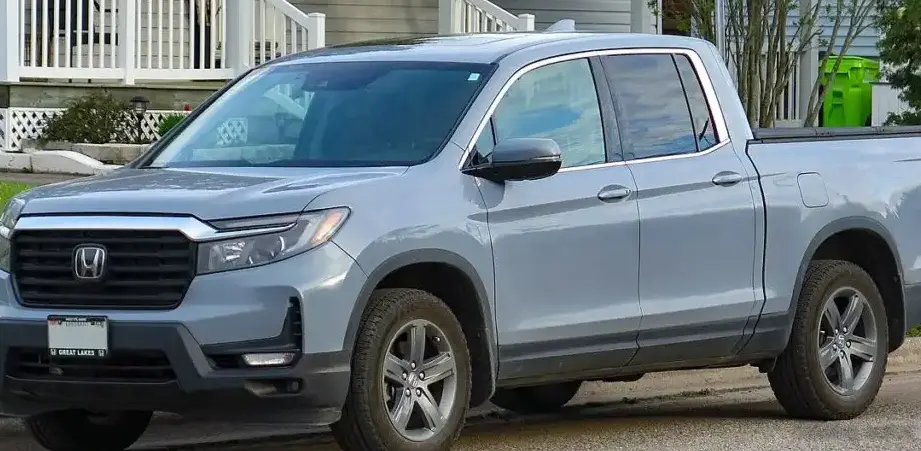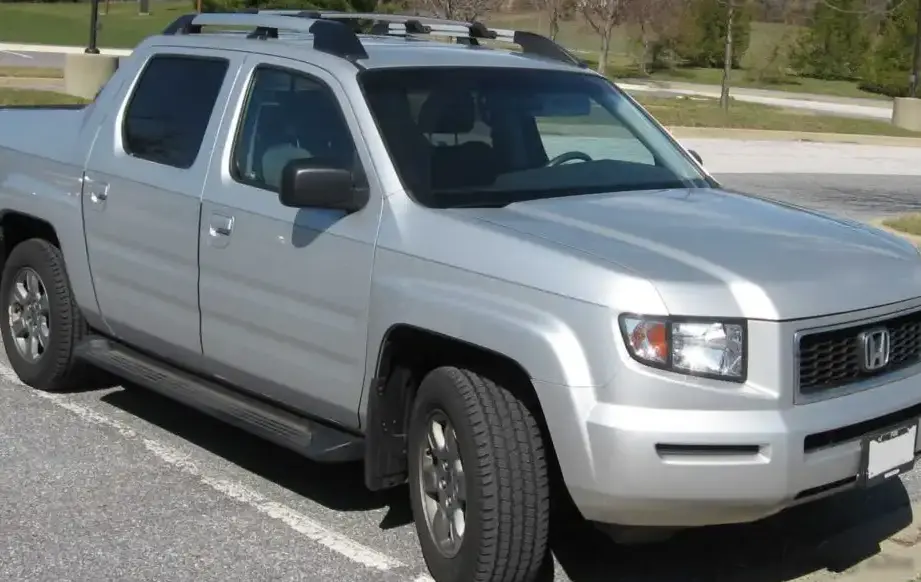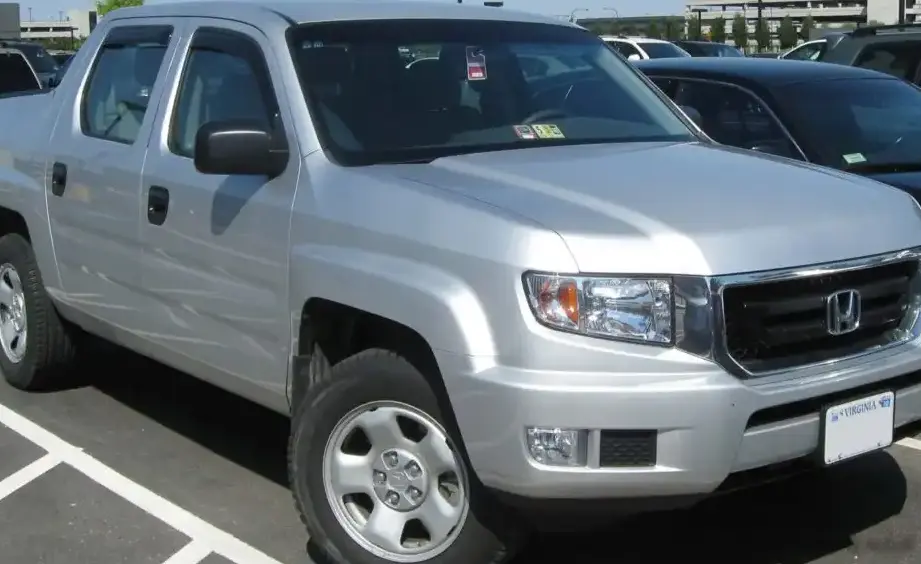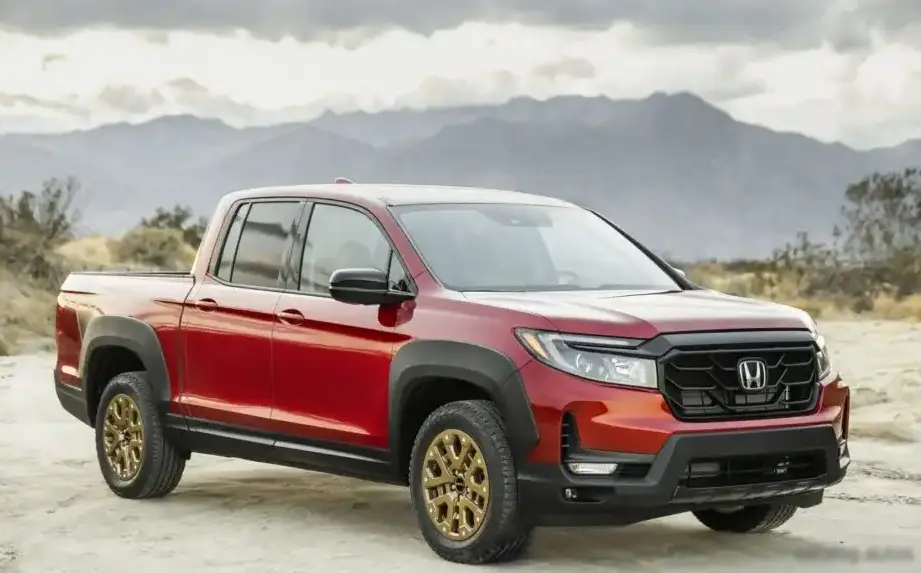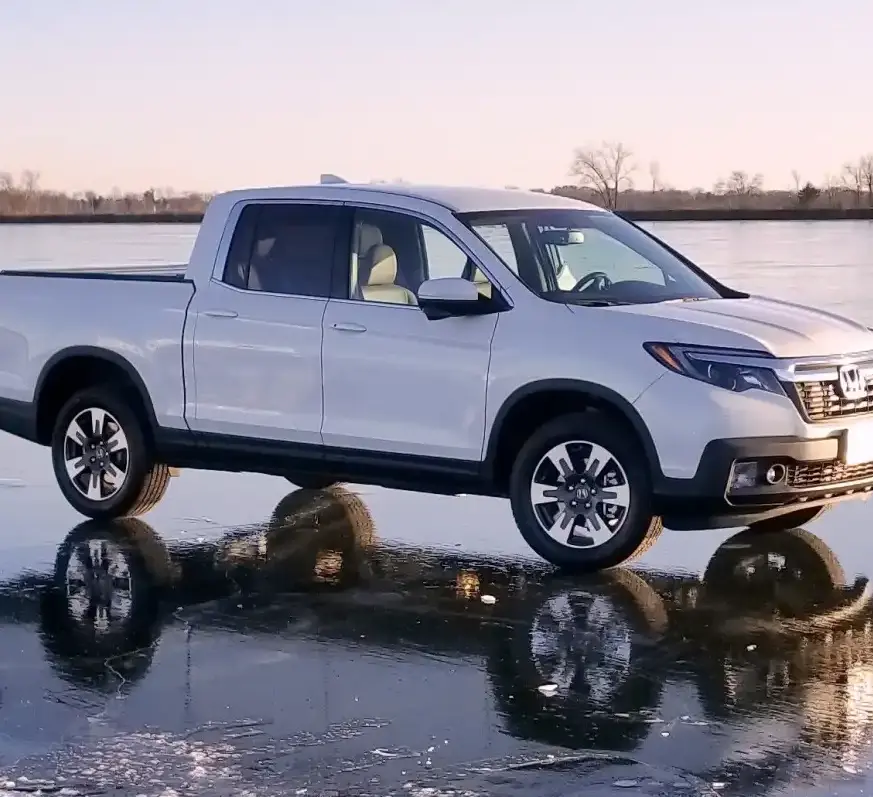
The Honda Ridgeline II, specifically the 3.5 V6 variant with the six-speed automatic transmission, represents Honda’s second foray into the mid-size pickup truck market. Introduced for the 2017 model year and continuing through 2019, this iteration of the Ridgeline marked a significant departure from traditional body-on-frame pickup designs, opting instead for a unibody construction. This approach, similar to that of crossover SUVs, aimed to deliver a more comfortable ride and improved on-road handling. The 3.5 V6 Automatic trim occupied the mainstream position in the Ridgeline II lineup, serving as the volume seller and offering a balance between capability, comfort, and price. It was positioned above the base LX trim and below the higher-spec RTL and Black Edition models.
Technical Specifications
| Brand | Honda |
| Model | Ridgeline |
| Generation | Ridgeline II |
| Type (Engine) | 3.5 V6 (280 Hp) Automatic |
| Start of production | 2017 year |
| End of production | 2019 year |
| Powertrain Architecture | Internal Combustion engine |
| Body type | Pick-up |
| Seats | 5 |
| Doors | 4 |
| Fuel consumption (economy) – urban | 12.4 l/100 km (19 US mpg, 22.8 UK mpg, 8.1 km/l) |
| Fuel consumption (economy) – extra urban | 9 l/100 km (26.1 US mpg, 31.4 UK mpg, 11.1 km/l) |
| Fuel consumption (economy) – combined | 10.7 l/100 km (22 US mpg, 26.4 UK mpg, 9.3 km/l) |
| Fuel Type | Petrol (Gasoline) |
| Weight-to-power ratio | 6.9 kg/Hp, 145.5 Hp/tonne |
| Weight-to-torque ratio | 5.4 kg/Nm, 184.5 Nm/tonne |
| Power | 280 Hp @ 6000 rpm |
| Power per litre | 80.7 Hp/l |
| Torque | 355 Nm @ 4700 rpm (261.83 lb.-ft. @ 4700 rpm) |
| Maximum engine speed | 6800 rpm |
| Engine layout | Front, Transverse |
| Engine Model/Code | J35Y6 |
| Engine displacement | 3471 cm3 (211.81 cu. in.) |
| Number of cylinders | 6 |
| Engine configuration | V-engine |
| Cylinder Bore | 89 mm (3.5 in.) |
| Piston Stroke | 93 mm (3.66 in.) |
| Compression ratio | 11.5:1 |
| Number of valves per cylinder | 4 |
| Fuel injection system | Direct injection |
| Engine aspiration | Naturally aspirated engine |
| Valvetrain | SOHC, i-VTEC |
| Engine oil capacity | 5.4 l (5.71 US qt | 4.75 UK qt) |
| Coolant | 7.13 l (7.53 US qt | 6.27 UK qt) |
| Kerb Weight | 1924-1932 kg (4241.69 – 4259.33 lbs.) |
| Max. weight | 2590 kg (5709.97 lbs.) |
| Max load | 658-666 kg (1450.64 – 1468.28 lbs.) |
| Trunk (boot) space – minimum | 960 l (33.9 cu. ft.) |
| Fuel tank capacity | 74 l (19.55 US gal | 16.28 UK gal) |
| Permitted trailer load with brakes (12%) | 1588 kg (3500.94 lbs.) |
| Length | 5334 mm (210 in.) |
| Width | 1996 mm (78.58 in.) |
| Height | 1783 mm (70.2 in.) |
| Wheelbase | 3180 mm (125.2 in.) |
| Front track | 1684 mm (66.3 in.) |
| Rear (Back) track | 1684 mm (66.3 in.) |
| Ride height (ground clearance) | 185 mm (7.28 in.) |
| Minimum turning circle (turning diameter) | 13.5 m (44.29 ft.) |
| Approach angle | 19.2° |
| Departure angle | 21.4° |
| Ramp-over (brakeover) angle | 18.5° |
| Drivetrain Architecture | The Internal combustion engine (ICE) drives the front wheels of the vehicle. |
| Drive wheel | Front wheel drive |
| Number of gears and type of gearbox | 6 gears, automatic transmission |
| Front suspension | Independent, type McPherson with coil spring and anti-roll bar |
| Rear suspension | Independent multi-link spring suspension with stabilizer |
| Front brakes | Ventilated discs, 320 mm |
| Rear brakes | Disc, 330 mm |
| Assisting systems | ABS (Anti-lock braking system) |
| Steering type | Steering rack and pinion |
| Power steering | Electric Steering |
| Tires size | 245/60 R18 |
| Wheel rims size | 18 |
Powertrain & Engine Architecture
At the heart of the Ridgeline II 3.5 V6 Automatic lies Honda’s J35Y6 engine, a 3.5-liter naturally aspirated V6. This engine is part of Honda’s J-series family, known for its reliability and smooth operation. The J35Y6 utilizes direct fuel injection, enhancing fuel efficiency and power output. The engine employs a single overhead camshaft (SOHC) cylinder head with Honda’s Variable Valve Timing and Lift Electronic Control (i-VTEC) system, optimizing valve timing for improved performance across the rev range. The engine produces 280 horsepower at 6000 rpm and 262 lb-ft of torque at 4700 rpm. The engine is transversely mounted, contributing to a more compact engine bay. Paired with the J35Y6 is a six-speed automatic transmission, chosen for its smooth shifting and responsiveness. This transmission is not designed for aggressive shifting, prioritizing comfort and fuel economy over outright performance.
Driving Characteristics
The 3.5 V6 Automatic Ridgeline delivers a comfortable and refined driving experience. The unibody construction and independent suspension contribute to a smoother ride compared to traditional body-on-frame trucks. Acceleration is adequate for everyday driving, with the 280 hp engine providing sufficient power for merging onto highways and passing other vehicles. However, it doesn’t offer the same level of acceleration as some of its competitors with more powerful engines. The six-speed automatic transmission is well-tuned for everyday use, providing smooth and predictable shifts. The front-wheel-drive configuration contributes to good fuel economy, but it limits off-road capability compared to four-wheel-drive models. The gear ratios are optimized for cruising and fuel efficiency, rather than maximizing acceleration.
Equipment & Trim Levels
The 3.5 V6 Automatic Ridgeline typically came standard with features such as a multi-angle rearview camera, a 5-inch color LCD screen, Bluetooth connectivity, and a USB audio interface. Higher trim levels added features like a larger touchscreen display, Apple CarPlay and Android Auto integration, leather upholstery, heated front seats, and a premium audio system. Interior upholstery was typically cloth in the base trims, with leather options available on higher-spec models. The dashboard layout was functional and user-friendly, with logically placed controls. Optional extras included a sunroof, navigation system, and a bed trunk.
Chassis & Braking
The Ridgeline II utilizes a fully independent suspension system, with a McPherson strut setup at the front and a multi-link setup at the rear. This configuration provides a comfortable ride and good handling characteristics. The front brakes are ventilated discs measuring 320mm, while the rear brakes are solid discs measuring 330mm. Anti-lock braking system (ABS) is standard. The Ridgeline’s unibody construction contributes to a lower center of gravity, improving stability and handling. The steering is electric power-assisted, providing light and precise steering feel.
Market Reception & Comparison
The Ridgeline II 3.5 V6 Automatic received generally positive reviews from automotive critics. It was praised for its comfortable ride, refined interior, and user-friendly features. However, some critics noted its limited off-road capability and relatively modest towing capacity compared to traditional body-on-frame trucks. Fuel economy was generally considered good for a mid-size pickup truck, averaging around 22 mpg in combined driving. Compared to other trims in the Ridgeline lineup, the 3.5 V6 Automatic offered a good balance between price and features, making it a popular choice for buyers who prioritized comfort and convenience over outright performance or off-road capability.
Legacy
The Honda Ridgeline II, particularly the 3.5 V6 Automatic variant, has proven to be a reliable and durable vehicle. The J35Y6 engine is known for its longevity, and the six-speed automatic transmission has also demonstrated good reliability. In the used car market, these Ridgelines hold their value relatively well, due to their reputation for dependability and practicality. While not a traditional pickup truck, the Ridgeline II carved out a niche for itself as a comfortable and versatile alternative, appealing to buyers who wanted the functionality of a pickup truck with the ride quality of a crossover SUV.