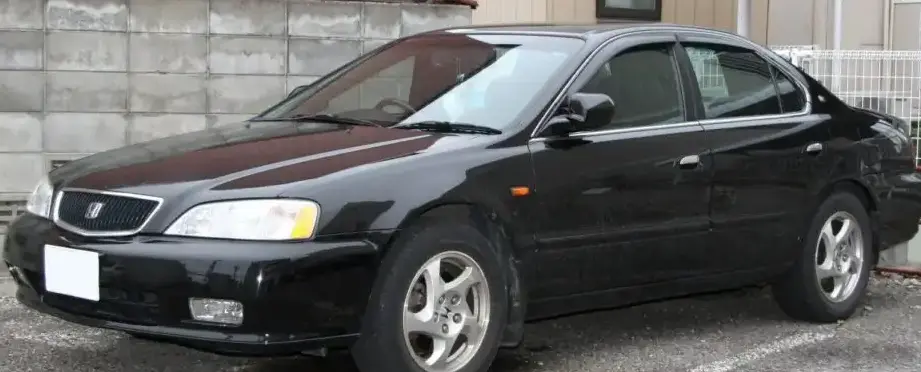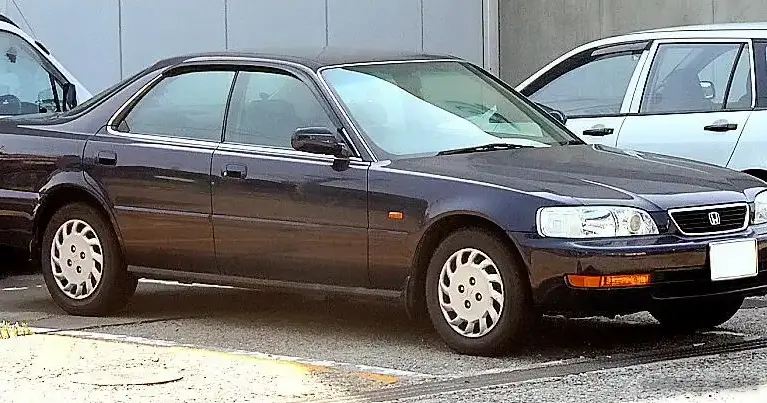
The Honda Saber, specifically the U1/U2 generation produced between 1995 and 1998, represented Honda’s foray into a more upscale, comfortable sedan segment within the Japanese domestic market (JDM). Positioned above the Accord but below the Inspire/Vigor duo, the Saber aimed to offer a blend of practicality, refinement, and a touch of sporting character. The 2.0 i 20V G variant, equipped with a 160 horsepower engine and a four-speed automatic transmission, was a mid-range offering within the Saber lineup, balancing performance with affordability and ease of use. It served as a popular choice for buyers seeking a comfortable and reliable family sedan with a respectable level of equipment.
Technical Specifications
| Brand | Honda |
| Model | Saber |
| Generation | Saber (U1/U2) |
| Type (Engine) | 2.0 i 20V G (160 Hp) |
| Start of production | 1995 |
| End of production | 1998 |
| Powertrain Architecture | Internal Combustion engine |
| Body type | Sedan |
| Seats | 5 |
| Doors | 4 |
| Fuel consumption (combined) | 7.5 l/100 km |
| Fuel consumption (US mpg) | 31.4 US mpg |
| Fuel consumption (UK mpg) | 37.7 UK mpg |
| Fuel consumption (km/l) | 13.3 km/l |
| Fuel Type | Petrol (Gasoline) |
| Weight-to-power ratio | 8.5 kg/Hp |
| Hp/tonne | 117.6 Hp/tonne |
| Weight-to-torque ratio | 7.3 kg/Nm |
| Nm/tonne | 136.8 Nm/tonne |
| Power | 160 Hp @ 6700 rpm |
| Power per litre | 80.2 Hp/l |
| Torque | 186 Nm @ 4000 rpm |
| Torque (lb.-ft.) | 137.19 lb.-ft. @ 4000 rpm |
| Engine layout | Front, Longitudinal |
| Engine displacement | 1996 cm3 |
| Engine displacement (cu. in.) | 121.8 cu. in. |
| Number of cylinders | 5 |
| Engine configuration | Inline |
| Cylinder Bore | 82 mm |
| Cylinder Bore (in.) | 3.23 in. |
| Piston Stroke | 75.6 mm |
| Piston Stroke (in.) | 2.98 in. |
| Compression ratio | 9.7:1 |
| Number of valves per cylinder | 4 |
| Fuel injection system | Multi-port manifold injection |
| Engine aspiration | Naturally aspirated engine |
| Valvetrain | OHC |
| Kerb Weight | 1360 kg |
| Kerb Weight (lbs.) | 2998.29 lbs. |
| Fuel tank capacity | 65 l |
| Fuel tank capacity (US gal) | 17.17 US gal |
| Fuel tank capacity (UK gal) | 14.3 UK gal |
| Length | 4840 mm |
| Length (in.) | 190.55 in. |
| Width | 1785 mm |
| Width (in.) | 70.28 in. |
| Height | 1405 mm |
| Height (in.) | 55.31 in. |
| Wheelbase | 2840 mm |
| Wheelbase (in.) | 111.81 in. |
| Front track | 1520 mm |
| Front track (in.) | 59.84 in. |
| Rear track | 1510 mm |
| Rear track (in.) | 59.45 in. |
| Drivetrain Architecture | Front wheel drive |
| Number of gears | 4 |
| Gearbox type | automatic transmission |
| Front suspension | Coil spring |
| Rear suspension | Coil spring |
| Front brakes | Ventilated discs |
| Rear brakes | Disc |
| Assisting systems | ABS (Anti-lock braking system) |
| Steering type | Steering rack and pinion |
| Power steering | Hydraulic Steering |
| Tires size | 195/65 R15 H |
Powertrain & Engine Architecture
The heart of the Saber 2.0 i 20V G was Honda’s F20A inline-five cylinder engine. This engine, a hallmark of Honda’s engineering prowess, featured a single overhead camshaft (OHC) design and multi-port fuel injection. The 20 valves (four per cylinder) contributed to its relatively high specific output for a naturally aspirated engine of the time. The F20A was known for its smooth power delivery and inherent reliability. The four-speed automatic transmission, while not offering the most modern gear ratios, was chosen for its comfort and ease of use, aligning with the Saber’s overall positioning as a refined family sedan. This transmission was electronically controlled, offering smoother shifts compared to older hydraulic systems.
Driving Characteristics
The 160 horsepower and 186 Nm (137 lb-ft) of torque provided by the 2.0L engine and automatic transmission resulted in adequate, but not exhilarating, performance. Acceleration from 0-60 mph was estimated to be around 9-10 seconds. Compared to the manual transmission versions of the Saber, or the higher-output V6 models available in the Inspire/Vigor range, the 2.0L automatic felt noticeably less responsive. The automatic transmission’s gear ratios were geared towards fuel efficiency and smooth cruising rather than aggressive acceleration. However, for everyday driving and highway merging, the powertrain proved perfectly capable. The longitudinal engine layout and front-wheel drive configuration provided decent handling characteristics, although it lacked the dynamic sharpness of rear-wheel drive competitors.
Equipment & Trim Levels
The 2.0 i 20V G trim typically included features such as power windows, power locks, air conditioning, and a basic audio system. Higher trim levels added features like leather upholstery, a sunroof, upgraded audio systems, and woodgrain interior trim. The interior design was generally conservative and focused on comfort and practicality. The dashboard layout was straightforward and easy to use, with clearly labeled controls. The Saber aimed to provide a comfortable and well-equipped interior without being overly ostentatious.
Chassis & Braking
The Saber utilized a conventional coil spring suspension setup at both the front and rear. The front suspension employed MacPherson struts, while the rear used a multi-link design. This configuration provided a comfortable ride quality, absorbing bumps and imperfections in the road effectively. Braking duties were handled by ventilated discs at the front and solid discs at the rear. Anti-lock braking system (ABS) was standard, enhancing safety and control during emergency braking situations. The steering system was a rack-and-pinion setup with hydraulic power assistance, providing light and precise steering feel.
Market Reception & Comparison
The Honda Saber 2.0 i 20V G was generally well-received by Japanese consumers. Critics praised its comfortable ride, spacious interior, and reliable powertrain. However, some reviewers noted that the 2.0L engine and automatic transmission combination lacked the performance of its V6 counterparts. Fuel economy was considered respectable for its class, averaging around 31.4 US mpg in combined driving. Compared to other sedans in its segment, such as the Toyota Camry and Nissan Cefiro, the Saber offered a unique blend of comfort, refinement, and Honda’s reputation for reliability. The automatic transmission was a key selling point for buyers prioritizing ease of use over outright performance.
Legacy
The Honda Saber, while not as widely known internationally as some of Honda’s other models, holds a respected position among JDM enthusiasts. The F20A engine is known for its durability and relatively simple maintenance requirements. The four-speed automatic transmission, while not the most technologically advanced, has also proven to be reliable. Today, well-maintained examples of the Saber 2.0 i 20V G are becoming increasingly collectible, particularly among those seeking a unique and reliable JDM sedan. The car represents a specific era of Japanese automotive engineering, prioritizing comfort, reliability, and a smooth driving experience.