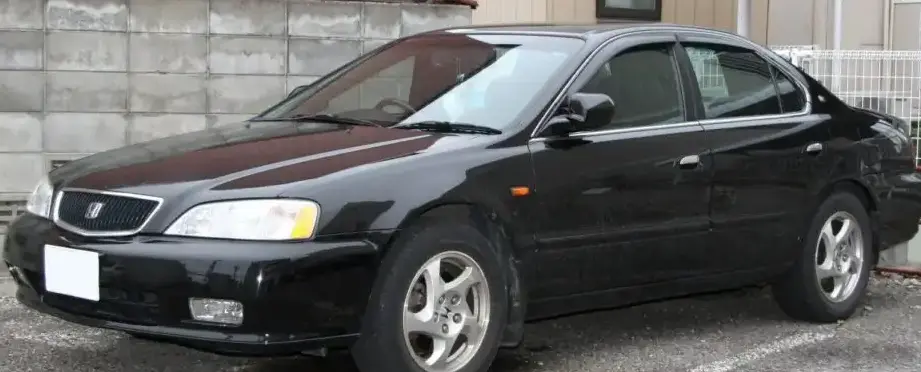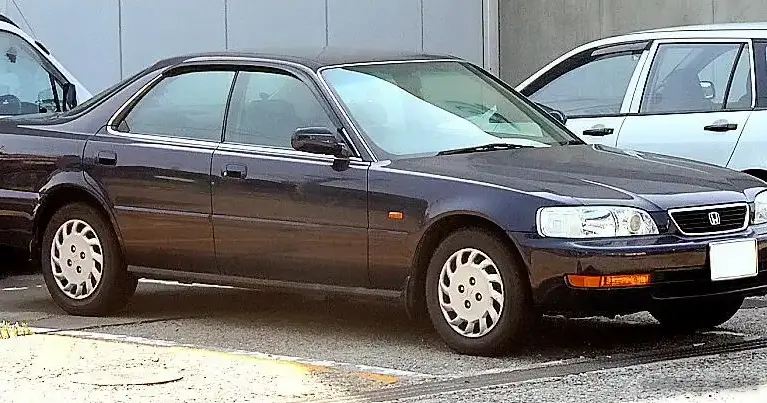
The Honda Saber, specifically the U1/U2 generation produced between 1995 and 1998, represented Honda’s foray into a more upscale, comfortable sedan segment within the Japanese domestic market (JDM). Positioned above the Accord but below the flagship Legend, the Saber aimed to offer a blend of performance, luxury, and practicality. The 2.5 i 20V S variant, equipped with the 2.5-liter inline-five engine producing 180 horsepower, occupied a mid-range position within the Saber lineup, offering a balance between performance and fuel efficiency. It was a popular choice for buyers seeking a refined driving experience without the higher price tag of the top-tier models.
Technical Specifications
| Brand | Honda |
| Model | Saber |
| Generation | Saber (U1/U2) |
| Type (Engine) | 2.5 i 20V S (180 Hp) |
| Start of production | 1995 |
| End of production | 1998 |
| Powertrain Architecture | Internal Combustion engine |
| Body type | Sedan |
| Seats | 5 |
| Doors | 4 |
| Fuel consumption (combined) | 7.8 l/100 km (30.2 US mpg, 36.2 UK mpg, 12.8 km/l) |
| Fuel Type | Petrol (Gasoline) |
| Weight-to-power ratio | 7.7 kg/Hp, 130.4 Hp/tonne |
| Weight-to-torque ratio | 6.1 kg/Nm, 163.8 Nm/tonne |
| Power | 180 Hp @ 6500 rpm |
| Power per litre | 73.4 Hp/l |
| Torque | 226 Nm @ 3800 rpm (166.69 lb.-ft. @ 3800 rpm) |
| Engine layout | Front, Longitudinal |
| Engine displacement | 2451 cm3 (149.57 cu. in.) |
| Number of cylinders | 5 |
| Engine configuration | Inline |
| Cylinder Bore | 85 mm (3.35 in.) |
| Piston Stroke | 86.4 mm (3.4 in.) |
| Compression ratio | 9.3:1 |
| Number of valves per cylinder | 4 |
| Fuel injection system | Multi-port manifold injection |
| Engine aspiration | Naturally aspirated engine |
| Valvetrain | OHC |
| Kerb Weight | 1380 kg (3042.38 lbs.) |
| Fuel tank capacity | 65 l (17.17 US gal | 14.3 UK gal) |
| Length | 4840 mm (190.55 in.) |
| Width | 1785 mm (70.28 in.) |
| Height | 1405 mm (55.31 in.) |
| Wheelbase | 2840 mm (111.81 in.) |
| Front track | 1520 mm (59.84 in.) |
| Rear track | 1510 mm (59.45 in.) |
| Drivetrain Architecture | The Internal combustion engine (ICE) drives the front wheels of the vehicle. |
| Drive wheel | Front wheel drive |
| Number of gears and type of gearbox | 4 gears, automatic transmission |
| Front suspension | Coil spring |
| Rear suspension | Coil spring |
| Front brakes | Ventilated discs |
| Rear brakes | Disc |
| Assisting systems | ABS (Anti-lock braking system) |
| Steering type | Steering rack and pinion |
| Power steering | Hydraulic Steering |
| Tires size | 195/65 R15H |
Powertrain & Engine Architecture
The heart of the Saber 2.5 i 20V S is the G25A inline-five engine. This engine, a hallmark of Honda’s engineering prowess, featured a cast iron block and an aluminum cylinder head. The 20-valve configuration (four valves per cylinder) and multi-port fuel injection contributed to its relatively high output for its displacement. The engine’s longitudinal mounting allowed for a front-wheel-drive configuration with a transaxle. The four-speed automatic transmission, while not the most modern by today’s standards, was known for its smooth operation and reliability. It was designed to provide comfortable cruising and adequate acceleration for everyday driving. The transmission’s gear ratios were tuned for fuel efficiency and ease of use, prioritizing a relaxed driving experience over outright performance.
Driving Characteristics
The 180 horsepower and 226 Nm (166.69 lb-ft) of torque delivered by the 2.5-liter engine provided the Saber 2.5 i 20V S with respectable, though not exhilarating, performance. Acceleration from 0 to 60 mph was estimated to be around 9-10 seconds. Compared to the manual transmission versions, the automatic offered slightly slower acceleration due to inherent transmission losses. However, the automatic’s smooth shifts and ease of use made it a more appealing option for many drivers, particularly those prioritizing comfort. The Saber’s front-wheel-drive layout provided predictable handling, although it lacked the all-wheel-drive capability of some competitors. The suspension, tuned for comfort, absorbed bumps and imperfections in the road well, resulting in a smooth and refined ride.
Equipment & Trim Levels
The 2.5 i 20V S trim level typically included features such as power windows, power locks, air conditioning, and a basic audio system. Higher-end options included leather upholstery, a sunroof, and upgraded audio systems. The interior design was functional and well-built, reflecting Honda’s commitment to quality. The dashboard layout was straightforward and easy to use, with clearly labeled controls. The Saber’s spacious interior provided ample room for passengers and cargo. The overall ambiance was one of understated elegance, appealing to buyers seeking a comfortable and refined driving experience.
Chassis & Braking
The Saber’s chassis featured a MacPherson strut front suspension and a multi-link rear suspension, providing a good balance of ride comfort and handling. The front brakes were ventilated discs, offering good stopping power, while the rear brakes were solid discs. Anti-lock braking system (ABS) was standard, enhancing safety by preventing wheel lockup during hard braking. The steering was rack-and-pinion with hydraulic power assistance, providing precise and responsive steering feel. The 195/65 R15 tires offered a good compromise between comfort and grip.
Market Reception & Comparison
The Honda Saber 2.5 i 20V S was generally well-received by Japanese automotive critics. It was praised for its comfortable ride, refined interior, and reliable engine. However, some critics noted that its performance was not as sporty as some of its competitors. Compared to other Saber trims, the 2.5 i 20V S offered a good balance between performance and fuel economy. The 2.0-liter models were more fuel-efficient but lacked the power of the 2.5-liter engine. The higher-end trims offered more luxurious features but came at a higher price. Fuel economy averaged around 30.2 US mpg, which was competitive for its class.
Legacy
The Honda Saber, while not widely known outside of Japan, remains a respected vehicle among JDM enthusiasts. The G25A engine is known for its durability and reliability, and well-maintained examples can still provide years of trouble-free service. The Saber 2.5 i 20V S, in particular, is valued for its balance of performance, comfort, and practicality. In the used car market, these Sabers command a moderate price, reflecting their age and relative rarity. They are often sought after by collectors and enthusiasts who appreciate their unique character and Honda’s engineering heritage. The Saber represents a significant chapter in Honda’s history, showcasing the company’s ability to create refined and reliable vehicles for a discerning clientele.