
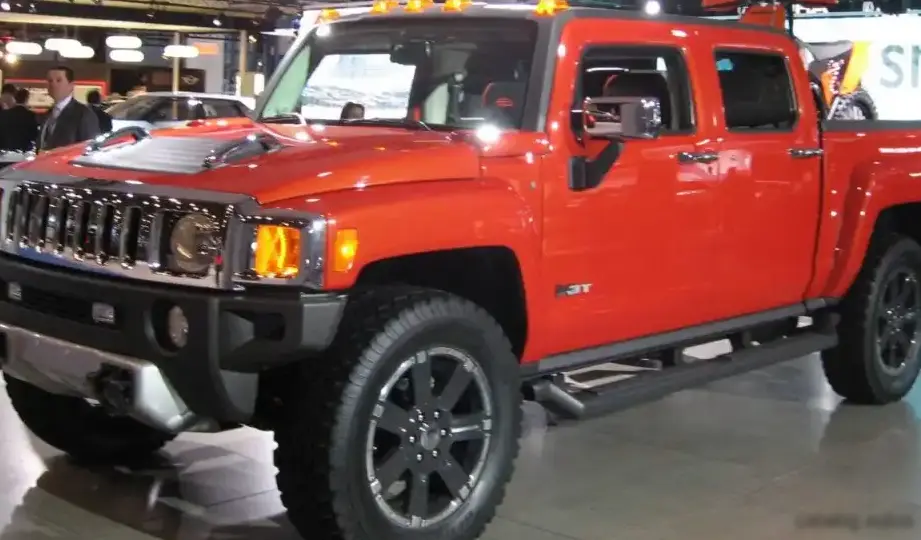
The Hummer H3T 3.7i 20V (242 Hp) 4×4, produced from 2008 to 2010, represented a unique offering in the Hummer lineup. It was the truck variant of the H3, designed to blend Hummer’s off-road capability with the practicality of a mid-size pickup. Positioned as a more versatile alternative to the standard H3 SUV, the H3T aimed to appeal to buyers needing both ruggedness and cargo-carrying capacity. It was built on the GM Colorado/Canyon platform, sharing many components but distinguished by its distinctive Hummer styling and off-road focused engineering. This particular variant, equipped with the 3.7-liter inline-five engine and a five-speed manual transmission, occupied a middle ground in the H3T range, offering a balance between performance and affordability.
Technical Specifications
| Brand | Hummer |
| Model | H3 |
| Generation | H3T |
| Type (Engine) | 3.7i 20V (242 Hp) 4×4 |
| Start of production | 2008 |
| End of production | 2010 |
| Powertrain Architecture | Internal Combustion engine |
| Body type | Off-road vehicle, Pick-up |
| Seats | 4 |
| Doors | 4 |
| Fuel consumption (urban) | 16.8 l/100 km (14 US mpg, 16.8 UK mpg, 6 km/l) |
| Fuel consumption (extra urban) | 13.1 l/100 km (18 US mpg, 21.6 UK mpg, 7.6 km/l) |
| Fuel consumption (combined) | 14.7 l/100 km (16 US mpg, 19.2 UK mpg, 6.8 km/l) |
| Fuel Type | Petrol (Gasoline) |
| Maximum speed | 158 km/h (98.18 mph) |
| Weight-to-power ratio | 9.2 kg/Hp, 108.1 Hp/tonne |
| Weight-to-torque ratio | 6.8 kg/Nm, 146.1 Nm/tonne |
| Power | 242 Hp @ 5600 rpm |
| Power per litre | 66.2 Hp/l |
| Torque | 327 Nm @ 4600 rpm (241.18 lb.-ft. @ 4600 rpm) |
| Maximum engine speed | 6300 rpm |
| Engine layout | Front, Longitudinal |
| Engine Model/Code | LLR |
| Engine displacement | 3653 cm3 (222.92 cu. in.) |
| Number of cylinders | 5 |
| Engine configuration | Inline |
| Cylinder Bore | 95.5 mm (3.76 in.) |
| Piston Stroke | 102 mm (4.02 in.) |
| Compression ratio | 10:1 |
| Number of valves per cylinder | 4 |
| Fuel injection system | Multi-port manifold injection |
| Engine aspiration | Naturally aspirated engine |
| Valvetrain | DOHC, CVVT |
| Engine oil capacity | 5.7 l (6.02 US qt | 5.02 UK qt) |
| Coolant | 9.5 l (10.04 US qt | 8.36 UK qt) |
| Kerb Weight | 2238 kg (4933.95 lbs.) |
| Max. weight | 2722 kg (6000.98 lbs.) |
| Max load | 484 kg (1067.04 lbs.) |
| Fuel tank capacity | 102 l (26.95 US gal | 22.44 UK gal) |
| Length | 5403 mm (212.72 in.) |
| Width | 1905 mm (75 in.) |
| Height | 1831 mm (72.09 in.) |
| Wheelbase | 2842 mm (111.89 in.) |
| Front track | 1651 mm (65 in.) |
| Rear track | 1664 mm (65.51 in.) |
| Ride height (ground clearance) | 242 mm (9.53 in.) |
| Drag coefficient (Cd) | 0.55 |
| Minimum turning circle | 13.3 m (43.64 ft.) |
| Approach angle | 37.1° |
| Departure angle | 30.9° |
| Ramp-over angle | 19° |
| Drive wheel | All wheel drive (4×4) |
| Number of gears | 5 |
| Gearbox type | Manual transmission |
| Front suspension | Torsion |
| Rear suspension | Leaf spring |
| Front brakes | Ventilated discs |
| Rear brakes | Disc |
| Assisting systems | ABS (Anti-lock braking system) |
| Tires size | 265/75 R16 |
| Wheel rims size | 16 |
Powertrain & Engine Architecture
The H3T 3.7i utilized General Motors’ LLR 3.7-liter inline-five engine. This engine, a relatively uncommon configuration, was chosen for its blend of power and compact size. It featured a cast iron block and aluminum cylinder heads, incorporating dual overhead camshafts (DOHC) and variable valve timing (CVVT) on both intake and exhaust valves. The multi-port fuel injection system delivered fuel directly to the intake ports, optimizing combustion. The engine produced 242 horsepower at 5600 rpm and 327 lb-ft of torque at 4600 rpm. Paired with the five-speed manual transmission, the powertrain offered a reasonably direct driving experience. The manual gearbox was a New Venture M32, known for its durability. The engine’s longitudinal mounting allowed for a traditional front-engine, rear-wheel-drive layout with four-wheel drive engagement.
Driving Characteristics
The 3.7-liter engine, while providing adequate power for everyday driving, wasn’t particularly quick in the H3T. The vehicle’s substantial weight (approximately 4,934 lbs) and the aerodynamic inefficiencies of its boxy shape limited acceleration. The five-speed manual transmission allowed drivers to keep the engine in its optimal power band, but it still wasn’t a sporty performer. The gear ratios were geared more towards low-end torque for off-road crawling than outright speed. Compared to the H3T models equipped with the optional four-speed automatic transmission, the manual version felt more responsive and engaging. However, the automatic offered greater convenience, particularly in stop-and-go traffic. The H3T’s off-road prowess was its defining characteristic, and the powertrain provided sufficient grunt for navigating challenging terrain.
Equipment & Trim Levels
The H3T 3.7i typically came standard with features like air conditioning, power windows and locks, a CD player with an auxiliary input, and basic cloth upholstery. The interior design was functional but lacked the refinement of some competitors. Optional extras included a premium sound system, leather upholstery, heated front seats, and a navigation system. The H3T offered a relatively limited range of trim levels, with most variations focusing on adding convenience and cosmetic enhancements. The base model was fairly spartan, while higher trims offered more luxurious appointments. The H3T’s interior space was adequate for four passengers, but the rear seats were somewhat cramped.
Chassis & Braking
The H3T’s chassis was based on the GM mid-size truck platform, featuring a body-on-frame construction. The front suspension utilized torsion bars, while the rear suspension employed leaf springs. This setup prioritized durability and load-carrying capacity over ride comfort. The H3T’s braking system consisted of ventilated discs at the front and solid discs at the rear. Anti-lock brakes (ABS) were standard. The H3T’s relatively high center of gravity and substantial weight contributed to noticeable body roll during cornering. The standard tire size was 265/75R16, providing a good balance between on-road comfort and off-road traction.
Market Reception & Comparison
The Hummer H3T received mixed reviews from automotive critics. While its off-road capability was widely praised, its fuel economy (averaging around 16 mpg combined) and on-road handling were often criticized. Compared to other mid-size pickups like the Toyota Tacoma and Nissan Frontier, the H3T offered a more distinctive style and greater off-road prowess, but it lacked their refinement and fuel efficiency. The 3.7-liter engine was considered adequate but not particularly exciting. The manual transmission was appreciated by enthusiasts, but it wasn’t as popular as the automatic among mainstream buyers. Reliability was generally acceptable, but some owners reported issues with the engine’s oil consumption and the vehicle’s electrical system.
Legacy
The Hummer H3T, and the H3 line in general, represents a unique chapter in automotive history. The brand’s demise following General Motors’ bankruptcy in 2009 has made the H3T a relatively rare and collectible vehicle. The 3.7-liter engine, while not known for exceptional longevity, has proven reasonably durable with proper maintenance. On the used car market, H3Ts in good condition command a premium, particularly those with low mileage and well-maintained mechanicals. The H3T’s rugged styling and off-road capability continue to appeal to enthusiasts seeking a distinctive and capable vehicle. Its legacy is one of bold design and uncompromising off-road performance, even if it came at the expense of fuel efficiency and refinement.
