
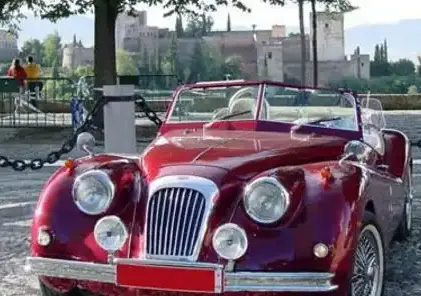
The Hurtan Grand Albaycin 2.0 16V, produced from 2008 onwards, represents a unique offering in the small, lightweight sports car segment. Hurtan, a Spanish manufacturer, built the Grand Albaycin as a modern interpretation of classic British roadsters, aiming for a blend of performance, style, and driver engagement. Available as both a coupe and a convertible (cabriolet), the 2.0 16V variant was positioned as the performance-oriented model within the Grand Albaycin lineup, offering a significant power increase over potential lower-displacement options. The car’s design deliberately evokes the spirit of the 1960s and 70s, while incorporating contemporary mechanical components.
Technical Specifications
| Brand | Hurtan |
| Model | Grand Albaycin |
| Generation | Grand Albaycin |
| Type (Engine) | 2.0 16V (200 Hp) |
| Start of production | 2008 |
| Powertrain Architecture | Internal Combustion engine |
| Body type | Coupe – Cabriolet |
| Seats | 2 |
| Doors | 2 |
| Fuel Type | Petrol (Gasoline) |
| Weight-to-power ratio | 4.5 kg/Hp, 222.2 Hp/tonne |
| Power | 200 Hp |
| Number of cylinders | 4 |
| Number of valves per cylinder | 4 |
| Engine aspiration | Naturally aspirated engine |
| Kerb Weight | 900 kg (1984.16 lbs.) |
| Fuel tank capacity | 40 l (10.57 US gal | 8.8 UK gal) |
| Length | 4100 mm (161.42 in.) |
| Width | 1625 mm (63.98 in.) |
| Height | 1300 mm (51.18 in.) |
| Drivetrain Architecture | The Internal combustion engine (ICE) drives the rear wheels of the vehicle. |
| Drive wheel | Rear wheel drive |
| Assisting systems | ABS (Anti-lock braking system) |
Powertrain & Engine Architecture
The heart of the Grand Albaycin 2.0 16V is a naturally aspirated, four-cylinder engine displacing 1998cc. While Hurtan did not manufacture the engine in-house, they sourced it from established European suppliers, often utilizing units derived from the Renault/Peugeot/Volvo alliance. The “16V” designation indicates a four-valve-per-cylinder configuration, enhancing breathing and contributing to the engine’s 200 horsepower output. Fuel delivery is managed by a multi-point fuel injection system, optimized for performance and efficiency. The engine’s architecture is a relatively conventional design, prioritizing simplicity and reliability. Specific details regarding the engine management system are often dependent on the exact supplier and year of manufacture, but generally feature electronic ignition and control. The engine is mated to a five-speed manual transmission as standard, though an automatic transmission was also offered, albeit less common. The automatic transmission, typically a four-speed unit, was sourced from a variety of suppliers depending on production year.
Driving Characteristics
The Grand Albaycin 2.0 16V delivers a lively and engaging driving experience, largely due to its low weight and rear-wheel-drive configuration. With a power-to-weight ratio of approximately 222 horsepower per tonne, acceleration is brisk, and the car feels nimble in corners. The five-speed manual transmission provides precise shifts, allowing the driver to fully exploit the engine’s powerband. The automatic transmission, while offering convenience, does slightly diminish the car’s responsiveness. Gear ratios are tuned for acceleration rather than outright top speed, making the car feel particularly strong in the mid-range. The rear-wheel-drive layout contributes to a balanced chassis, although careful throttle control is required, especially on slippery surfaces. The steering is direct and communicative, providing good feedback to the driver. The suspension, while relatively simple, is well-tuned for both comfort and handling, offering a good compromise between ride quality and body control.
Equipment & Trim Levels
The Grand Albaycin 2.0 16V was offered with a relatively minimalist interior, reflecting the car’s focus on driving experience. Standard equipment typically included leather seats, power windows, and central locking. Air conditioning was often an optional extra. The dashboard layout is clean and functional, with a focus on essential instrumentation. Interior trim materials varied depending on customer preference, with options for different leather colors and finishes. The convertible version featured a manually operated soft top, available in a range of colors. Optional extras included upgraded audio systems, alloy wheels, and a limited-slip differential. The overall ambiance of the interior is one of understated elegance, prioritizing quality and craftsmanship over excessive features.
Chassis & Braking
The Grand Albaycin utilizes a steel tube chassis, providing a strong and lightweight foundation for the vehicle. Suspension is handled by independent suspension at all four corners, typically utilizing coil springs and telescopic shock absorbers. Front suspension is typically a double wishbone setup, while the rear utilizes a trailing arm configuration. Braking is provided by disc brakes at the front and drum brakes at the rear, although some later models featured disc brakes all around. An Anti-lock Braking System (ABS) was standard equipment, enhancing safety and stability. Steering is rack-and-pinion, providing precise and responsive control. The relatively lightweight construction of the chassis and suspension components contributes to the car’s agile handling characteristics.
Market Reception & Comparison
The Hurtan Grand Albaycin 2.0 16V received generally positive reviews from automotive journalists, who praised its engaging driving dynamics, classic styling, and overall value. Critics noted that the car offered a unique alternative to more mainstream sports cars, appealing to enthusiasts seeking a more raw and visceral driving experience. Compared to other small sports cars of the era, such as the Mazda MX-5, the Grand Albaycin offered a more powerful engine and a more distinctive design. However, it lacked the widespread brand recognition and dealer network of its Japanese competitor. Fuel economy was reasonable for a sports car of this type, averaging around 28-32 mpg. Reliability was generally good, although sourcing parts could sometimes be challenging due to the car’s limited production run.
Legacy
The Hurtan Grand Albaycin 2.0 16V remains a relatively rare and sought-after vehicle among enthusiasts. Its unique blend of classic styling, modern mechanicals, and engaging driving dynamics has ensured its continued appeal. The powertrain, while not particularly complex, has proven to be reasonably reliable, and parts availability is generally adequate. On the used car market, well-maintained examples command a premium price. The Grand Albaycin represents a fascinating example of a small-volume manufacturer successfully creating a niche product that appeals to a dedicated following. Its legacy lies in its ability to capture the spirit of classic British roadsters while offering a contemporary driving experience.
