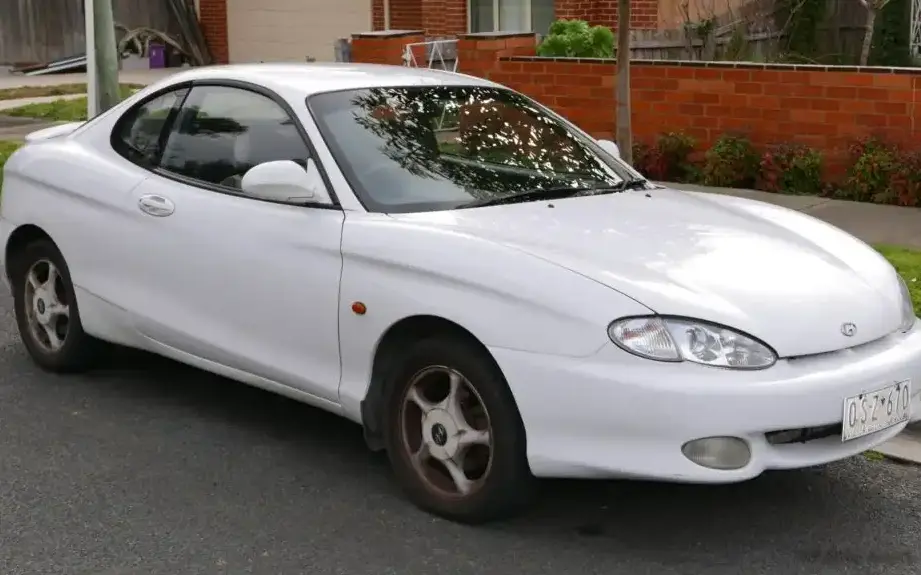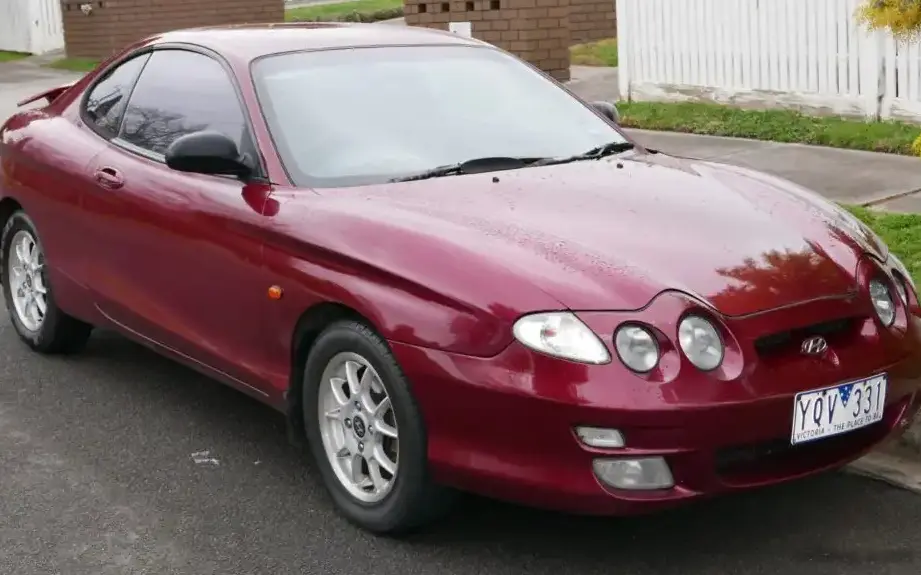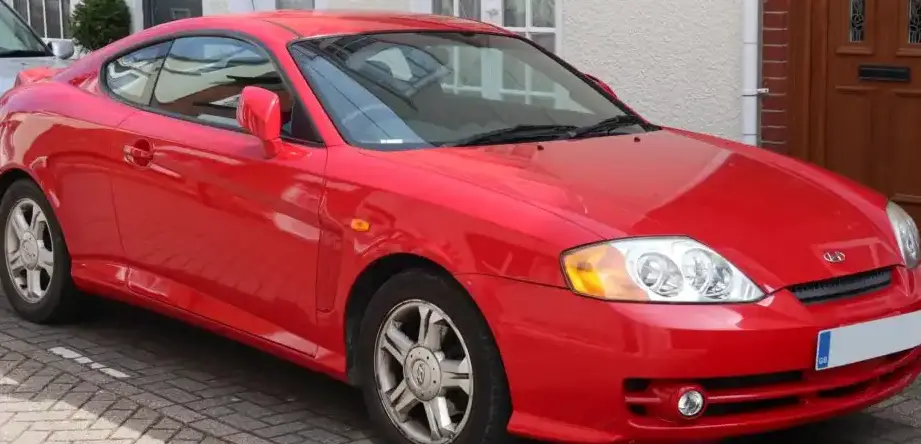
The Hyundai Coupe II (GK) 2.7 i V6 24V, produced between 2001 and 2007, represented a significant step forward for Hyundai’s styling and performance aspirations. Positioned as the range-topping engine option within the GK Coupe lineup, this variant aimed to deliver a more refined and powerful driving experience compared to the 1.6L and 2.0L models. Built on the GK platform, the Coupe II sought to establish Hyundai as a contender in the increasingly competitive compact coupe segment, particularly in European and Asian markets where the sporty coupe aesthetic held strong appeal. While never a massive seller in the United States, the Coupe II offered a unique alternative to established Japanese and European rivals.
Technical Specifications
| Brand | Hyundai |
| Model | Coupe |
| Generation | Coupe II (GK) |
| Type (Engine) | 2.7 i V6 24V (167 Hp) |
| Start of production | 2001 |
| End of production | 2007 |
| Powertrain Architecture | Internal Combustion engine |
| Body type | Coupe |
| Seats | 5 |
| Doors | 3 |
| Fuel consumption (urban) | 14.6 l/100 km (16.1 US mpg, 19.3 UK mpg, 6.8 km/l) |
| Fuel consumption (extra urban) | 7.9 l/100 km (29.8 US mpg, 35.8 UK mpg, 12.7 km/l) |
| Fuel consumption (combined) | 10.4 l/100 km (22.6 US mpg, 27.2 UK mpg, 9.6 km/l) |
| Fuel Type | Petrol (Gasoline) |
| Acceleration 0 – 100 km/h | 8.2 sec |
| Acceleration 0 – 62 mph | 8.2 sec |
| Acceleration 0 – 60 mph | 7.8 sec |
| Maximum speed | 220 km/h (136.7 mph) |
| Weight-to-power ratio | 8 kg/Hp, 125.1 Hp/tonne |
| Weight-to-torque ratio | 5.4 kg/Nm, 183.5 Nm/tonne |
| Power | 167 Hp @ 6000 rpm |
| Power per litre | 62.9 Hp/l |
| Torque | 245 Nm @ 4000 rpm (180.7 lb.-ft. @ 4000 rpm) |
| Engine layout | Front, Transverse |
| Engine Model/Code | Delta / G6BA |
| Engine displacement | 2657 cm3 (162.14 cu. in.) |
| Number of cylinders | 6 |
| Engine configuration | V-engine |
| Cylinder Bore | 86.7 mm (3.41 in.) |
| Piston Stroke | 75 mm (2.95 in.) |
| Compression ratio | 10:1 |
| Number of valves per cylinder | 4 |
| Fuel injection system | Multi-port manifold injection |
| Engine aspiration | Naturally aspirated engine |
| Valvetrain | DOHC |
| Engine oil capacity | 4.5 l (4.76 US qt | 3.96 UK qt) |
| Coolant capacity | 8 l (8.45 US qt | 7.04 UK qt) |
| Kerb Weight | 1335 kg (2943.17 lbs.) |
| Max. weight | 1740 kg (3836.04 lbs.) |
| Max load | 405 kg (892.87 lbs.) |
| Trunk (boot) space – minimum | 420 l (14.83 cu. ft.) |
| Fuel tank capacity | 55 l (14.53 US gal | 12.1 UK gal) |
| Length | 4395 mm (173.03 in.) |
| Width | 1760 mm (69.29 in.) |
| Height | 1330 mm (52.36 in.) |
| Wheelbase | 2530 mm (99.61 in.) |
| Front track | 1490 mm (58.66 in.) |
| Rear (Back) track | 1490 mm (58.66 in.) |
| Drivetrain Architecture | The Internal combustion engine (ICE) drives the front wheels of the vehicle. |
| Drive wheel | Front wheel drive |
| Number of gears and type of gearbox | 6 gears, manual transmission |
| Front suspension | Spring Strut |
| Rear suspension | Double wishbone |
| Front brakes | Ventilated discs |
| Rear brakes | Ventilated discs |
| Assisting systems | ABS (Anti-lock braking system) |
| Steering type | Steering rack and pinion |
| Power steering | Hydraulic Steering |
| Tires size | 215/45 R17 |
Powertrain & Engine Architecture
The heart of the Coupe II 2.7 i V6 was the Hyundai Delta engine, specifically the G6BA code. This 2.7-liter, naturally aspirated V6 engine featured a 60-degree V-angle and a dual overhead camshaft (DOHC) valvetrain with four valves per cylinder. The engine utilized a multi-port fuel injection system, delivering fuel directly into the intake ports. The 10:1 compression ratio contributed to its respectable power output. The G6BA engine was known for its relatively smooth operation and decent refinement for its class. The six-speed manual transmission was the standard offering, providing drivers with direct control over the engine’s power. While an automatic transmission was available in some markets, it wasn’t as commonly paired with the 2.7L V6 as the manual.
Driving Characteristics
The 2.7L V6, paired with the six-speed manual, offered a noticeable performance upgrade over the lower-displacement engines in the Coupe II range. Acceleration to 60 mph was achieved in around 7.8 seconds, and the car had a top speed of 136.7 mph. The engine delivered a broad torque curve, making it responsive in most driving situations. The six-speed gearbox allowed drivers to keep the engine in its optimal power band, enhancing both acceleration and fuel efficiency. Compared to the 2.0L models, the V6 provided a more effortless driving experience, particularly during highway cruising and overtaking maneuvers. However, the front-wheel-drive configuration meant that traction could be a limitation when applying full throttle, especially on damp surfaces.
Equipment & Trim Levels
The 2.7 i V6 typically represented the highest trim level available for the Coupe II. Standard features often included air conditioning, power windows and locks, a CD player, and alloy wheels. Higher-spec models could be equipped with leather upholstery, a sunroof, and upgraded audio systems. The interior design was generally modern for its time, with a driver-focused layout and reasonably comfortable seating. The Coupe II aimed to provide a sporty yet comfortable interior environment.
Chassis & Braking
The Coupe II utilized a front-wheel-drive platform with independent suspension at all four corners. The front suspension employed MacPherson struts, while the rear featured a multi-link setup. This suspension configuration aimed to provide a balance between ride comfort and handling precision. Braking duties were handled by ventilated disc brakes on all four wheels, providing adequate stopping power. An Anti-lock Braking System (ABS) was standard, enhancing safety and control during emergency braking situations. The chassis was tuned to provide a reasonably sporty driving experience, but it wasn’t as sharp or agile as some of its European rivals.
Market Reception & Comparison
The Hyundai Coupe II 2.7 i V6 received mixed reviews from automotive critics. While the engine was praised for its smooth operation and respectable power, the car’s handling and overall refinement were often criticized as being below par compared to established competitors like the Honda Prelude or the Mazda MX-6. Fuel economy was also a concern, with the 2.7L V6 consuming significantly more fuel than the smaller-displacement engines. However, the Coupe II offered a compelling value proposition, providing a well-equipped and relatively powerful coupe at a competitive price point. Compared to the 1.6L and 2.0L versions, the 2.7L V6 offered a substantial performance boost, but at the cost of increased fuel consumption and a slightly higher purchase price.
Legacy
The Hyundai Coupe II 2.7 i V6, while not a mainstream success, played a role in establishing Hyundai as a more credible automotive manufacturer. The G6BA engine proved to be relatively reliable, and well-maintained examples continue to be found on the used car market today. However, finding parts can sometimes be challenging, and the car’s age means that regular maintenance is essential to ensure its continued reliability. The Coupe II remains a popular choice among enthusiasts looking for an affordable and stylish coupe with a distinctive design and a capable V6 engine. It represents a pivotal moment in Hyundai’s history, showcasing the company’s ambition to compete with established brands in the global automotive market.