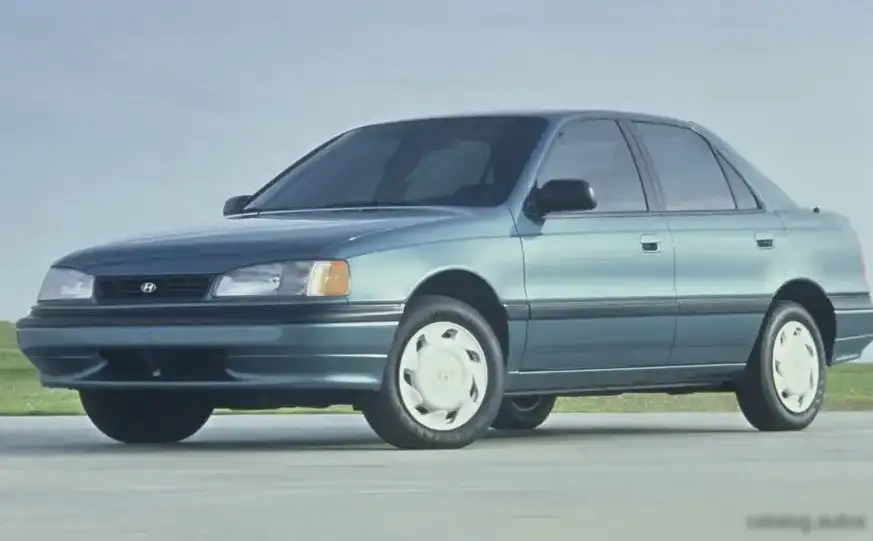
The Hyundai Elantra GT N Line 1.6, produced from 2017 to 2020, represents a performance-oriented variant of the Elantra GT hatchback. Positioned as a step above the standard Elantra GT, the N Line aimed to deliver a more engaging driving experience with a turbocharged engine and sporty styling cues. It served as an accessible entry point into Hyundai’s burgeoning “N” performance line, bridging the gap between mainstream models and the full-fledged “N” cars. This variant was primarily marketed in Europe and other global markets, offering a compelling alternative to established hot hatches.
Technical Specifications
| Brand | Hyundai |
| Model | Elantra |
| Generation | Elantra GT |
| Type (Engine) | N Line 1.6 (204 Hp) |
| Start of production | 2017 |
| End of production | 2020 |
| Powertrain Architecture | Internal Combustion engine |
| Body type | Hatchback |
| Seats | 5 |
| Doors | 5 |
| Fuel consumption (economy) – urban | 10.7 l/100 km (22 US mpg, 26.4 UK mpg, 9.3 km/l) |
| Fuel consumption (economy) – extra urban | 8.1 l/100 km (29 US mpg, 34.9 UK mpg, 12.3 km/l) |
| Fuel consumption (economy) – combined | 9.4 l/100 km (25 US mpg, 30.1 UK mpg, 10.6 km/l) |
| Fuel Type | Petrol (Gasoline) |
| Weight-to-power ratio | 6.7 kg/Hp, 149.2 Hp/tonne |
| Weight-to-torque ratio | 5.2 kg/Nm, 193.1 Nm/tonne |
| Power | 204 Hp @ 6000 rpm |
| Power per litre | 128.2 Hp/l |
| Torque | 264 Nm @ 1500-4500 rpm (194.72 lb.-ft. @ 1500-4500 rpm) |
| Engine layout | Front, Transverse |
| Engine Model/Code | Gamma II / G4FJ |
| Engine displacement | 1591 cm3 (97.09 cu. in.) |
| Number of cylinders | 4 |
| Engine configuration | Inline |
| Cylinder Bore | 77 mm (3.03 in.) |
| Piston Stroke | 85.4 mm (3.36 in.) |
| Compression ratio | 9.5:1 |
| Number of valves per cylinder | 4 |
| Fuel injection system | Direct injection |
| Engine aspiration | Turbocharger, Intercooler |
| Valvetrain | DOHC |
| Engine oil capacity | 4.5 l (4.76 US qt | 3.96 UK qt) |
| Coolant | 6.1 l (6.45 US qt | 5.37 UK qt) |
| Kerb Weight | 1367 kg (3013.72 lbs.) |
| Trunk (boot) space – minimum | 705 l (24.9 cu. ft.) |
| Fuel tank capacity | 53 l (14 US gal | 11.66 UK gal) |
| Length | 4341 mm (170.91 in.) |
| Width | 1796 mm (70.71 in.) |
| Height | 1466 mm (57.72 in.) |
| Wheelbase | 2649 mm (104.29 in.) |
| Front track | 1552 mm (61.1 in.) |
| Rear (Back) track | 1562 mm (61.5 in.) |
| Ride height (ground clearance) | 150 mm (5.91 in.) |
| Drivetrain Architecture | The Internal combustion engine (ICE) drives the front wheels of the vehicle. |
| Drive wheel | Front wheel drive |
| Number of gears and type of gearbox | 6 gears, manual transmission |
| Front brakes | Ventilated discs |
| Rear brakes | Disc |
| Assisting systems | ABS (Anti-lock braking system) |
| Steering type | Steering rack and pinion |
| Power steering | Electric Steering |
| Tires size | 225/40 R18 |
| Wheel rims size | 7.5J x 18 |
Introduction
The Hyundai Elantra GT N Line 1.6, launched in 2017 and continuing through 2020, was a significant addition to the Elantra GT lineup. Built on the 1HX0/AD platform, it aimed to provide a more spirited driving experience than the standard GT. The N Line trim was designed to appeal to drivers seeking a balance between practicality and performance, offering a turbocharged engine, sport-tuned suspension, and distinctive styling elements. It was a key model in Hyundai’s strategy to broaden its appeal to enthusiasts and establish a stronger presence in the competitive compact hatchback segment, particularly in European and Asian markets.
Powertrain & Engine Architecture
At the heart of the Elantra GT N Line 1.6 lies the Hyundai Gamma II engine, specifically the G4FJ code. This 1.6-liter, inline-four cylinder engine utilizes direct injection and is coupled with a twin-scroll turbocharger and intercooler. The direct injection system allows for precise fuel delivery, optimizing combustion efficiency and power output. The engine produces 204 horsepower at 6000 rpm and 264 Nm (194.72 lb-ft) of torque between 1500 and 4500 rpm. The six-speed manual transmission was the only transmission option available, chosen for its driver engagement and performance characteristics. The engine’s valvetrain features a Dual Overhead Camshaft (DOHC) design, contributing to its responsive nature. The turbocharger is a key component, providing a significant boost in power and torque compared to naturally aspirated engines.
Driving Characteristics
The Elantra GT N Line 1.6 offered a noticeable improvement in driving dynamics compared to the standard Elantra GT. The turbocharged engine delivered strong acceleration, with the peak torque available across a broad rev range making it feel responsive in everyday driving situations. The six-speed manual transmission provided precise gear changes and allowed drivers to fully exploit the engine’s power. While not a dedicated “N” car, the N Line offered a firmer suspension setup and more direct steering, resulting in improved handling and cornering ability. Compared to higher-output versions of the Elantra GT (which weren’t widely available), the 1.6L N Line prioritized a balance between performance and fuel efficiency. It wasn’t as brutally fast as a potential higher-horsepower variant, but it offered a more accessible and enjoyable driving experience for a wider range of drivers.
Equipment & Trim Levels
The Elantra GT N Line 1.6 came standard with a range of features designed to enhance both comfort and style. Interior appointments typically included sport seats with unique cloth upholstery, a leather-wrapped steering wheel, and aluminum pedals. The dashboard featured a modern design with a touchscreen infotainment system compatible with Apple CarPlay and Android Auto. Standard safety features included ABS, electronic stability control, and multiple airbags. Optional extras included a panoramic sunroof, upgraded audio system, and various exterior styling enhancements such as a rear spoiler and unique alloy wheel designs. The N Line trim was generally well-equipped, offering a premium feel without the price tag of a fully-loaded model.
Chassis & Braking
The Elantra GT N Line 1.6 featured a chassis tuned for improved handling and stability. The suspension system incorporated stiffer springs and dampers compared to the standard GT, reducing body roll and enhancing cornering grip. The front suspension utilized MacPherson struts, while the rear employed a multi-link setup. Braking duties were handled by ventilated discs at the front and solid discs at the rear, providing adequate stopping power for everyday driving and spirited performance. The electric power steering system offered a more direct and responsive feel than the standard GT’s steering. The overall chassis setup was designed to provide a comfortable ride while still delivering a sporty driving experience.
Market Reception & Comparison
The Hyundai Elantra GT N Line 1.6 was generally well-received by automotive critics. Reviewers praised its responsive engine, engaging handling, and attractive styling. It was often compared to rivals such as the Volkswagen Golf, Ford Focus, and Opel Astra. In terms of fuel economy, the N Line offered a reasonable balance between performance and efficiency, achieving around 25 US mpg in combined driving. Reliability was generally good, with few reported issues. Compared to the standard Elantra GT, the N Line offered a significant upgrade in driving dynamics and performance. It provided a more compelling alternative to other hot hatches in its class, offering a good value proposition for buyers seeking a sporty and practical compact hatchback.
Legacy
The Hyundai Elantra GT N Line 1.6 played a crucial role in establishing Hyundai’s N Line as a desirable performance trim. The Gamma II 1.6L turbo engine proved to be a reliable and capable powerplant, and the N Line’s combination of sporty styling and engaging driving dynamics resonated with buyers. On the used car market today, the Elantra GT N Line 1.6 remains a popular choice for those seeking an affordable and fun-to-drive hatchback. Its relatively simple mechanicals and readily available parts contribute to its long-term reliability and ease of maintenance. It represents a significant step forward for Hyundai in terms of performance and driving enjoyment, and it paved the way for the more extreme “N” models that followed.