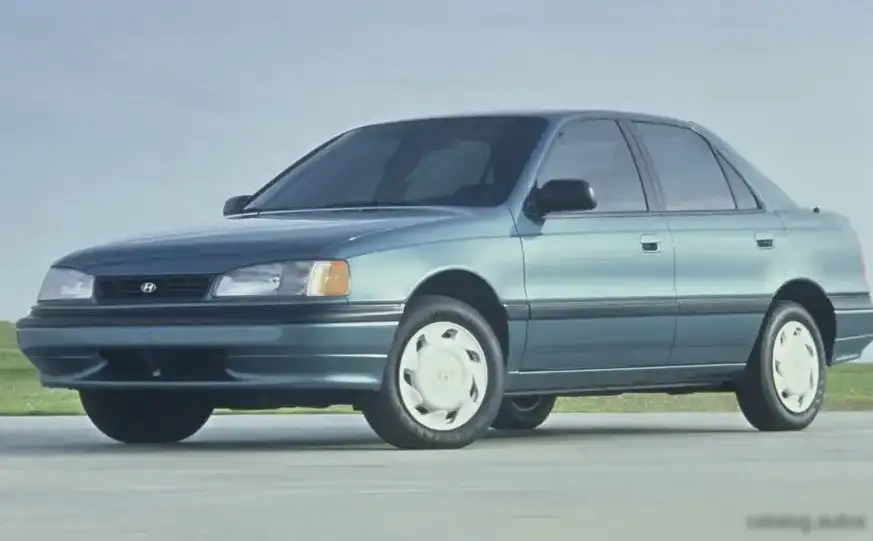
The Hyundai Elantra II 1.5 12V, produced between 1996 and 2000, represented a significant step forward for Hyundai in the competitive compact sedan market. Falling within the second generation of the Elantra (also known as the Avante in some markets), this variant was positioned as the entry-level offering, providing affordable transportation with a focus on fuel efficiency and practicality. It was a key model in Hyundai’s strategy to establish a stronger foothold in North America and Europe, offering a value proposition against established Japanese and European rivals. The Elantra II was built on the XD platform, a substantial upgrade from the first generation, offering improved refinement and safety features.
Technical Specifications
| Brand | Hyundai |
| Model | Elantra |
| Generation | Elantra II |
| Type (Engine) | 1.5 12V (88 Hp) |
| Start of production | 1996 |
| End of production | 2000 |
| Powertrain Architecture | Internal Combustion Engine |
| Body type | Sedan |
| Seats | 5 |
| Doors | 4 |
| Fuel Type | Petrol (Gasoline) |
| Power | 88 Hp |
| Engine Model/Code | Alpha / G4EK |
| Engine aspiration | Naturally aspirated |
| Engine oil capacity | 3.3 l (3.49 US qt | 2.9 UK qt) |
| Coolant capacity | 6 l (6.34 US qt | 5.28 UK qt) |
| Drivetrain Architecture | Front Wheel Drive |
| Number of gears | 5 |
| Gearbox type | Manual Transmission |
Powertrain & Engine Architecture
The heart of the Elantra II 1.5 was the Hyundai Alpha engine, specifically the G4EK code. This 1.5-liter, 12-valve inline-four engine was a relatively simple design, prioritizing reliability and fuel economy over outright performance. It featured a single overhead camshaft (SOHC) configuration, operating with a modest 9.5:1 compression ratio. Fuel delivery was managed by a multi-point fuel injection system, a significant improvement over earlier carburetor-based systems. The engine produced 88 horsepower at approximately 6,000 rpm and 98 lb-ft of torque at 3,000 rpm. The engine block was constructed from cast iron, contributing to its durability, while the cylinder head was made of aluminum alloy to reduce weight. The five-speed manual transmission was a standard feature, offering a direct and relatively engaging driving experience. The transmission was designed for smooth shifting and durability, though it wasn’t particularly sporty in its gearing.
Driving Characteristics
The 1.5-liter engine, paired with the five-speed manual, provided adequate, though not exhilarating, performance. Acceleration from 0 to 60 mph took around 11-12 seconds, making it competitive with other entry-level compact sedans of the era. The engine felt most comfortable in the mid-range, providing sufficient power for everyday driving situations like merging onto highways and passing slower vehicles. The gear ratios were tuned for fuel efficiency, meaning the engine often needed to be revved to extract maximum performance. Compared to the later 1.8-liter engine options available in the Elantra II, the 1.5 felt noticeably less powerful, particularly when fully loaded with passengers and cargo. However, the lighter engine weight contributed to slightly better handling and a more nimble feel. The steering was light and easy, making it well-suited for urban driving, but lacked the feedback desired by more enthusiastic drivers.
Equipment & Trim Levels
The Elantra II 1.5 12V typically came with a fairly basic level of standard equipment, reflecting its position as the entry-level model. Standard features generally included power steering, a basic audio system (often a cassette player), cloth upholstery, and manual windows and locks. Air conditioning was often an optional extra, as were power windows and upgraded audio systems. Interior trim was functional and durable, prioritizing practicality over luxury. The dashboard layout was straightforward and easy to use, with clearly labeled controls. Safety features were also relatively basic for the time, typically including front seatbelts and a driver’s side airbag. Higher trim levels, such as the GL and GSi, offered additional features like alloy wheels, upgraded interior trim, and more advanced audio systems.
Chassis & Braking
The Elantra II utilized a MacPherson strut front suspension and a torsion beam rear suspension. This setup provided a comfortable ride quality, absorbing bumps and imperfections in the road reasonably well. The torsion beam rear suspension was a cost-effective solution, but it didn’t offer the same level of handling precision as a fully independent rear suspension. Braking duties were handled by disc brakes on the front wheels and drum brakes on the rear wheels. This configuration was common for vehicles in this price range during the late 1990s. The braking system was adequate for everyday driving, but lacked the stopping power and fade resistance of more advanced braking systems. Stabilizer bars were included, contributing to reduced body roll during cornering, though the overall handling characteristics were geared towards comfort rather than sporty performance.
Market Reception & Comparison
The Elantra II 1.5 12V was generally well-received by critics as a practical and affordable compact sedan. It was praised for its fuel efficiency, reliability, and spacious interior. However, it was often criticized for its lack of power and somewhat bland styling. Compared to its competitors, such as the Honda Civic, Toyota Corolla, and Nissan Sentra, the Elantra II offered a lower price point, but lacked the same level of refinement and brand recognition. The 1.5-liter engine offered better fuel economy than the larger 1.8-liter options, but at the expense of performance. Maintenance costs were generally low, and the engine proved to be quite durable, contributing to its popularity in the used car market.
Legacy
The Hyundai Elantra II 1.5 12V played a crucial role in establishing Hyundai as a viable competitor in the global automotive market. Its affordability, reliability, and fuel efficiency made it a popular choice for budget-conscious buyers. Today, these vehicles are relatively common in the used car market, often prized for their low running costs and simple mechanical design. While not a particularly collectible car, well-maintained examples are still sought after by those looking for a dependable and economical mode of transportation. The G4EK engine, while not known for its performance, proved to be remarkably durable, and many examples are still on the road today with high mileage. The Elantra II 1.5 12V represents a pivotal moment in Hyundai’s history, demonstrating the company’s commitment to providing value and quality to consumers.