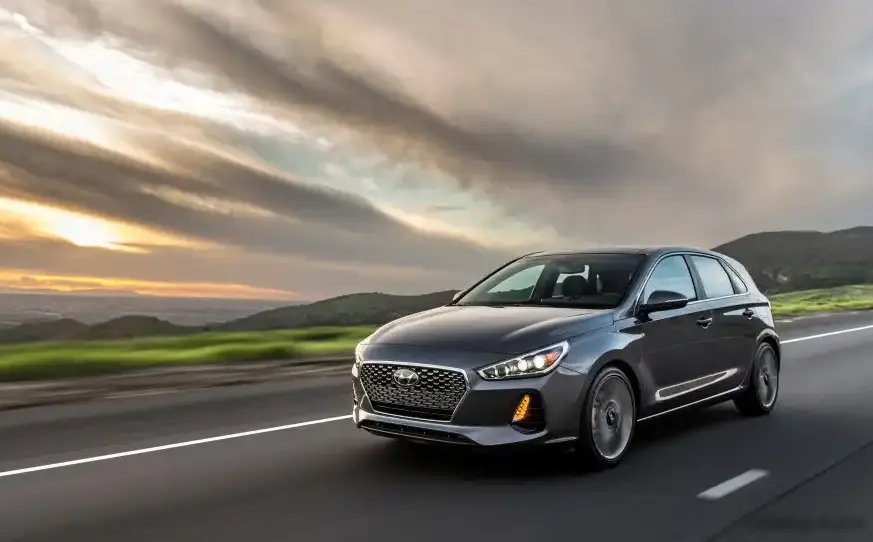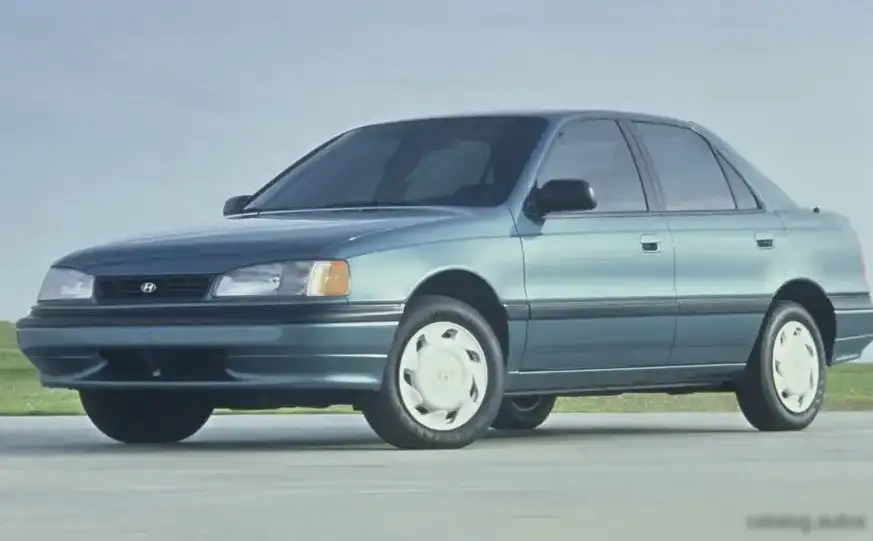
The Hyundai Elantra II Wagon 1.8 16V, produced between 1996 and 2000, represented Hyundai’s entry into the European and Asian compact wagon market. Positioned as a practical and affordable family vehicle, it offered increased cargo capacity compared to the sedan version of the Elantra II (also known as the Avante in some markets). This variant, powered by the Beta 1.8-liter engine and a 5-speed manual transmission, aimed to provide a balance between fuel efficiency and acceptable performance for everyday driving. It sat in the mid-range of the Elantra II lineup, offering more power than the base 1.6L engine but falling short of any potential higher-performance trims that weren’t widely available.
Technical Specifications
| Brand | Hyundai |
| Model | Elantra |
| Generation | Elantra II Wagon |
| Type (Engine) | 1.8 16V (128 Hp) |
| Start of production | 1996 |
| End of production | 2000 |
| Powertrain Architecture | Internal Combustion engine |
| Body type | Station wagon (estate) |
| Seats | 5 |
| Doors | 5 |
| Fuel consumption (urban) | 10.8 l/100 km (21.8 US mpg) |
| Fuel consumption (extra urban) | 7.2 l/100 km (32.7 US mpg) |
| Fuel Type | Petrol (Gasoline) |
| Acceleration 0 – 100 km/h | 9.5 sec |
| Acceleration 0 – 62 mph | 9.5 sec |
| Acceleration 0 – 60 mph | 9 sec |
| Maximum speed | 194 km/h (120.55 mph) |
| Weight-to-power ratio | 9.6 kg/Hp |
| Weight-to-torque ratio | 7.6 kg/Nm |
| Power | 128 Hp @ 6100 rpm |
| Torque | 162 Nm @ 5000 rpm (119.49 lb.-ft. @ 5000 rpm) |
| Engine layout | Front, Transverse |
| Engine Model/Code | Beta / G4GM |
| Engine displacement | 1795 cm3 (109.54 cu. in.) |
| Number of cylinders | 4 |
| Engine configuration | Inline |
| Cylinder Bore | 82 mm (3.23 in.) |
| Piston Stroke | 85 mm (3.35 in.) |
| Compression ratio | 10:1 |
| Number of valves per cylinder | 4 |
| Fuel injection system | Multi-port manifold injection |
| Engine aspiration | Naturally aspirated engine |
| Valvetrain | DOHC |
| Engine oil capacity | 4 l (4.23 US qt | 3.52 UK qt) |
| Coolant capacity | 6 l (6.34 US qt | 5.28 UK qt) |
| Kerb Weight | 1235 kg (2722.71 lbs.) |
| Max. weight | 1715 kg (3780.93 lbs.) |
| Max load | 480 kg (1058.22 lbs.) |
| Trunk (boot) space – minimum | 362 l (12.78 cu. ft.) |
| Trunk (boot) space – maximum | 1260 l (44.5 cu. ft.) |
| Fuel tank capacity | 52 l (13.74 US gal | 11.44 UK gal) |
| Length | 4450 mm (175.2 in.) |
| Width | 1700 mm (66.93 in.) |
| Height | 1457 mm (57.36 in.) |
| Wheelbase | 2550 mm (100.39 in.) |
| Front track | 1465 mm (57.68 in.) |
| Rear track | 1450 mm (57.09 in.) |
| Drivetrain Architecture | Front wheel drive |
| Number of gears | 5 |
| Gearbox type | Manual transmission |
| Front suspension | Wishbone |
| Rear suspension | Spring Strut |
| Front brakes | Ventilated discs |
| Rear brakes | Disc |
| Assisting systems | ABS (Anti-lock braking system) |
| Steering type | Steering rack and pinion |
| Power steering | Hydraulic Steering |
| Tires size | 195/60 R14 |
Powertrain & Engine Architecture
The heart of the Elantra II Wagon 1.8 16V is the Hyundai Beta engine, specifically the G4GM code. This 1.8-liter inline-four engine utilizes a double overhead camshaft (DOHC) valvetrain with four valves per cylinder, contributing to its relatively high output for its displacement. The engine employs multi-point fuel injection, a common technology in the mid-1990s, delivering fuel directly to each intake port. The Beta engine was a significant step forward for Hyundai, demonstrating improved refinement and performance compared to earlier designs. The 5-speed manual transmission was a standard offering, providing drivers with good control over the engine’s power band. The transmission’s gear ratios were tuned for a balance of acceleration and fuel economy, prioritizing usability over outright performance.
Driving Characteristics
The 1.8-liter engine, producing 128 horsepower, provided adequate performance for the Elantra II Wagon. Acceleration from 0 to 60 mph took approximately 9 seconds, which was competitive within its class. While not a sporty vehicle, the 1.8L engine offered sufficient power for highway merging and overtaking maneuvers. The manual transmission allowed drivers to exploit the engine’s power band effectively, although the gear ratios weren’t particularly short, meaning frequent shifting wasn’t necessary for normal driving. Compared to the base 1.6L engine, the 1.8L offered a noticeable improvement in responsiveness and overall drivability. It felt less strained during uphill climbs and when carrying a full load of passengers and cargo. The wagon’s suspension provided a comfortable ride, but handling was generally considered average, leaning towards comfort rather than sporty dynamics.
Equipment & Trim Levels
The Elantra II Wagon 1.8 16V typically came equipped with features considered standard for a family vehicle of its era. These included power steering, central locking, and an AM/FM radio. Higher trim levels, though not always widely available depending on the market, could add features like air conditioning, power windows, and upgraded interior upholstery. The interior generally featured durable, if somewhat basic, plastics and cloth upholstery. The dashboard layout was functional and straightforward, prioritizing ease of use over aesthetic appeal. Optional extras often included a sunroof and alloy wheels.
Chassis & Braking
The Elantra II Wagon utilized a front-wheel-drive layout with an independent wishbone suspension at the front and a spring strut suspension at the rear. The braking system consisted of ventilated discs at the front and solid discs at the rear, providing adequate stopping power for the vehicle’s weight. Anti-lock braking system (ABS) was included as a standard safety feature. The chassis was designed to prioritize ride comfort and practicality, rather than sporty handling. Stabilizer bars were present, but their thickness was modest, reflecting the car’s focus on everyday usability.
Market Reception & Comparison
The Elantra II Wagon 1.8 16V was generally well-received by automotive critics as a practical and affordable family vehicle. It offered a good amount of space for its size and provided a reasonable level of performance. Fuel economy was considered competitive for its class. Compared to other wagons available at the time, such as the Ford Escort Wagon or the Opel/Vauxhall Astra Estate, the Elantra offered a compelling value proposition, often undercutting its rivals in price. However, it wasn’t considered as refined or dynamically engaging as some of the European competitors. Reliability was generally good, although some owners reported minor issues with the fuel injection system over time.
Legacy
The Hyundai Elantra II Wagon 1.8 16V, while not a groundbreaking vehicle, played a significant role in establishing Hyundai as a credible player in the European and Asian automotive markets. The Beta engine proved to be a relatively durable and reliable powerplant, and many examples are still on the road today. In the used car market, these wagons are often sought after by those looking for an affordable and practical family vehicle. Maintenance costs are generally low, and parts availability remains reasonable. The Elantra II Wagon represents a pivotal moment in Hyundai’s history, demonstrating the company’s growing commitment to quality and value.