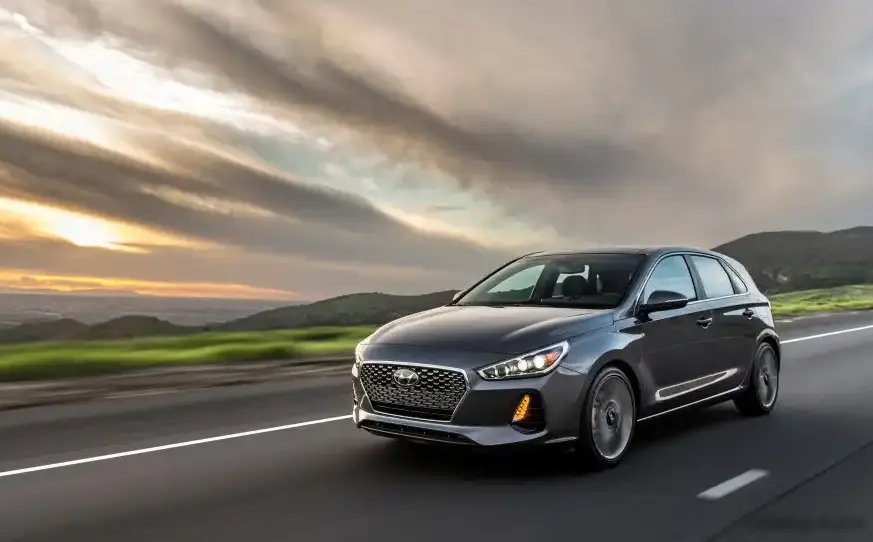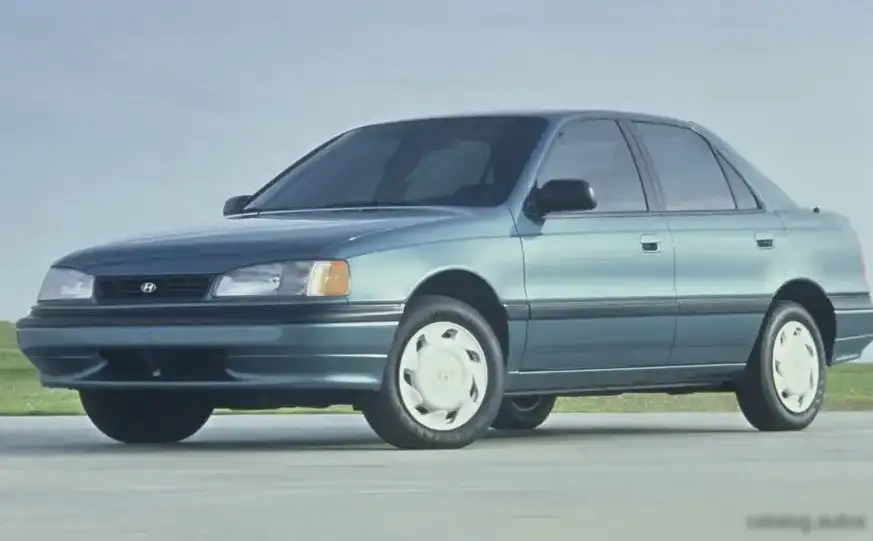
The Hyundai Elantra III 2.0i 16V Automatic, produced between 2003 and 2006, represented a significant step forward for Hyundai in the North American market. Part of the XD series (internally designated), this Elantra aimed to offer a compelling blend of affordability, practicality, and a more refined driving experience than previous Hyundai offerings. This particular variant, equipped with the 2.0-liter inline-four engine and a four-speed automatic transmission, was positioned as a mid-range option within the Elantra lineup, appealing to buyers seeking a comfortable and convenient daily driver. It competed directly with established compact sedans like the Honda Civic, Toyota Corolla, and Mazda3.
Technical Specifications
| Brand | Hyundai |
| Model | Elantra |
| Generation | Elantra III |
| Type (Engine) | 2.0 i 16V (143 Hp) Automatic |
| Start of production | 2003 |
| End of production | 2006 |
| Powertrain Architecture | Internal Combustion engine |
| Body type | Sedan |
| Seats | 5 |
| Doors | 4 |
| Fuel consumption (urban) | 11.3 l/100 km (20.8 US mpg) |
| Fuel consumption (extra urban) | 6.6 l/100 km (35.6 US mpg) |
| Fuel consumption (combined) | 8.3 l/100 km (28.3 US mpg) |
| Fuel Type | Petrol (Gasoline) |
| Acceleration 0 – 100 km/h | 9 sec |
| Acceleration 0 – 62 mph | 9 sec |
| Acceleration 0 – 60 mph | 8.6 sec |
| Maximum speed | 208 km/h (129.25 mph) |
| Weight-to-power ratio | 9.9 kg/Hp |
| Weight-to-torque ratio | 7.6 kg/Nm |
| Power | 143 Hp @ 6000 rpm |
| Torque | 186 Nm @ 4500 rpm (137.19 lb.-ft. @ 4500 rpm) |
| Engine layout | Front, Transverse |
| Engine Model/Code | G4GC |
| Engine displacement | 1975 cm3 (120.52 cu. in.) |
| Number of cylinders | 4 |
| Engine configuration | Inline |
| Cylinder Bore | 82 mm (3.23 in.) |
| Piston Stroke | 93.5 mm (3.68 in.) |
| Compression ratio | 10:1 |
| Number of valves per cylinder | 4 |
| Fuel injection system | Multi-port manifold injection |
| Engine aspiration | Naturally aspirated engine |
| Valvetrain | DOHC |
| Engine oil capacity | 3.85 l (4.07 US qt | 3.39 UK qt) |
| Coolant capacity | 6 l (6.34 US qt | 5.28 UK qt) |
| Kerb Weight | 1418 kg (3126.15 lbs.) |
| Max. weight | 1800 kg (3968.32 lbs.) |
| Max load | 382 kg (842.17 lbs.) |
| Trunk (boot) space – minimum | 415 l (14.66 cu. ft.) |
| Trunk (boot) space – maximum | 1222 l (43.15 cu. ft.) |
| Fuel tank capacity | 55 l (14.53 US gal | 12.1 UK gal) |
| Length | 4495 mm (176.97 in.) |
| Width | 1720 mm (67.72 in.) |
| Height | 1425 mm (56.1 in.) |
| Wheelbase | 2610 mm (102.76 in.) |
| Front track | 1485 mm (58.46 in.) |
| Rear track | 1475 mm (58.07 in.) |
| Drivetrain Architecture | Front wheel drive |
| Number of gears | 4 |
| Gearbox type | Automatic transmission |
| Front suspension | Wishbone |
| Rear suspension | Spring Strut |
| Front brakes | Ventilated discs |
| Rear brakes | Disc |
| Assisting systems | ABS (Anti-lock braking system) |
| Steering type | Steering rack and pinion |
| Power steering | Hydraulic Steering |
| Tires size | 195/60 R15 |
| Wheel rims size | 15 |
Introduction
The Elantra III, launched in 2003, represented Hyundai’s continued efforts to establish itself as a mainstream automotive brand. Building upon the success of its predecessors, the XD series Elantra offered increased interior space, improved refinement, and a more modern design. The 2.0i 16V Automatic variant was a key component of this strategy, providing a comfortable and accessible option for buyers prioritizing ease of use and convenience. It was a direct response to the growing demand for automatic transmissions in the US market, where manual transmissions were becoming less common in the compact sedan segment.
Powertrain & Engine Architecture
At the heart of the Elantra 2.0i Automatic lies the G4GC engine, a 1.975-liter (120.52 cubic inches) inline-four cylinder powerplant. This engine featured a double overhead camshaft (DOHC) valvetrain with four valves per cylinder, contributing to its respectable power output. Fuel delivery was handled by a multi-port fuel injection system, ensuring efficient combustion. The engine produced 143 horsepower at 6000 rpm and 186 Nm (137.19 lb-ft) of torque at 4500 rpm. The four-speed automatic transmission, while not as sophisticated as some of the continuously variable transmissions (CVTs) emerging at the time, provided smooth and predictable shifts. It was designed for durability and ease of maintenance, a key consideration for Hyundai at the time. The transmission’s gear ratios were tuned for a balance of fuel efficiency and acceptable acceleration.
Driving Characteristics
The Elantra 2.0i Automatic offered a comfortable and predictable driving experience. Acceleration from 0-60 mph took approximately 8.6 seconds, which was competitive for its class, though noticeably slower than the manual transmission equipped models or the higher-output V6 options available in some markets. The automatic transmission prioritized smooth shifts over outright performance, making it well-suited for city driving and highway cruising. While not a sporty vehicle, the Elantra provided adequate power for everyday driving situations. The steering was light and easy to use, and the suspension offered a comfortable ride, absorbing bumps and imperfections in the road surface effectively.
Equipment & Trim Levels
The 2.0i Automatic trim typically included standard features such as air conditioning, power windows and locks, a basic audio system, and anti-lock brakes (ABS). Higher trim levels, often denoted by “GL” or “Limited” packages, added features like alloy wheels, a sunroof, upgraded audio systems, and cruise control. Interior upholstery was typically cloth, with optional leather available on higher trims. The dashboard layout was functional and straightforward, prioritizing ease of use over stylistic flair.
Chassis & Braking
The Elantra III utilized a front-wheel-drive layout with a MacPherson strut front suspension and a coupled torsion beam rear suspension. This configuration provided a good balance of ride comfort and handling. The braking system consisted of ventilated disc brakes at the front and solid disc brakes at the rear. ABS was standard, enhancing safety by preventing wheel lockup during hard braking. The chassis was designed to provide a stable and predictable driving experience, prioritizing comfort and safety over sporty handling characteristics.
Market Reception & Comparison
The Elantra 2.0i Automatic was generally well-received by automotive critics as a practical and affordable compact sedan. It was praised for its spacious interior, comfortable ride, and value for money. However, some critics noted that the engine lacked the refinement and power of some of its competitors, and the four-speed automatic transmission felt somewhat dated compared to newer transmissions. Compared to the manual transmission version, the automatic offered less engaging driving experience but greater convenience. Fuel economy was respectable, averaging around 28.3 US mpg in combined driving, making it a relatively efficient option in its class.
Legacy
The Hyundai Elantra III 2.0i Automatic proved to be a reliable and durable vehicle, with many examples still on the road today. The G4GC engine is known for its longevity, and the four-speed automatic transmission, while not particularly advanced, is generally considered to be robust. In the used car market, these Elantras are often sought after for their affordability and practicality. While they may not offer the same level of technology or performance as newer vehicles, they represent a solid and dependable transportation option. The success of the Elantra III helped to solidify Hyundai’s reputation as a manufacturer of quality and affordable vehicles, paving the way for the brand’s continued growth and success in the North American market.