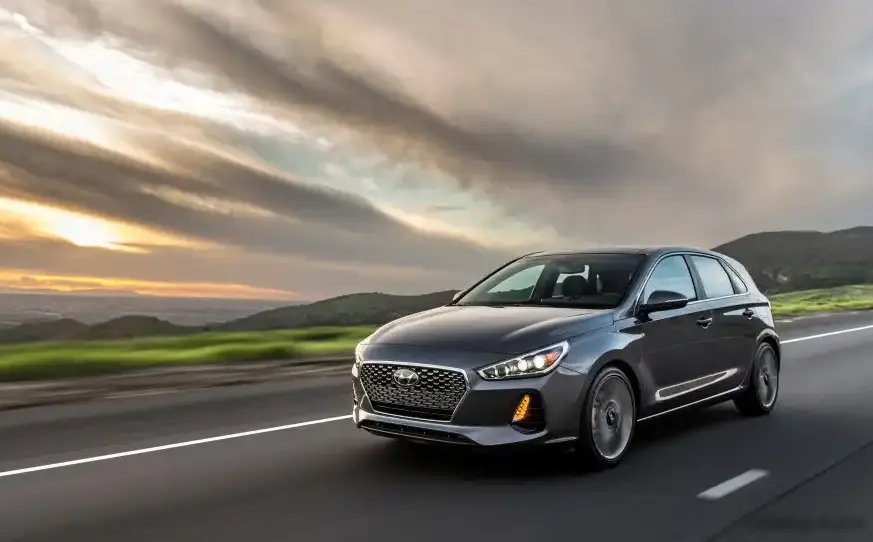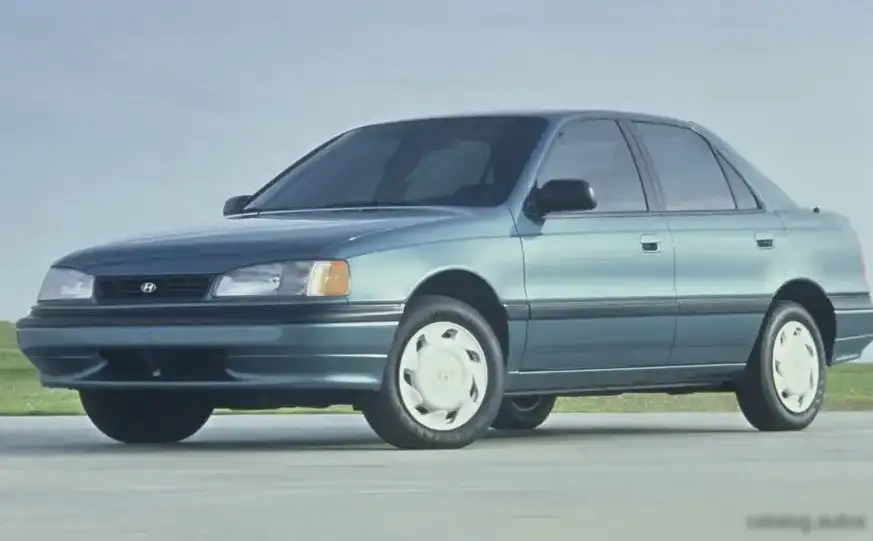
The Hyundai Elantra III Hatchback 2.0, produced between 2000 and 2006, represented a significant step forward for Hyundai in the compact hatchback segment. Positioned as a practical and affordable option, the Elantra III (internally designated XD) aimed to compete with established European and Japanese rivals. The 2.0-liter variant, producing 139 horsepower, was a mid-range offering within the Elantra III lineup, slotting above the base 1.6L engine and below any potential performance-oriented trims. This generation Elantra marked a shift towards more modern styling and improved build quality for the Korean automaker, and the hatchback body style offered increased versatility compared to the sedan.
Technical Specifications
| Brand | Hyundai |
| Model | Elantra |
| Generation | Elantra III Hatchback |
| Type (Engine) | 2.0 (139 Hp) |
| Start of production | 2000 year |
| End of production | 2006 year |
| Powertrain Architecture | Internal Combustion engine |
| Body type | Hatchback |
| Seats | 5 |
| Doors | 5 |
| Fuel consumption (urban) | 11.5 l/100 km (20.5 US mpg) |
| Fuel consumption (extra urban) | 8.2 l/100 km (28.7 US mpg) |
| Fuel Type | Petrol (Gasoline) |
| Acceleration 0 – 100 km/h | 9.1 sec |
| Acceleration 0 – 62 mph | 9.1 sec |
| Acceleration 0 – 60 mph | 8.6 sec |
| Maximum speed | 206 km/h (128 mph) |
| Weight-to-power ratio | 9.3 kg/Hp |
| Weight-to-torque ratio | 7.1 kg/Nm |
| Power | 139 Hp @ 6000 rpm |
| Torque | 182 Nm @ 4900 rpm (134.24 lb.-ft. @ 4900 rpm) |
| Engine layout | Front, Transverse |
| Engine Model/Code | G4GC |
| Engine displacement | 1975 cm3 (120.52 cu. in.) |
| Number of cylinders | 4 |
| Engine configuration | Inline |
| Cylinder Bore | 82 mm (3.23 in.) |
| Piston Stroke | 93.5 mm (3.68 in.) |
| Compression ratio | 10.3:1 |
| Number of valves per cylinder | 4 |
| Fuel injection system | Multi-port manifold injection |
| Engine aspiration | Naturally aspirated engine |
| Valvetrain | DOHC |
| Engine oil capacity | 3.85 l (4.07 US qt | 3.39 UK qt) |
| Coolant capacity | 6 l (6.34 US qt | 5.28 UK qt) |
| Kerb Weight | 1293 kg (2850.58 lbs.) |
| Max. weight | 1800 kg (3968.32 lbs.) |
| Max load | 507 kg (1117.74 lbs.) |
| Trunk (boot) space – minimum | 415 l (14.66 cu. ft.) |
| Trunk (boot) space – maximum | 1222 l (43.15 cu. ft.) |
| Fuel tank capacity | 55 l (14.53 US gal | 12.1 UK gal) |
| Length | 4495 mm (176.97 in.) |
| Width | 1720 mm (67.72 in.) |
| Height | 1425 mm (56.1 in.) |
| Wheelbase | 2610 mm (102.76 in.) |
| Front track | 1485 mm (58.46 in.) |
| Rear track | 1475 mm (58.07 in.) |
| Drivetrain Architecture | Front wheel drive |
| Number of gears | 5 |
| Gearbox type | Manual transmission |
| Front suspension | Wishbone |
| Rear suspension | Spring Strut |
| Front brakes | Ventilated discs |
| Rear brakes | Disc |
| Assisting systems | ABS (Anti-lock braking system) |
| Steering type | Steering rack and pinion |
| Power steering | Hydraulic Steering |
| Tires size | 195/60 R15 |
Powertrain & Engine Architecture
The heart of the Elantra III 2.0 was the Hyundai G4GC engine, a 1.975-liter inline-four cylinder gasoline engine. This engine utilized a multi-port fuel injection (MPI) system, delivering fuel directly into the intake ports just before the intake valves. The G4GC featured a double overhead camshaft (DOHC) valvetrain, operating four valves per cylinder, contributing to improved breathing and power output. The 10.3:1 compression ratio was fairly standard for the time, balancing performance and fuel efficiency. The engine was transversely mounted in the front of the vehicle, driving the front wheels. The five-speed manual transmission was the standard offering, providing a relatively direct connection between the engine and the wheels. While an automatic transmission was available, it was often criticized for its sluggish performance and tendency to hunt for gears.
Driving Characteristics
The 2.0-liter Elantra III Hatchback offered a reasonable driving experience for its class. With 139 horsepower, acceleration to 60 mph took around 8.6-9.1 seconds, making it competitive with other compact hatchbacks of the era. The five-speed manual transmission allowed drivers to maintain control over the engine’s powerband, while the automatic, though less engaging, provided convenience. The gear ratios were tuned for a balance of fuel economy and everyday drivability. Compared to the base 1.6L engine, the 2.0L provided noticeably more power, especially when fully loaded or tackling inclines. However, it didn’t offer the sporty feel of some European rivals. The suspension was tuned for comfort, resulting in a relatively soft ride, but this also meant some body roll during cornering.
Equipment & Trim Levels
The Elantra III 2.0 Hatchback typically came standard with features such as air conditioning, power windows and locks, and an AM/FM radio with a CD player. Higher trim levels added features like alloy wheels, a sunroof, and upgraded interior upholstery. Interior materials were generally durable but not luxurious. The dashboard layout was functional and straightforward, with easy-to-read gauges. Optional extras included a rear window wiper, upgraded sound systems, and side airbags. The hatchback configuration provided a generous amount of cargo space, especially with the rear seats folded down.
Chassis & Braking
The Elantra III utilized a front independent suspension with wishbones and a rear spring strut suspension. This setup provided a comfortable ride, but wasn’t particularly sporty. The front brakes were ventilated discs, offering good stopping power, while the rear brakes were solid discs. Anti-lock Braking System (ABS) was standard, enhancing safety. The steering was rack and pinion with hydraulic power assistance, providing a reasonably responsive feel. The 195/60 R15 tires offered a good balance of grip and ride comfort.
Market Reception & Comparison
The Elantra III Hatchback 2.0 was generally well-received by critics as a practical and affordable option. It offered a good value for the money, with a spacious interior and a decent level of equipment. However, some reviewers criticized the engine’s refinement and the automatic transmission’s performance. Compared to the 1.6L version, the 2.0L offered a significant performance boost, making it a more appealing choice for drivers who frequently carried passengers or cargo. Fuel economy was competitive with other vehicles in its class, averaging around 20-29 mpg depending on driving conditions. Reliability was generally good, although some owners reported minor issues with the electrical system.
Legacy
The Hyundai Elantra III Hatchback 2.0, while not a groundbreaking vehicle, played a crucial role in establishing Hyundai as a credible competitor in the global automotive market. The G4GC engine proved to be relatively durable, and many examples are still on the road today. In the used car market, these Elantras are often sought after for their affordability and practicality. While not a collector’s item, the Elantra III represents a significant milestone in Hyundai’s history, demonstrating the company’s commitment to improving quality and offering value to consumers. The 2.0L variant, in particular, remains a popular choice for those seeking a reliable and economical compact hatchback.