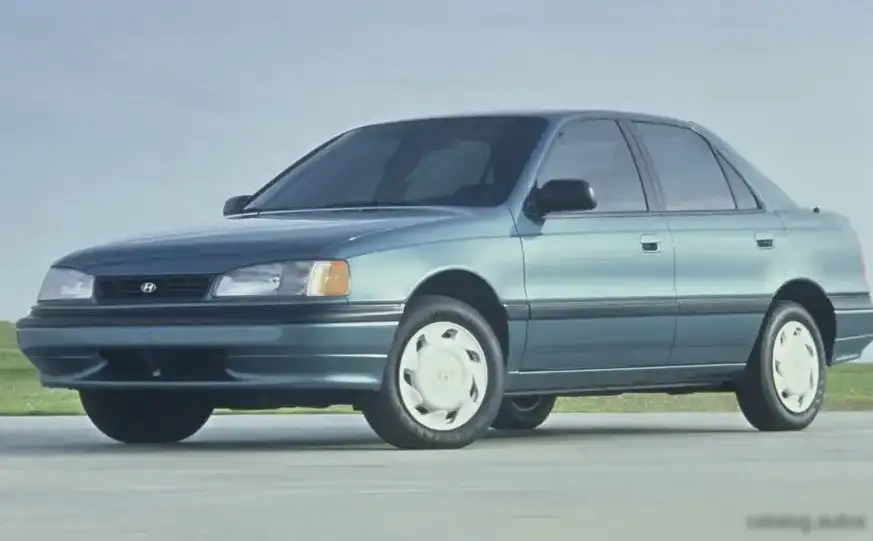
The Hyundai Elantra IV 2.0 i 16V (143 Hp) CWT, produced between 2006 and 2011, represents a significant step forward for Hyundai in the competitive compact sedan segment. This variant, powered by the Beta II engine and paired with a four-speed automatic transmission, was positioned as a mainstream offering within the fourth-generation Elantra (XD) lineup. It aimed to provide a balance of fuel efficiency, comfortable driving dynamics, and a reasonable level of equipment for the average family car buyer in North America and other global markets. The Elantra IV, built on the XD platform, was a crucial model for Hyundai, helping to establish the brand as a serious contender against established Japanese and American automakers.
Technical Specifications
| Brand | Hyundai |
| Model | Elantra |
| Generation | Elantra IV |
| Type (Engine) | 2.0 i 16V (143 Hp) CWT |
| Start of production | 2006 |
| End of production | 2011 |
| Powertrain Architecture | Internal Combustion engine |
| Body type | Sedan |
| Seats | 5 |
| Doors | 4 |
| Fuel Type | Petrol (Gasoline) |
| Power | 143 Hp @ 6000 rpm |
| Power per litre | 72.4 Hp/l |
| Torque | 190 Nm @ 4600 rpm / 140.14 lb.-ft. @ 4600 rpm |
| Engine layout | Front, Transverse |
| Engine Model/Code | Beta II / G4GC |
| Engine displacement | 1975 cm3 / 120.52 cu. in. |
| Number of cylinders | 4 |
| Engine configuration | Inline |
| Cylinder Bore | 82 mm / 3.23 in. |
| Piston Stroke | 93.5 mm / 3.68 in. |
| Compression ratio | 10.1:1 |
| Number of valves per cylinder | 4 |
| Fuel injection system | Multi-port manifold injection |
| Engine aspiration | Naturally aspirated engine |
| Valvetrain | DOHC |
| Engine oil capacity | 4 l / 4.23 US qt | 3.52 UK qt |
| Coolant | 6.6 l / 6.97 US qt | 5.81 UK qt |
| Trunk (boot) space – minimum | 460 l / 16.24 cu. ft. |
| Fuel tank capacity | 53 l / 14 US gal | 11.66 UK gal |
| Length | 4505 mm / 177.36 in. |
| Width | 1775 mm / 69.88 in. |
| Height | 1490 mm / 58.66 in. |
| Wheelbase | 2690 mm / 105.91 in. |
| Front track | 1543 mm / 60.75 in. |
| Rear (Back) track | 1541 mm / 60.67 in. |
| Minimum turning circle (turning diameter) | 11.3 m / 37.07 ft. |
| Drivetrain Architecture | The Internal combustion engine (ICE) drives the front wheels of the vehicle. |
| Drive wheel | Front wheel drive |
| Number of gears and type of gearbox | 4 gears, automatic transmission |
| Front suspension | Spring Strut |
| Rear suspension | Transverse stabilizer |
| Front brakes | Ventilated discs |
| Rear brakes | Drum |
| Steering type | Steering rack and pinion |
| Tires size | 185/65 R15 |
| Wheel rims size | 5.5J X 15 |
Powertrain & Engine Architecture
The heart of the Elantra IV 2.0 i 16V CWT is the Hyundai Beta II engine, specifically the G4GC variant. This 1.975-liter inline-four cylinder engine utilizes a cast iron block and an aluminum cylinder head. The engine features a double overhead camshaft (DOHC) valvetrain with four valves per cylinder, contributing to its relatively efficient breathing. Fuel delivery is managed by a multi-port fuel injection system, providing a balance between performance and fuel economy. The engine’s 143 horsepower at 6,000 rpm and 190 Nm (140 lb-ft) of torque at 4,600 rpm were considered adequate for everyday driving. The four-speed automatic transmission, while not the most modern, was known for its reliability and smooth operation. It was designed to prioritize comfort over sporty performance, with gear ratios optimized for fuel efficiency and ease of driving.
Driving Characteristics
The 2.0L automatic Elantra offered a comfortable and predictable driving experience. Acceleration was adequate for merging onto highways and passing slower traffic, but it wasn’t particularly quick. The automatic transmission, while smooth, lacked the responsiveness of a manual gearbox or more modern automatic transmissions with more gears. The gear ratios were spaced to favor fuel economy, resulting in a noticeable delay during kickdown for passing maneuvers. Compared to the manual transmission version of the same engine, the automatic version felt slightly less energetic. The Elantra’s suspension provided a comfortable ride, absorbing bumps and imperfections in the road well. However, it wasn’t particularly sporty, with noticeable body roll during cornering.
Equipment & Trim Levels
The 2.0 i 16V CWT trim typically included standard features such as air conditioning, power windows and locks, a basic audio system (often with a CD player), and standard safety equipment like dual front airbags. Higher trim levels offered options like alloy wheels, a sunroof, upgraded audio systems, and cruise control. Interior upholstery was typically cloth, with a relatively simple and functional dashboard layout. The CWT designation often indicated a mid-range trim level, offering a good balance of features and affordability.
Chassis & Braking
The Elantra IV utilized a front-wheel-drive layout with a MacPherson strut front suspension and a torsion beam rear suspension. The front brakes were ventilated discs, providing adequate stopping power, while the rear brakes were drum brakes, a cost-saving measure common in this class of vehicle. Steering was rack-and-pinion, offering reasonable precision and feel. The suspension was tuned for comfort, prioritizing ride quality over sporty handling. Stabilizer bars were included to reduce body roll, but the overall handling characteristics were geared towards everyday driving rather than performance.
Market Reception & Comparison
The Elantra IV 2.0 i 16V CWT was generally well-received by critics as a practical and affordable compact sedan. It was praised for its comfortable ride, spacious interior, and reasonable fuel economy. However, some critics noted that the automatic transmission felt dated and lacked the responsiveness of newer designs. Compared to other trims in the Elantra lineup, the 2.0L automatic offered a good balance between performance and fuel economy. The base 1.6L engine was less powerful, while the higher-spec trims with manual transmissions offered more engaging driving experiences. In terms of reliability, the Elantra IV proved to be a relatively dependable vehicle, with few major issues reported.
Legacy
The Hyundai Elantra IV 2.0 i 16V CWT remains a relatively common sight on used car lots today. The Beta II engine is known for its durability and relatively low maintenance costs, making it a popular choice for budget-conscious buyers. While the four-speed automatic transmission is not as sophisticated as modern transmissions, it has proven to be reliable. Overall, this variant of the Elantra IV represents a solid and dependable compact sedan that offered good value for money during its production run. Its continued presence in the used car market is a testament to its overall quality and reliability.