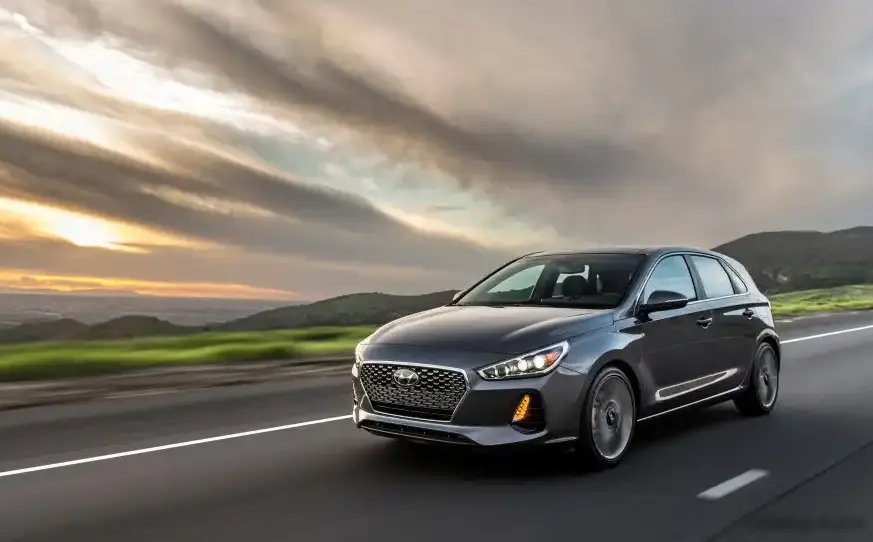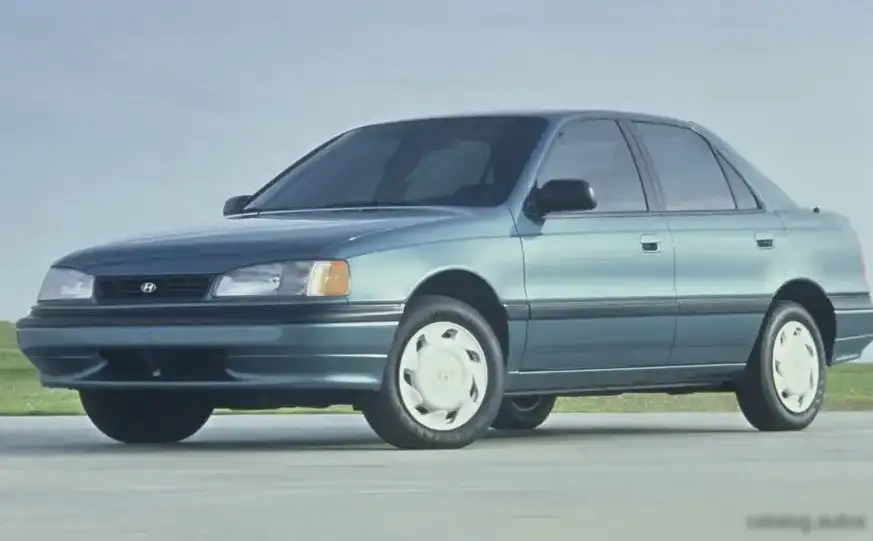
The Hyundai Elantra VI (AD) 1.4 Automatic, produced between 2016 and 2019, represented a significant step forward for Hyundai in the competitive compact sedan segment. Positioned as a mid-range offering within the AD generation Elantra lineup, this variant aimed to balance fuel efficiency with adequate performance for everyday driving. It was primarily marketed towards buyers seeking a comfortable, well-equipped, and modern sedan with a focus on value. The AD Elantra, built on the Hyundai-Kia K3 platform, was a crucial model for Hyundai’s expansion in North America and globally, offering a compelling alternative to established rivals like the Toyota Corolla and Honda Civic.
Technical Specifications
| Brand | Hyundai |
| Model | Elantra |
| Generation | Elantra VI (AD) |
| Type (Engine) | 1.4 (130 Hp) Automatic |
| Start of production | 2016 |
| End of production | 2019 |
| Powertrain Architecture | Internal Combustion engine |
| Body type | Sedan |
| Seats | 5 |
| Doors | 4 |
| Fuel consumption (urban) | 7.4 l/100 km (31.8 US mpg) |
| Fuel consumption (extra urban) | 5.9 l/100 km (39.9 US mpg) |
| Fuel consumption (combined) | 6.7 l/100 km (35.1 US mpg) |
| Fuel Type | Petrol (Gasoline) |
| Weight-to-power ratio | 10 kg/Hp |
| Weight-to-torque ratio | 6.1 kg/Nm |
| Power | 130 Hp @ 5500 rpm |
| Torque | 212 Nm @ 1400-3700 rpm (156.36 lb.-ft. @ 1400-3700 rpm) |
| Engine layout | Front, Transverse |
| Engine Model/Code | Kappa II / G4LD |
| Engine displacement | 1353 cm3 (82.57 cu. in.) |
| Number of cylinders | 4 |
| Engine configuration | Inline |
| Cylinder Bore | 71.6 mm (2.82 in.) |
| Piston Stroke | 84 mm (3.31 in.) |
| Compression ratio | 10:1 |
| Number of valves per cylinder | 4 |
| Fuel injection system | Direct injection |
| Engine aspiration | Turbocharger, Intercooler |
| Valvetrain | DOHC |
| Engine oil capacity | 4.2 l (4.44 US qt | 3.7 UK qt) |
| Kerb Weight | 1296 kg (2857.19 lbs.) |
| Max. weight | 1760 kg (3880.14 lbs.) |
| Max load | 464 kg (1022.94 lbs.) |
| Trunk (boot) space – minimum | 408 l (14.41 cu. ft.) |
| Fuel tank capacity | 53 l (14 US gal | 11.66 UK gal) |
| Length | 4569 mm (179.88 in.) |
| Width | 1801 mm (70.91 in.) |
| Height | 1435 mm (56.5 in.) |
| Wheelbase | 2700 mm (106.3 in.) |
| Front track | 1562 mm (61.5 in.) |
| Rear (Back) track | 1572 mm (61.89 in.) |
| Ride height (ground clearance) | 135 mm (5.31 in.) |
| Drag coefficient (Cd) | 0.27 |
| Minimum turning circle (turning diameter) | 10.6 m (34.78 ft.) |
| Drivetrain Architecture | The Internal combustion engine (ICE) drives the front wheels of the vehicle. |
| Drive wheel | Front wheel drive |
| Number of gears and type of gearbox | 7 gears, automatic transmission DCT |
| Front brakes | Ventilated discs |
| Rear brakes | Drum |
Powertrain & Engine Architecture
The heart of the Elantra VI 1.4 Automatic is the Hyundai Kappa II (G4LD) engine. This 1.4-liter, turbocharged, inline-four cylinder engine utilizes direct fuel injection and a dual continuously variable valve timing (D-CVVT) system. The turbocharger, coupled with an intercooler, helps to boost power output and improve efficiency. The engine produces 130 horsepower at 5,500 rpm and 212 Nm (156 lb-ft) of torque between 1,400 and 3,700 rpm. This broad torque curve is a key characteristic of the engine, providing good responsiveness in everyday driving situations. The engine is paired with a 7-speed dual-clutch transmission (DCT), which offers quicker and smoother shifts compared to a traditional automatic transmission. The DCT contributes to both improved fuel economy and a more engaging driving experience.
Driving Characteristics
The 1.4-liter turbo engine and 7-speed DCT combination delivers a comfortable and refined driving experience. While not a performance-oriented setup, the Elantra 1.4 Automatic provides adequate acceleration for merging onto highways and navigating city streets. The DCT’s quick shifts help to maximize the available power, and the broad torque band means that the engine feels responsive even at lower speeds. Compared to the base 1.6L engine, the 1.4T offers a noticeable improvement in performance. However, it doesn’t match the more powerful engines available in the Elantra lineup, such as the 2.0L naturally aspirated engine. The suspension is tuned for comfort, providing a smooth ride over most road surfaces. Steering feel is light and precise, making the car easy to maneuver.
Equipment & Trim Levels
The 1.4 Automatic trim typically included standard features such as air conditioning, power windows and locks, a touchscreen infotainment system with Bluetooth connectivity, a rearview camera, and basic safety features like ABS and airbags. Higher trim levels, such as the Limited, added features like leather upholstery, a sunroof, automatic climate control, and advanced safety technologies like lane departure warning and automatic emergency braking. Interior materials were generally of good quality for the price point, with a focus on durability and practicality. Optional extras included navigation, premium audio systems, and various cosmetic enhancements.
Chassis & Braking
The Elantra VI utilizes a front-wheel-drive platform with a MacPherson strut front suspension and a coupled torsion beam rear suspension. This setup provides a good balance between ride comfort and handling. The front brakes are ventilated discs, while the rear brakes are drums. ABS (Anti-lock Braking System) is standard. The chassis is designed to be lightweight, contributing to improved fuel efficiency and handling. The steering system is an electric power steering (EPS) system, which provides precise and responsive steering feel.
Market Reception & Comparison
The Elantra VI 1.4 Automatic was generally well-received by automotive critics. It was praised for its stylish design, comfortable interior, and good fuel economy. The turbo engine was considered a good compromise between performance and efficiency. However, some critics noted that the rear drum brakes were a cost-cutting measure that detracted from the overall driving experience. Compared to other trims in the Elantra lineup, the 1.4 Automatic offered a more engaging driving experience than the base 1.6L engine, but it wasn’t as powerful as the 2.0L engine. Fuel economy was comparable to other compact sedans in its class.
Legacy
The Hyundai Elantra VI 1.4 Automatic has proven to be a reliable and durable vehicle. The Kappa II engine, while not without its minor issues, is generally considered to be a robust and long-lasting powerplant. The 7-speed DCT has also proven to be relatively reliable, although regular maintenance is important to ensure its longevity. In the used car market, the Elantra VI 1.4 Automatic remains a popular choice for buyers seeking an affordable, fuel-efficient, and well-equipped compact sedan. Its combination of practicality, comfort, and modern features makes it a compelling option in its price range. The AD generation Elantra significantly elevated Hyundai’s reputation for quality and design, paving the way for the brand’s continued success in the global automotive market.