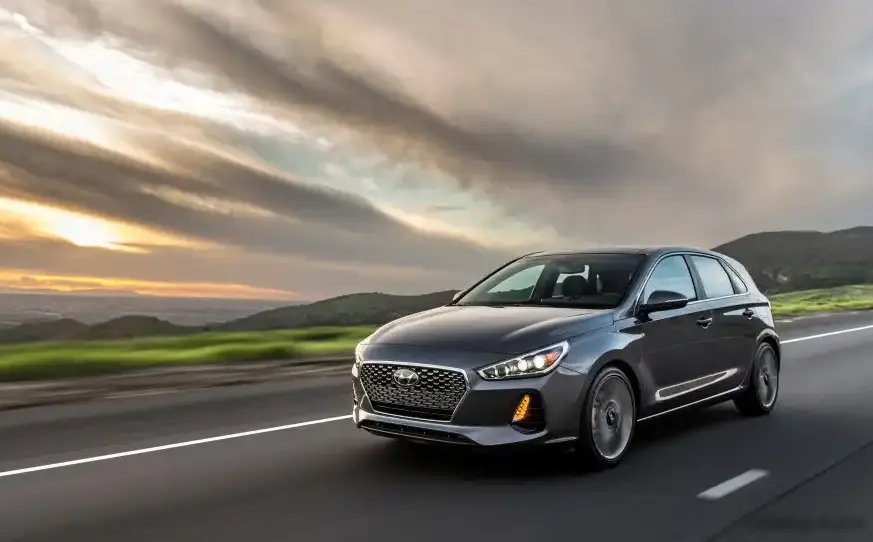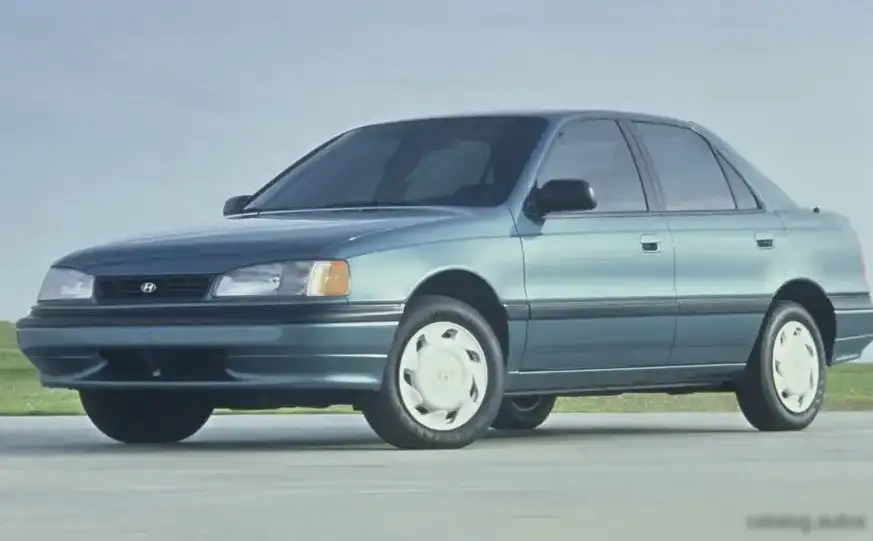
The Hyundai Elantra VI (AD series, specifically the 2019 facelift) 1.4 Turbo GDI with a Dual Clutch Transmission (DCT) represents a significant step in Hyundai’s efforts to offer a compelling compact sedan in the North American and global markets. Produced from 2018 through 2020, this variant occupied a mid-range position within the AD Elantra lineup, bridging the gap between the base engine options and the more powerful, though less fuel-efficient, alternatives. It was designed to appeal to buyers seeking a balance of performance, fuel economy, and modern features. The AD generation Elantra, as a whole, aimed to elevate Hyundai’s brand image with improved styling, technology, and driving dynamics.
Technical Specifications
| Brand | Hyundai |
| Model | Elantra |
| Generation | Elantra VI (AD, facelift 2019) |
| Type (Engine) | 1.4 Turbo GDI (128 Hp) DCT |
| Start of production | 2018 |
| End of production | 2020 |
| Powertrain Architecture | Internal Combustion engine |
| Body type | Sedan |
| Seats | 5 |
| Doors | 4 |
| Fuel Type | Petrol (Gasoline) |
| Weight-to-power ratio | 10.1 kg/Hp, 98.8 Hp/tonne |
| Weight-to-torque ratio | 6.1 kg/Nm, 162.8 Nm/tonne |
| Power | 128 Hp @ 5500 rpm |
| Power per litre | 94.6 Hp/l |
| Torque | 211 Nm @ 1400-3700 rpm (155.63 lb.-ft. @ 1400-3700 rpm) |
| Engine layout | Front, Transverse |
| Engine Model/Code | Kappa II / G4LD |
| Engine displacement | 1353 cm3 (82.57 cu. in.) |
| Number of cylinders | 4 |
| Engine configuration | Inline |
| Cylinder Bore | 71.6 mm (2.82 in.) |
| Piston Stroke | 84 mm (3.31 in.) |
| Compression ratio | 10:1 |
| Number of valves per cylinder | 4 |
| Fuel injection system | Direct injection |
| Engine aspiration | Turbocharger, Intercooler |
| Valvetrain | DOHC |
| Engine oil capacity | 4.2 l (4.44 US qt | 3.7 UK qt) |
| Coolant | 6.1 l (6.45 US qt | 5.37 UK qt) |
| Kerb Weight | 1296 kg (2857.19 lbs.) |
| Max. weight | 1760 kg (3880.14 lbs.) |
| Max load | 464 kg (1022.94 lbs.) |
| Trunk (boot) space – minimum | 408 l (14.41 cu. ft.) |
| Fuel tank capacity | 53 l (14 US gal | 11.66 UK gal) |
| Length | 4620 mm (181.89 in.) |
| Width | 1800 mm (70.87 in.) |
| Height | 1435 mm (56.5 in.) |
| Wheelbase | 2700 mm (106.3 in.) |
| Minimum turning circle | 10.6 m (34.78 ft.) |
| Drivetrain Architecture | The Internal combustion engine (ICE) drives the front wheels of the vehicle. |
| Drive wheel | Front wheel drive |
| Number of gears and type of gearbox | 7 gears, automatic transmission DCT |
| Front suspension | Independent, type McPherson with coil spring and anti-roll bar |
| Rear suspension | Semi-independent, coil spring |
| Front brakes | Ventilated discs |
| Rear brakes | Drum |
| Assisting systems | ABS (Anti-lock braking system) |
| Steering type | Steering rack and pinion |
| Tires size | 195/65 R15 |
| Wheel rims size | 6.0J x 15 |
Powertrain & Engine Architecture
At the heart of the Elantra 1.4 Turbo GDI DCT lies the Hyundai Kappa II engine, specifically the G4LD code. This 1.4-liter, inline-four cylinder engine utilizes direct fuel injection (GDI) and a single scroll turbocharger with an intercooler to deliver a respectable 128 horsepower and 211 Nm (155.63 lb-ft) of torque. The direct injection system allows for precise fuel delivery, enhancing both power and fuel efficiency. The engine features a dual overhead camshaft (DOHC) valvetrain with four valves per cylinder, optimizing airflow for improved performance. The DCT (Dual Clutch Transmission) is a seven-speed unit, offering quicker and smoother shifts compared to a traditional automatic transmission. This transmission contributes to a more engaging driving experience and helps maximize the engine’s efficiency.
Driving Characteristics
The 1.4 Turbo GDI DCT Elantra provides a noticeable step up in performance compared to the base 2.0-liter naturally aspirated engine. While not a sports car, the turbocharger provides a good amount of low-end torque, making it responsive in everyday driving situations. The DCT transmission contributes to brisk acceleration, particularly during highway merging and overtaking maneuvers. Compared to the six-speed manual transmission available on some Elantra models, the DCT offers convenience and ease of use, though some enthusiasts might prefer the more direct feel of a manual. The gear ratios are tuned for a balance of fuel economy and performance, with the seventh gear providing a comfortable cruising speed on the highway. The overall driving experience is refined and comfortable, prioritizing ride quality over outright sportiness.
Equipment & Trim Levels
The 1.4 Turbo GDI DCT trim typically included features such as automatic headlights, a rearview camera, a 7-inch touchscreen infotainment system with Apple CarPlay and Android Auto compatibility, and Bluetooth connectivity. Standard safety features included ABS, electronic stability control, and multiple airbags. Higher trim levels offered additional features like leather upholstery, a sunroof, heated front seats, and advanced driver-assistance systems such as automatic emergency braking and lane departure warning. Interior upholstery was generally cloth on the base trims, with leather options available on higher-spec models. The dashboard layout was modern and functional, with a focus on user-friendliness.
Chassis & Braking
The Elantra VI utilized a McPherson strut front suspension and a semi-independent coil spring rear suspension. This setup provided a comfortable ride while maintaining reasonable handling characteristics. The front brakes were ventilated discs, offering good stopping power, while the rear brakes were drums, a cost-saving measure common in this segment. The steering was a rack and pinion system, providing precise and responsive steering feel. Stabilizer bars were included on both the front and rear axles to reduce body roll during cornering. The suspension tuning was geared towards comfort, prioritizing a smooth ride over aggressive handling.
Market Reception & Comparison
Critics generally praised the Elantra 1.4 Turbo GDI DCT for its fuel efficiency, comfortable ride, and well-equipped interior. The turbo engine was seen as a good compromise between performance and economy. However, some reviewers noted that the rear drum brakes were a drawback compared to the disc brakes offered on some competitors. Compared to the base 2.0-liter Elantra, the 1.4 Turbo offered significantly better acceleration and fuel economy. When compared to rivals like the Honda Civic and Toyota Corolla, the Elantra offered a competitive package with a longer warranty and a more modern design. Fuel economy figures typically ranged from 32-38 mpg combined, depending on driving conditions.
Legacy
The Hyundai Elantra VI 1.4 Turbo GDI DCT has proven to be a relatively reliable powertrain in the used car market. The Kappa II engine is generally considered durable, and the DCT transmission, while requiring occasional maintenance, has a good track record. Common issues reported by owners include occasional turbocharger lag and minor software glitches with the infotainment system. Overall, this variant represents a solid choice for buyers seeking a fuel-efficient and well-equipped compact sedan. Its combination of performance, features, and value has contributed to its continued popularity in the used car market.