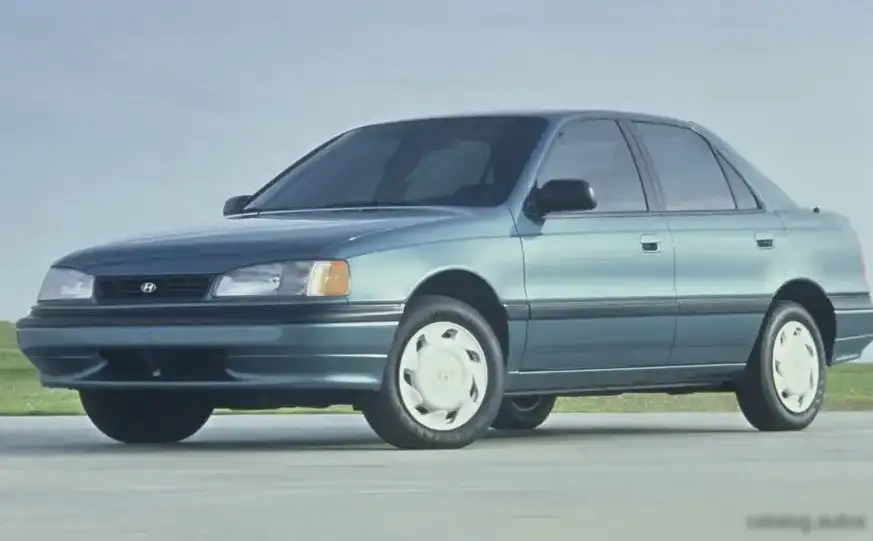
The Hyundai Elantra VI (AD series, specifically the 2019 facelift) Sport 1.6 Turbo GDI represents a performance-oriented variant within the sixth generation of Hyundai’s popular compact sedan. Produced from 2018 through 2019, this model aimed to offer a more engaging driving experience compared to the standard Elantra trims, appealing to buyers seeking a blend of practicality and sporty characteristics. It occupied a position above the base engine options, serving as a step up in performance before reaching any potential higher-trim luxury configurations. The AD generation Elantra was a significant model for Hyundai, representing a maturation of their design language and a push towards offering more sophisticated features in the compact segment.
Technical Specifications
| Brand | Hyundai |
| Model | Elantra |
| Generation | Elantra VI (AD, facelift 2019) |
| Type | Sport 1.6 Turbo GDI (201 Hp) |
| Start of production | 2018 |
| End of production | 2019 |
| Powertrain Architecture | Internal Combustion engine |
| Body type | Sedan |
| Seats | 5 |
| Doors | 4 |
| Fuel Type | Petrol (Gasoline) |
| Power | 201 Hp @ 6000 rpm |
| Power per litre | 126.3 Hp/l |
| Torque | 264 Nm @ 1500-4500 rpm / 194.72 lb.-ft. @ 1500-4500 rpm |
| Engine layout | Front, Transverse |
| Engine Model/Code | Gamma II / G4FJ |
| Engine displacement | 1591 cm3 / 97.09 cu. in. |
| Number of cylinders | 4 |
| Engine configuration | Inline |
| Cylinder Bore | 77 mm / 3.03 in. |
| Piston Stroke | 85.44 mm / 3.36 in. |
| Compression ratio | 9.5:1 |
| Number of valves per cylinder | 4 |
| Fuel injection system | Direct injection |
| Engine aspiration | Turbocharger, Intercooler |
| Valvetrain | DOHC |
| Engine oil capacity | 4.5 l / 4.76 US qt | 3.96 UK qt |
| Coolant | 6.1 l / 6.45 US qt | 5.37 UK qt |
| Max. weight | 1810 kg / 3990.37 lbs |
| Trunk (boot) space – minimum | 408 l / 14.41 cu. ft |
| Fuel tank capacity | 53 l / 14 US gal | 11.66 UK gal |
| Length | 4620 mm / 181.89 in |
| Width | 1800 mm / 70.87 in |
| Height | 1435 mm / 56.5 in |
| Wheelbase | 2700 mm / 106.3 in |
| Minimum turning circle | 10.6 m / 34.78 ft |
| Drivetrain Architecture | Front wheel drive |
| Number of gears and type of gearbox | 6 gears, manual transmission |
| Front suspension | Independent, type McPherson with coil spring and anti-roll bar |
| Rear suspension | Independent multi-link suspension |
| Front brakes | Ventilated discs |
| Rear brakes | Disc |
| Assisting systems | ABS (Anti-lock braking system) |
| Steering type | Steering rack and pinion |
| Tires size | 225/40 R18 |
| Wheel rims size | 7.5J x 18 |
Powertrain & Engine Architecture
The heart of the Elantra Sport 1.6 Turbo GDI is the Hyundai Gamma II engine, specifically the G4FJ code. This 1.6-liter inline-four cylinder engine utilizes direct fuel injection (GDI) and a single-scroll turbocharger with an integrated intercooler. The direct injection system allows for precise fuel delivery, contributing to both power output and efficiency. The engine features a dual continuously variable valve timing (D-CVVT) system, optimizing valve timing for improved performance across the rev range. The 6-speed manual transmission was standard, providing drivers with full control over the engine’s power. This transmission was chosen to complement the sporty nature of the variant. The engine’s design prioritizes a broad torque curve, making it responsive in everyday driving situations.
Driving Characteristics
The 201 horsepower and 195 lb-ft of torque delivered by the 1.6L turbo engine provided a noticeable performance upgrade over the base Elantra engines. The manual transmission allowed for brisk acceleration, with the turbocharger providing a surge of power in the mid-range. While not a dedicated track car, the Sport model offered a more engaging driving experience, with responsive steering and a firm suspension setup. The 6-speed gearbox was well-matched to the engine’s powerband, allowing drivers to keep the engine in its optimal operating range. Compared to the standard Elantra’s naturally aspirated engines, the turbo variant offered significantly improved passing power and overall responsiveness. The manual transmission, while enjoyable for enthusiasts, did require more driver involvement than the automatic transmissions offered on other Elantra trims.
Equipment & Trim Levels
The Elantra Sport 1.6 Turbo GDI came standard with a number of features designed to enhance both the driving experience and the vehicle’s aesthetics. These included sport seats with enhanced bolstering, a leather-wrapped steering wheel, and unique exterior styling cues such as a sport mesh grille, side skirts, and a rear spoiler. Inside, the Sport trim typically featured aluminum pedals and a black interior color scheme. Available options included a sunroof, upgraded audio system, and various driver-assistance features. The overall interior design was modern and functional, with a focus on providing a comfortable and user-friendly experience.
Chassis & Braking
The Elantra Sport featured a revised suspension tuning compared to the standard Elantra, with stiffer springs and dampers to improve handling. The front suspension utilized a McPherson strut design, while the rear suspension employed a multi-link setup. This combination provided a good balance between ride comfort and handling performance. Braking duties were handled by ventilated front discs and solid rear discs, providing adequate stopping power for the vehicle’s weight and performance level. The standard anti-lock braking system (ABS) enhanced safety by preventing wheel lockup during hard braking.
Market Reception & Comparison
The Elantra Sport 1.6 Turbo GDI was generally well-received by automotive critics, who praised its improved performance and handling compared to the standard Elantra. Reviewers noted that the turbo engine provided a significant boost in power and responsiveness, making the car more enjoyable to drive. However, some critics pointed out that the interior materials were not as premium as those found in some competing models. Compared to other compact sedans in its class, such as the Mazda3 and Volkswagen Jetta, the Elantra Sport offered a competitive level of performance and features at a relatively affordable price point. Fuel economy was also a strong point, with the turbo engine delivering respectable mileage for its power output.
Legacy
The Hyundai Elantra VI Sport 1.6 Turbo GDI represents an important step in Hyundai’s evolution as a performance-oriented brand. It demonstrated the company’s ability to develop and produce engaging, sporty vehicles that could compete with established players in the compact sedan segment. While not without its flaws, the Elantra Sport offered a compelling combination of performance, features, and value. On the used car market, these models are generally considered reliable, with the Gamma II engine proving to be relatively durable. Regular maintenance, including oil changes and timing belt replacements (if applicable), is crucial for ensuring long-term reliability. The Elantra Sport 1.6 Turbo GDI remains a popular choice for buyers seeking an affordable and fun-to-drive compact sedan.