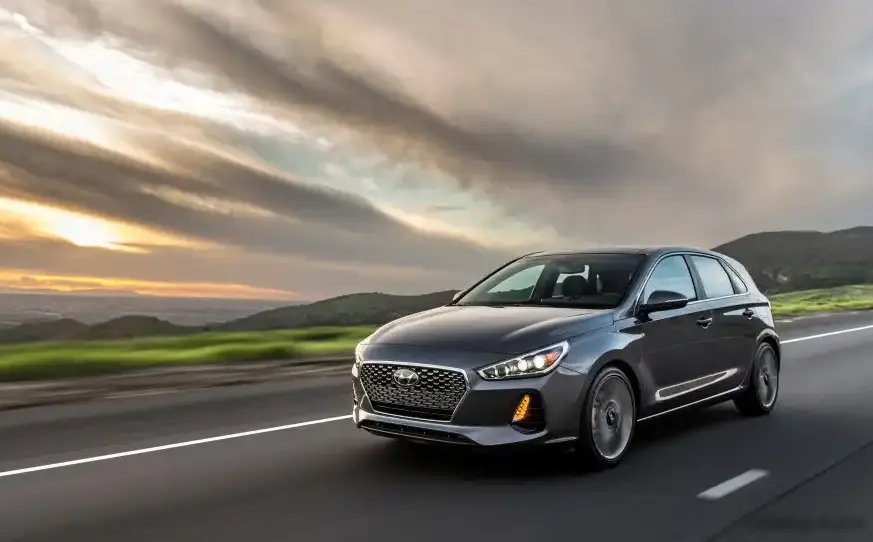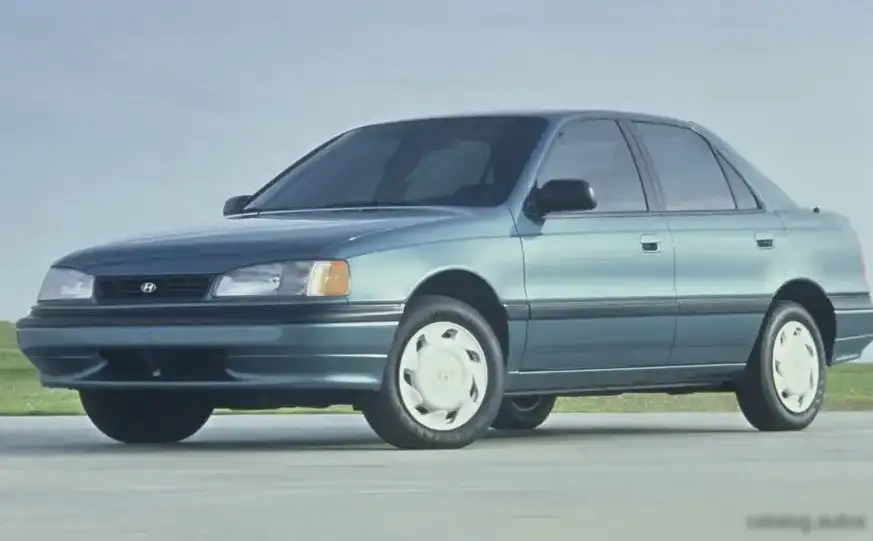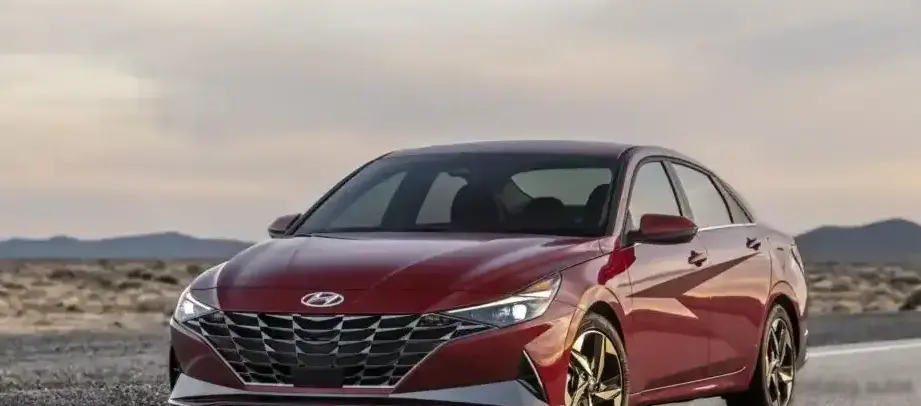
The Hyundai Elantra VII (CN7) 1.6 GDI (139 Hp) HEV DCT represents a significant step in Hyundai’s commitment to fuel efficiency and hybrid technology within the compact sedan segment. Introduced for the 2020 model year and continuing through 2023, this variant occupied a key position in the CN7 Elantra lineup, offering a balance between affordability, modern features, and improved gas mileage. It’s built on the CN7 platform, representing the seventh generation of the Elantra, and was primarily marketed towards consumers seeking a technologically advanced and economical daily driver. This model was sold primarily in North America, Europe, and parts of Asia.
Technical Specifications
| Brand | Hyundai |
| Model | Elantra |
| Generation | Elantra VII (CN7) |
| Type (Engine) | 1.6 GDI (139 Hp) HEV DCT |
| Start of production | 2020 |
| End of production | 2023 |
| Powertrain Architecture | FHEV (Full Hybrid Electric Vehicle) |
| Body type | Sedan |
| Seats | 5 |
| Doors | 4 |
| Fuel consumption (urban) | 4.4-4.8 l/100 km (53.5 – 49 US mpg) |
| Fuel consumption (extra urban) | 4.2-4.5 l/100 km (56 – 52.3 US mpg) |
| Fuel consumption (combined) | 4.4-4.7 l/100 km (53.5 – 50 US mpg) |
| Fuel Type | Petrol (Gasoline) |
| Weight-to-power ratio | 9.7 kg/Hp, 103.3 Hp/tonne |
| Weight-to-torque ratio | 5.1 kg/Nm, 196.3 Nm/tonne |
| Gross battery capacity | 1.32 kWh |
| Battery voltage | 240 V |
| Battery technology | Lithium-ion (Li-Ion) |
| Electric motor power | 43 Hp |
| Electric motor Torque | 169 Nm (124.65 lb.-ft.) |
| Electric motor location | Between the combustion engine and the transmission |
| System power | 139 Hp |
| System torque | 264 Nm (194.72 lb.-ft.) |
| Power | 104 Hp @ 5700 rpm |
| Torque | 148 Nm @ 4000 rpm (109.16 lb.-ft. @ 4000 rpm) |
| Engine layout | Front, Transverse |
| Engine Model/Code | Kappa II / G4LE |
| Engine displacement | 1580 cm3 (96.42 cu. in.) |
| Number of cylinders | 4 |
| Engine configuration | Inline |
| Cylinder Bore | 72 mm (2.83 in.) |
| Piston Stroke | 97 mm (3.82 in.) |
| Compression ratio | 10:1 |
| Number of valves per cylinder | 4 |
| Fuel injection system | Direct injection |
| Engine aspiration | Naturally aspirated engine |
| Valvetrain | DOHC |
| Engine oil capacity | 3.8 l (4.02 US qt | 3.34 UK qt) |
| Coolant capacity | 5.9 l (6.23 US qt | 5.19 UK qt) |
| Kerb Weight | 1345-1392 kg (2965.22 – 3068.83 lbs.) |
| Max. weight | 1850 kg (4078.55 lbs.) |
| Max load | 458-505 kg (1009.72 – 1113.33 lbs.) |
| Trunk (boot) space | 402 l (14.2 cu. ft.) |
| Fuel tank capacity | 42 l (11.1 US gal | 9.24 UK gal) |
| Length | 4676 mm (184.09 in.) |
| Width | 1826 mm (71.89 in.) |
| Height | 1415 mm (55.71 in.) |
| Wheelbase | 2720 mm (107.09 in.) |
| Front track | 1580-1585 mm (62.2 – 62.4 in.) |
| Rear track | 1590-1600 mm (62.6 – 62.99 in.) |
| Front overhang | 894 mm (35.2 in.) |
| Rear overhang | 1059 mm (41.69 in.) |
| Ride height (ground clearance) | 140 mm (5.51 in.) |
| Drag coefficient (Cd) | 0.28 |
| Drivetrain Architecture | The Internal combustion engine (ICE) and electric motor drive the front wheels with the ability to work in full electric or mixed mode. |
| Drive wheel | Front wheel drive |
| Number of gears | 6 |
| Gearbox type | automatic transmission DCT |
| Front suspension | Independent, type McPherson with coil spring and anti-roll bar |
| Rear suspension | Independent multi-link spring suspension with stabilizer |
| Front brakes | Disc, 381 mm |
| Rear brakes | Disc, 355.6 mm |
| Assisting systems | ABS (Anti-lock braking system) |
| Steering type | Steering rack and pinion |
| Power steering | Electric Steering |
| Tires size | 205/55 R16; 225/45 R17 |
| Wheel rims size | 6.5J x 16; 7.0J x 17 |
Powertrain & Engine Architecture
At the heart of the Elantra VII 1.6 GDI HEV DCT lies the Kappa II 1.6-liter inline-four cylinder gasoline engine, designated G4LE. This engine utilizes direct fuel injection (GDI) to optimize combustion efficiency and power output. The engine produces 104 horsepower at 5700 rpm and 148 Nm (109.16 lb-ft) of torque at 4000 rpm. The hybrid system incorporates a 43 horsepower electric motor powered by a 1.32 kWh lithium-ion battery pack. This motor is strategically positioned between the engine and the transmission. The combined system output reaches 139 horsepower and 264 Nm (194.72 lb-ft) of torque. The engine features a double overhead camshaft (DOHC) valvetrain and a compression ratio of 10:1. The transmission is a 6-speed dual-clutch transmission (DCT), chosen for its quick shifts and efficiency. The DCT works seamlessly with the electric motor to provide smooth acceleration and optimized fuel economy.
Driving Characteristics
The 1.6 GDI HEV DCT Elantra delivers a comfortable and efficient driving experience. While not a performance-oriented trim, the combined output of the engine and electric motor provides adequate acceleration for everyday driving situations. The DCT transmission offers responsive shifts, contributing to a more engaging feel than a traditional automatic. The hybrid system allows for short periods of electric-only driving at lower speeds, further enhancing fuel economy. Compared to the standard 2.0-liter naturally aspirated engine offered in other Elantra trims, the 1.6 GDI HEV prioritizes fuel efficiency over outright power. The gear ratios are tuned for maximizing fuel economy, which means acceleration isn’t as brisk as higher-powered variants. However, the electric motor provides instant torque, mitigating some of the engine’s limitations.
Equipment & Trim Levels
The 1.6 GDI HEV DCT trim typically came standard with a generous array of features. These included a touchscreen infotainment system with Apple CarPlay and Android Auto compatibility, a rearview camera, automatic climate control, and a suite of safety features such as lane keeping assist, forward collision avoidance assist, and automatic emergency braking. Interior upholstery was typically cloth, with options for leather upgrades available. Higher trim levels within the HEV range offered features like a larger touchscreen display, premium audio systems, heated and ventilated seats, and a sunroof. The overall interior design focused on a modern and minimalist aesthetic.
Chassis & Braking
The Elantra VII utilizes a McPherson strut front suspension and a multi-link rear suspension, providing a comfortable ride and predictable handling. Stabilizer bars are included on both axles to reduce body roll during cornering. Braking duties are handled by disc brakes on all four wheels, with front discs measuring 381 mm and rear discs at 355.6 mm. The vehicle is equipped with an Anti-lock Braking System (ABS) to enhance braking performance and stability. The suspension tuning is geared towards comfort, prioritizing a smooth ride over sporty handling. The steering is electrically assisted, providing light and precise steering feel.
Market Reception & Comparison
The Hyundai Elantra VII 1.6 GDI HEV DCT was generally well-received by automotive critics for its fuel efficiency and value proposition. Reviewers praised its comfortable ride, spacious interior, and comprehensive suite of standard features. Compared to other trims in the Elantra lineup, the HEV variant offered significantly better fuel economy, making it an attractive option for commuters and environmentally conscious buyers. However, some critics noted that the engine lacked the punch of the 2.0-liter engine, and the DCT transmission could occasionally exhibit some hesitation at low speeds. Against competitors like the Toyota Corolla Hybrid and Honda Insight, the Elantra HEV offered a compelling combination of features, fuel economy, and price.
Legacy
The Hyundai Elantra VII 1.6 GDI HEV DCT has proven to be a reliable and durable vehicle in the used car market. The Kappa II engine, while not without its minor quirks, is generally considered to be a robust and long-lasting unit. The hybrid system has also demonstrated good reliability, with few reported issues. The DCT transmission, however, requires regular maintenance to ensure smooth operation. Overall, this variant represents a significant step forward in Hyundai’s hybrid technology and continues to be a popular choice for buyers seeking an affordable and fuel-efficient compact sedan.