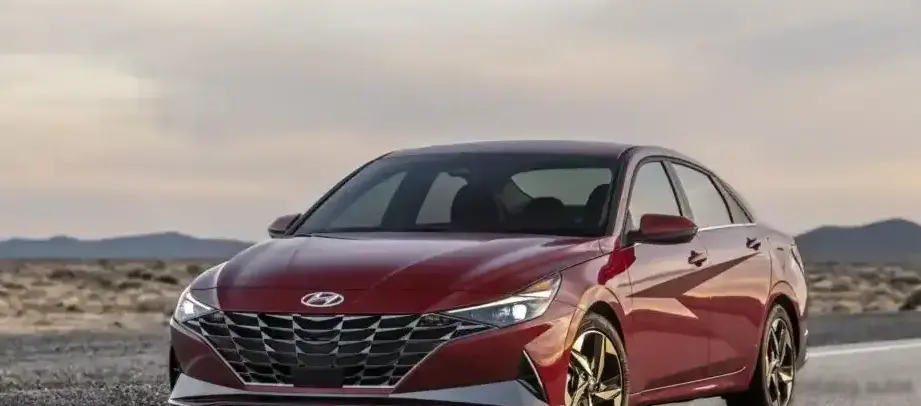
The Hyundai Elantra VII (CN7), produced from 2020 to 2023, represented a significant step forward for Hyundai’s compact sedan. Within the CN7 generation, the 1.6 Turbo GDI variant, delivering 201 horsepower, occupied a mid-range position, offering a balance between performance and fuel efficiency. This model aimed to attract buyers seeking a more engaging driving experience than the base engine offered, without the higher price tag of potential future performance trims. It was primarily marketed in markets where compact sedans were highly popular, including North America, South Korea, and parts of Europe, offering a competitive alternative to established rivals like the Honda Civic, Toyota Corolla, and Mazda3.
Technical Specifications
| Brand | Hyundai |
| Model | Elantra |
| Generation | Elantra VII (CN7) |
| Type (Engine) | 1.6 Turbo GDI (201 Hp) |
| Start of production | 2020 |
| End of production | 2023 |
| Powertrain Architecture | Internal Combustion engine |
| Body type | Sedan |
| Seats | 5 |
| Doors | 4 |
| Fuel consumption (urban) | 9.4 l/100 km (25 US mpg) |
| Fuel consumption (extra urban) | 6.9 l/100 km (34.1 US mpg) |
| Fuel consumption (combined) | 8.4 l/100 km (28 US mpg) |
| Fuel Type | Petrol (Gasoline) |
| Emission standard | LEV3-ULEV70 |
| Weight-to-power ratio | 6.7 kg/Hp |
| Weight-to-torque ratio | 5.1 kg/Nm |
| Power | 201 Hp @ 6000 rpm |
| Power per litre | 125.8 Hp/l |
| Torque | 264 Nm @ 1500-4500 rpm (194.72 lb.-ft. @ 1500-4500 rpm) |
| Engine layout | Front, Transverse |
| Engine Model/Code | G4FP |
| Engine displacement | 1598 cm3 (97.52 cu. in.) |
| Number of cylinders | 4 |
| Engine configuration | Inline |
| Cylinder Bore | 75.6 mm (2.98 in.) |
| Piston Stroke | 89 mm (3.5 in.) |
| Compression ratio | 10:1 |
| Number of valves per cylinder | 4 |
| Fuel injection system | Direct injection |
| Engine aspiration | Turbocharger, Intercooler |
| Valvetrain | DOHC, CVVD |
| Engine oil capacity | 4.8 l (5.07 US qt | 4.22 UK qt) |
| Coolant capacity | 6.8 l (7.19 US qt | 5.98 UK qt) |
| Kerb Weight | 1340 kg (2954.19 lbs.) |
| Max. weight | 1780 kg (3924.23 lbs.) |
| Max load | 440 kg (970.03 lbs.) |
| Trunk (boot) space – minimum | 402 l (14.2 cu. ft.) |
| Fuel tank capacity | 47 l (12.42 US gal | 10.34 UK gal) |
| Length | 4676 mm (184.09 in.) |
| Width | 1826 mm (71.89 in.) |
| Height | 1420 mm (55.91 in.) |
| Wheelbase | 2720 mm (107.09 in.) |
| Front track | 1567 mm (61.69 in.) |
| Rear track | 1580 mm (62.2 in.) |
| Front overhang | 894 mm (35.2 in.) |
| Rear overhang | 1059 mm (41.69 in.) |
| Ride height (ground clearance) | 140 mm (5.51 in.) |
| Drag coefficient (Cd) | 0.31 |
| Drivetrain Architecture | Front wheel drive |
| Number of gears | 6 |
| Type of gearbox | Manual transmission |
| Front suspension | Independent, McPherson with coil spring and anti-roll bar |
| Rear suspension | Independent multi-link spring suspension with stabilizer |
| Assisting systems | ABS (Anti-lock braking system) |
| Steering type | Steering rack and pinion |
| Power steering | Electric Steering |
| Tires size | 235/40 R18 |
| Wheel rims size | 18 |
Powertrain & Engine Architecture
The heart of the Elantra 1.6 Turbo GDI is the Hyundai G4FP engine, a 1.6-liter inline-four cylinder gasoline engine. This engine utilizes direct fuel injection (GDI) and is turbocharged, allowing it to produce a respectable 201 horsepower and 264 Nm (194.72 lb-ft) of torque. A key feature of this engine is Hyundai’s Continuously Variable Valve Duration (CVVD) technology. CVVD optimizes valve timing based on driving conditions, improving both performance and fuel efficiency. The engine’s turbocharger, coupled with an intercooler, helps to manage intake air temperature, maximizing power output. The six-speed manual transmission was standard, providing drivers with a more connected driving experience.
Driving Characteristics
The 1.6 Turbo GDI Elantra offered a noticeable step up in performance compared to the base 2.0-liter naturally aspirated engine. The turbocharger provides strong low-end torque, making it responsive in everyday driving situations. While not a sports car, the 201 hp output allowed for brisk acceleration and confident highway merging. The six-speed manual transmission, while engaging, had slightly longer throws compared to some competitors. The gear ratios were tuned to balance acceleration and fuel economy, with a focus on providing usable power throughout the rev range. Compared to a potential future N-Line or performance-oriented trim, this variant prioritized a more comfortable and refined driving experience.
Equipment & Trim Levels
The 1.6 Turbo GDI trim typically included features such as alloy wheels, a touchscreen infotainment system with Apple CarPlay and Android Auto compatibility, a rearview camera, and automatic climate control. Higher sub-trims within the 1.6 Turbo GDI range often added features like a sunroof, leather upholstery, heated front seats, and a premium sound system. Safety features like automatic emergency braking, lane keeping assist, and blind-spot monitoring were also commonly included, depending on the specific package. Interior materials were generally of good quality for the price point, with a focus on providing a comfortable and modern cabin environment.
Chassis & Braking
The Elantra CN7 utilized a McPherson strut front suspension and a multi-link rear suspension. This setup provided a good balance between ride comfort and handling. The suspension was tuned to be relatively compliant, absorbing bumps and imperfections in the road without feeling overly soft. The braking system consisted of ventilated front disc brakes and solid rear disc brakes. ABS (Anti-lock Braking System) was standard, providing enhanced stopping power and control. The electric power steering offered a light and precise feel, making it easy to maneuver in both city and highway driving.
Market Reception & Comparison
The 1.6 Turbo GDI Elantra was generally well-received by automotive critics. It was praised for its stylish design, spacious interior, and strong value proposition. The engine was noted for its responsiveness and fuel efficiency. However, some reviewers found the manual transmission to be slightly notchy and the ride quality a bit firm on rough roads. Compared to the base 2.0-liter engine, the 1.6 Turbo GDI offered a significant performance upgrade with only a modest decrease in fuel economy. It positioned itself as a compelling alternative to rivals like the Honda Civic and Toyota Corolla, offering a more engaging driving experience and a more modern interior.
Legacy
The Hyundai Elantra CN7 1.6 Turbo GDI has proven to be a relatively reliable vehicle in the used car market. The G4FP engine, while turbocharged, has demonstrated good durability when properly maintained. Common maintenance items include regular oil changes, spark plug replacements, and turbocharger inspections. The CVVD system, while innovative, has not been associated with widespread issues. Overall, this variant of the Elantra represents a solid choice for buyers seeking a fuel-efficient, well-equipped, and reasonably sporty compact sedan.