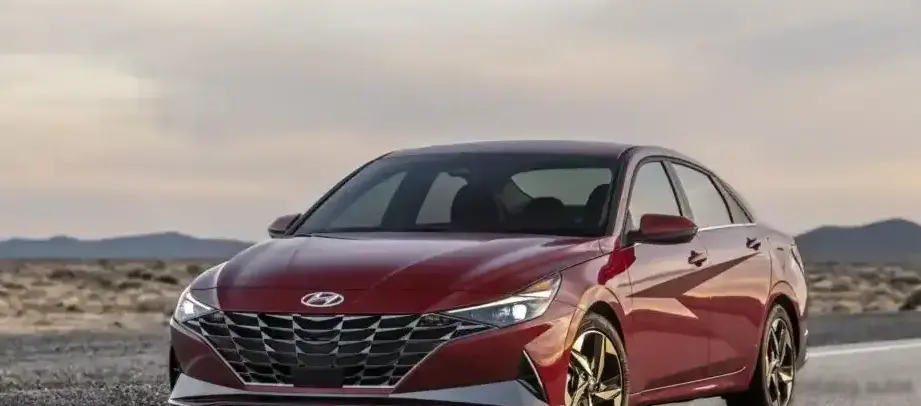
The Hyundai Elantra VII (CN7), produced from March 2020 through 2023, represents the seventh generation of Hyundai’s popular compact sedan. Within the CN7 lineup, the G1.6 Smartstream variant, equipped with a 1.6-liter naturally aspirated engine and a continuously variable transmission (CVT), served as a core offering, positioned as a fuel-efficient and accessible entry point to the seventh-generation Elantra. This model aimed to balance affordability with Hyundai’s increasingly sophisticated design and technology features. It was primarily marketed towards buyers seeking a reliable and economical daily driver, particularly in markets where fuel costs are a significant concern.
Technical Specifications
| Brand | Hyundai |
| Model | Elantra |
| Generation | Elantra VII (CN7) |
| Type (Engine) | G1.6 Smartstream (123 Hp) CVT |
| Start of production | March, 2020 |
| End of production | 2023 |
| Powertrain Architecture | Internal Combustion engine |
| Body type | Sedan |
| Seats | 5 |
| Doors | 4 |
| Fuel Type | Petrol (Gasoline) |
| Weight-to-power ratio | 9.6 kg/Hp, 103.8 Hp/tonne |
| Weight-to-torque ratio | 7.7 kg/Nm, 130 Nm/tonne |
| Power | 123 Hp @ 6300 rpm |
| Power per litre | 77 Hp/l |
| Torque | 154 Nm @ 4500 rpm (113.58 lb.-ft. @ 4500 rpm) |
| Engine layout | Front, Transverse |
| Engine displacement | 1598 cm3 (97.52 cu. in.) |
| Number of cylinders | 4 |
| Engine configuration | Inline |
| Number of valves per cylinder | 4 |
| Fuel injection system | Multi-port manifold injection |
| Engine aspiration | Naturally aspirated engine |
| Valvetrain | DOHC |
| Engine oil capacity | 4.8 l (5.07 US qt | 4.22 UK qt) |
| Coolant | 6.8 l (7.19 US qt | 5.98 UK qt) |
| Kerb Weight | 1185-1270 kg (2612.48 – 2799.87 lbs.) |
| Max. weight | 1750 kg (3858.09 lbs.) |
| Max load | 480-565 kg (1058.22 – 1245.61 lbs.) |
| Length | 4675 mm (184.06 in.) |
| Width | 1825 mm (71.85 in.) |
| Height | 1430 mm (56.3 in.) |
| Wheelbase | 2720 mm (107.09 in.) |
| Front track | 1579-1593 mm (62.17 – 62.72 in.) |
| Rear (Back) track | 1590-1604 mm (62.6 – 63.15 in.) |
| Drivetrain Architecture | The Internal combustion engine (ICE) drives the front wheels of the vehicle. |
| Drive wheel | Front wheel drive |
| Number of gears and type of gearbox | automatic transmission CVT |
| Front suspension | Independent type McPherson |
| Rear suspension | Torsion |
| Front brakes | Ventilated discs |
| Rear brakes | Disc |
| Assisting systems | ABS (Anti-lock braking system) |
| Steering type | Steering rack and pinion |
| Tires size | 195/65 R15; 205/55 R16; 225/45 R17 |
| Wheel rims size | 6.0J x 15; 6.5J x 16; 7.0J x 17 |
Powertrain & Engine Architecture
The heart of the Elantra G1.6 Smartstream is Hyundai’s naturally aspirated 1.6-liter inline-four cylinder engine, designated as the Gamma II Smartstream. This engine utilizes a multi-port fuel injection (MPI) system, a relatively conventional approach chosen for its cost-effectiveness and reliability. The engine features a dual overhead camshaft (DOHC) valvetrain with four valves per cylinder, contributing to improved breathing and efficiency. Hyundai’s Smartstream technology incorporates several refinements aimed at reducing friction and optimizing combustion. The engine produces 123 horsepower at 6,300 rpm and 154 Nm (113.58 lb-ft) of torque at 4,500 rpm. Paired with this engine is a continuously variable transmission (CVT), replacing the traditional automatic transmissions found in previous Elantra generations. The CVT is designed to provide smooth, stepless gear changes and maximize fuel efficiency by keeping the engine operating within its optimal power band.
Driving Characteristics
The 1.6L/CVT combination delivers adequate, though not exhilarating, performance. Acceleration is linear and predictable, suitable for everyday commuting and highway merging. The CVT, while prioritizing fuel economy, can sometimes feel less responsive than a traditional automatic, exhibiting a slight “rubber band” effect during hard acceleration. Compared to the more powerful 2.0-liter engine option available in the CN7 Elantra, the 1.6L feels noticeably less potent. However, the CVT’s programming is tuned to mimic traditional gear shifts under heavier throttle, mitigating some of the typical CVT drawbacks. The gear ratios are optimized for fuel efficiency, resulting in a comfortable cruising experience at highway speeds. The overall driving experience is geared towards comfort and ease of use rather than sporty handling.
Equipment & Trim Levels
The G1.6 Smartstream CVT trim typically included standard features such as air conditioning, power windows and locks, a touchscreen infotainment system with Apple CarPlay and Android Auto compatibility, and a rearview camera. Safety features like ABS, electronic stability control, and multiple airbags were also standard. Higher trim levels, such as the Limited, added features like heated front seats, a sunroof, upgraded audio systems, and advanced driver-assistance systems (ADAS) such as lane keeping assist and adaptive cruise control. Interior upholstery was typically cloth in the base trims, with leather options available on higher-end models. Dashboard configurations were consistent across the CN7 range, featuring a modern and minimalist design.
Chassis & Braking
The Elantra CN7 utilizes a front-wheel-drive layout with an independent McPherson strut suspension in the front and a torsion beam suspension in the rear. This suspension setup provides a comfortable ride quality, absorbing bumps and irregularities in the road surface effectively. The front brakes are ventilated discs, providing ample stopping power, while the rear brakes are solid discs. The steering system employs a rack and pinion setup, offering precise and responsive steering feel. Wheel sizes varied depending on the trim level, ranging from 15-inch steel wheels with covers to 17-inch alloy wheels. Stabilizer bars were included in both the front and rear suspension to reduce body roll during cornering.
Market Reception & Comparison
The Elantra G1.6 Smartstream CVT was generally well-received by critics as a practical and fuel-efficient option. Reviewers praised its comfortable ride, spacious interior, and comprehensive feature set for the price. However, some criticized the engine’s lack of power and the CVT’s occasionally sluggish response. Compared to other trims in the Elantra lineup, the 1.6L CVT offered the best fuel economy, achieving an EPA-estimated 33 mpg city / 43 mpg highway. In terms of reliability, the Smartstream engine has proven to be generally dependable, with few widespread issues reported. Compared to the more powerful 2.0L engine, the 1.6L required less frequent maintenance and offered lower running costs.
Legacy
The Hyundai Elantra VII (CN7) G1.6 Smartstream CVT represents a significant step forward in Hyundai’s commitment to fuel efficiency and technology. While not the most powerful variant in the lineup, it provided a compelling value proposition for buyers seeking a reliable and economical compact sedan. On the used car market, these models are generally considered a good value, offering a blend of affordability, fuel economy, and modern features. The Smartstream engine and CVT transmission have proven to be relatively durable, making these Elantras a practical choice for budget-conscious buyers. As Hyundai continues to innovate, the CN7 Elantra, and specifically the G1.6 Smartstream CVT, will be remembered as a pivotal model in the brand’s evolution.