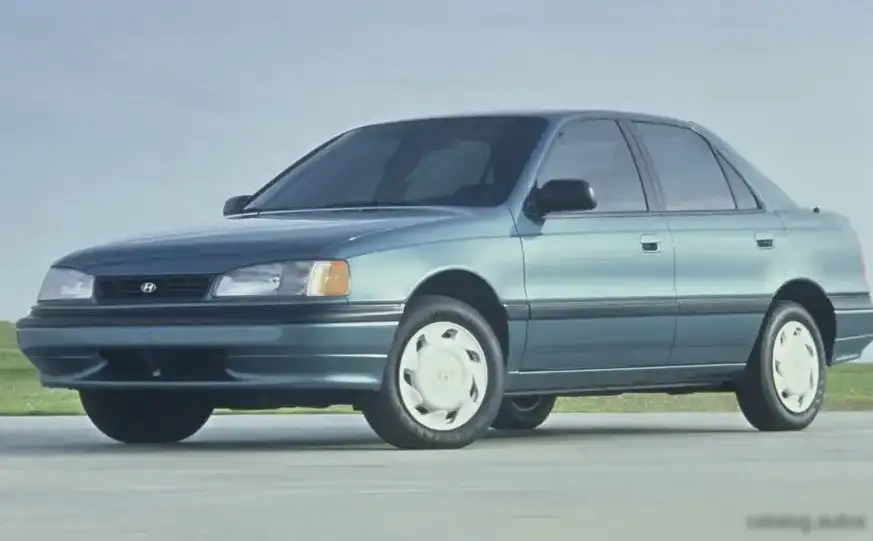
The Hyundai Elantra XD 1.6i, produced between 2008 and 2011, represented a significant step forward for Hyundai in the compact sedan segment. Part of the XD generation (2006-2011), this variant occupied the entry to mid-level position in the Elantra lineup, offering a balance of affordability, fuel efficiency, and practicality. It was primarily marketed towards budget-conscious buyers seeking a reliable and reasonably equipped family car. The XD generation itself was a crucial model for Hyundai, demonstrating improved build quality and design compared to its predecessors, and gaining traction in competitive markets like North America and Europe.
Technical Specifications
| Brand | Hyundai |
| Model | Elantra |
| Generation | Elantra XD |
| Type (Engine) | 1.6i (122 Hp) |
| Start of production | 2008 |
| End of production | 2011 |
| Powertrain Architecture | Internal Combustion engine |
| Body type | Sedan |
| Seats | 5 |
| Doors | 4 |
| Fuel Type | Petrol (Gasoline) |
| Acceleration 0 – 100 km/h | 10 sec |
| Acceleration 0 – 62 mph | 10 sec |
| Acceleration 0 – 60 mph | 9.5 sec |
| Maximum speed | 190 km/h (118.06 mph) |
| Emission standard | Euro 4 |
| Weight-to-power ratio | 9.5 kg/Hp, 105.5 Hp/tonne |
| Weight-to-torque ratio | 7.4 kg/Nm, 135.8 Nm/tonne |
| Power | 122 Hp @ 6200 rpm |
| Power per litre | 76.7 Hp/l |
| Torque | 157 Nm @ 4200 rpm (115.8 lb.-ft. @ 4200 rpm) |
| Engine layout | Front, Transverse |
| Engine displacement | 1591 cm3 (97.09 cu. in.) |
| Number of cylinders | 4 |
| Engine configuration | Inline |
| Cylinder Bore | 77 mm (3.03 in.) |
| Piston Stroke | 85.4 mm (3.36 in.) |
| Compression ratio | 10.5:1 |
| Number of valves per cylinder | 4 |
| Fuel injection system | Multi-port manifold injection |
| Engine aspiration | Naturally aspirated engine |
| Valvetrain | DOHC |
| Kerb Weight | 1156 kg (2548.54 lbs.) |
| Max. weight | 1680 kg (3703.77 lbs.) |
| Max load | 524 kg (1155.22 lbs.) |
| Fuel tank capacity | 53 l (14 US gal | 11.66 UK gal) |
| Length | 4505 mm (177.36 in.) |
| Width | 1775 mm (69.88 in.) |
| Height | 1480 mm (58.27 in.) |
| Wheelbase | 2650 mm (104.33 in.) |
| Front track | 1543 mm (60.75 in.) |
| Rear (Back) track | 1541 mm (60.67 in.) |
| Drivetrain Architecture | The Internal combustion engine (ICE) drives the front wheels of the vehicle. |
| Drive wheel | Front wheel drive |
| Number of gears and type of gearbox | 5 gears, manual transmission |
| Front suspension | Independent, type McPherson with coil spring and anti-roll bar |
| Rear suspension | Independent coil spring |
| Front brakes | Ventilated discs |
| Rear brakes | Disc |
| Assisting systems | ABS (Anti-lock braking system) |
| Steering type | Steering rack and pinion |
| Power steering | Electric Steering |
| Tires size | 185/65 R15 |
Powertrain & Engine Architecture
The heart of the Elantra XD 1.6i is the Hyundai G4GD engine, a 1.6-liter inline-four cylinder gasoline engine. This engine utilizes a multi-point fuel injection system, delivering fuel directly into the intake ports. The engine features a double overhead camshaft (DOHC) valvetrain, operating 16 valves (four per cylinder) to optimize airflow and combustion efficiency. The G4GD engine is known for its relatively simple design, contributing to its reliability and ease of maintenance. The 1.6L engine produced 122 horsepower at 6200 rpm and 157 Nm (115.8 lb-ft) of torque at 4200 rpm. This power was delivered through a standard five-speed manual transmission, which was the configuration detailed in the original specifications. While an automatic transmission was available on other Elantra XD trims, the 1.6L engine was often paired with the manual to maximize fuel economy and provide a more engaging driving experience.
Driving Characteristics
The 1.6L engine, coupled with the five-speed manual transmission, provided adequate, though not exhilarating, performance. Acceleration from 0-60 mph took approximately 9.5 seconds, and top speed was around 118 mph. The engine felt most comfortable in the mid-range, offering sufficient power for everyday driving situations like merging onto highways and overtaking slower vehicles. Compared to the more powerful 2.0L engine option available in the Elantra XD, the 1.6L felt noticeably less responsive, particularly at higher speeds. However, the lighter engine weight contributed to slightly better handling and fuel economy. The five-speed manual transmission offered precise shifts and allowed drivers to maintain optimal engine speed for various driving conditions. The gear ratios were well-spaced, providing a balance between acceleration and fuel efficiency.
Equipment & Trim Levels
The Elantra XD 1.6i typically came with a reasonable level of standard equipment, focusing on practicality and value. Standard features generally included air conditioning, power windows and locks, a basic audio system (often with a CD player and AM/FM radio), and standard safety features like dual front airbags and ABS brakes. Interior upholstery was typically cloth, and the dashboard featured a straightforward design with easy-to-use controls. Optional extras could include alloy wheels, a sunroof, upgraded audio systems, and power mirrors. The 1.6i trim often served as the base model, with higher trims offering more luxurious features and the more powerful 2.0L engine.
Chassis & Braking
The Elantra XD utilized a McPherson strut front suspension and an independent coil spring rear suspension. This setup provided a comfortable ride quality, absorbing bumps and irregularities in the road surface effectively. The front suspension incorporated an anti-roll bar to reduce body roll during cornering. Braking duties were handled by ventilated discs at the front and solid discs at the rear. The ABS system helped to prevent wheel lockup during hard braking, enhancing safety and control. The chassis was designed to provide a balance between handling and ride comfort, prioritizing stability and predictability over sporty performance.
Market Reception & Comparison
The Elantra XD 1.6i was generally well-received by critics as a practical and affordable compact sedan. It was praised for its improved build quality, comfortable ride, and generous warranty. However, some reviewers noted that the 1.6L engine lacked the power and refinement of its competitors. Compared to other trims in the Elantra lineup, the 1.6i offered the best fuel economy, making it an attractive option for budget-conscious buyers. The 2.0L engine provided significantly more power but came at the cost of increased fuel consumption. In terms of reliability, the Elantra XD proved to be a dependable vehicle, with relatively few reported issues.
Legacy
The Hyundai Elantra XD 1.6i remains a relatively common sight on used car lots today. The G4GD engine is known for its durability and longevity, provided it has been properly maintained. While not a performance standout, the 1.6L engine offers a good balance of reliability and fuel efficiency. The XD generation Elantra played a pivotal role in establishing Hyundai as a serious competitor in the compact car segment, and the 1.6i variant provided an accessible entry point for many buyers. Its affordability and practicality continue to make it a viable option for those seeking a reliable and economical used car.