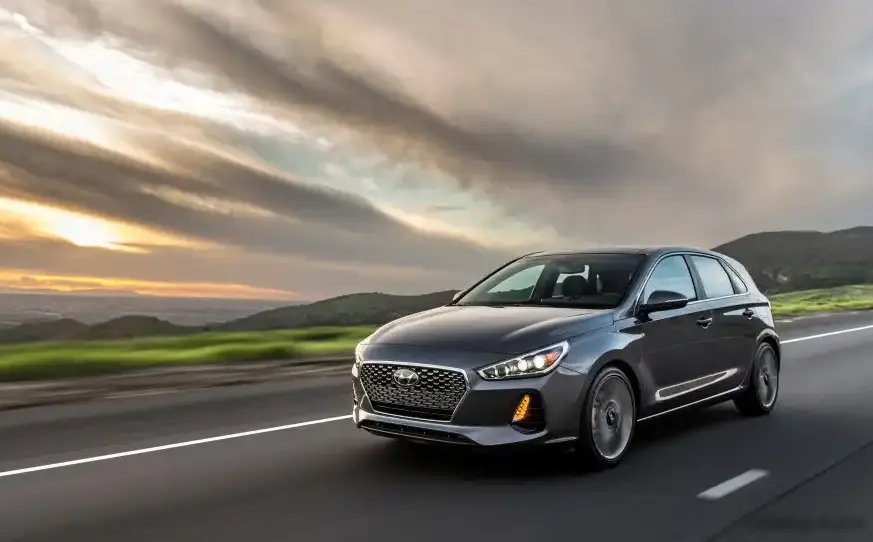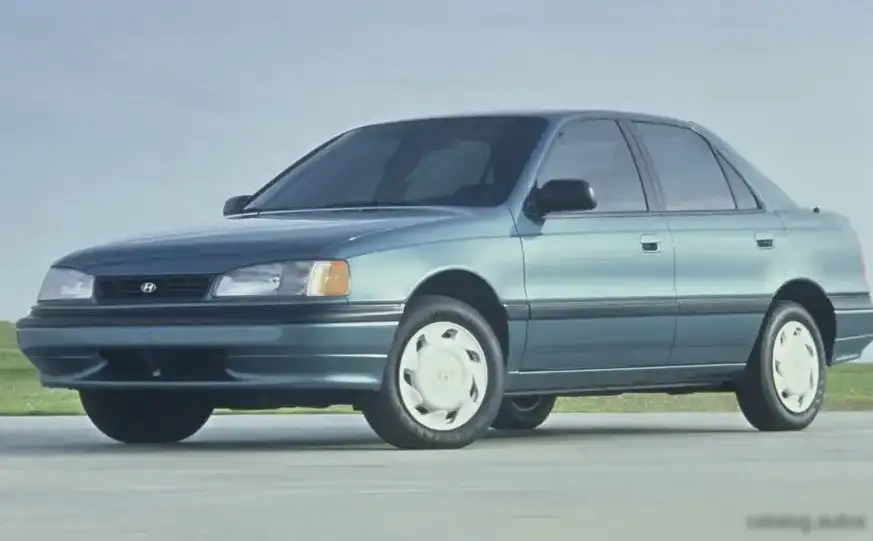
The Hyundai Elantra XD 1.6i Automatic, produced between 2008 and 2011, represented a significant step forward for Hyundai in the compact sedan segment. Positioned as a mainstream offering within the XD generation (2006-2011), this variant aimed to provide a balance of affordability, fuel efficiency, and comfortable transportation for families and commuters. It was a key model for Hyundai as they continued to gain market share in North America and globally, competing with established rivals like the Toyota Corolla and Honda Civic. This particular configuration – the 1.6-liter engine paired with a four-speed automatic transmission – was designed to appeal to buyers prioritizing ease of use over outright performance.
Technical Specifications
| Brand | Hyundai |
| Model | Elantra |
| Generation | Elantra XD |
| Type (Engine) | 1.6i Automatic (122 Hp) |
| Start of production | 2008 |
| End of production | 2011 |
| Powertrain Architecture | Internal Combustion engine |
| Body type | Sedan |
| Seats | 5 |
| Doors | 4 |
| Fuel Type | Petrol (Gasoline) |
| Acceleration 0 – 100 km/h | 11.6 sec |
| Acceleration 0 – 62 mph | 11.6 sec |
| Acceleration 0 – 60 mph | 11 sec |
| Maximum speed | 183 km/h (113.71 mph) |
| Emission standard | Euro 4 |
| Weight-to-power ratio | 9.6 kg/Hp, 104.1 Hp/tonne |
| Weight-to-torque ratio | 7.5 kg/Nm, 134 Nm/tonne |
| Power | 122 Hp @ 6200 rpm |
| Power per litre | 76.7 Hp/l |
| Torque | 157 Nm @ 4200 rpm (115.8 lb.-ft. @ 4200 rpm) |
| Engine layout | Front, Transverse |
| Engine displacement | 1591 cm3 (97.09 cu. in.) |
| Number of cylinders | 4 |
| Engine configuration | Inline |
| Cylinder Bore | 77 mm (3.03 in.) |
| Piston Stroke | 85.4 mm (3.36 in.) |
| Compression ratio | 10.5:1 |
| Number of valves per cylinder | 4 |
| Fuel injection system | Multi-port manifold injection |
| Engine aspiration | Naturally aspirated engine |
| Valvetrain | DOHC |
| Kerb Weight | 1172 kg (2583.82 lbs.) |
| Max. weight | 1680 kg (3703.77 lbs.) |
| Max load | 508 kg (1119.95 lbs.) |
| Fuel tank capacity | 53 l (14 US gal | 11.66 UK gal) |
| Length | 4505 mm (177.36 in.) |
| Width | 1775 mm (69.88 in.) |
| Height | 1480 mm (58.27 in.) |
| Wheelbase | 2650 mm (104.33 in.) |
| Front track | 1543 mm (60.75 in.) |
| Rear (Back) track | 1541 mm (60.67 in.) |
| Drivetrain Architecture | The Internal combustion engine (ICE) drives the front wheels of the vehicle. |
| Drive wheel | Front wheel drive |
| Number of gears and type of gearbox | 4 gears, automatic transmission |
| Front suspension | Independent, type McPherson with coil spring and anti-roll bar |
| Rear suspension | Independent coil spring |
| Front brakes | Ventilated discs |
| Rear brakes | Disc |
| Assisting systems | ABS (Anti-lock braking system) |
| Steering type | Steering rack and pinion |
| Power steering | Electric Steering |
| Tires size | 185/65 R15 |
Powertrain & Engine Architecture
The heart of the Elantra XD 1.6i Automatic is the Hyundai G4GE engine, a 1.6-liter inline-four cylinder gasoline engine. This engine utilizes a multi-point fuel injection system, delivering fuel directly into the intake ports. The engine features a double overhead camshaft (DOHC) valvetrain, operating 16 valves (four per cylinder) to optimize airflow and combustion efficiency. The G4GE engine was known for its relatively simple design, contributing to its overall reliability. Paired with this engine is a four-speed automatic transmission. While not the most advanced transmission available at the time, it provided smooth and predictable shifts, catering to drivers who preferred the convenience of an automatic over a manual gearbox. The transmission’s gear ratios were tuned for fuel economy and comfortable cruising, rather than aggressive acceleration.
Driving Characteristics
The 122 horsepower and 115.8 lb-ft of torque produced by the 1.6-liter engine and automatic transmission combination resulted in a driving experience focused on practicality. Acceleration from 0-60 mph took around 11 seconds, which was adequate for everyday driving but noticeably slower than the Elantra models equipped with larger engines or manual transmissions. The automatic transmission, while smooth, did contribute to some power loss. The gear ratios were spaced to prioritize fuel efficiency, meaning the engine often felt strained during quick overtaking maneuvers or when climbing hills. Compared to the more powerful 2.0-liter engine option, the 1.6-liter automatic offered a more relaxed and fuel-conscious driving experience.
Equipment & Trim Levels
The Elantra XD 1.6i Automatic typically came standard with features such as air conditioning, power windows and locks, and a basic audio system. Higher trim levels, often denoted by GLS or Limited designations, added features like alloy wheels, a sunroof, upgraded audio systems, and cruise control. Interior upholstery was typically cloth, with options for upgraded materials on higher trims. Safety features included dual front airbags and ABS brakes. The 1.6-liter automatic trim was generally considered the entry-level or mid-range offering, providing a good balance of features for the price.
Chassis & Braking
The Elantra XD utilized a McPherson strut front suspension and an independent coil spring rear suspension. This setup provided a comfortable ride quality, absorbing bumps and irregularities in the road surface effectively. The front brakes were ventilated discs, offering good stopping power, while the rear brakes were solid discs. ABS (Anti-lock Braking System) was standard, enhancing safety by preventing wheel lockup during hard braking. The suspension tuning was geared towards comfort rather than sporty handling, making it well-suited for everyday commuting and family transportation.
Market Reception & Comparison
The Elantra XD 1.6i Automatic received generally positive reviews for its value, fuel efficiency, and comfortable ride. Critics noted that the engine lacked significant power, particularly when compared to competitors like the Honda Civic and Toyota Corolla. However, the Elantra’s lower price point and generous standard features made it an attractive option for budget-conscious buyers. Fuel economy was a strong point, with the 1.6-liter engine achieving respectable MPG figures. Compared to the 2.0-liter Elantra, the 1.6-liter automatic offered better fuel economy but significantly less performance. Reliability was also a positive aspect, with the G4GE engine proving to be relatively durable.
Legacy
The Hyundai Elantra XD 1.6i Automatic has proven to be a reasonably reliable vehicle in the used car market. The G4GE engine, while not known for its blistering performance, is generally considered durable and relatively inexpensive to maintain. Common issues include minor oil leaks and occasional sensor failures, but these are typically not major concerns. Today, these Elantras represent an affordable and practical transportation option for those seeking a dependable compact sedan. The XD generation, and this variant in particular, played a crucial role in establishing Hyundai as a credible competitor in the global automotive market, paving the way for the brand’s continued success.