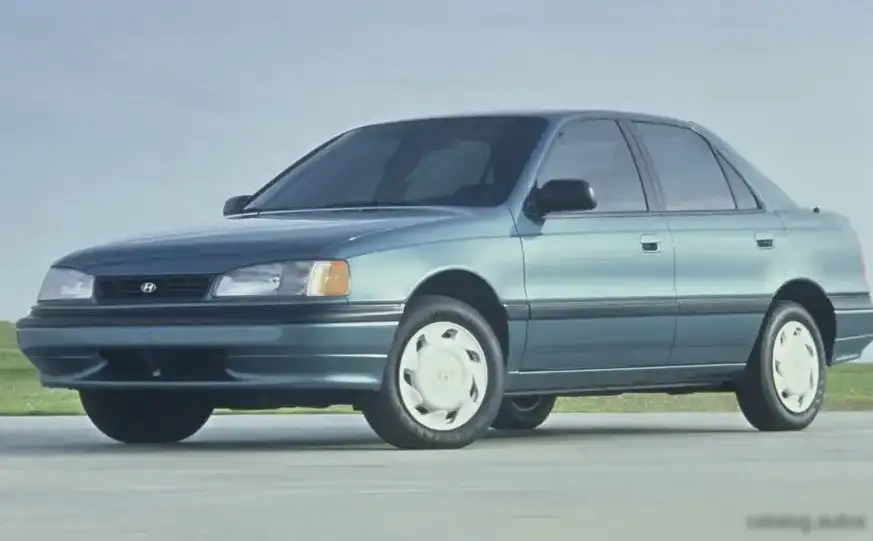
The Hyundai Elantra XD 2.0i, produced from 2008 to 2011, represented a significant step forward for Hyundai in the compact sedan segment. Part of the XD generation (2006-2011), this variant occupied a mid-range position within the Elantra lineup, offering a balance of performance and affordability. It was primarily marketed towards buyers seeking a practical, reliable, and reasonably well-equipped family car. The XD generation, and specifically the 2.0i model, played a crucial role in establishing Hyundai’s growing reputation for value and quality in the North American market.
Technical Specifications
| Brand | Hyundai |
| Model | Elantra |
| Generation | Elantra XD |
| Type (Engine) | 2.0i (143 Hp) |
| Start of production | 2008 |
| End of production | 2011 |
| Powertrain Architecture | Internal Combustion engine |
| Body type | Sedan |
| Seats | 5 |
| Doors | 4 |
| Fuel consumption (urban) | 9.3 l/100 km (25.3 US mpg) |
| Fuel consumption (extra urban) | 5.9 l/100 km (39.9 US mpg) |
| Fuel consumption (combined) | 7.1 l/100 km (33.1 US mpg) |
| Fuel Type | Petrol (Gasoline) |
| Acceleration 0 – 100 km/h | 8.9 sec |
| Acceleration 0 – 62 mph | 8.9 sec |
| Acceleration 0 – 60 mph | 8.5 sec |
| Maximum speed | 190 km/h (118.06 mph) |
| Emission standard | Euro 4 |
| Weight-to-power ratio | 8.5 kg/Hp |
| Weight-to-torque ratio | 6.6 kg/Nm |
| Power | 143 Hp @ 6000 rpm |
| Torque | 186 Nm @ 4500 rpm (137.19 lb.-ft. @ 4500 rpm) |
| Engine layout | Front, Transverse |
| Engine displacement | 1975 cm3 (120.52 cu. in.) |
| Number of cylinders | 4 |
| Engine configuration | Inline |
| Cylinder Bore | 82 mm (3.23 in.) |
| Piston Stroke | 93.5 mm (3.68 in.) |
| Compression ratio | 10:1 |
| Number of valves per cylinder | 4 |
| Fuel injection system | Multi-port manifold injection |
| Engine aspiration | Naturally aspirated engine |
| Valvetrain | DOHC |
| Kerb Weight | 1221 kg (2691.84 lbs.) |
| Max. weight | 1730 kg (3814 lbs.) |
| Max load | 509 kg (1122.15 lbs.) |
| Fuel tank capacity | 53 l (14 US gal | 11.66 UK gal) |
| Length | 4505 mm (177.36 in.) |
| Width | 1775 mm (69.88 in.) |
| Height | 1480 mm (58.27 in.) |
| Wheelbase | 2650 mm (104.33 in.) |
| Front track | 1543 mm (60.75 in.) |
| Rear track | 1541 mm (60.67 in.) |
| Drivetrain Architecture | Front wheel drive |
| Number of gears | 5 gears, manual transmission |
| Front suspension | Independent, type McPherson with coil spring and anti-roll bar |
| Rear suspension | Independent coil spring |
| Front brakes | Ventilated discs |
| Rear brakes | Disc |
| Assisting systems | ABS (Anti-lock braking system) |
| Steering type | Steering rack and pinion |
| Power steering | Electric Steering |
| Tires size | 205/55 R16 |
Powertrain & Engine Architecture
The heart of the Elantra XD 2.0i is the Hyundai G4GC engine, a 1.975-liter (120.52 cubic inches) inline-four cylinder gasoline engine. This engine utilizes a multi-port fuel injection system, delivering fuel directly into the intake ports just before the intake valves. The engine features a double overhead camshaft (DOHC) valvetrain, operating 16 valves (four per cylinder) to optimize airflow and combustion efficiency. The 2.0-liter engine produced 143 horsepower at 6000 rpm and 186 Nm (137.19 lb-ft) of torque at 4500 rpm. This power was delivered through a standard five-speed manual transmission, providing drivers with direct control over gear selection. While an automatic transmission was offered in other Elantra XD trims, the 2.0i was primarily sold with the manual gearbox in many markets.
Driving Characteristics
The 2.0i with the five-speed manual transmission offered a reasonably engaging driving experience. Acceleration from 0 to 60 mph was achieved in approximately 8.5 seconds, making it competitive within its class. The engine provided adequate power for everyday driving situations, including highway merging and overtaking. The manual transmission allowed for precise gear changes, enhancing driver control. Compared to the base 1.6L engine, the 2.0i offered a noticeable improvement in performance. However, it didn’t possess the same level of refinement or power as larger-displacement engines found in some competing models. The gear ratios were tuned for a balance between fuel efficiency and acceleration, prioritizing usability over outright performance.
Equipment & Trim Levels
The Elantra XD 2.0i typically came standard with features such as air conditioning, power windows and locks, and a basic audio system. Higher trim levels added features like alloy wheels, a sunroof, upgraded audio systems, and cruise control. Interior upholstery was generally cloth, with options for leather in some markets. The dashboard layout was functional and straightforward, prioritizing ease of use. Safety features included dual front airbags and ABS (Anti-lock Braking System). The 2.0i trim often served as a stepping stone for buyers wanting more performance than the base model but not requiring the luxury features of the top-tier trims.
Chassis & Braking
The Elantra XD utilized a McPherson strut front suspension and an independent coil spring rear suspension. This setup provided a comfortable ride quality while maintaining reasonable handling characteristics. The front brakes were ventilated discs, offering good stopping power, while the rear brakes were solid discs. The steering was rack and pinion with electric power steering, providing a light and responsive feel. The XD’s chassis was designed to balance ride comfort with handling stability, making it suitable for a wide range of driving conditions. The standard tire size was 205/55 R16, providing a good compromise between grip and ride comfort.
Market Reception & Comparison
The Elantra XD 2.0i was generally well-received by automotive critics. It was praised for its value, reliability, and spacious interior. However, some reviewers noted that the interior materials were not as refined as those found in some competing models. Fuel economy was considered good for its class, with combined fuel consumption around 33.1 US mpg. Compared to other trims in the Elantra lineup, the 2.0i offered a noticeable performance advantage over the base 1.6L engine, making it a popular choice for drivers who prioritized acceleration and responsiveness. It competed with other compact sedans such as the Honda Civic, Toyota Corolla, and Mazda3.
Legacy
The Hyundai Elantra XD 2.0i has proven to be a reliable and durable vehicle. The G4GC engine is known for its longevity, and with proper maintenance, it can provide many years of service. In the used car market, the XD 2.0i remains a popular choice for budget-conscious buyers seeking a practical and dependable sedan. While not a performance icon, it represents a significant milestone in Hyundai’s journey towards becoming a major player in the global automotive industry. Its combination of affordability, reliability, and reasonable performance has cemented its place as a solid and dependable compact car.