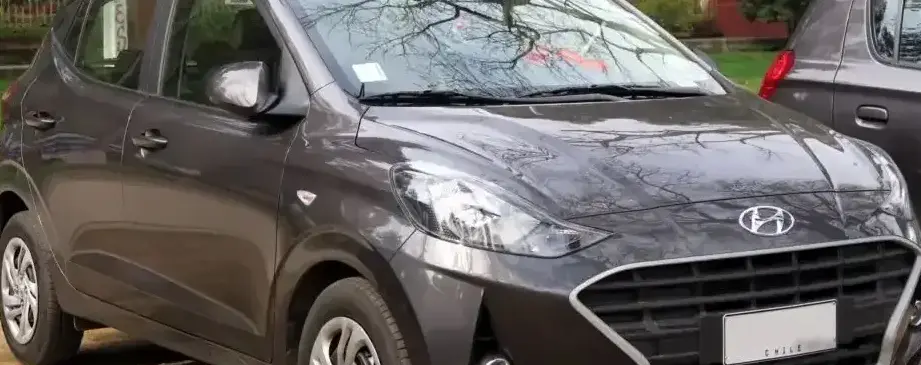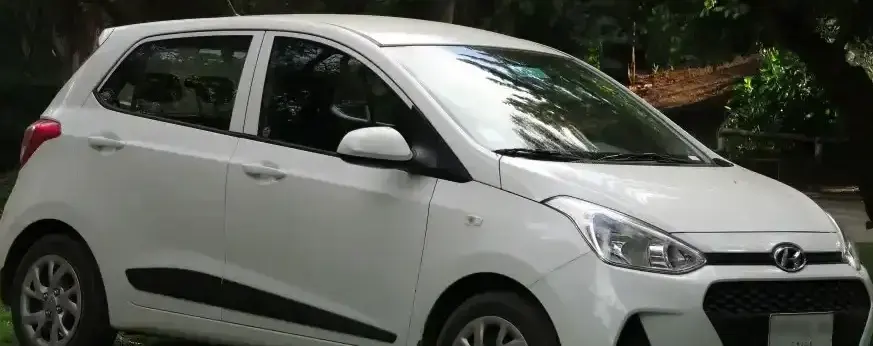
The Hyundai Grand i10 II (facelift 2017) 1.2 VTVT, producing 83 horsepower, represents a significant iteration within the second generation of Hyundai’s popular city car. Introduced in 2017 and continuing through August 2019, this variant was positioned as a practical and economical choice within the Grand i10 lineup, primarily targeting urban commuters and first-time car buyers. The facelift brought styling updates and refinements to the already successful Grand i10, enhancing its appeal in competitive markets, particularly in Asia and emerging economies where the Grand i10 found a strong foothold. This specific engine and transmission combination aimed to balance affordability with acceptable performance for everyday driving.
Technical Specifications
| Brand | Hyundai |
| Model | i10 |
| Generation | Grand i10 II (facelift 2017) |
| Type (Engine) | 1.2 VTVT (83 Hp) |
| Start of production | 2017 |
| End of production | August, 2019 |
| Powertrain Architecture | Internal Combustion engine |
| Body type | Hatchback |
| Seats | 5 |
| Doors | 5 |
| Fuel Type | Petrol (Gasoline) |
| Power | 83 Hp @ 6000 rpm |
| Power per litre | 69.3 Hp/l |
| Torque | 114 Nm @ 4000 rpm / 84.08 lb.-ft. @ 4000 rpm |
| Engine layout | Front, Transverse |
| Engine Model/Code | Kappa |
| Engine displacement | 1197 cm3 / 73.05 cu. in. |
| Number of cylinders | 4 |
| Engine configuration | Inline |
| Number of valves per cylinder | 4 |
| Fuel injection system | Multi-port manifold injection |
| Engine aspiration | Naturally aspirated engine |
| Valvetrain | DOHC |
| Engine oil capacity | 3.6 l / 3.8 US qt | 3.17 UK qt |
| Fuel tank capacity | 43 l / 11.36 US gal | 9.46 UK gal |
| Length | 3765 mm / 148.23 in. |
| Width | 1660 mm / 65.35 in. |
| Height | 1520 mm / 59.84 in. |
| Wheelbase | 2425 mm / 95.47 in. |
| Front track | 1479 mm / 58.23 in. |
| Rear track | 1493 mm / 58.78 in. |
| Drivetrain Architecture | The Internal combustion engine (ICE) drives the front wheels of the vehicle. |
| Drive wheel | Front wheel drive |
| Number of gears and type of gearbox | 5 gears, manual transmission |
| Front suspension | Independent type McPherson |
| Rear suspension | Torsion |
| Front brakes | Disc |
| Rear brakes | Drum |
| Assisting systems | ABS (Anti-lock braking system) |
| Steering type | Steering rack and pinion |
| Tires size | 165/65 R14 |
| Wheel rims size | 14 |
Powertrain & Engine Architecture
The heart of the Grand i10 II 1.2 VTVT is Hyundai’s Kappa engine family. This 1.2-liter, naturally aspirated inline-four cylinder engine utilizes a multi-point fuel injection system. The ‘VTVT’ designation stands for Variable Timing Valve Technology, a system designed to optimize engine breathing across the rev range, improving both fuel efficiency and power delivery. The DOHC (Dual Overhead Camshaft) valvetrain further contributes to the engine’s efficiency. The Kappa engine is known for its relatively simple design, contributing to its reliability and ease of maintenance. The engine produces 83 horsepower at 6000 rpm and 114 Nm (84.08 lb-ft) of torque at 4000 rpm. This power is delivered to the front wheels through a standard five-speed manual transmission.
Driving Characteristics
The 1.2 VTVT engine, paired with the five-speed manual gearbox, provides adequate performance for city driving. Acceleration is not brisk, but sufficient for merging into traffic and navigating urban environments. The gear ratios are tuned for economy, meaning the engine needs to be revved to access its peak power. Compared to higher-spec Grand i10 models equipped with larger engines, this variant feels noticeably less powerful, particularly when fully loaded or tackling inclines. However, the lighter engine weight contributes to nimble handling and a relatively comfortable ride. The manual transmission offers precise shifts, allowing drivers to maintain control and optimize fuel efficiency.
Equipment & Trim Levels
The Grand i10 II 1.2 VTVT typically served as the entry-level trim in many markets. Standard equipment generally included air conditioning, power steering, central locking, and basic audio system with radio and USB connectivity. Safety features such as ABS (Anti-lock Braking System) and dual airbags were also commonly included. Higher trim levels offered additional features like alloy wheels, power windows, a more advanced audio system with Bluetooth connectivity, and optional features like rear parking sensors. Interior upholstery was typically cloth, with a functional and durable design. The dashboard layout was straightforward and user-friendly, prioritizing practicality over luxury.
Chassis & Braking
The Grand i10 II utilizes a front-wheel-drive layout with an independent McPherson strut suspension at the front and a torsion beam suspension at the rear. This suspension setup provides a reasonable balance between ride comfort and handling. The front brakes are disc brakes, offering adequate stopping power, while the rear brakes are drum brakes, a cost-saving measure common in this segment. The steering is a rack and pinion system, providing responsive and accurate steering feel. The vehicle rides on 14-inch wheels with 165/65 R14 tires, which contribute to a comfortable ride quality.
Market Reception & Comparison
The Hyundai Grand i10 II 1.2 VTVT was generally well-received by automotive critics as a practical and affordable city car. Its fuel efficiency was a major selling point, making it an attractive option for budget-conscious buyers. Compared to other trims in the Grand i10 lineup, this variant offered the most affordable entry point, but at the expense of performance. The 1.2-liter engine provided adequate power for most everyday driving situations, but it lacked the punch of the larger 1.4-liter engine available in higher trims. Reliability was generally good, with the Kappa engine proving to be a durable and dependable unit.
Legacy
The Hyundai Grand i10 II 1.2 VTVT has established a reputation as a reliable and economical used car. The Kappa engine is known for its longevity, and routine maintenance is relatively inexpensive. The availability of spare parts is generally good, making repairs straightforward. In the used car market, this variant represents a good value proposition for buyers seeking an affordable and practical city car. While it may not offer the performance or features of higher-spec models, its fuel efficiency, reliability, and low running costs make it a compelling choice for those prioritizing practicality and affordability.