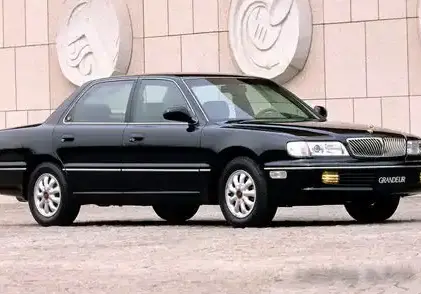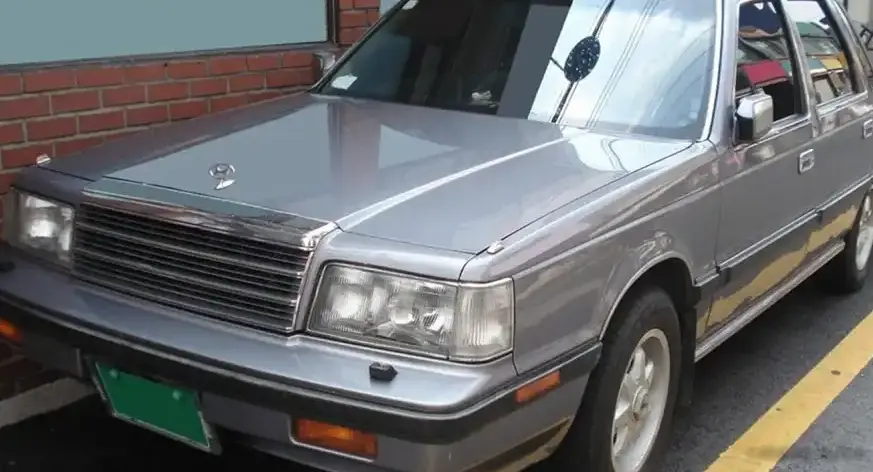
The Hyundai Grandeur I, known as the Azera in some export markets, represented a significant step forward for the South Korean automaker. Introduced in 1986 and produced through 1992, the Grandeur was Hyundai’s first truly large, domestically-developed sedan, intended to compete with established Japanese and American models in the burgeoning upper-middle class segment. The 2.0i variant, equipped with a 120 horsepower engine and an automatic transmission, occupied a middle ground within the Grandeur lineup, offering a balance of comfort and affordability. It was positioned as a more accessible alternative to the higher-specification trims, appealing to buyers prioritizing a smooth driving experience over outright performance.
Technical Specifications
| Brand | Hyundai |
| Model | Grandeur/Azera |
| Generation | Grandeur I (L) |
| Type (Engine) | 2.0i (120 Hp) Automatic |
| Start of production | 1986 |
| End of production | 1992 |
| Powertrain Architecture | Internal Combustion engine |
| Body type | Sedan |
| Seats | 5 |
| Doors | 4 |
| Fuel consumption (urban) | 11 l/100 km (21.4 US mpg) |
| Fuel consumption (extra urban) | 9 l/100 km (26.1 US mpg) |
| Fuel consumption (combined) | 9.7 l/100 km (24.2 US mpg) |
| Fuel Type | Petrol (Gasoline) |
| Acceleration 0 – 100 km/h | 15.7 sec |
| Acceleration 0 – 62 mph | 15.7 sec |
| Acceleration 0 – 60 mph | 14.9 sec |
| Maximum speed | 157 km/h (97.56 mph) |
| Weight-to-power ratio | 11.8 kg/Hp |
| Weight-to-torque ratio | 8.9 kg/Nm |
| Power | 120 Hp @ 5000 rpm |
| Torque | 159 Nm @ 3500 rpm (117.27 lb.-ft. @ 3500 rpm) |
| Engine layout | Front, Transverse |
| Engine displacement | 1997 cm3 (121.86 cu. in.) |
| Number of cylinders | 4 |
| Engine configuration | Inline |
| Cylinder Bore | 85 mm (3.35 in.) |
| Piston Stroke | 88 mm (3.46 in.) |
| Compression ratio | 8.9:1 |
| Number of valves per cylinder | 2 |
| Fuel injection system | Multi-port manifold injection |
| Engine aspiration | Naturally aspirated |
| Kerb Weight | 1410 kg (3108.52 lbs.) |
| Trunk (boot) space | 460 l (16.24 cu. ft.) |
| Fuel tank capacity | 72 l (19.02 US gal | 15.84 UK gal) |
| Length | 4865 mm (191.54 in.) |
| Width | 1725 mm (67.91 in.) |
| Height | 1450 mm (57.09 in.) |
| Wheelbase | 2690 mm (105.91 in.) |
| Front track | 1455 mm (57.28 in.) |
| Rear track | 1405 mm (55.31 in.) |
| Ride height | 165 mm (6.5 in.) |
| Drag coefficient (Cd) | 0.42 |
| Minimum turning circle | 11.2 m (36.75 ft.) |
| Drivetrain Architecture | Front wheel drive |
| Number of gears | 4 |
| Gearbox type | Automatic transmission |
| Front suspension | Independent coil spring |
| Front brakes | Ventilated discs |
| Rear brakes | Disc |
| Tires size | 195/70 R14 |
| Wheel rims size | 14 |
Powertrain & Engine Architecture
The heart of the Grandeur I 2.0i was the Mitsubishi-sourced 4G63 inline-four cylinder engine. While Hyundai would later develop its own engines, this initial powerplant was a licensed design. Displacing 1997cc, the engine featured a cast iron block and an aluminum cylinder head. It utilized a multi-port fuel injection system, a relatively advanced feature for the time, contributing to improved fuel efficiency and smoother operation compared to carbureted engines. The engine produced 120 horsepower at 5000 rpm and 159 Nm (117.27 lb-ft) of torque at 3500 rpm. The engine’s 8.9:1 compression ratio was a compromise between performance and the quality of available fuel in the Korean market. The automatic transmission was a four-speed unit, providing relatively smooth shifts but prioritizing comfort over sporty responsiveness. This transmission was chosen to appeal to the target demographic who valued ease of driving over performance.
Driving Characteristics
The 2.0i automatic Grandeur offered a comfortable, if not particularly exhilarating, driving experience. Acceleration from 0-60 mph took around 14.9 seconds, and top speed was limited to approximately 97.56 mph. The automatic transmission’s gear ratios were geared towards fuel economy and relaxed cruising. While the engine provided adequate power for everyday driving, overtaking maneuvers required careful planning. Compared to the manual transmission versions, the automatic suffered a noticeable performance deficit. The higher-specification Grandeur trims, equipped with larger engines (often V6s), offered significantly more power and a more engaging driving experience. However, the 2.0i’s softer suspension tuning and automatic transmission made it a more comfortable choice for long journeys.
Equipment & Trim Levels
The Grandeur I 2.0i Automatic typically came equipped with features considered standard for a mid-size sedan in the late 1980s. These included power steering, air conditioning, and a basic audio system. Interior upholstery was typically cloth, with options for upgraded materials available. The dashboard layout was functional and straightforward, prioritizing ease of use. Optional extras included power windows, central locking, and a sunroof. The trim level of the 2.0i was generally considered to be mid-range, offering a good balance of features and affordability. It was a step up from the base models but lacked the luxury appointments found in the higher-end trims.
Chassis & Braking
The Grandeur I utilized a front-engine, front-wheel-drive layout. The front suspension consisted of independent coil springs, providing a comfortable ride. The rear suspension employed a semi-independent torsion beam setup. Braking duties were handled by ventilated discs at the front and solid discs at the rear. While adequate for normal driving conditions, the braking system lacked the stopping power of more modern systems. The car rode on 195/70 R14 tires, mounted on 14-inch steel wheels. The suspension was tuned for comfort, resulting in a relatively soft ride quality. Stabilizer bars were included to reduce body roll during cornering, but the car was not designed for aggressive handling.
Market Reception & Comparison
The Hyundai Grandeur I was generally well-received in the Korean market. It was praised for its spacious interior, comfortable ride, and relatively affordable price. Critics noted that the 2.0i automatic variant offered a good balance of features and fuel economy. However, some reviewers criticized its lack of performance compared to competitors. Fuel economy figures were around 24.2 US mpg combined, which was competitive for the time. Reliability was generally good, although some owners reported issues with the automatic transmission over the long term. Compared to other trims in the Grandeur lineup, the 2.0i automatic was the most popular choice for buyers prioritizing comfort and affordability.
Legacy
The Hyundai Grandeur I played a crucial role in establishing Hyundai as a major player in the automotive industry. It demonstrated the company’s ability to develop and produce a large, modern sedan. The 2.0i automatic variant, while not the most powerful or sporty version, remains a popular choice among collectors and enthusiasts. The Mitsubishi 4G63 engine is known for its durability and relatively simple maintenance requirements. Today, well-maintained examples of the Grandeur I 2.0i can be found in the used car market, offering a glimpse into the early days of Hyundai’s automotive ambitions. The car represents a significant milestone in the history of the Korean automotive industry and a testament to Hyundai’s commitment to innovation and quality.