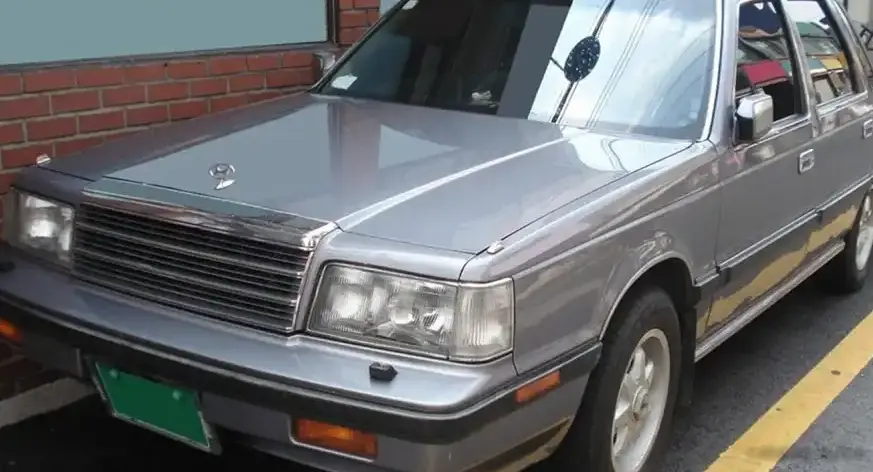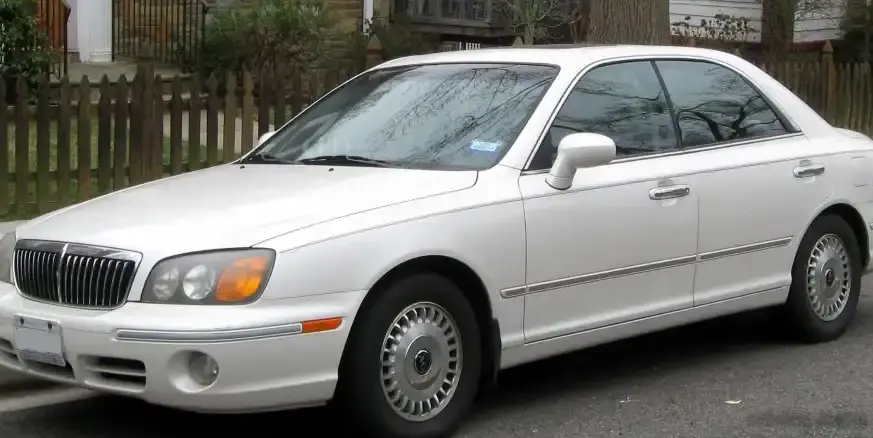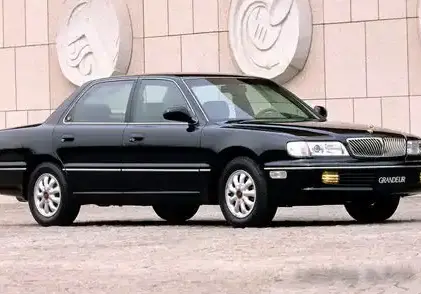
The Hyundai Grandeur II (LX) 2.5i V6 Automatic, produced between 1992 and 1996, represented a significant step forward for Hyundai in the mid-size luxury sedan segment. Positioned as the flagship model, the Grandeur II, known as the Azera in some export markets, aimed to compete with established Japanese and European brands. This variant, equipped with the 2.5-liter Sigma V6 engine and a four-speed automatic transmission, was a key offering in the lineup, balancing performance with the convenience expected by its target demographic. It was built on the Hyundai’s LX platform, a front-wheel drive configuration, and was a crucial model for establishing Hyundai’s reputation for quality and refinement.
Technical Specifications
| Brand | Hyundai |
| Model | Grandeur/Azera |
| Generation | Grandeur II (LX) |
| Type (Engine) | 2.5i V6 (173 Hp) Automatic |
| Start of production | 1992 |
| End of production | 1996 |
| Powertrain Architecture | Internal Combustion engine |
| Body type | Sedan |
| Seats | 5 |
| Doors | 4 |
| Fuel Type | Petrol (Gasoline) |
| Maximum speed | 195 km/h (121.17 mph) |
| Weight-to-power ratio | 9.5 kg/Hp, 105.2 Hp/tonne |
| Weight-to-torque ratio | 7.5 kg/Nm, 133.7 Nm/tonne |
| Power | 173 Hp @ 6000 rpm |
| Power per litre | 69.3 Hp/l |
| Torque | 220 Nm @ 4000 rpm (162.26 lb.-ft. @ 4000 rpm) |
| Engine Model/Code | Sigma / G6AV |
| Engine displacement | 2497 cm3 (152.38 cu. in.) |
| Number of cylinders | 6 |
| Engine configuration | V-engine |
| Cylinder Bore | 83.5 mm (3.29 in.) |
| Piston Stroke | 76 mm (2.99 in.) |
| Compression ratio | 9:1 |
| Number of valves per cylinder | 4 |
| Fuel injection system | Multi-port manifold injection |
| Engine aspiration | Naturally aspirated engine |
| Valvetrain | DOHC |
| Engine oil capacity | 4.5 l (4.76 US qt | 3.96 UK qt) |
| Coolant | 8.3 l (8.77 US qt | 7.3 UK qt) |
| Kerb Weight | 1645 kg (3626.6 lbs) |
| Trunk (boot) space – minimum | 460 l (16.24 cu. ft.) |
| Fuel tank capacity | 72 l (19.02 US gal | 15.84 UK gal) |
| Length | 4980 mm (196.06 in.) |
| Width | 1810 mm (71.26 in.) |
| Height | 1440 mm (56.69 in.) |
| Wheelbase | 2745 mm (108.07 in.) |
| Front track | 1540 mm (60.63 in.) |
| Rear (Back) track | 1550 mm (61.02 in.) |
| Ride height (ground clearance) | 160 mm (6.3 in.) |
| Drag coefficient (Cd) | 0.37 |
| Minimum turning circle (turning diameter) | 11.4 m (37.4 ft.) |
| Drivetrain Architecture | The Internal combustion engine (ICE) drives the front wheels of the vehicle. |
| Drive wheel | Front wheel drive |
| Number of gears and type of gearbox | 4 gears, automatic transmission |
| Front brakes | Ventilated discs |
| Rear brakes | Disc |
| Steering type | Steering rack and pinion |
| Tires size | 205/65 R15 H |
| Wheel rims size | 15 |
Powertrain & Engine Architecture
The heart of the Grandeur II 2.5i was the Hyundai Sigma engine, internally designated G6AV. This 2.5-liter, 60-degree V6 engine featured a cast iron block and an aluminum cylinder head. It employed a multi-port fuel injection (MPI) system, delivering fuel directly to each intake port for improved efficiency and responsiveness. The engine utilized a double overhead camshaft (DOHC) valvetrain with four valves per cylinder, contributing to its respectable power output for its displacement. The 9:1 compression ratio was a compromise between performance and the fuel quality available in target markets. Paired with this engine was a four-speed automatic transmission, providing smooth and convenient gear changes. This transmission, while not particularly advanced by modern standards, was known for its reliability and suitability for comfortable cruising.
Driving Characteristics
The 173 horsepower and 162 lb-ft of torque delivered by the 2.5i V6 and automatic transmission combination provided adequate, though not exhilarating, performance. Acceleration from 0 to 60 mph was estimated to be around 9-10 seconds. The automatic transmission’s gear ratios were tuned for comfort and fuel economy rather than outright speed. Compared to the later, more powerful V6 options available in the Grandeur, or even a hypothetical manual transmission version of the 2.5i, this variant felt somewhat less responsive. However, it offered a refined and relaxed driving experience, well-suited for highway cruising and city driving. The front-wheel drive configuration provided predictable handling, although it lacked the dynamic capabilities of rear-wheel drive alternatives.
Equipment & Trim Levels
The Grandeur II 2.5i Automatic typically came well-equipped for its time. Standard features often included power windows, power locks, air conditioning, and a basic audio system. Higher trim levels added features like leather upholstery, a sunroof, upgraded audio systems, and woodgrain interior trim. The interior design emphasized comfort and spaciousness, with ample legroom for both front and rear passengers. The dashboard layout was relatively straightforward and functional, prioritizing ease of use. Optional extras could include alloy wheels, cruise control, and a more advanced sound system.
Chassis & Braking
The Grandeur II utilized a MacPherson strut front suspension and a multi-link rear suspension, providing a comfortable ride quality. The suspension was tuned to prioritize smoothness over sporty handling. Braking duties were handled by ventilated discs at the front and solid discs at the rear. The braking system was adequate for the vehicle’s weight and performance, but lacked the sophistication of more modern anti-lock braking systems (ABS), which were not standard on all trims. Steering was via a rack and pinion system, offering reasonable precision and feedback.
Market Reception & Comparison
The Grandeur II 2.5i Automatic was generally well-received by critics as a comfortable and well-equipped family sedan. It was praised for its spacious interior, smooth ride, and relatively quiet engine. However, some reviewers noted that its performance was not as exciting as some of its competitors, and the automatic transmission could feel somewhat sluggish at times. Compared to other trims in the Grandeur lineup, the 2.5i Automatic offered a more affordable entry point into the model range, appealing to buyers who prioritized comfort and convenience over outright performance. Fuel economy was respectable for a V6 engine of that era, averaging around 20-25 mpg in mixed driving conditions.
Legacy
The Hyundai Grandeur II 2.5i V6 Automatic, while not a performance icon, played a vital role in establishing Hyundai as a credible automotive manufacturer. The Sigma engine proved to be relatively reliable, and the four-speed automatic transmission was generally durable. Today, these vehicles are relatively rare and are gaining a following among collectors and enthusiasts. Parts availability can be a challenge, but the relatively simple mechanical design makes them accessible for DIY repairs. The Grandeur II represents a pivotal moment in Hyundai’s history, showcasing the company’s ambition to compete on a global scale and deliver quality vehicles at competitive prices.